
Live-In Care for Seniors in Tri-Cities, TN
Some families need more than scheduled visits — they need a caregiver present in the home around the clock. Live-in care in Johnson City, Kingsport, and Bristol provides exactly that: a trained caregiver who lives in the home, handles overnight needs, and ensures no hour goes unsupervised for seniors who cannot safely be alone.
- Experienced and trained caregivers, including CNA/HHA professionals
- Bilingual support in English and Spanish
- Flexible schedules from one to twenty-four hours
- Experienced and trained caregivers, including CNA/HHA professionals
- Bilingual support in English and Spanish
- Flexible schedules from one to twenty-four hours
- Trusted by families across Carter, Sullivan & Washington counties

Why Tri-Cities Families Choose Live-In Care Over a Facility
Live-in care keeps your loved one in the home they know, with their routines, belongings, and community connections intact — at a cost that is often lower than memory care or assisted living facilities in the Tri-Cities area. Preferred Care at Home manages scheduling, supervision, and backup coverage so families do not carry that burden.
Live-In Care Services We Provide in Tri-Cities
Live-in care covers everything from overnight safety monitoring to full personal care and household management. A live-in caregiver is not a roommate — they are a professional working a structured schedule with daily tasks, rest periods, and supervision from our office.
Overnight Safety Monitoring
Night-time falls, disorientation, incontinence, and wandering are the primary reasons families seek live-in care. A caregiver present overnight responds immediately to any need without the delay of an emergency call system or waiting for a scheduled visit.
For seniors with dementia, overnight supervision eliminates the wandering danger that makes the nighttime hours most dangerous. For those recovering from surgery at Ballad Health, it ensures compliance with post-operative movement and medication restrictions.
Why Choose This Service:
- Immediate response to overnight needs
- Wandering prevention during night hours
- Post-surgical overnight monitoring and support

Full Personal Care Coverage
A live-in caregiver handles the complete spectrum of personal care — morning hygiene routines, dressing, meals, toileting, repositioning, and bedtime routines — without the gap between visit windows that part-time care creates.
Continuity matters for personal care quality. The same caregiver handles every task in a consistent sequence, building trust and routine that reduces resistance and anxiety. Care plans are documented so backup caregivers maintain the same approach.
Why Choose This Service:
- Complete personal care from morning to bedtime
- No gaps between scheduled visit windows
- Consistent routine maintained by one caregiver

Household Management and Meal Preparation
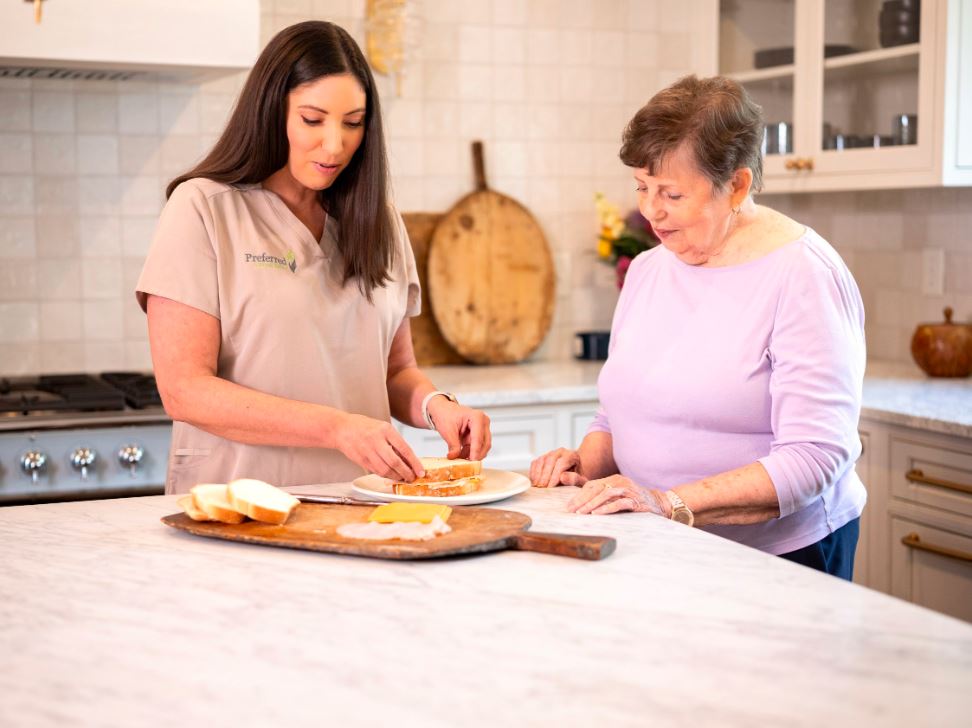
Live-in caregivers handle light housekeeping, laundry, grocery shopping coordination, and meal preparation as part of the daily schedule. A well-managed household environment directly supports health — clean surfaces reduce infection risk, regular meals prevent nutritional decline.
Meals are prepared according to dietary requirements — diabetic-friendly, low-sodium, soft-texture — using foods the client already knows and likes. Mealtime becomes a structured, sociable part of the day rather than a sporadic event.
Why Choose This Service:
- Meals prepared three times daily per dietary needs
- Light housekeeping and laundry managed
- Grocery needs coordinated with family
Medication Reminders and Health Observation
A live-in caregiver provides medication reminders around the clock — morning doses, afternoon doses, evening doses, and any middle-of-night requirements. Consistency prevents the dangerous accumulation of missed or doubled doses.
Daily health observation — appetite, mobility, mood, vital signs — provides a continuous clinical picture that part-time care cannot. Changes that develop gradually are caught early when a single caregiver observes the same client every day.
Why Choose This Service:
- Reminders for all daily medication doses
- Daily health observation and family reporting
- Early detection of declining health trends

Companionship and Social Engagement
Social isolation is a serious health risk for elderly seniors, particularly those in rural Northeast Tennessee communities. A live-in caregiver provides ongoing human contact, conversation, shared activities, and accompaniment to community events or religious services.
Beyond companionship, caregivers facilitate connections — phone calls with family members, video visits with grandchildren, transportation to church in Bristol or community gatherings in Elizabethton. Social engagement is not a luxury in senior care; it is a health intervention.
Why Choose This Service:
- Daily social interaction and companionship
- Transportation to community and religious events
- Video call support for family connections

Caregiver Scheduling and Backup Coverage
Live-in care requires scheduling structure that protects the caregiver’s rest periods — typically 8 hours of sleep and 2 hours of off-duty time within a 24-hour period — while maintaining client safety. Preferred Care at Home manages this logistics layer completely.
When the primary live-in caregiver is on a scheduled day off or calls out, we provide trained backup coverage without requiring the family to find a replacement independently. Continuity of care is our responsibility, not the family’s.
Why Choose This Service:
- Caregiver rest periods structured into schedule
- Backup coverage handled by our office
- Family is never left to find a replacement
How Live-In Care Gets Started in the Tri-Cities

Step 01
In-Home Assessment and Needs Evaluation
A coordinator visits the home in Johnson City, Kingsport, Bristol, or surrounding areas to assess care needs, evaluate the living space for caregiver accommodation, and discuss schedule and budget.

Step 02
Live-In Care Plan and Schedule
A detailed care plan covers all daily tasks, sleep/off-duty schedule, backup coverage protocol, and family communication expectations. Both family and client approve the plan before care begins.

Step 03
Caregiver Match and Introduction
We match a live-in caregiver based on experience, personality, and the specific care needs involved. We introduce the caregiver before the live-in arrangement begins.

Step 04
Trial Period and Adjustment
The first week of live-in care includes coordinator check-ins to verify that the plan is working, the caregiver is a comfortable fit, and any scheduling adjustments are made quickly.

Step 05
Ongoing Supervision and Backup Management
Our office manages caregiver scheduling, day-off coverage, and care plan updates. Families focus on their loved one, not on caregiver logistics.
Signs It Is Time for Live-In Care
These are the situations that lead most Tri-Cities families to contact us about full-time live-in support.
Challenge
What It Looks Like
How We Help
Unsafe hours alone at night
What It Looks Like
Falls, disorientation, or wandering during overnight hours create acute safety risk.
How We Help
Live-in caregiver provides immediate overnight response every night.
Caregiver needed more than 8 hours daily
What It Looks Like
Description
Part-time visit schedules no longer cover the hours the senior needs support.
How We Help
Live-in care provides continuous coverage without hourly scheduling gaps.
Family caregiver cannot continue
What It Looks Like
Description
A spouse or adult child has been providing care but health or life circumstances require them to step back.
How We Help
We take over primary care responsibility with a consistent professional in the home.
Nursing home or facility not acceptable
What It Looks Like
Description
The senior has expressed a strong preference to remain at home and the family wants to honor that.
How We Help
Live-in care preserves home-based independence at a comparable or lower cost than residential care.
Complex care needs require constant availability
What It Looks Like
Description
Multiple conditions requiring ongoing monitoring and frequent assistance throughout the day and night.
How We Help
A live-in caregiver handles all non-medical needs continuously without scheduling gaps.
Post-hospital discharge requiring intensive monitoring
What It Looks Like
Description
Discharge planners at Ballad Health or Quillen VA recommend 24-hour monitoring during recovery.
How We Help
We can begin live-in care within 24 to 48 hours of hospital discharge coordination.
Local Companion Care in the Tri-Cities Area
Celebrating life, dignity and independence.®
Our Johnson City office serves families across the Tri-Cities region and surrounding Northeast Tennessee communities. We focus on helping seniors and older adults live independent lives in their own homes, close to the people and places they know.
We understand TennCare CHOICES, VA Aid and Attendance, and ECF CHOICES funding pathways. Ask about the wide range of non-medical services available 1 to 24 hours per day, and about qualified live-in caregivers who can provide 24-hour peace of mind for you or your loved one.
We Serve:
- Johnson City
- Kingsport
- Bristol
- Jonesborough
- Elizabethton
- Bluff City
- Blountville
- Mountain City
- Erwin
- Unicoi
- Greeneville
- Limestone
- Morristown
- Piney Flats
- Gray
Frequently Asked Questions About Live-In Care in Tri-Cities
What is the difference between live-in care and 24-hour care?
Live-in care provides one caregiver who lives in the home and works a structured schedule including sleep and off-duty hours. True 24-hour care uses multiple caregivers in shifts to cover every hour without sleep interruptions. Most families need live-in care; those with clients who require continuous attention through the night may need 24-hour shift care.
Does the live-in caregiver sleep in the home?
Yes. The caregiver is provided with a private sleeping area and typically has 8 hours of scheduled sleep. If the client requires overnight assistance during that sleep period, the caregiver responds. For clients with very frequent overnight needs, 24-hour shift staffing may be more appropriate.
How much does live-in care cost compared to a memory care facility?
Live-in care costs vary depending on the level of care required. In many cases it is comparable to or less expensive than memory care facilities in the Tri-Cities area, while keeping the senior at home. Contact our office for a current rate discussion.
Can a live-in caregiver handle medical equipment like oxygen or feeding tubes?
Non-medical caregivers do not manage clinical equipment or perform nursing tasks. If medical equipment management is required, a skilled home health agency with licensed nursing staff must be involved. We can coordinate alongside them for the non-medical personal care.
What space does the home need to accommodate a live-in caregiver?
A private bedroom for the caregiver is required. A shared bathroom is typically acceptable. We evaluate the home environment during the initial assessment to ensure the living arrangement is appropriate for both the client and the caregiver.
How are live-in caregivers supervised?
Our office supervises all live-in caregivers through regular check-ins, care plan reviews, and documented visit logs. Caregivers are employees, not independent contractors, so full supervision and accountability rest with Preferred Care at Home.
What happens when the live-in caregiver has a day off?
We schedule backup coverage in advance. Our office manages the replacement caregiver logistics — families do not need to find someone independently. We ensure continuity and never leave a client without coverage.
Can live-in care be started quickly after a hospital discharge?
Yes. We can typically start live-in care within 24 to 48 hours of a hospital discharge referral. Our office coordinates with Ballad Health and Quillen VA discharge planners in the Tri-Cities area.
Is live-in care available in rural areas of Northeast Tennessee?
Yes. We serve the full Tri-Cities region including rural areas in Carter, Sullivan, Washington, Unicoi, and Johnson counties. This includes Mountain City, Elizabethton, Erwin, and other communities outside the major metro areas.
How do I know live-in care is the right choice versus a facility?
If your loved one values remaining in their home, has an appropriate living space, and their care needs can be met non-medically, live-in care is typically the right choice. Our coordinator will give you an honest assessment during the in-home evaluation.

Preferred Care at Home of Tri-Cities
2726 E Oakland Ave Suite 101
Johnson City, TN 37601
(865) 692-4000
Tennessee PSSA License #L000000038642
Services may vary depending on the licensing of each Preferred Care at Home Franchise location. Each location is individually owned and responsible for controlling and managing day-to-day business operations.