
Alzheimer's Care at Home in Tri-Cities, TN
Alzheimer’s disease follows a predictable progression, but it unfolds differently in every family. Preferred Care at Home builds care plans in Johnson City, Kingsport, and Bristol that match the current stage — light support in early phases, structured supervision as memory loss deepens, and intensive personal care in the advanced stage — all delivered at home.
- Experienced and trained caregivers, including CNA/HHA professionals
- Bilingual support in English and Spanish
- Flexible schedules from one to twenty-four hours
- Experienced and trained caregivers, including CNA/HHA professionals
- Bilingual support in English and Spanish
- Flexible schedules from one to twenty-four hours
- Trusted by families across Carter, Sullivan & Washington counties

Why Families Trust Us for Alzheimer's Care in Northeast Tennessee
Alzheimer’s care demands more than a willing helper. It requires a caregiver who understands the disease, reads behavioral cues correctly, and keeps the care environment consistent. Preferred Care at Home trains every caregiver in Alzheimer’s-specific approaches before they enter a client’s home.
Our Alzheimer's Care Services in Tri-Cities
Alzheimer’s care at home addresses safety, personal care, behavioral management, and family support in a single integrated plan. Services scale up as the disease advances without requiring a move to a memory care facility.
Early-Stage Alzheimer's Support
In early Alzheimer’s, the primary needs are safety oversight, routine reinforcement, and early relationship-building between client and caregiver. A few hours of structured support each day maintains independence while preventing the dangerous gaps that occur when seniors are entirely alone.
Caregivers assist with medication reminders, appointment transportation, and light household tasks that become confusing. The focus at this stage is keeping the existing routine intact rather than introducing a new one.
Why Choose This Service:
- Light supervision preserving independence
- Medication reminders and appointment support
- Caregiver relationship built before crisis occurs

Mid-Stage Memory Care
Mid-stage Alzheimer’s is when most families in the Tri-Cities first require significant professional support. Personal hygiene resistance, wandering, sundowning, and communication difficulty all emerge, making unsupervised hours unsafe.
Caregivers implement structured daily routines, provide full personal care, manage behavioral episodes, and maintain the home environment. The care plan typically increases from part-time to extended hours during this phase.
Why Choose This Service:
- Full personal care and hygiene assistance
- Behavioral management and sundowning support
- Extended hours to cover high-risk periods

Advanced Alzheimer's Personal Care
In advanced Alzheimer’s, total assistance with all personal care tasks — bathing, feeding, toileting, repositioning — is required. Caregivers provide this care with the same dignity and patience used in earlier stages, even when verbal communication is no longer possible.
Comfort and pain observation become primary concerns. Caregivers trained for advanced-stage care recognize discomfort signals and communicate them to family and clinical providers. Coordination with hospice services is seamless when the time comes.
Why Choose This Service:
- Total personal care including feeding and positioning
- Pain and discomfort observation and reporting
- Hospice coordination when clinically appropriate
Communication Support
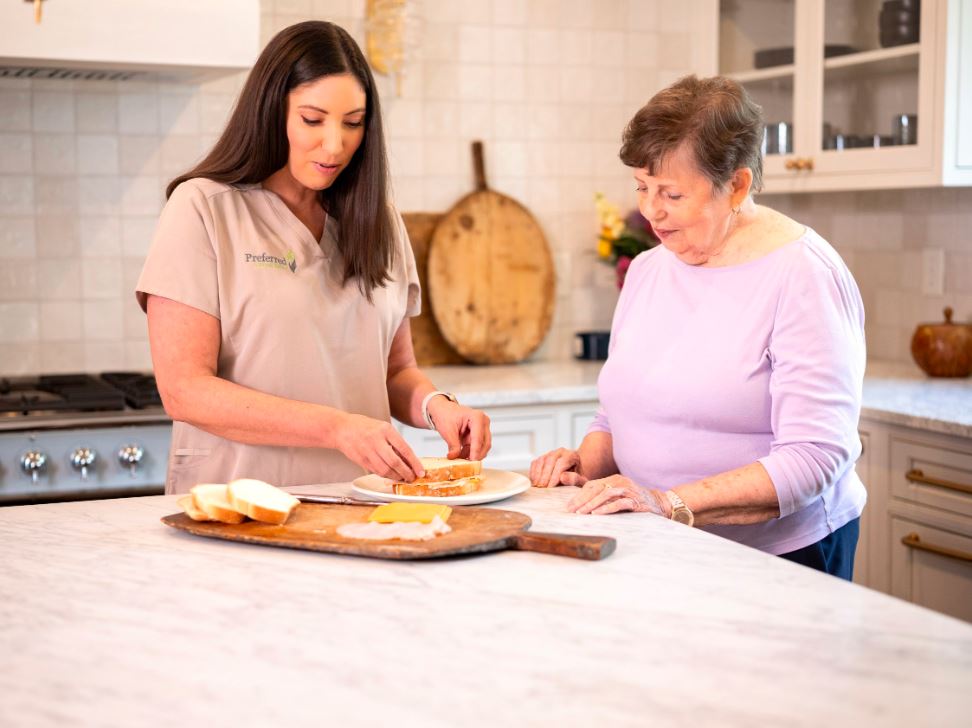
Alzheimer’s progressively erodes verbal communication — names disappear first, then sentences become fragmented, and eventually spoken language fails entirely. Caregivers adapt communication to the current ability level, using short sentences, visual cues, and gentle touch.
Families are coached on communication strategies that reduce frustration for both the client and the caregiver. Non-verbal communication — expression, gesture, eye contact — is prioritized as language fades, keeping the human connection intact.
Why Choose This Service:
- Communication adapted to Alzheimer's stage
- Visual cues and simplified language techniques
- Family coaching on communication strategies

Family Caregiver Relief and Respite
Family members caring for a parent with Alzheimer’s in Johnson City or Kingsport face a level of sustained stress that is physically and psychologically damaging. Scheduled respite shifts allow primary caregivers to rest without worrying that the routine is being disrupted.
Preferred Care at Home respite hours are handled by the same caregiver the client already knows, maintaining the consistency that Alzheimer’s care requires. We can provide a few hours daily or extended multi-day coverage.
Why Choose This Service:
- Same caregiver maintains Alzheimer's routine
- Flexible hours aligned with family schedule
- No new introductions during respite periods

Safety and Environmental Management
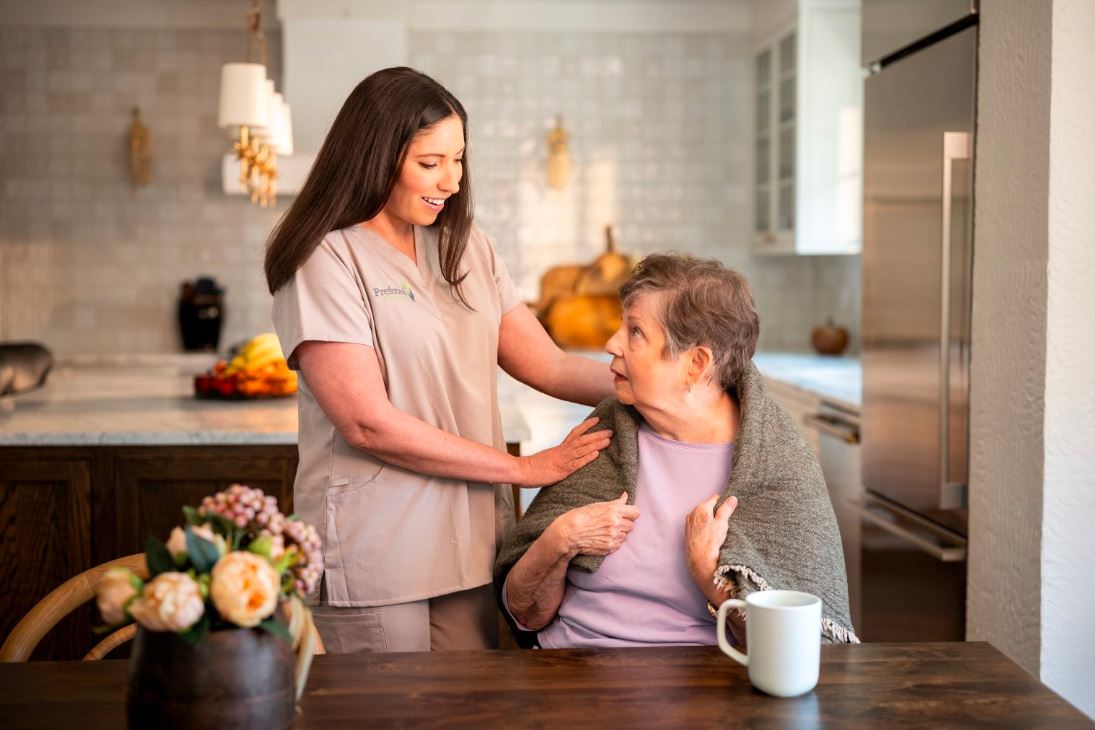
The home environment itself is a safety tool in Alzheimer’s care. Caregivers conduct informal hazard assessments every visit — checking for wandering risks, kitchen dangers, medication mismanagement, and fall hazards — and report findings to family.
When urgent safety modifications are needed — door alarms, stove knob covers, cabinet locks — caregivers escalate to coordinators who can advise on immediate steps and refer to occupational therapy resources in the Tri-Cities area.
Why Choose This Service:
- Hazard assessment built into every visit
- Wandering and exit risk identification
- OT referral when home modifications are needed
Starting Alzheimer's Care in the Tri-Cities

Step 01
Stage Assessment and Home Evaluation
We assess the current Alzheimer’s stage, document abilities and behavioral patterns, and evaluate the home environment for safety risks. This forms the foundation of the care plan.

Step 02
Stage-Specific Care Plan
A written care plan is built for the current stage and updated proactively as the disease progresses. Every task, schedule, and communication strategy is documented for caregiver consistency.

Step 03
Consistent Caregiver Introduction
One primary caregiver is assigned and introduced before the first solo shift. In Alzheimer’s care, this relationship matters more than in any other type of home care.

Step 04
Care Begins With Close Supervision
Coordinator oversight during initial visits confirms that the plan is working and the caregiver is managing behavioral situations correctly. Adjustments happen in the first week.

Step 05
Proactive Plan Updates as Disease Advances
We schedule reassessments before transitions between stages, so care is never playing catch-up. When advanced care or hospice coordination is needed, we initiate the conversation proactively.
Signs That Alzheimer's Care Is Needed at Home
These situations are what bring most Tri-Cities families to Preferred Care at Home for the first time.
Challenge
What It Looks Like
How We Help
Getting lost in familiar places
What It Looks Like
A parent found wandering in their own neighborhood or unable to return home from a short walk.
How We Help
Supervised outings and home exit management eliminate the wandering risk.
Failing to recognize family members
What It Looks Like
Description
Misidentification of spouses or children signals mid-stage progression requiring structured care.
How We Help
Consistent caregiver presence stabilizes the daily environment during this transition.
Personal hygiene completely abandoned
What It Looks Like
Description
Refusing or unable to bathe, dress, or manage toileting independently.
How We Help
We provide full personal care using stage-appropriate techniques every visit.
Night-time wandering and sleep disruption
What It Looks Like
Description
Overnight safety risks are creating family sleep deprivation and household stress.
How We Help
Overnight shifts provide safety coverage while family members sleep.
Weight loss and swallowing concerns
What It Looks Like
Description
Forgetting to eat, refusing food, or showing difficulty swallowing indicate advancing disease.
How We Help
We supervise meals, assist with feeding, and escalate swallowing concerns to clinical team.
Primary caregiver in physical or emotional crisis
What It Looks Like
Description
The family caregiver’s health is declining because Alzheimer’s care has become overwhelming.
How We Help
Scheduled shifts restore the primary caregiver’s health and prevent total family collapse.
Local Companion Care in the Tri-Cities Area
Celebrating life, dignity and independence.®
Our Johnson City office serves families across the Tri-Cities region and surrounding Northeast Tennessee communities. We focus on helping seniors and older adults live independent lives in their own homes, close to the people and places they know.
We understand TennCare CHOICES, VA Aid and Attendance, and ECF CHOICES funding pathways. Ask about the wide range of non-medical services available 1 to 24 hours per day, and about qualified live-in caregivers who can provide 24-hour peace of mind for you or your loved one.
We Serve:
- Johnson City
- Kingsport
- Bristol
- Jonesborough
- Elizabethton
- Bluff City
- Blountville
- Mountain City
- Erwin
- Unicoi
- Greeneville
- Limestone
- Morristown
- Piney Flats
- Gray
Frequently Asked Questions About Alzheimer's Care in Tri-Cities
What makes Alzheimer's care different from regular home care?
Alzheimer’s care requires specific training in behavioral management, communication adaptation, and stage-specific safety. General home care training does not cover these needs. Every Preferred Care at Home caregiver assigned to an Alzheimer’s client has completed this specialized training.
Can you care for someone with both Alzheimer's and other medical conditions?
Yes. Many Alzheimer’s clients also manage diabetes, heart disease, or mobility limitations. We coordinate non-medical personal care and can work alongside skilled nursing agencies and physical therapists managing clinical needs.
How do you handle a client who refuses care?
Refusal is common in Alzheimer’s and usually comes from fear or confusion. Caregivers are trained to approach refusal calmly, try different timing or framing, and never force care. Consistent caregiver relationships reduce refusal over time.
What if the Alzheimer's progresses faster than expected?
We assess regularly and can increase hours, add overnight coverage, or add tasks within days of identifying a need. You do not need to start over or wait for a re-intake process.
Is Alzheimer's care covered by insurance?
Long-term care insurance, TennCare CHOICES, and VA benefits (for eligible veterans at Quillen VA) are common funding sources. Medicare does not cover ongoing personal care, but short-term post-hospital home health may apply in some situations.
Do your caregivers interact with memory care facilities?
Our goal is to keep clients at home as long as possible. When a family is evaluating a memory care facility, we can provide transitional support and help the family understand the timeline. We do not manage facility placements but can refer to resources.
How do caregivers manage sundowning?
Sundowning — increased confusion and agitation in the late afternoon and evening — is managed by maintaining a consistent late-day routine, reducing stimulation before sunset, ensuring adequate nutrition and hydration, and using redirection. Caregivers document sundowning patterns to identify triggers.
Can Preferred Care at Home work with our existing home health agency?
Yes. We coordinate with skilled home health agencies providing nursing, PT, OT, or speech therapy. We handle the non-medical personal care layer while the home health agency handles clinical services, creating a complete at-home care team.
How do I talk to a parent with Alzheimer's about accepting care?
Framing matters. Introducing a caregiver as a ‘helper’ or ‘companion’ rather than a care worker often reduces resistance. Starting with a few short visits before full-time care also helps. Our coordinators can coach family members on effective introduction strategies.
How do I get started with Alzheimer's care in Johnson City, Kingsport, or Bristol?
Call (865) 692-4000 or complete our contact form. A coordinator will visit the home within 24 to 48 hours, assess the current stage, and have a care plan ready before the first shift.

Preferred Care at Home of Tri-Cities
2726 E Oakland Ave Suite 101
Johnson City, TN 37601
(865) 692-4000
Tennessee PSSA License #L000000038642
Services may vary depending on the licensing of each Preferred Care at Home Franchise location. Each location is individually owned and responsible for controlling and managing day-to-day business operations.