
End-of-Life Care at Home in Tri-Cities, TN
Most people, when asked, say they want to die at home. Preferred Care at Home makes that possible in Johnson City, Kingsport, Bristol, and surrounding Northeast Tennessee communities — providing compassionate, dignified personal care and daily support that allows families to focus on presence rather than tasks during the time that matters most.
- Experienced and trained caregivers, including CNA/HHA professionals
- Bilingual support in English and Spanish
- Flexible schedules from one to twenty-four hours
- Experienced and trained caregivers, including CNA/HHA professionals
- Bilingual support in English and Spanish
- Flexible schedules from one to twenty-four hours
- Trusted by families across Carter, Sullivan & Washington counties
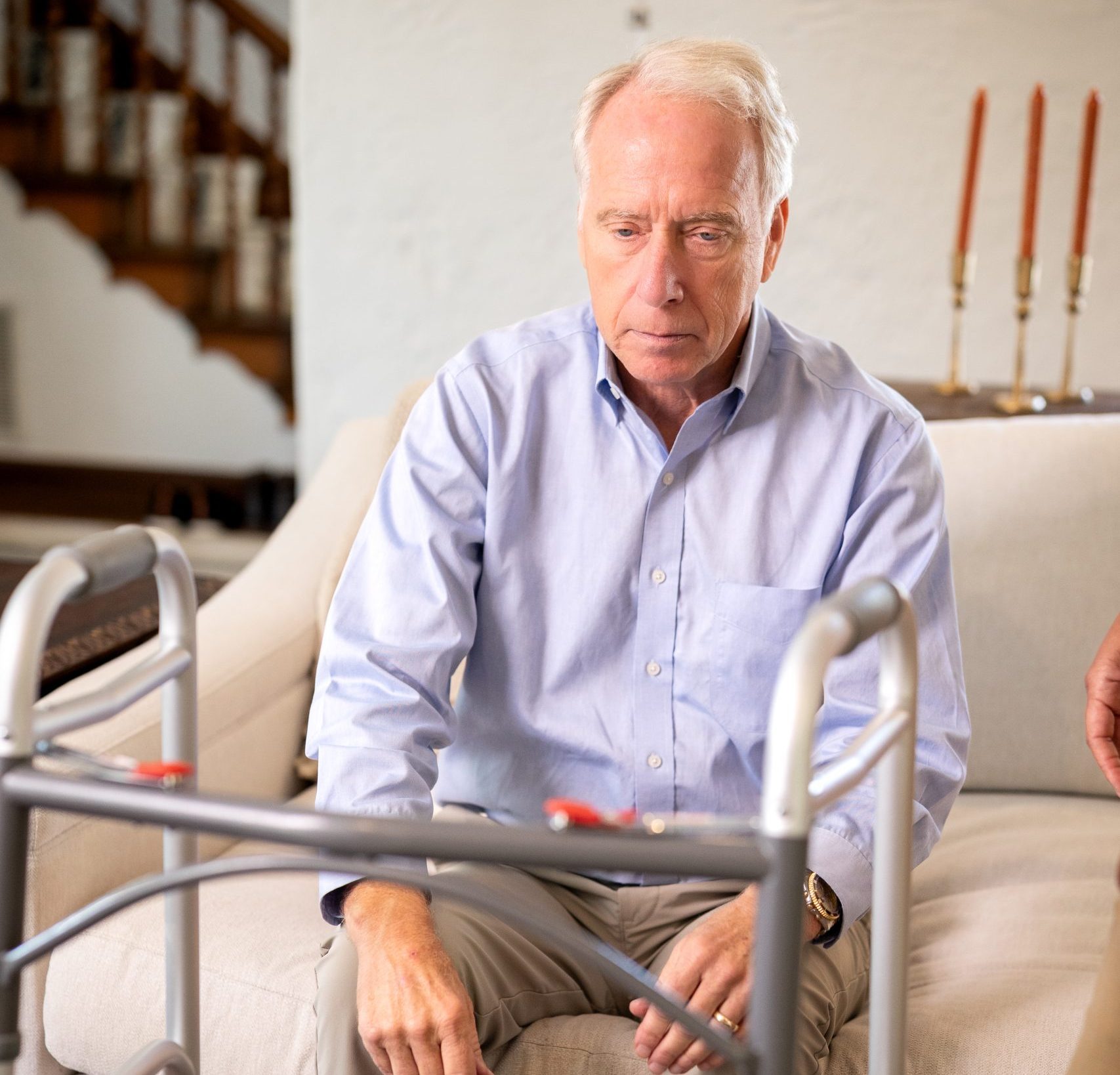
Why Families Choose Preferred Care at Home for End-of-Life Support
End-of-life care at home is not just about comfort — it is about maintaining the familiar environment, relationships, and routines that define a person’s life. Our caregivers are trained in compassionate end-of-life care and work in coordination with hospice providers serving the Tri-Cities region.
Our End-of-Life Care Services in Tri-Cities
End-of-life care covers the personal, practical, and emotional dimensions of the final chapter. Every service is delivered with the dignity and presence that this period deserves.
Comfort-Focused Personal Care
Hygiene, positioning, oral care, and skin integrity become primary comfort concerns in end-of-life care. Caregivers handle bathing, dressing, repositioning, and grooming with a gentleness calibrated to the reduced stamina and sensitivity of the final stage.
Pain and discomfort signals that cannot be verbalized — facial expression, restlessness, guarding, refusal of touch — are observed, documented, and communicated immediately to hospice nurses and family. This observational layer is critical when the client cannot advocate for their own comfort.
Why Choose This Service:
- Dignified hygiene and comfort care every visit
- Pain and discomfort observation and reporting
- Skin integrity monitoring to prevent pressure sores

Hospice Coordination and Support
Preferred Care at Home works alongside hospice agencies operating in the Tri-Cities area, handling the non-medical personal care layer that hospice clinical staff do not manage. Our caregivers and hospice nurses work from a shared understanding of the client’s care goals.
The CAHPS Hospice Survey — administered by the Centers for Medicare and Medicaid Services (cms.gov) — measures the quality of end-of-life care coordination that hospice and support providers deliver. Our coordination standards are built to support positive family experiences across every metric.
Why Choose This Service:
- Parallel care with hospice clinical team
- CMS care quality standards observed
- Shared care goals across all providers
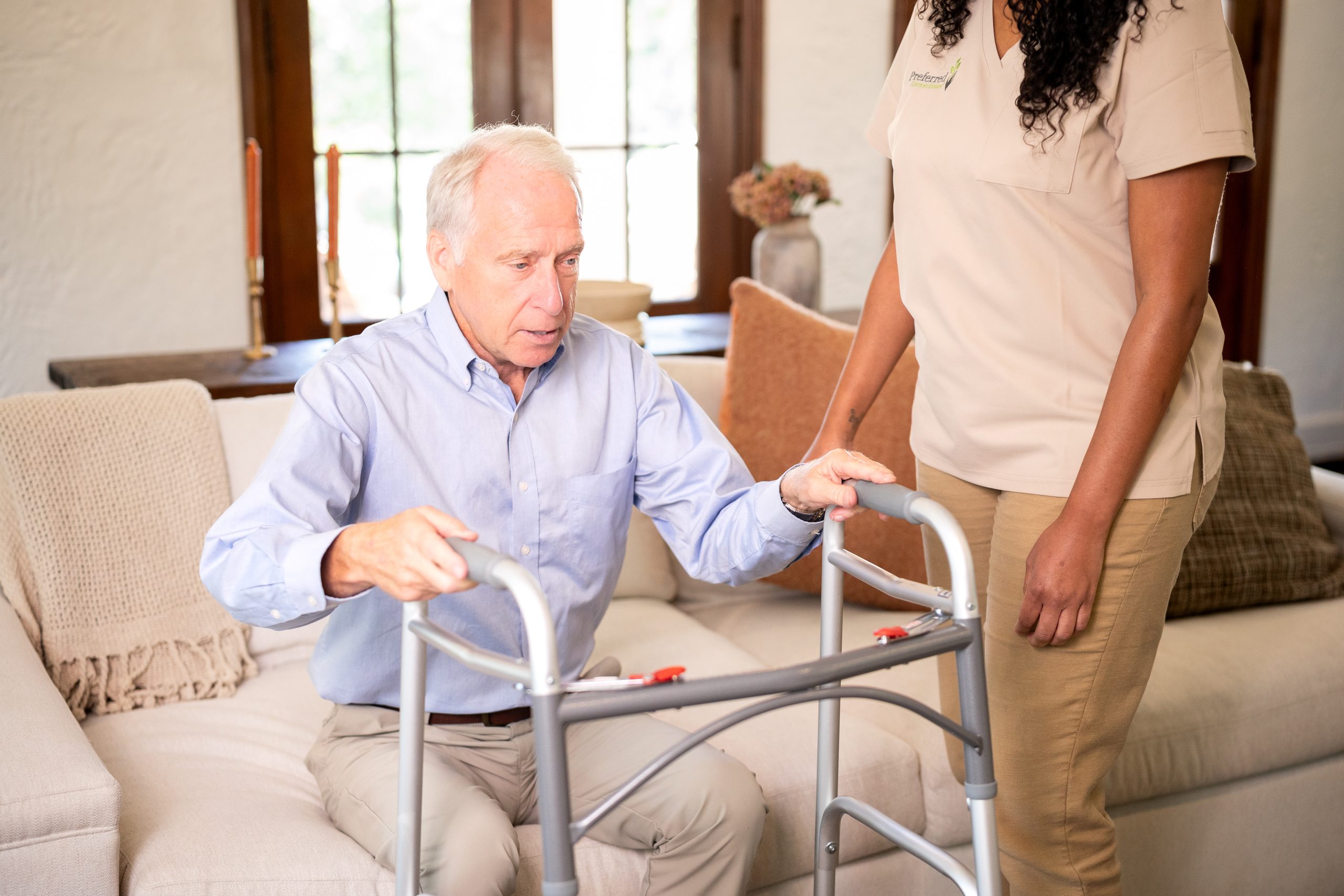
Family Presence and Respite
Family members at the bedside of a dying loved one need rest, food, and time away — even in these final days. A caregiver managing personal care and household tasks while family is present means the family’s energy is spent in presence and conversation, not caregiving logistics.
When family members need to sleep or return home briefly, the caregiver ensures the client is never alone and that any changes are communicated immediately. This backup presence allows family to rest without fear of missing a critical moment.
Why Choose This Service:
- Family freed from personal care tasks
- Overnight coverage available when family needs rest
- Immediate contact when condition changes
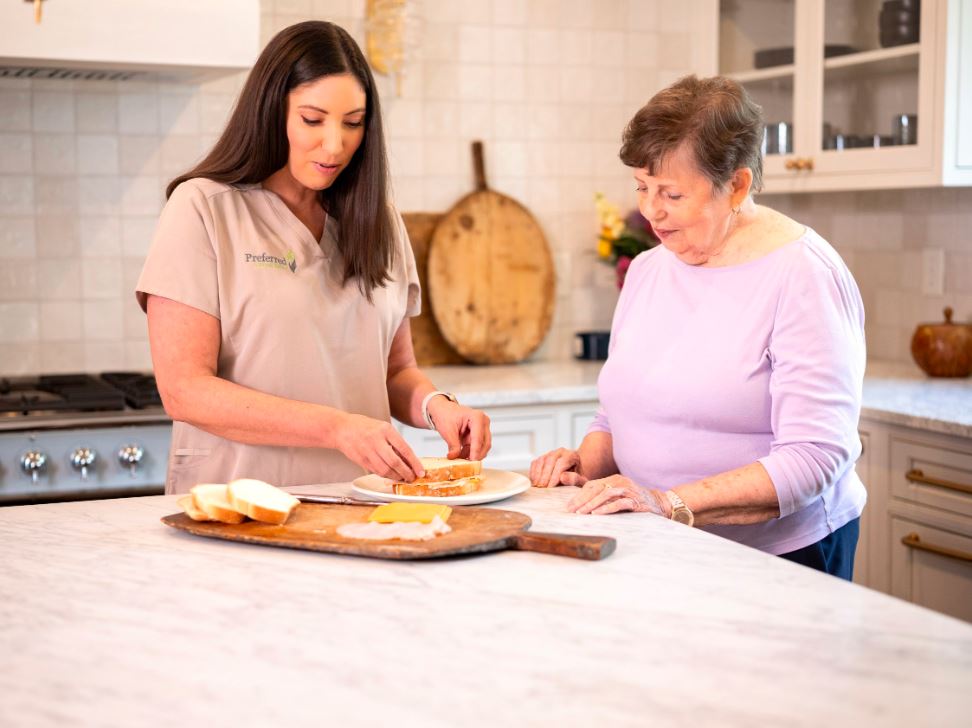
Nutrition and Hydration Comfort Care
As the end of life approaches, appetite naturally diminishes. Caregivers offer food and fluids gently, following hospice guidance on when nutritional intervention helps versus when honoring the body’s process is more appropriate. Oral care replaces meal preparation as the primary nutrition task in the final stage.
Small comfort foods, favorite beverages, ice chips, and moisture swabs become the primary nutrition tools. Caregivers follow the hospice team’s specific guidance and document everything that is offered, accepted, and declined.
Why Choose This Service:
- Food and hydration offered per hospice guidance
- Oral care and moisture comfort at advanced stage
- Documentation of intake for hospice review

Household Management During a Difficult Time
Dishes, laundry, grocery runs, and household organization do not stop during end-of-life care. Caregivers handle these tasks so family members visiting from out of town arrive at a functional, clean home and can give their full attention to their loved one.
This practical support layer is invisible when done well. Families in Johnson City and Kingsport consistently describe caregiver household support as one of the most meaningful services during the final weeks — small acts that removed enormous stress.
Why Choose This Service:
- Household tasks handled without family involvement
- Clean, organized environment for visiting family
- Grocery and pharmacy runs included

Bereavement Support and Transition
After a death, families face a sudden transition from active caregiving to grief. Preferred Care at Home coordinators provide information about bereavement resources in the Tri-Cities area and connect families with grief support services when requested.
For families who have been receiving long-term care, the caregiver has become a known and trusted presence. We support a dignified transition and give families the information they need to access grief support through local providers and community resources.
Why Choose This Service:
- Bereavement resource referrals provided
- Dignified end of care relationship
- Connection to grief support in Northeast Tennessee
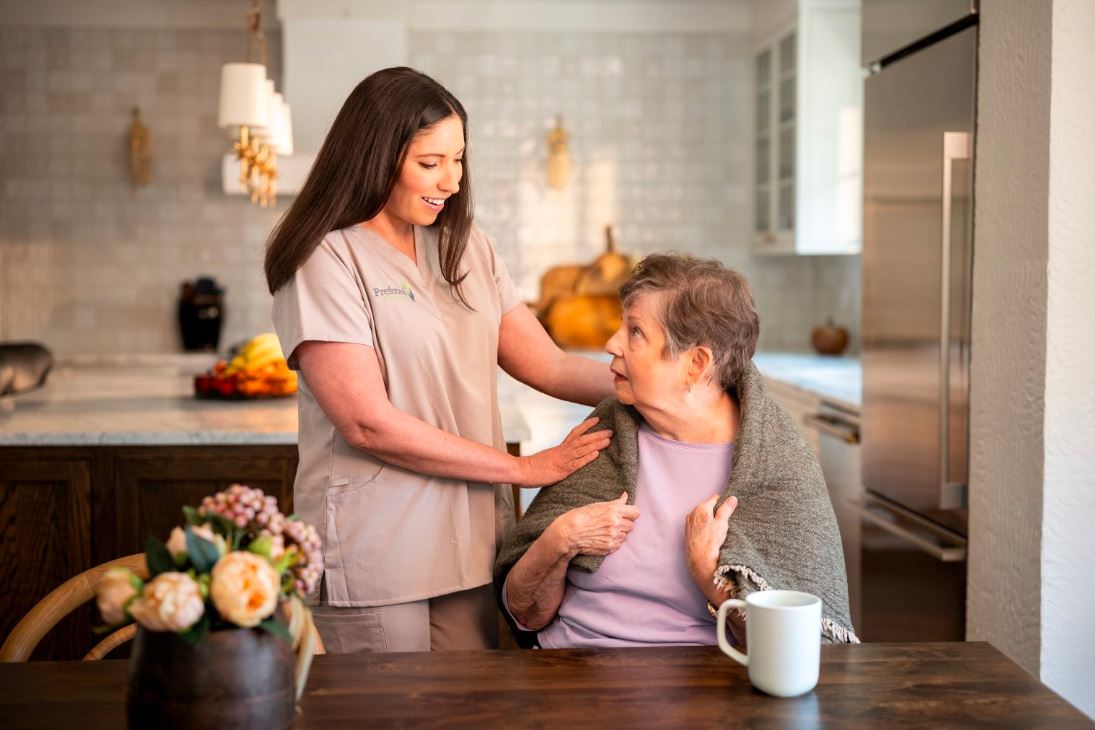
How End-of-Life Care Gets Started in Tri-Cities

Step 01
Care Goals Conversation
We begin with a conversation about care goals — what matters most, what the family needs, and how personal care fits alongside hospice services. There is no intake form that captures this; it requires a human conversation.

Step 02
Coordinated Care Plan
A care plan is built in coordination with the hospice team to ensure personal care and clinical support work together without overlap or conflict. The family approves every element.

Step 03
Compassionate Caregiver Introduction
We introduce a caregiver with end-of-life experience. Some families prefer a brief meeting before the first shift; others want care to start immediately. We follow the family’s lead.

Step 04
Daily Care With Close Communication
Visit notes, condition observations, and any changes are communicated to family and hospice in real time. The caregiver is not passive — they are an active observer and communicator.

Step 05
Family Support Through the Final Stage
As the final stage approaches, we increase availability — more hours, overnight coverage, continuous presence if needed — so the family is never managing this period without support.
When to Start Planning End-of-Life Care at Home
These are the situations that bring Tri-Cities families to us for end-of-life support planning.
Challenge
What It Looks Like
How We Help
Hospice recently enrolled
What It Looks Like
Hospice covers clinical care but not the daily personal care and household support that families need.
How We Help
We fill the non-clinical gap alongside the hospice team from the day of enrollment.
Family cannot provide daily personal care
What It Looks Like
Description
Adult children are working or living out of state and cannot be present for daily care tasks.
How We Help
Our caregiver handles daily personal care so family visits are spent in presence.
Primary caregiver is exhausted
What It Looks Like
Description
A spouse who has been the primary caregiver is physically and emotionally depleted.
How We Help
We provide respite and take over primary personal care, protecting the caregiver’s own health.
Comfort declining at home without support
What It Looks Like
Description
Hygiene, nutrition, and positioning are being managed inconsistently, affecting comfort.
How We Help
Daily caregiver visits restore consistency and communicate comfort observations to the hospice team.
Family member wants to die at home
What It Looks Like
Description
The wish to die at home is expressed, but the family is unsure if they can make it possible.
How We Help
In most cases, we can support home death with the right care plan and hospice partnership.
Visiting family members need household support
What It Looks Like
Description
Family members arriving from out of town are managing household logistics instead of spending time with their loved one.
How We Help
We take over all household management so visiting family focuses on what matters most.
Local Companion Care in the Tri-Cities Area
Celebrating life, dignity and independence.®
Our Johnson City office serves families across the Tri-Cities region and surrounding Northeast Tennessee communities. We focus on helping seniors and older adults live independent lives in their own homes, close to the people and places they know.
We understand TennCare CHOICES, VA Aid and Attendance, and ECF CHOICES funding pathways. Ask about the wide range of non-medical services available 1 to 24 hours per day, and about qualified live-in caregivers who can provide 24-hour peace of mind for you or your loved one.
We Serve:
- Johnson City
- Kingsport
- Bristol
- Jonesborough
- Elizabethton
- Bluff City
- Blountville
- Mountain City
- Erwin
- Unicoi
- Greeneville
- Limestone
- Morristown
- Piney Flats
- Gray
Frequently Asked Questions About End-of-Life Care in Tri-Cities
What is the difference between end-of-life care and hospice?
Hospice is a medical program providing clinical care — nursing, physician visits, medications, and chaplaincy — for individuals with a terminal diagnosis and a prognosis of six months or less. End-of-life personal care from Preferred Care at Home is non-medical support: hygiene, household management, companionship, and family respite. The two services work together, not in competition.
Can Preferred Care at Home work alongside our hospice provider?
Yes. We coordinate with all hospice agencies operating in the Tri-Cities region. Our caregivers and the hospice clinical team work from shared care goals, and we communicate directly with the hospice nurse when we observe changes that require clinical assessment.
Is it possible for someone to die at home with this type of support?
Yes. Most clients who receive end-of-life personal care at home with hospice support are able to remain at home throughout the final stage. Our caregiver presence eliminates the gaps that make home death impractical without support.
What does the CAHPS Hospice Survey measure?
The CAHPS Hospice Survey measures family satisfaction with end-of-life care coordination, communication, and emotional support. It is administered by CMS and available at cms.gov. Preferred Care at Home’s coordination standards are designed to support positive outcomes in all survey domains.
How are end-of-life care and comfort-focused care different from regular personal care?
The tasks are similar — hygiene, positioning, meals, and observation — but the pace, communication, and emotional attunement are different. End-of-life caregivers are trained to recognize comfort signals, communicate with compassion, and understand the priorities that shift as the final stage approaches.
Can family members still be involved in care?
Absolutely. End-of-life care is a family experience, not a handoff. Our caregiver handles the personal care logistics so family members can be fully present without being burdened by the physical demands of caregiving.
What happens after a death?
Following a death, our coordinator contacts the family to provide bereavement resource information and ensure the family knows how to access grief support services in the Tri-Cities area. The care relationship concludes with dignity and clarity.
Can care start very quickly for someone nearing the end of life?
Yes. We treat end-of-life referrals as urgent. In most cases care can begin within 24 hours. Contact our Tri-Cities office at (865) 692-4000 for an immediate response.
Do you provide overnight coverage for end-of-life care?
Yes. As the final stage approaches, overnight coverage is often needed. We can provide live-in care, extended shifts, or 24-hour shift coverage depending on what the family needs and what the care plan requires.
Is end-of-life personal care covered by insurance?
Long-term care insurance, Veterans Aid and Attendance benefits (through Quillen VA), and private pay are the most common funding sources. Some states offer Medicaid waiver funding for personal care during the end-of-life period. Our coordinators can help identify applicable options.

Preferred Care at Home of Tri-Cities
2726 E Oakland Ave Suite 101
Johnson City, TN 37601
(865) 692-4000
Tennessee PSSA License #L000000038642
Services may vary depending on the licensing of each Preferred Care at Home Franchise location. Each location is individually owned and responsible for controlling and managing day-to-day business operations.