
Transition Care After Hospitalization in Tri-Cities, TN
The 30 days after discharge from Ballad Health, Holston Valley, or Quillen VA carry the highest risk of readmission. Preferred Care at Home transition care bridges the gap between hospital-level supervision and independent living — keeping seniors in Johnson City, Kingsport, and Bristol safe at home while recovery progresses.
- Experienced and trained caregivers, including CNA/HHA professionals
- Bilingual support in English and Spanish
- Flexible schedules from one to twenty-four hours
- Experienced and trained caregivers, including CNA/HHA professionals
- Bilingual support in English and Spanish
- Flexible schedules from one to twenty-four hours
- Trusted by families across Carter, Sullivan & Washington counties

Why Post-Hospital Transition Care Matters in Northeast Tennessee
Hospital readmission rates for seniors are a national quality crisis. Discharge without adequate home support is the leading cause. Preferred Care at Home addresses this gap with structured, supervised care that starts within 24 hours of discharge and adapts as recovery progresses.
Our Transition Care Services in Tri-Cities
Transition care addresses the specific vulnerabilities of the post-hospital period — medication compliance, wound care support, mobility assistance, nutrition, and fall prevention — during the critical window when most readmissions occur.
Post-Hospital Daily Monitoring
The first two weeks after discharge are highest-risk. Daily caregiver visits provide a trained observer who notices signs of deterioration — increased pain, swelling, fever, confusion, reduced urine output — before they become emergencies.
Caregivers document observations on every visit and route alerts to family members and care coordinators immediately. This early-warning function has prevented hospitalizations for clients across Carter, Sullivan, and Washington counties.
Why Choose This Service:
- Daily health observation during recovery window
- Early deterioration detection and family alert
- Communication with treating physicians and care team

Medication Compliance Support
Discharge medication regimens are frequently complex — multiple new prescriptions on changed schedules, with dosing instructions patients did not fully retain during the discharge conversation. Medication errors within the first two weeks of discharge drive a significant portion of readmissions.
Caregivers provide scheduled reminders for every dose, observe compliance, and flag any concerns about new side effects, interactions, or missed refills to family and the medical team. They do not administer medications but ensure the senior does not manage the new regimen alone.
Why Choose This Service:
- Scheduled reminders for all discharge medications
- Side effect and compliance observation
- Refill coordination flagged to family
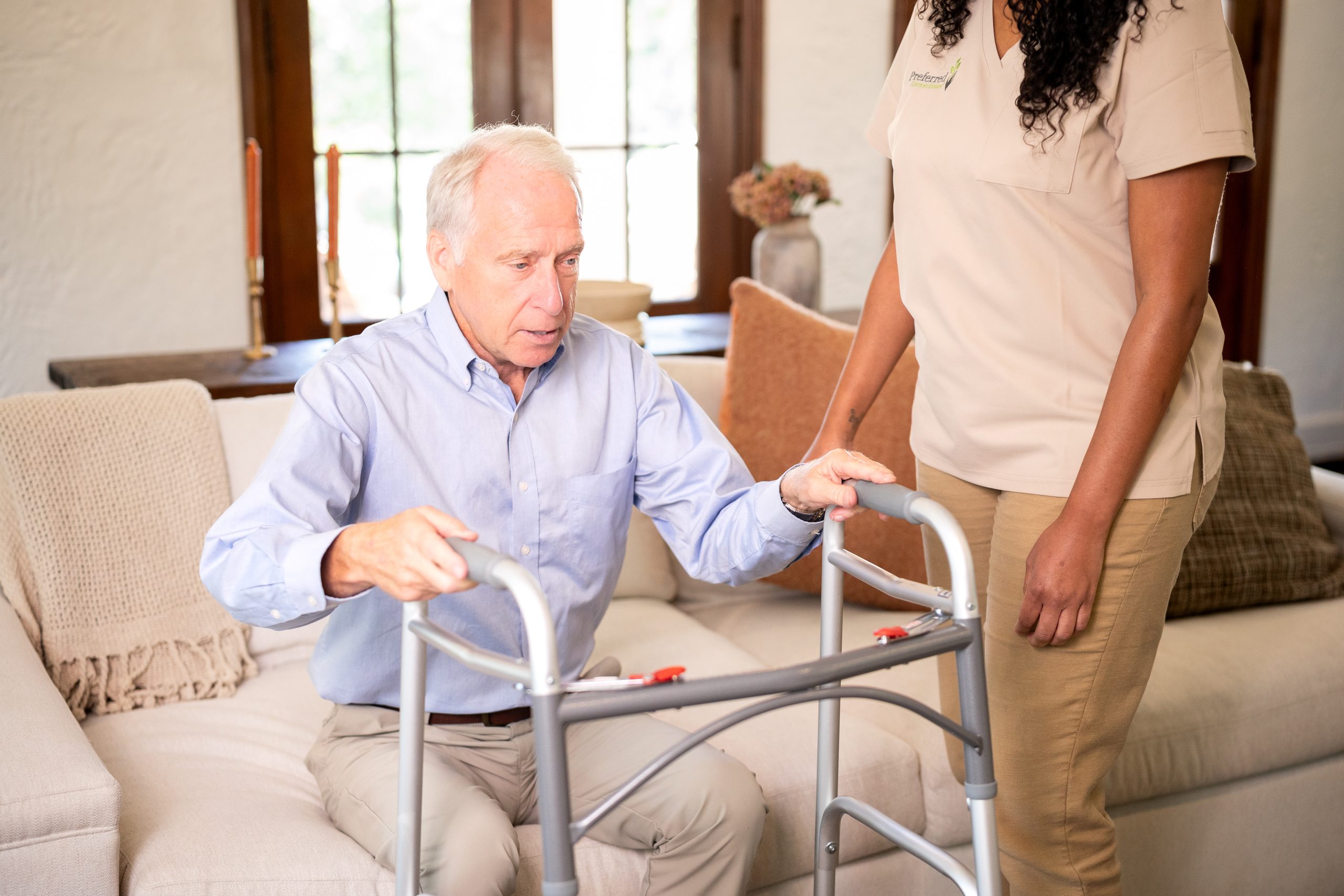
Mobility Assistance and Fall Prevention
Post-surgical weakness, medication side effects, and pain-avoidance behaviors dramatically increase fall risk during the recovery period. A caregiver present for morning routines, bathroom transfers, and mobility exercises prevents the fall that would send the senior back to the hospital.
Home safety assessments identify temporary hazards — furniture rearranged for equipment access, new throw rugs, clutter from medical supply delivery — and either remove them directly or escalate to the coordinator and family.
Why Choose This Service:
- Supervision during highest-risk mobility moments
- Temporary home hazard assessment and removal
- Support during prescribed mobility exercises
Wound Care and Dressing Support
Non-medical wound care support — keeping dressings clean and dry, observing for infection signs, ensuring the senior does not disturb surgical sites — is within the scope of personal care and prevents the wound infections that account for a significant portion of readmissions.
When wound assessment or clinical dressing changes are required, the caregiver coordinates scheduling with the home health nurse and ensures the client is positioned and prepared for the visit. The two care teams operate in parallel without overlap.
Why Choose This Service:
- Wound site observation and family reporting
- Coordination with home health nursing visits
- Dressing support per nurse instructions

Nutrition and Hydration Monitoring
Appetite suppression is common during recovery — pain, medication side effects, and fatigue all reduce the desire to eat. Dehydration and malnutrition compound recovery difficulty and are primary drivers of post-surgical readmission in elderly patients.
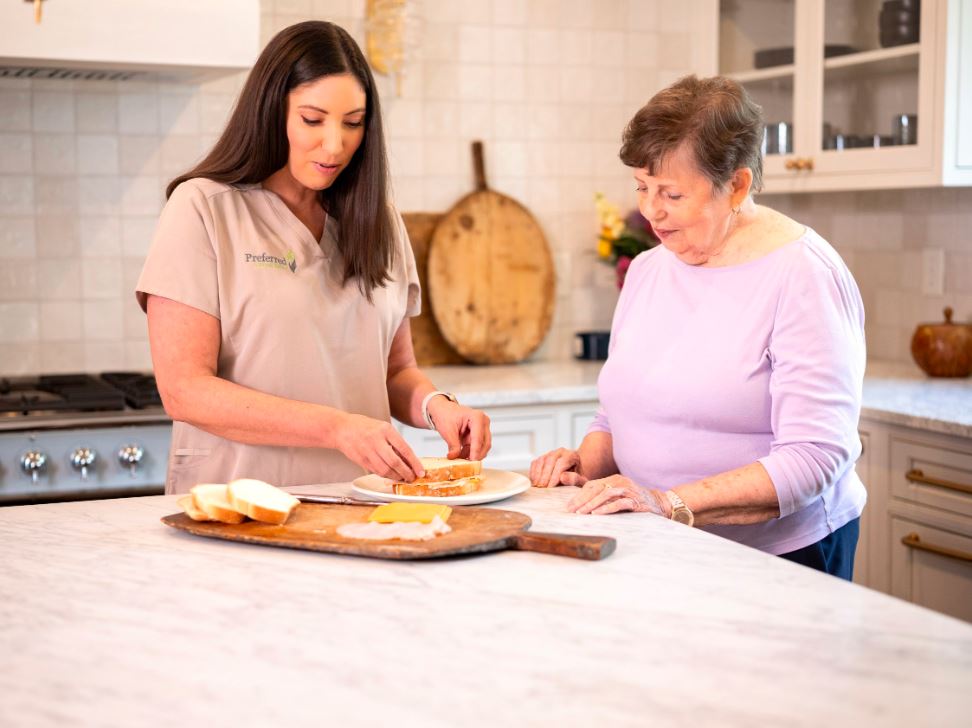
Caregivers prepare recovery-appropriate meals, encourage hydration throughout the day, and track nutritional intake for reporting to family. For clients with post-procedure dietary restrictions, caregivers strictly follow prescribed guidelines.
Why Choose This Service:
- Recovery-appropriate meal preparation three times daily
- Hydration monitoring and encouragement
- Nutritional intake reporting to family and team

Transportation and Follow-Up Coordination
Missing the follow-up appointment at Ballad Health or Quillen VA is one of the most reliable predictors of readmission. Caregivers provide transportation to all scheduled follow-ups, accompany clients inside, and relay clinical instructions clearly back to family.
For seniors without nearby family, the caregiver is the only adult who attends the follow-up visit, asks questions, and captures post-appointment instructions. This role is critical in rural Northeast Tennessee, where the nearest family member may be hours away.
Why Choose This Service:
- Transportation to all post-discharge follow-ups
- In-clinic accompaniment and question support
- Discharge instruction relay to family
How Transition Care Gets Started After Discharge

Step 01
Hospital Discharge Coordination
Contact us before discharge from Ballad Health, Holston Valley, or Quillen VA. We coordinate with the discharge team to understand care instructions, equipment delivery, and home readiness.

Step 02
Transition Care Plan Created
A care plan is built from the discharge paperwork — medications, activity restrictions, wound care, follow-up schedule, and monitoring alerts. The plan is ready before the senior arrives home.

Step 03
Caregiver Present at Discharge
When possible, a caregiver meets the client at the hospital and accompanies them home. This eliminates the unsupervised window between discharge and the first home visit.

Step 04
Daily Visits During Critical Window
The first two weeks include daily or twice-daily visits at minimum. Observation notes are shared with family and routed to the medical team when clinical concerns arise.

Step 05
Care Tapers as Recovery Progresses
As the senior stabilizes, visit frequency is reduced and care shifts toward longer-term support needs. Some clients continue with personal care or companion care after the transition period ends.
Signs That Transition Care Is Needed After Discharge
These are the situations Tri-Cities families encounter when discharge happens without adequate home support in place.
Challenge
What It Looks Like
How We Help
Discharge planned without home support
What It Looks Like
Discharge planner recommends home care but no arrangement has been made.
How We Help
We can begin care within 24 hours of referral from the hospital team.
Previous readmission within 30 days
What It Looks Like
Description
The senior has been readmitted once or more in the past year after going home without support.
How We Help
Structured transition care addresses the specific compliance and monitoring gaps that led to readmission.
Family caregiver not available locally
What It Looks Like
Description
Adult children live outside the Tri-Cities region and cannot provide post-discharge supervision.
How We Help
Our caregiver serves as the on-the-ground daily observer and communicates directly with out-of-state family.
Complex discharge medication regimen
What It Looks Like
Description
Multiple new medications on changed schedules that the senior cannot reliably manage alone.
How We Help
Daily medication reminders and compliance monitoring prevent the errors that cause readmission.
Mobility significantly limited post-procedure
What It Looks Like
Description
Surgery has left the senior at high fall risk during the recovery window.
How We Help
Caregivers supervise every high-risk mobility moment and conduct daily home safety checks.
Follow-up appointments not attended
What It Looks Like
Description
The senior has no transportation to required post-discharge appointments.
How We Help
We provide transportation, in-clinic accompaniment, and instruction relay to the family.
Local Companion Care in the Tri-Cities Area
Celebrating life, dignity and independence.®
Our Johnson City office serves families across the Tri-Cities region and surrounding Northeast Tennessee communities. We focus on helping seniors and older adults live independent lives in their own homes, close to the people and places they know.
We understand TennCare CHOICES, VA Aid and Attendance, and ECF CHOICES funding pathways. Ask about the wide range of non-medical services available 1 to 24 hours per day, and about qualified live-in caregivers who can provide 24-hour peace of mind for you or your loved one.
We Serve:
- Johnson City
- Kingsport
- Bristol
- Jonesborough
- Elizabethton
- Bluff City
- Blountville
- Mountain City
- Erwin
- Unicoi
- Greeneville
- Limestone
- Morristown
- Piney Flats
- Gray
Frequently Asked Questions About Transition Care in Tri-Cities
How quickly can transition care start after hospital discharge?
We can typically begin care within 24 hours of discharge notification. If discharge is planned in advance, we coordinate with the hospital team before the senior leaves so a caregiver is ready when they arrive home.
Does Preferred Care at Home work with Ballad Health discharge planners?
Yes. We coordinate with discharge planners at Ballad Health facilities including Johnson City Medical Center and Holston Valley Medical Center, as well as Quillen VA. We can be contacted directly by the discharge team.
How is transition care different from home health?
Home health is skilled medical care — nursing, physical therapy, occupational therapy — ordered by a physician and typically covered by Medicare. Transition care from Preferred Care at Home is non-medical personal care support that fills the gap between skilled visits and manages daily living needs throughout the recovery period.
Can transition care work alongside home health services?
Yes. Home health and non-medical transition care often operate simultaneously. Home health handles clinical tasks like wound care and therapy. We handle daily personal care, medication reminders, meals, and monitoring. The two teams are coordinated by the care plan.
How long does transition care typically last?
Most transition care plans run two to four weeks — the critical post-discharge window. After stabilization, some clients transition to ongoing personal care or companion care, while others return to fully independent living with no further support.
Is transition care covered by Medicare?
Non-medical personal care is not covered by Medicare. Skilled home health authorized by Medicare covers clinical services. Long-term care insurance, private pay, and some supplemental plans may cover personal care. Our coordinators can help identify funding options.
What conditions do you commonly support during transition care?
Joint replacement, cardiac events, stroke recovery, COPD exacerbation, fall-related fractures, and post-surgical recovery are the most common. We also support seniors recovering from pneumonia and other illness-related hospitalizations.
Can a caregiver be present when the senior arrives home from the hospital?
Yes. When discharge timing is known in advance, we can have a caregiver present at the hospital for discharge and accompany the senior home. This eliminates the unsupervised gap between discharge and the first home visit.
How do you communicate with family during transition care?
Caregivers document observations on every visit and route significant findings to family immediately. Our coordinators provide regular updates and can escalate clinical concerns to the medical team when warranted.
Do you serve rural areas of Northeast Tennessee for transition care?
Yes. We serve all communities in the Tri-Cities service area including Elizabethton, Erwin, Mountain City, Jonesborough, Piney Flats, and other rural communities across Carter, Sullivan, Washington, Unicoi, and Johnson counties.

Preferred Care at Home of Tri-Cities
2726 E Oakland Ave Suite 101
Johnson City, TN 37601
(865) 692-4000
Tennessee PSSA License #L000000038642
Services may vary depending on the licensing of each Preferred Care at Home Franchise location. Each location is individually owned and responsible for controlling and managing day-to-day business operations.