
Personal In-Home Care for Tri-Cities, TN Seniors
Bathing, dressing, grooming, and moving safely through the day become harder as the body ages — and hiring a stranger to help can feel invasing. Preferred Care at Home matches caregivers in Johnson City, Kingsport, and Bristol by personality and skill, so personal care feels like help from someone who already knows your family.
- Experienced and trained caregivers, including CNA/HHA professionals
- Bilingual support in English and Spanish
- Flexible schedules from one to twenty-four hours
- Experienced and trained caregivers, including CNA/HHA professionals
- Bilingual support in English and Spanish
- Flexible schedules from one to twenty-four hours
- Trusted by families across Carter, Sullivan & Washington counties

Why Families in Northeast Tennessee Choose Our Personal Care
Families across Carter, Sullivan, Washington, Unicoi, and Johnson counties trust Preferred Care at Home because every caregiver is agency-hired, background-checked, and supervised. Care plans adapt as needs change, and family members receive real-time updates so they stay informed even when living hours away.
Our Personal Care Services in Tri-Cities
Every personal care plan is built around the individual. Services range from daily hygiene assistance to mobility support and medication reminders, delivered by trained caregivers who treat clients with dignity and respect.
Bathing and Personal Hygiene Assistance
Safe bathing is one of the most requested services in Tri-Cities homes. A caregiver provides hands-on support for showering, sponge baths, oral hygiene, and hair care — always maintaining the client’s dignity and privacy throughout.
For clients recovering from surgery at Ballad Health or managing chronic conditions, consistent hygiene routines reduce infection risk and support healing. Caregivers adjust techniques for grab-bar availability, mobility limitations, and skin sensitivity.
Why Choose This Service:
- Shower, tub, and sponge bath support
- Oral care and hair grooming included
- Dignity-centered approach every visit

Dressing and Grooming Support
Picking out clothes, fastening buttons, and managing footwear can become daily frustrations for seniors with arthritis, Parkinson’s tremors, or reduced grip strength. A caregiver handles these tasks efficiently without rushing or making the client feel dependent.
Grooming goes beyond clothing — nail care, shaving, and skin moisturizing are included. Looking and feeling presentable improves mood and self-esteem, which research consistently links to better health outcomes in aging adults.
Why Choose This Service:
- Clothing selection and dressing assistance
- Shaving, nail care, and skincare routines
- Builds confidence and daily routine

Mobility Assistance and Fall Prevention
Fall-related hospitalizations are the leading cause of injury in Johnson City and Kingsport seniors. Caregivers trained in safe transfer techniques support movement between bed, chair, vehicle, and bathroom — the four highest-risk transitions at home.
Beyond transfers, caregivers identify and report hazards: loose rugs, poor lighting, unsecured bathroom accessories. A consistent caregiver knows the home environment and builds safe movement habits into every visit.
Why Choose This Service:
- Safe transfer and ambulation support
- Fall hazard identification and reporting
- Coordination with physical therapist goals
Toileting and Incontinence Care
Toileting assistance is among the most private and sensitive forms of personal care. Preferred Care at Home caregivers are trained to handle these needs matter-of-factly and respectfully, preserving the client’s dignity at all times.
For clients using briefs or catheters, caregivers manage incontinence products, monitor for skin breakdown, and communicate changes to family or clinical staff. Consistent care prevents urinary tract infections and pressure sores that lead to avoidable hospitalizations.
Why Choose This Service:
- Respectful, dignity-centered approach
- Incontinence product management
- Skin integrity monitoring and reporting

Medication Reminders and Health Monitoring
Missed doses and double doses are common when seniors manage complex medication schedules alone. Caregivers provide timely reminders, observe that medications are taken, and flag any concerns — without administering or managing medications, which is a clinical function.
Vital sign monitoring, weight tracking, and noting changes in mood, appetite, or behavior complete the picture. This observational layer catches declining health early and routes information to family caregivers and medical teams in the Tri-Cities region.
Why Choose This Service:
- Timely medication reminders every dose
- Observation and family reporting built in
- Early detection of health changes

Meal Preparation and Nutritional Support
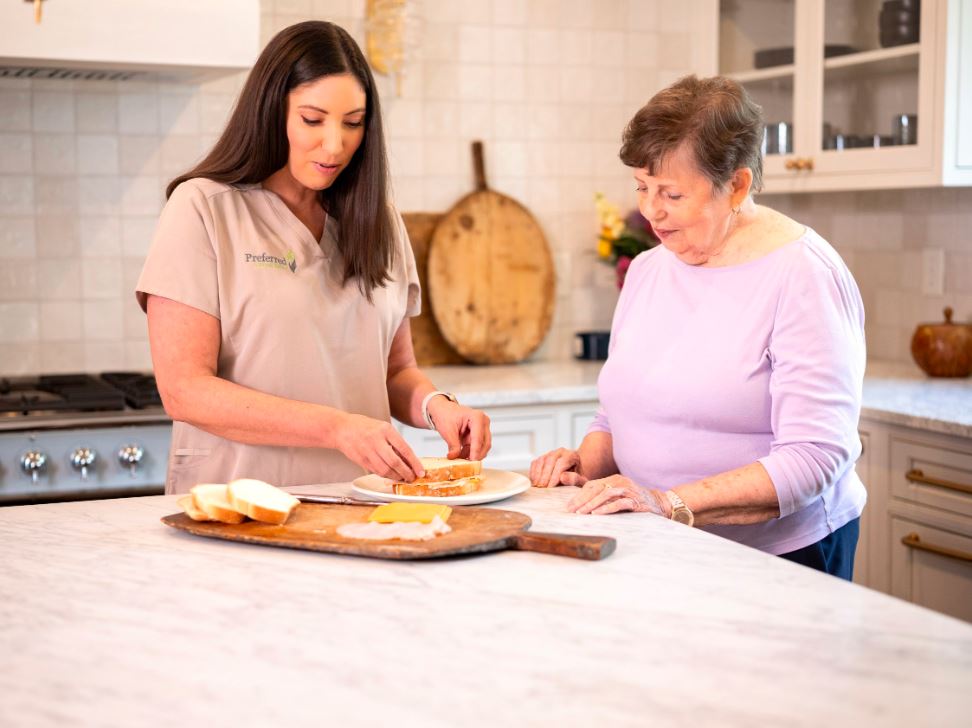
Cooking becomes unsafe or impractical for seniors managing cognitive decline, limited mobility, or low stamina. A caregiver prepares nutritious meals aligned with dietary restrictions — diabetic-friendly, low-sodium, soft-texture — using ingredients already in the kitchen.
Eating well reduces hospital readmission rates and supports recovery from procedures at Quillen VA and Johnson City Medical Center. Caregivers sit with clients during meals when requested, turning mealtime into a social connection rather than a solitary necessity.
Why Choose This Service:
- Diet-specific meal preparation
- Grocery list coordination with family
- Companionship during mealtimes
How Personal Care Starts in the Tri-Cities

Step 01
Free In-Home Assessment
A Preferred Care at Home coordinator visits the home in Johnson City, Kingsport, Bristol, or surrounding areas. We evaluate the environment, discuss daily needs, and identify safety considerations before any care begins.

Step 02
Custom Care Plan Created
Your coordinator builds a written care plan covering every personal care task, visit schedule, caregiver preferences, and communication expectations. The plan is shared with the family and updated when needs change.

Step 03
Caregiver Match and Introduction
We select a caregiver based on skill set, availability, and compatibility with the client. Before care begins, we introduce the match and verify comfort on both sides.

Step 04
Care Begins on Schedule
Visits start on the agreed schedule. The caregiver follows the written care plan, maintains visit logs, and communicates any changes through our family update system.

Step 05
Ongoing Supervision and Plan Updates
Our office supervises all caregivers and conducts quality check-ins. As your loved one’s needs evolve — more hours, new tasks, clinical coordination — we adjust the plan with no added hassle.
Signs It Is Time to Consider Personal Care
Personal care needs often develop gradually. Families in the Tri-Cities region frequently notice these warning signals before reaching out.
Challenge
What It Looks Like
How We Help
Skipping showers or grooming
What It Looks Like
A senior who once valued cleanliness stops bathing regularly or wears the same clothes repeatedly.
How We Help
We provide scheduled hygiene assistance and make bathing feel routine and safe.
Increased fall risk at home
What It Looks Like
Description
Near-misses on stairs, in the bathroom, or during transfers raise family alarm levels.
How We Help
Caregivers provide mobility support and identify hazards during every visit.
Meals skipped or irregular
What It Looks Like
Description
Weight loss, expired food in the fridge, or an empty pantry indicate nutritional neglect.
How We Help
We prepare fresh, appropriate meals and track nutritional intake.
Medication errors increasing
What It Looks Like
Description
Pill organizers left untouched, double doses, or missed refills signal an unsafe situation.
How We Help
Timely medication reminders ensure consistent adherence every day.
Family caregiver exhaustion
What It Looks Like
Description
Adult children in Johnson City or working remotely are burning out managing daily care tasks.
How We Help
We step in for regular or respite visits, restoring balance for the whole family.
Medical team recommending home care
What It Looks Like
Description
Discharge planners at Ballad Health or Quillen VA recommend structured home support.
How We Help
We coordinate with clinical teams and start care within 24 to 48 hours of referral.
Local Companion Care in the Tri-Cities Area
Celebrating life, dignity and independence.®
Our Johnson City office serves families across the Tri-Cities region and surrounding Northeast Tennessee communities. We focus on helping seniors and older adults live independent lives in their own homes, close to the people and places they know.
We understand TennCare CHOICES, VA Aid and Attendance, and ECF CHOICES funding pathways. Ask about the wide range of non-medical services available 1 to 24 hours per day, and about qualified live-in caregivers who can provide 24-hour peace of mind for you or your loved one.
We Serve:
- Johnson City
- Kingsport
- Bristol
- Jonesborough
- Elizabethton
- Bluff City
- Blountville
- Mountain City
- Erwin
- Unicoi
- Greeneville
- Limestone
- Morristown
- Piney Flats
- Gray
Frequently Asked Questions About Personal Care in Tri-Cities
What is the difference between personal care and companion care?
Personal care includes hands-on assistance with bathing, dressing, mobility, toileting, and grooming. Companion care focuses on social engagement, errands, and light household tasks. Many clients receive both through a combined care plan.
Do I need a doctor's referral for personal care services?
No referral is required for non-medical personal care from Preferred Care at Home. You can contact us directly to schedule a free in-home assessment. If your care plan requires medical coordination, we work with your existing providers.
How quickly can personal care start in Johnson City or Kingsport?
In most cases we can begin care within 24 to 48 hours of the initial assessment. For urgent needs following hospital discharge or a care crisis, we can often arrange same-day visits.
Can caregivers administer medications?
Our caregivers provide medication reminders and observe that medications are taken, but they do not administer or manage prescriptions. For medication administration, a licensed home health agency providing skilled nursing would be appropriate.
Is personal care covered by Medicare or TennCare?
Medicare typically covers skilled nursing and therapy services but not ongoing personal care. TennCare CHOICES, administered through the First Tennessee Area Agency on Aging and Disability, may fund personal care for eligible seniors. Long-term care insurance and private pay are also common options.
What if I don't get along with my assigned caregiver?
Caregiver compatibility is important to us. If the initial match isn’t right, contact our office and we will arrange a replacement quickly. We take compatibility concerns seriously and never require a long waiting period to make a change.
Can personal care be combined with skilled nursing?
Yes. Preferred Care at Home handles the non-medical personal care layer, and we coordinate with home health agencies providing skilled nursing or physical therapy when both types of care are part of the plan.
Are your caregivers employees or independent contractors?
All caregivers are Preferred Care at Home employees — not independent contractors. We handle background screening, training, supervision, taxes, and workers’ compensation. This protects your family from liability and ensures accountability.
What areas in the Tri-Cities region do you serve for personal care?
We serve Johnson City, Kingsport, Bristol, Jonesborough, Elizabethton, Bluff City, Blountville, Mountain City, Erwin, Unicoi, Greeneville, Limestone, Morristown, and Piney Flats across Carter, Sullivan, Washington, Unicoi, and Johnson counties.
How do family members stay updated on care?
We provide real-time family updates through our communication system. Caregivers log visit notes, and your coordinator contacts you when anything significant changes. Family members living outside the Tri-Cities region can stay fully informed without being present.

Preferred Care at Home of Tri-Cities
2726 E Oakland Ave Suite 101
Johnson City, TN 37601
(865) 692-4000
Tennessee PSSA License #L000000038642
Services may vary depending on the licensing of each Preferred Care at Home Franchise location. Each location is individually owned and responsible for controlling and managing day-to-day business operations.