
Dependable Companion Care for Tri-Cities Seniors
Preferred Care at Home matches a caregiver by personality — not by availability — for elderly parents across Johnson City, Kingsport, Bristol, and 11 more Northeast Tennessee communities. Care can start at a few hours a week and scale to 24 hours. Serving Carter, Sullivan, Washington, Unicoi, and Johnson counties. Tennessee PSSA License #L000000038642.
- Experienced and trained caregivers, including CNA/HHA professionals
- Bilingual support in English and Spanish
- Flexible schedules from one to twenty-four hours
- Experienced and trained caregivers, including CNA/HHA professionals
- Bilingual support in English and Spanish
- Flexible schedules from one to twenty-four hours
- Trusted by families across Carter, Sullivan & Washington counties

Why Choose Us for Companion Care in Tri-Cities?
Preferred Care at Home was founded in 1984 by registered nurses Lois Whitesell and Jody Guerrieri. The Tri-Cities office at 2726 E Oakland Ave in Johnson City is owned and operated by Ryan Siddons and David Vick, who also lead Preferred Care at Home of East Tennessee in Knoxville. The office serves Carter, Sullivan, Washington, Unicoi, and Johnson counties and covers rural communities that other agencies routinely decline.
Families monitor visits remotely through the Transparency Room portal, where notes, schedules, and caregiver updates appear in real time. Our care team understands TennCare CHOICES, ECF CHOICES, and VA Aid and Attendance pathways that other agencies in Northeast Tennessee do not emphasize. Every caregiver clears a 7-step screen before the first visit — including criminal background checks and abuse-registry verification. Tennessee PSSA License #L000000038642.
Our Companion Care Services in Tri-Cities
Companion care in Northeast Tennessee covers more ground than it does in flat-terrain metro areas. Ice storms in Carter and Johnson counties cut elderly people off for days. Rural distance in Mountain City, Erwin, and Unicoi means an elderly parent may go three or four days without seeing anyone. Our six companion care services address the specific isolation patterns families in this region face — from Ballad Health appointment coordination to storm-day check-ins and reading sessions built around lifelong interests.
Conversation and Social Engagement
For elderly parents in Johnson City or Erwin who used to walk to a neighbor’s porch and now go days without a real conversation, Companion Care rebuilds the daily contact that rural distance has erased. Caregivers are matched by personality and shared interests — so visits feel like a friend coming over, not a shift change. Preferred Care at Home asks about lifelong hobbies, conversation topics, and shared experiences before the first visit so the match is real, not routine.
Highlights:
- Visits from 1 to 24 hours daily
- Matched on shared interests
- Available 7 days a week

Accompanying to Appointments and Events
Rides to Ballad Health follow-ups, Quillen VA appointments, church, social outings, and grocery runs across Carter, Sullivan, and Washington counties become reliable when one person owns the transportation schedule. Door-through-door support means your loved one is not dropped off and left to navigate a medical building alone. The caregiver becomes the consistent presence who knows which doctor said what and which follow-up is coming next.
Highlights:
- Door-through-door support
- Notes shared with family
- Ballad Health coordination

Light Activity Participation
Gentle walks, puzzles, gardening, and front-porch time keep elderly Tri-Cities residents engaged without overwhelming them. Light housekeeping and meal preparation often happen during the same visits, so the caregiver handles multiple needs in one schedule. Preferred Care at Home builds activity plans around what your loved one already enjoys — if your mother liked baking, the caregiver brings ingredients. If your father liked sitting on the porch watching birds, the caregiver sits with him.
Highlights:
- Activities paced to ability
- Fall-aware support
- Indoor and outdoor options
Safety Reassurance and Check-Ins
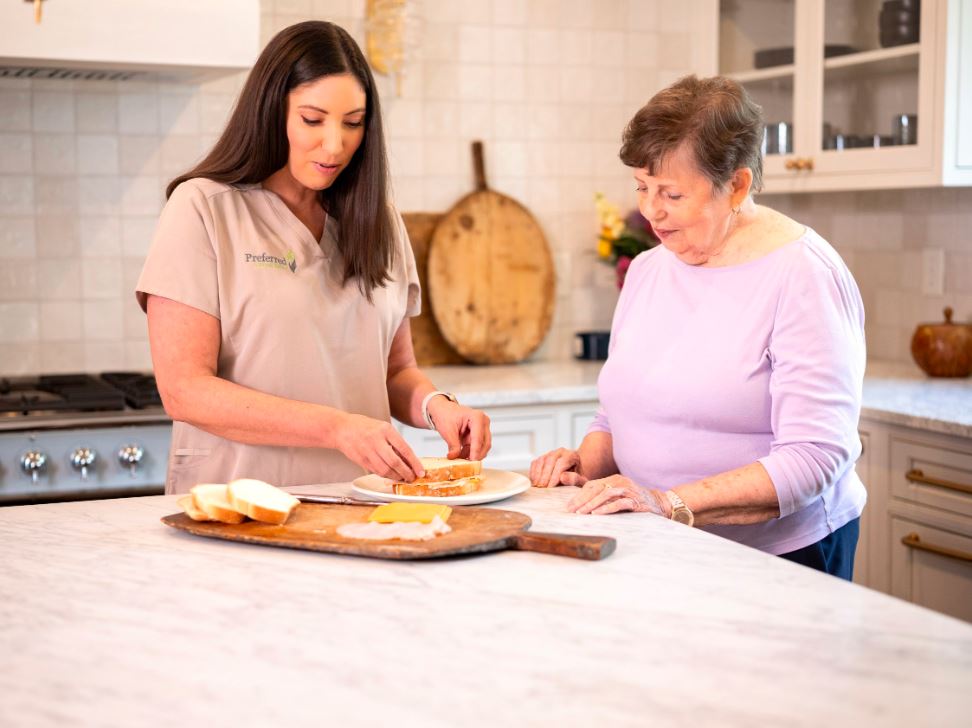
Daily presence catches what phone calls miss, especially during Appalachian Highlands ice storms and power outages when elderly people lose contact for days. A caregiver who shows up several times per week notices changes in routine, mobility, or mood that a weekend visit would not catch. Caregivers route updates to family through the Transparency Room, so adult children see what is happening in real time even when living hours away. Schedule a free consultation today.
Highlights:
- Daily safety observations
- Storm-day check-ins
- Real-time family updates

Reading and Entertainment
Reading aloud, music, hymns, and shared television for elderly people in Mountain City, Bristol, or rural Johnson County whose eyesight or focus has changed restore the entertainment routines that used to fill afternoons. Caregivers bring what your loved one already loves rather than imposing a script — if your mother listened to gospel music her whole life, the caregiver brings gospel playlists. Preferred Care at Home treats reading and entertainment as companionship delivery, not a checkbox on a task list.
Highlights:
- Books, music, and shared shows
- Built around lifelong interests
- Quiet companionship sessions

Emotional Support After Loss
For elderly parents in Northeast Tennessee living alone after losing a spouse, companion care provides steady, compassionate support and a non-clinical presence that addresses isolation before it becomes depression. If your loved one is receiving hospice care or grief counseling, the caregiver coordinates schedules and does not overlap. The goal is to fill the daily hours with human contact, a helping hand with light housekeeping and meal preparation, and the presence that makes aging in place possible after a major loss. TennCare CHOICES, VA Benefits, and LTCI all accepted.
Highlights:
- Steady weekly presence
- Routine and conversation
- Coordinated with hospice when needed
What To Expect: Our Companion Care Process

Step 01
You Call or Message Us
One conversation to share what is happening at home and what your loved one needs. Call (865) 692-4000 or reach Ryan and David’s team through our website.

Step 02
In-Home Assessment
A care coordinator visits to meet your loved one and map the rhythms of the day — daily routines, preferences, and the specific coverage gaps in the current schedule.

Step 03
We Build a Care Plan Together
Hours, routines, and priorities written down so everyone knows what to expect. Payment pathway confirmed at this stage — TennCare CHOICES, VA benefits, LTCI, or private pay.

Step 04
We Match a Caregiver
Personality and experience aligned to who your loved one is, not just availability. Every caregiver clears our 7-step screen — background check, abuse registry, and identity verification.

Step 05
Care Begins — Watch Through the Transparency Room
Visits, notes, and updates visible from anywhere — so adult children in Knoxville, Nashville, or out of state stay informed without constant check-in calls to their loved one.
Common Companion Care Challenges in Tri-Cities
Companion care in Northeast Tennessee runs into conditions that agencies in larger metros do not face. These are the six challenges we see most often across Johnson City, Kingsport, and the surrounding rural counties.
Challenge
What It Looks Like
How We Help
Challenge
What It Looks Like
Mountain weather isolates elderly homes. Ice storms and power outages in Carter and Johnson counties cut elderly people off for days, with neighbors too far to walk to.
How We Help
Caregivers prioritize storm-day check-ins and route around closed roads so visits keep happening when the weather turns dangerous across the Appalachian Highlands.
Challenge
What It Looks Like
Description
Rural distance thins daily contact. In Mountain City, Erwin, and Unicoi, an elderly parent may go three or four days without seeing anyone — compounding across all companionship needs.
How We Help
Caregivers schedule recurring weekly visits matched to your loved one’s pace and routines, so isolation doesn’t compound into depression before anyone notices.
Challenge
What It Looks Like
Description
Funding pathways are hard to navigate alone. Families assume they must private-pay, missing TennCare CHOICES or VA Aid and Attendance options that can cover companion and accompaniment hours.
How We Help
Our team walks families through TennCare CHOICES screening and VA benefit coordination at no cost, connecting them with the First Tennessee Area Agency on Aging and Disability for eligibility guidance.
Challenge
What It Looks Like
Description
Families think companion care is just visits. According to the CDC, social isolation is linked to higher risks of heart disease, stroke, depression, dementia, and earlier death — informal check-ins don’t cover meals, errands, or daily observation.
How We Help
Care plans build conversation, errands, light housekeeping, and safety reassurance into one schedule — so companion care addresses the full isolation pattern, not just the social component.
Challenge
What It Looks Like
Description
Waiting until needs escalate costs more. TennCare CHOICES Group 3 covers Tennesseans at risk of needing nursing-home care unless they receive in-home support — delay can push families past that threshold.
How We Help
Starting with a few hours weekly often delays the jump to higher-cost care levels. Early companion care also builds caregiver familiarity before crisis forces a fast, unfamiliar match.
Challenge
What It Looks Like
Description
Adult children live in Knoxville, Nashville, or out of state. The primary family caregiver is hours away and cannot cover daily safety, meals, and medication reminders from a distance.
How We Help
Transparency Room gives remote family members real-time visit notes and updates — turning a once-a-week phone call into a daily window on how their loved one is actually doing.
Local Companion Care in the Tri-Cities Area
Celebrating life, dignity and independence.®
Our Johnson City office serves families across the Tri-Cities region and surrounding Northeast Tennessee communities. We focus on helping seniors and older adults live independent lives in their own homes, close to the people and places they know.
We understand TennCare CHOICES, VA Aid and Attendance, and ECF CHOICES funding pathways. Ask about the wide range of non-medical services available 1 to 24 hours per day, and about qualified live-in caregivers who can provide 24-hour peace of mind for you or your loved one.
We Serve:
- Johnson City
- Kingsport
- Bristol
- Jonesborough
- Elizabethton
- Bluff City
- Blountville
- Mountain City
- Erwin
- Unicoi
- Greeneville
- Limestone
- Morristown
- Piney Flats
- Gray
Frequently Asked Questions About Companion Care in Tri-Cities
Does Preferred Care at Home serve the Tri-Cities region?
Yes, the Johnson City office serves families across Carter, Sullivan, Washington, Unicoi, and Johnson counties.
Preferred Care at Home of Tri-Cities operates from 2726 E Oakland Ave in Johnson City and covers the full Northeast Tennessee region including Kingsport, Bristol, Jonesborough, Elizabethton, Mountain City, and surrounding communities. Service extends to rural areas that other agencies often decline. Call (865) 692-4000 or use the contact form to reach our care team.
What companion care services does Preferred Care at Home offer in the Tri-Cities?
Conversation, accompaniment, light activity, safety check-ins, reading and entertainment, and emotional support after loss.
Each service can start with a few hours per week and scale up as needs change. Preferred Care at Home also offers Personal Care for hands-on daily living assistance, Dementia and Alzheimer’s Care for memory-related needs, and Transition Care for families coming home from Ballad Health facilities. Services are combined based on what your loved one actually needs, not a preset package.
What is the process for starting companion care with Preferred Care at Home?
One call starts an in-home assessment, a written care plan, a personality-matched caregiver, and visits within days.
Families call (865) 692-4000 to describe what is happening at home. A care coordinator visits for an in-home assessment to meet your loved one and map daily routines. We build a care plan that documents hours, preferences, and priorities. Preferred Care at Home matches a caregiver based on personality and experience. Care typically begins within days of the assessment, and families monitor visits through the Transparency Room portal.
How much does companion care cost in Johnson City, TN?
Local starting rates run around $18 to $20 per hour, with final pricing based on hours, schedule, and care needs.
According to Care.com, the average starting cost of companion care in Johnson City was $18.56 per hour in March 2026. Preferred Care at Home pricing varies by weekly hours, schedule, and the specific services included. Families receive a detailed quote after the free in-home consultation. TennCare CHOICES and VA benefits can cover companion care costs for qualifying Tennesseans, and our team helps families navigate those pathways at no charge.
Is companion care the same as personal care or home health?
No. Companion care is non-medical; personal care adds hands-on assistance; home health is clinical care from a licensed provider.
Companion care focuses on social interaction, conversation, errands, light housekeeping, meal preparation, transportation, and medication reminders — without hands-on physical assistance. Personal care adds bathing, dressing, toileting, and mobility support. Home health delivers clinical care under physician orders for time-limited medical needs. Preferred Care at Home of Tri-Cities offers both companion care and personal care; families often start with one and add the other as needs change.
Can TennCare CHOICES help pay for in-home support in Tennessee?
Yes. TennCare CHOICES covers eligible adults 65+ or adults 21+ with physical disabilities for in-home support services.
TennCare CHOICES Group 3 specifically covers individuals who would require nursing-facility level care without in-home support. Financial eligibility is based on income thresholds. Preferred Care at Home helps families understand the screening process and coordinate with the First Tennessee Area Agency on Aging and Disability to determine eligibility. VA Aid and Attendance and VA Community Care are also accepted for qualifying veterans.
Can companion care start with just a few hours a week?
Yes. Care can start with as little as one hour per visit and scale up as needs change.
Many families start with one or two visits per week to establish routine and let their loved one adjust to a new caregiver. Preferred Care at Home increases hours as needs evolve, including weekend coverage, overnight care, and around-the-clock home care when necessary. Starting small gives families the ability to test the caregiver match before committing to a larger schedule.
Does companion care include medication reminders?
Yes. Caregivers provide medication reminders as part of companion care, though they do not administer medications.
Companion caregivers remind clients when to take medications and observe whether doses are being taken as prescribed. Preferred Care at Home caregivers do not administer medications or handle dosing decisions. If your loved one needs hands-on medication support beyond reminders, ask about personal care or skilled care options during your free consultation. Medication reminders are included in companion care at no additional charge.
When should a family choose companion care instead of waiting?
When an elderly parent is spending more time alone, missing meals, or showing small safety lapses — before a crisis forces harder choices.
Waiting often pushes families toward nursing-home-level decisions when the cost of delay includes increased fall risk, medication errors, and worsening isolation. Starting companion care early stabilizes routines, builds caregiver familiarity, and gives families time to plan for additional support. Helping seniors in Johnson City and across the Tri-Cities stay independent requires action before crisis forces the next move.
What should I look for in a companion care provider in the Tri-Cities?
Clear service scope, personality-based caregiver matching, schedule flexibility, local funding guidance, and named local ownership.
Look for a provider that explains exactly what is and is not included, matches caregivers by personality rather than availability, can start small and scale up, and offers guidance on TennCare CHOICES and VA benefits. Preferred Care at Home runs a 7-step caregiver screening process and provides backup coverage when a regular caregiver is unavailable. Families discharging from Ballad Health often need Transition Care in addition to companion services during the first 30 days at home.

Preferred Care at Home of Tri-Cities
2726 E Oakland Ave Suite 101
Johnson City, TN 37601
(865) 692-4000
Tennessee PSSA License #L000000038642
Services may vary depending on the licensing of each Preferred Care at Home Franchise location. Each location is individually owned and responsible for controlling and managing day-to-day business operations.