

Dementia Care · A Pillar Guide from Preferred Care at Home
Most families picture dementia moving through a tidy staircase — seven stages, each timed like clockwork. It doesn’t work that way. This guide walks the seven clinical stages into the three stages families actually live through, with real behavior examples and when in-home help usually starts. Written by Michael Murphy, CSA, from conversations with families across South Wake County.
Many families land on this page assuming any memory slip means dementia. Here is the distinction that matters most before staging even enters the conversation.
Mild cognitive impairment describes noticeable memory loss that still leaves someone managing daily living tasks on their own. Dementia is different: it interferes with those everyday tasks, not just the memory behind them.
No. An estimated 10–20% of adults 65+ with MCI develop dementia over one year, per the NIA — and a meta-analysis of 41 cohort studies found progression averaged 9.6% in clinical settings versus 4.9% in community studies.
The seven-stage Global Deterioration Scale (Reisberg scale) was built for clinical precision and research. The three-stage model — early, middle, late — is what families actually plan around at home. Both are useful; neither predicts speed.
Most families don’t decide by a stage number. They decide by a specific behavior, or a specific week that made things clear — missed meals, a wandering incident, a caregiver losing sleep.
 01
01
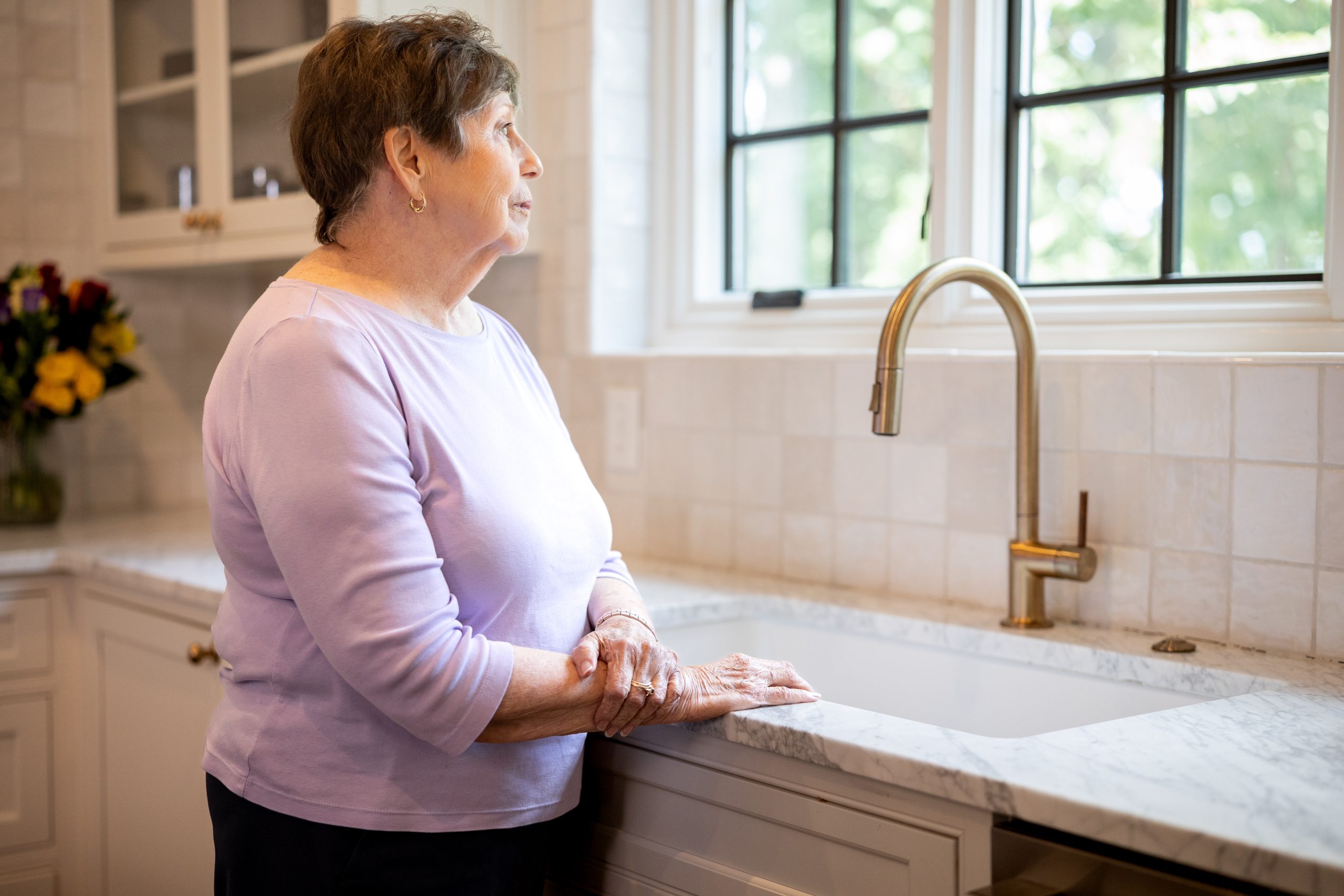
Repeating the same question in one conversation, trouble with the checkbook, getting lost on a grocery run in Apex or a weekly trip into Fuquay-Varina, taking longer to finish routine tasks, a short temper or pulled-back social plans. Many people here can still live alone — but this is the right time to plan ahead, and where companion visits usually start.
 02
02
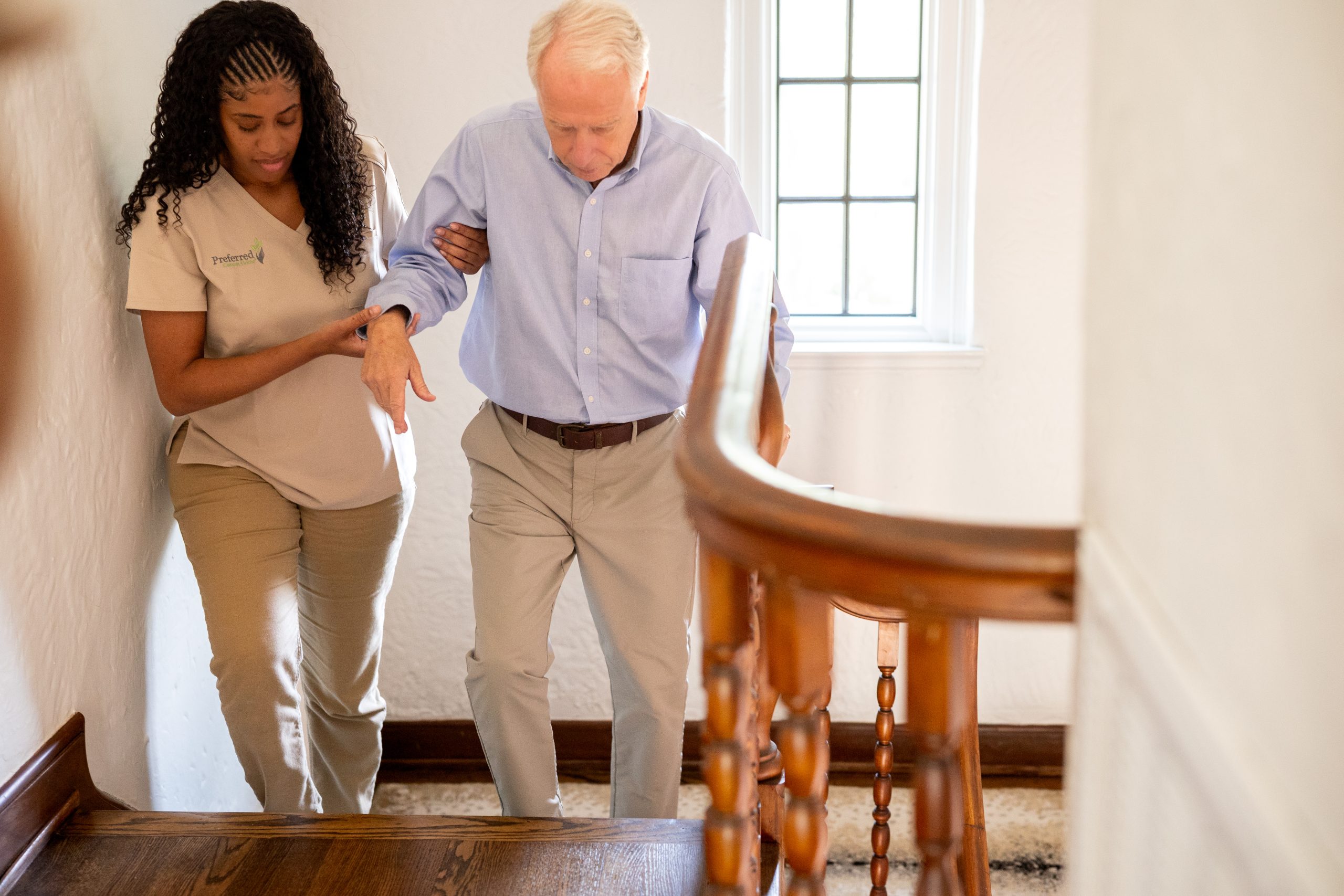
Prompting for bathing and dressing, confusion about time and place, difficulty recognizing people beyond close family, restlessness late in the day. A sudden behavior change deserves a call to the doctor — agitation can be linked to undertreated pain or medication side effects, not just the next stage. Personal care and respite tend to enter here.
 03
03
Speech shrinks to a few familiar words, walking then sitting up become difficult, and feeding, bathing, and toileting need full assistance. A New England Journal of Medicine study of 323 residents with advanced dementia showed late stage is often a prolonged care season, not a brief final event — live-in and end-of-life companion care support both the person and the family through it.
About one-third of adults 85 or older have some form of dementia, per the NIA, which is why staging questions become common family conversations around that age. The seven clinical stages fold into three practical ones because that’s what shapes real caregiving decisions.
Progression rates vary by person, dementia type, and even study setting: one cohort study found annual MCI-to-dementia conversion was 13% in clinic samples and 3% in community samples. Exact timelines should be read as ranges, not promises.
Per the CDC’s caregiving guidance, agitation can be linked to undertreated pain or medication side effects rather than the next stage on its own. Sudden changes should be discussed with a doctor, not chalked up to progression.

Where a local home care team fits — from the first “is this MCI or dementia?” call to live-in support.
Calls reach Michael Murphy, CSA, directly at (984) 246-8900 — a local guide who has had this exact conversation with families across South Wake County.
During MCI and the early stage: visits, driving check-ins, meal help, and a plan that exists before daily tasks get harder.
When days need structure: bathing and dressing help, structured routines, and a consistent caregiver the person comes to trust.
Respite care gives the primary family caregiver a break before exhaustion sets in — often the difference between sustainable care and crisis.
When recognition comes and goes and full assistance is daily reality, live-in care and end-of-life companion support carry the family through.
Calls to Preferred Care at Home of Apex, Garner, and Fuquay-Varina reach Michael Murphy, CSA, directly — not a call center. He built this location to be a local guide for families in South Wake County making exactly these decisions.
We work with families across the communities we serve: Garner, Fuquay-Varina, Holly Springs, Clayton, Angier, Sanford, and Lillington. First calls are usually about a specific week — missed meals, a wandering incident, a stove left on — not a stage number.
Support spans both conditions: companion care during MCI, personal care as functional needs grow, respite before the family caregiver burns out, and live-in and end-of-life companion care through the late stage.
Nothing unusual, or occasional forgetfulness still normal for age. No dementia-specific care needed — just awareness.
Word-finding trouble, misplacing objects, work slips; then trouble with money, repeating questions, getting lost. Companion visits, driving check-ins, and meal help fit here.
Confusion about time and place, needs help choosing proper clothing; then unreliable recognition of close family and bathing help. Personal care starts, with respite for the family caregiver.
Limited speech, declining physical abilities, full assistance with feeding, bathing, and toileting. Live-in support and end-of-life planning become the daily reality.
Once a doctor is involved, this is the distinction that shapes everything: MCI leaves independence intact; dementia interferes with the tasks themselves. Here is how the everyday signs split.
Stage 4 on the Global Deterioration Scale, sometimes called mild Alzheimer’s disease, is when memory and daily-task problems become clearly noticeable.
Common symptoms: trouble handling money and bills, repeating questions in the same conversation, taking longer with normal tasks, getting lost in familiar places, personality shifts, and wandering.
Refusing or forgetting to bathe usually shows up in the middle stages, not one exact stage. Bathing, dressing, and eating abilities change as dementia progresses, per the NIA.
It’s more of a function change than a specific number on a chart — and personal care support often starts around this point.
There is no single stage that marks “time for care.” Families decide by specific safety and function triggers: missed meals, a wandering incident, or caregiver exhaustion.
We help South Wake County families start with in-home support before institutional care becomes the only option.
Sundowning — restlessness and confusion in the late afternoon or evening — most often appears in the middle and later stages, with the pattern varying by person.
Sudden behavior changes should be discussed with a doctor, since they can be linked to undertreated pain or medication side effects, not just stage progression.
Many people with early-stage dementia can still live alone, according to the National Institute on Aging, but families should plan ahead for when daily tasks get harder.
Companion care visits are a common bridge once that becomes necessary.
No — dementia is not a normal part of aging, according to the CDC. Forgetting a name occasionally or misplacing keys now and then is different from the functional decline dementia causes, even though an estimated 1 in 9 Americans 65 and older are affected.
Progression rates vary widely by person, dementia type, and study setting. One cohort study found annual MCI-to-dementia conversion was 13% in clinic samples and 3% in community samples.
Alzheimer’s disease, vascular dementia, and frontotemporal dementia each progress at their own pace — read timelines as ranges, not promises.
Mild cognitive impairment means noticeable memory changes without loss of independence in daily life, while dementia interferes with daily activities themselves. Not everyone with MCI develops dementia.
We work with families through both seasons — companion care during MCI, and personal care as functional needs grow.