
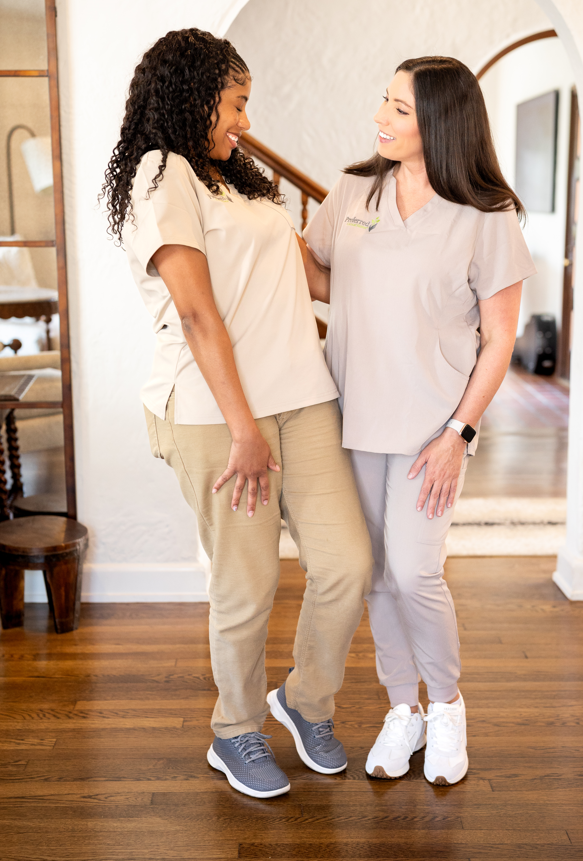
Nearly half of Wake County’s population growth from 2020 to 2022 came from adults age 55 and older, according to the Town of Fuquay-Varina. That surge means more families here are navigating senior care and end of life decisions than ever before. With over 40 years of home care experience since 1984, we serve the Fuquay-Varina area with one goal: helping your loved one maintain dignity and independence at home.
What sets us apart is who answers when you call. Michael Murphy, a Certified Senior Advisor, runs this office from South Wake County and matches caregivers by personality and life experience.
End-of-life care provides the steady, compassionate presence your loved one needs when hospice visits alone are not enough. We coordinate with hospice providers to provide care that covers bathing, meals, companionship, and overnight support in your loved one’s home.
A caregiver stays as long as your family needs, from a few hours of daytime help to around-the-clock supervision. We treat every one of our clients with comfort, dignity, and the assurance that no one faces this time alone.


Companion care brings meaningful companionship and emotional support during a time when loneliness can feel overwhelming. For seniors in the Fuquay-Varina community, a familiar face and genuine conversation can ease the weight of difficult days.
Your caregiver helps with transportation to appointments, accompanies your loved one on errands near Harris Teeter or Fuquay Mineral Spring Park, and provides the safety of someone who truly pays attention.
Personal care covers the hands-on physical assistance that becomes essential as life nears its close. Bathing, dressing, mobility support, and toileting are handled with patience and respect for your loved one’s dignity.
We understand this kind of help is deeply intimate. Caregivers are matched to your family’s unique situation so the person providing assistance is someone your loved one feels comfortable with.


Homemaker care keeps the household running when your family’s energy is focused on your loved one. Grocery shopping, meal preparation, laundry, and light housekeeping are handled so adult children and spouses can be present instead of overwhelmed.
In a car-dependent area like Fuquay-Varina, running errands and picking up prescriptions adds up quickly. Your caregiver handles the logistics so your family can focus on what matters.

Live-in care provides around-the-clock supervision in the comfort and privacy of your loved one’s home. One consistent caregiver stays overnight and through the day, responding to needs as they arise.
For families in Fuquay-Varina managing end of life support, 24-hour care means no gap between hospice visits goes uncovered. Transfers, overnight checks, and companionship continue through every hour

Respite care gives family caregivers the break they need before caregiver burnout takes over. According to AARP’s 2025 Caregiving in the U.S. report, nearly 1 in 4 caregivers provide 40 or more hours of care per week, and half report increased emotional stress.
Respite care lets you step away for a few hours or a few days while a screened, compassionate caregiver steps in with personalized care plans that match your routine.

Step 01
You call Michael Murphy directly at (984) 246-8900. No corporate call center, no automated menu.

Step 02
We visit your loved one’s home to understand the care needs, family dynamics, and daily routine.

Step 03
Your care plan is built around your loved one’s schedule, preferences, and hospice coordination. We partner with your hospice provider to keep everyone aligned.

Step 04
We match a caregiver by personality, life experience, and the specific demands of end of life support.
Fuquay-Varina’s rapid growth and suburban layout create specific challenges for families managing end of life care at home.
Challenge
What It Looks Like
How We Help
Rapid population growth straining care options
What It Looks Like
Fuquay-Varina grew from 17,937 to 46,617 in 14 years. More families compete for fewer local caregivers.
How We Help
We maintain a screened caregiver roster across Wake and Johnston counties, matched by personality.
Challenge
Family caregiver burnout compounding daily
What It Looks Like
Adult children juggle work, their own children, and overnight checks. Stress builds quietly.
How We Help
Respite care and flexible scheduling give family members real relief before exhaustion creates unsafe gaps.
Challenge
Hospice visits leave daily care gaps uncovered
What It Looks Like
Hospice staff make regular visits, but a loved one typically remains the primary caregiver between those visits.
How We Help
We fill the hours between hospice visits with bathing, meals, mobility support, and overnight supervision.
Challenge
Medicare coverage confusion delays decisions
What It Looks Like
Families assume Medicare covers long term non-medical care. It does not cover custodial care unless medical care is needed.
How We Help
We explain what hospice covers and what it does not, then build a care plan around your actual budget.
Challenge
Competing agencies offer broad claims with thin local proof
What It Looks Like
Other Fuquay-Varina pages rely on general language with no verifiable credentials.
How We Help
Michael Murphy, CSA, lives in South Wake County. You call a neighbor, not a corporate intake line.
Challenge
Falls and safety risks spike during late-stage weakness
What It Looks Like
The CDC reports falls among older adults caused over 38,000 deaths and nearly 3 million ER visits in 2021.
How We Help
Trained caregivers assist with transfers, bathing, and overnight checks so no gap triggers a hospital cycle.
Preferred Care at Home has continued this tradition by only referring the most reliable, compassionate, experienced, and affordable caregivers to client’s homes or care facilities.
The cost of end-of-life care at home depends on the level of support your loved one needs and how care is structured throughout the day and night.
In many cases, in-home care can be comparable to, and sometimes more affordable than, facility-based care, especially when services are tailored to your family’s specific needs.
At this stage, the focus is on comfort, dignity, and keeping your loved one safe. When it’s possible to provide that care at home, many families find it to be the most meaningful option, allowing their loved one to remain in a familiar and peaceful environment surrounded by the people they care about most.
We take a personalized approach and provide clear, transparent pricing so you can understand your options without any pressure.
If you’re navigating this season and want to explore what care at home could look like, we’re here to walk through it with you and support you every step of the way.
You reach Michael Murphy, a Certified Senior Advisor in South Wake County, directly on every call. Most home care agencies in the Fuquay-Varina area route calls to a corporate intake line, but here, Michael answers directly and matches caregivers by personality. Our 7-step screening process includes background checks, reference verification, and personality evaluation.
Care typically begins within days of your initial consultation, not weeks. After your free in-home visit, we build a care plan around your loved one’s hospice schedule and family availability. Caregiver matching follows immediately. Because Michael runs a local office with screened caregivers across Wake County, the process moves faster than families expect.
Hospice focuses on symptom management for a terminal diagnosis, while non-medical home care covers daily living support between those visits. Hospice eligibility requires a physician’s certification that life expectancy is six months or less, according to CMS, and hospice staff visit regularly for pain and symptom management. But NHPCO reports that a loved one typically serves as the primary caregiver between visits. Non-medical in home care services fill that gap with bathing, meals, mobility assistance, and overnight supervision.
Many families use both at the same time, and we help you understand where each one fits. Hospice addresses the clinical side: pain management, comfort medications, and planning with an attending physician. Non-medical home care handles what hospice does not, like personal care, grocery shopping, companionship, and keeping the home clean. Wake County recorded 4,013 hospice admissions in 2023, and many of those families also relied on non-medical support between visits.
Ask about NC licensure, caregiver screening depth, backup staffing, and how the agency handles caregiver changes. North Carolina requires separate licensure for each home care agency site through the NC Division of Health Service Regulation. Ask any agency: Are you licensed with NC DHSR? What happens when your regular caregiver is unavailable? How do you notify families of changes? We screen every caregiver through a 7-step process and notify families before any schedule or personnel change.
Medicare does not generally cover long term non-medical custodial care, even when hospice is involved. Medicare covers hospice visits from nurses, social workers, and chaplains, but does not cover ongoing help with bathing, meals, transportation, or overnight supervision unless medical care is needed. Most families pay privately for non-medical care, though Medicaid and long term care insurance may help in some cases. We walk you through paying for home care options including VA benefits for eligible parents and veterans.
Yes. We offer both live-in care and rotating 24-hour care schedules tailored to your family’s needs. Live-in care means one consistent caregiver stays in your loved one’s home day and night. For continuous awake coverage, we schedule rotating caregivers in shifts. Both options keep your loved one safe overnight when fall risk is highest. Hospice continuous home care is a separate clinical level; our non-medical overnight and 24-hour care covers everything else.
Yes. Our caregivers assist with all daily living needs, from bathing and transfers to grocery runs and doctor appointments. In a car-dependent community like Fuquay-Varina, NC, transportation to appointments, pharmacies, and stores like Harris Teeter is a real concern for older adults. Our caregivers provide physical assistance with bathing, dressing, and mobility, plus handle grocery shopping and rides.
Watch for repeated falls, missed medications, caregiver exhaustion, and any pattern of worsening that outpaces the current care plan. When overnight checks get skipped, transfers become unsafe, or depression and withdrawal increase, the current support level is not enough. The CDC reports falls among residents age 65 and older caused over 38,000 deaths nationally in 2021. Adding hours or moving to 24-hour care can restore safety before a crisis forces a higher-cost decision. Preferred Care at Home adjusts your care plan as needs change.