
Your loved one’s familiar routines, favorite rooms, and lifelong memories all live under one roof in Fuquay-Varina. Preferred Care at Home helps families across South Wake County keep it that way with Alzheimer’s in-home care matched to your unique situation.

North Carolina has 210,500 older adults living with Alzheimer’s, equal to 11.6% of the state’s 65-and-older population, according to the Alzheimer’s Association 2025 state facts sheet. In Fuquay-Varina, 14.3% of residents are 65 or older. Preferred Care at Home serves these families with over 40 years of experience and a local owner, Michael Murphy, Certified Senior Advisor.
What sets us apart is our 7-step caregiver screening process and personality-based matching. We pair caregivers with your loved one based on temperament, experience, and care needs.
For families in Fuquay-Varina facing a new or progressing Alzheimer’s diagnosis, dementia and Alzheimer’s care provides structured daily routines, safety monitoring, and cognitive engagement at home. Caregivers trained in dementia care help manage behavioral changes and reduce wandering risk.
NC DHHS reports 81% of adults 65 and older live with at least one chronic disease. Alzheimer’s compounds those challenges, making personalized care plans built around individual needs essential.
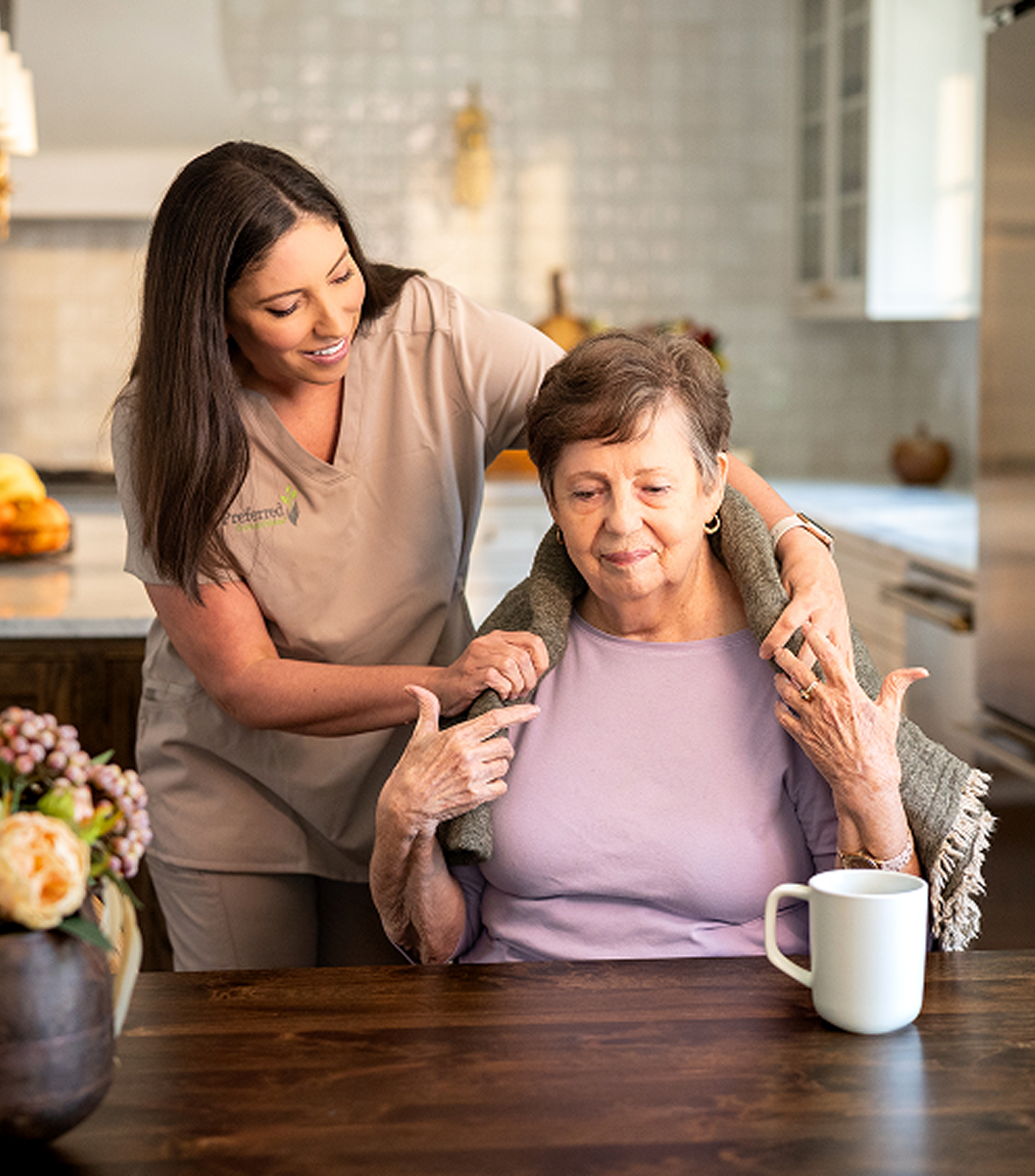

Loneliness settles in quietly after an Alzheimer’s diagnosis changes daily life. Companion care brings conversation, local activities, and meaningful social interaction back into your loved one’s week. A familiar caregiver can accompany your loved one to Fuquay Mineral Spring Park or simply sit together over a meal.
Companionship is not a luxury for older adults with Alzheimer’s. Elderly care that includes social interaction helps your loved one stay engaged in their own homes.
Bathing, dressing, and grooming become harder as Alzheimer’s progresses. Personal care from experienced caregivers provides hands-on help with daily living while preserving your loved one’s dignity at home. In a town where 74.2% of homes are owner-occupied, families want elderly parents to remain safe where they are.
Medication reminders, safe mobility support, and toileting assistance are part of every personalized care plan, adjusted as needs change.


Everyday tasks like grocery shopping at Harris Teeter, meal preparation, and light housekeeping overwhelm a family already managing Alzheimer’s care. Homemaker care keeps your loved one’s home clean, stocked, and safe. Caregivers handle errands along Judd Parkway and NC-55, so your family doesn’t have to choose between work and care.
A tidy, familiar home reduces confusion for older adults with memory loss and supports ongoing care that keeps daily routines intact.
When Alzheimer’s symptoms require overnight supervision, live-in care places one consistent caregiver in your loved one’s home around the clock. Families in Bentwinds, South Lakes, and Ballentine rely on this support to keep elderly parents safe without a facility move.
That consistency matters. A live-in caregiver learns your loved one’s habits, preferences, and triggers, reducing agitation in ways rotating staff cannot.

Family caregivers in North Carolina provided 739 million unpaid Alzheimer’s care hours valued at $13.0 billion, per the Alzheimer’s Association. Respite care gives adult children and spouses a break while a trusted caregiver steps in. Even a few hours a week can prevent caregiver burnout.
Respite is not a sign of giving up. It keeps your care journey sustainable for the long run.

A hospital discharge with Alzheimer’s in the picture is especially confusing. Transition care sends a trained coach to guide your loved one home, covering medication reminders, medical appointments, and follow-up coordination. Families near WakeMed Primary Care on Judd Parkway rely on this support to reduce readmission risk.
Alzheimer’s patients had a 21.5% hospital readmission rate, per Alzheimer’s Association North Carolina data. Transition care addresses that directly.

Step 01
You call (984) 246-8900 and speak directly with Michael Murphy, your local Certified Senior Advisor.

Step 02
We visit your loved one’s home to understand daily routines, safety concerns, and care needs.

Step 03
We build personalized care plans around your loved one’s Alzheimer’s stage, daily tasks, and family schedule.

Step 04
We match a caregiver by personality, dementia experience, and compatibility with your family.
Fuquay-Varina’s rapid growth and suburban layout create specific challenges for families managing Alzheimer’s at home.
How We Help
Spread-out errands and appointments
What It Looks Like
Grocery runs to Harris Teeter, pharmacy trips, and visits to WakeMed Primary Care require a driver your loved one trusts.
How We Help
Caregivers provide safe transportation to stores, appointments, and local activities across the Judd Parkway corridor.
Challenge
Aging in owner-occupied homes
What It Looks Like
Most Fuquay-Varina homes are single-family and owner-occupied, with stairs, wide lots, and layouts that make solo supervision difficult.
How We Help
Live-in and personal care services cover mobility support, fall prevention, and overnight presence in your loved one’s home.
Challenge
Unclear NC licensure requirements
What It Looks Like
Families comparing agencies often don’t know North Carolina requires separate site licensure and a signed plan of care for in-home aide services.
How We Help
We operate under NC DHSR licensure with a documented care plan for all clients, so your family has accountability built in.
Challenge
Wandering and safety gaps at home
What It Looks Like
Alzheimer’s-related wandering risk increases as cognition declines, especially in neighborhoods like South Lakes and Phillips Pointe with open layouts.
How We Help
Dementia-trained caregivers monitor for wandering triggers and maintain consistent daily routines that reduce agitation.
Challenge
Competitor communication failures
What It Looks Like
Review data across local agencies shows complaints about poor caregiver communication, missed visits, and inconsistent staffing.
How We Help
You reach Michael Murphy directly at (984) 246-8900. We pair your loved one with a consistent, personality-matched caregiver.
Challenge
Delayed care decisions by family caregivers
What It Looks Like
Caregiver burnout builds over months, and families often seek help only after a fall, wandering incident, or emergency room visit.
How We Help
We start care within days. Flexible scheduling means you can begin with a few hours and expand as your unique needs change.
Preferred Care at Home has continued this tradition by only referring the most reliable, compassionate, experienced, and affordable caregivers to client’s homes or care facilities.
The cost of Alzheimer’s care at home depends on the level of support needed, how many hours of care are required, and the complexity of the care plan.
At its core, this type of care is about keeping your loved one safe. When it’s possible to do that in the home, it often becomes the most meaningful option, allowing them to remain in a familiar environment that can reduce confusion and support overall well-being.
In many cases, in-home care can be comparable to, or even more affordable than, moving into a memory care facility, especially when care is tailored to your loved one’s specific needs. We offer flexible care plans that can adjust over time, so you are only paying for the level of support that is truly needed.
If you’d like help understanding what the right approach looks like for your family, we’re happy to talk it through and provide clear, personalized guidance.
We combine a local Certified Senior Advisor, personality-based caregiver matching, and a real-time family portal. Michael Murphy holds the Certified Senior Advisor credential and runs this office from South Wake County. We screen every caregiver through a 7-step process and match by personality, not availability.
We typically begin care within days of your first call to our local office. The Alzheimer’s Association reports North Carolina needs a 23.3% increase in home health aides by 2032. Waiting for a crisis makes finding the right fit harder. Call Michael Murphy at (984) 246-8900 to complete an assessment and build your care plan so care starts quickly.
Repeated missed meals, medication confusion, wandering attempts, or unexplained injuries signal it’s time for in-home support. Families often notice piling mail, skipped meals, or a loved one found outside without a clear destination. Alzheimer’s patients had 1,684 emergency department visits per 1,000 people with dementia, per the Alzheimer’s Association. These patterns mean supervision gaps are causing harm. In-home care can begin with a few hours per week and grow as needs change.
In-home care works well when safety risks can be managed with a structured care plan and consistent caregiver presence. A Place for Mom lists average memory care cost in Fuquay-Varina at about $5,867 per month. In-home care allows your loved one to remain safe in familiar surroundings with flexible hours. Memory care may fit better when advanced wandering risk or overnight safety concerns exceed what home-based support can address.
Verify NC DHSR licensure, ask about caregiver dementia training, and confirm a signed plan of care is part of the process. North Carolina requires home care agencies to hold NC DHSR licensure, with each site licensed separately. In-home aide services must follow a signed, dated plan of care. Ask any agency how they screen caregivers for dementia experience and how complaints are handled. Preferred Care at Home meets all NC requirements.
Yes. Our caregivers handle grocery shopping, medication reminders, and transportation services throughout Fuquay-Varina. Fuquay-Varina seniors rely on Harris Teeter, pharmacies along Judd Parkway, and primary care offices like WakeMed for everyday needs. Our compassionate caregivers drive your loved one to medical appointments, run errands, and provide medication reminders as part of a personalized care plan built around your routine.
Yes. We match one primary caregiver to your loved one and maintain that consistency. Review data across local competitors shows families frequently cite caregiver turnover and poor communication as top frustrations. We match caregivers by personality and assign one consistent caregiver to your loved one.
Respite care gives family caregivers scheduled breaks so they can sustain care over months and years. North Carolina Alzheimer’s caregivers provided 739 million unpaid hours valued at $13.0 billion, per the Alzheimer’s Association. Caregiver burnout leads to inconsistent supervision and crisis-driven decisions. Respite care lets you step back while a compassionate caregiver maintains your loved one’s routine.
We serve all of Fuquay-Varina, including Downtown Fuquay, Downtown Varina, South Lakes, Bentwinds, and surrounding neighborhoods. Our caregivers support local outings to Fuquay Mineral Spring Park, Hilltop Needmore Town Park picnic areas, and community events across the Fuquay-Varina community. We also cover errands, grocery shopping, and rides to appointments in Holly Springs, Apex, and throughout Wake County. These senior services are available across our full coverage area.