

AARP reported in 2024 that 75% of adults age 50 and older want to remain in their current homes. In the Fuquay-Varina area, that means finding a home care partner who understands South Wake County. We’ve helped families since 1984, and our local owner Michael Murphy, a Certified Senior Advisor, lives and works right here in Wake County.
What sets us apart is how we match experienced caregivers to your loved one. We pair caregivers by personality, background, and life experience.
For families in neighborhoods like South Lakes, High Grove, and Downtown, live-in care places one consistent caregiver in your loved one’s home around the clock. Familiar surroundings stay familiar, and your parent is never alone. One caregiver builds a genuine relationship, covering everyday tasks like bathing, dressing, meal preparation, and medication reminders. That consistency reduces confusion and brings comfort to the entire family.
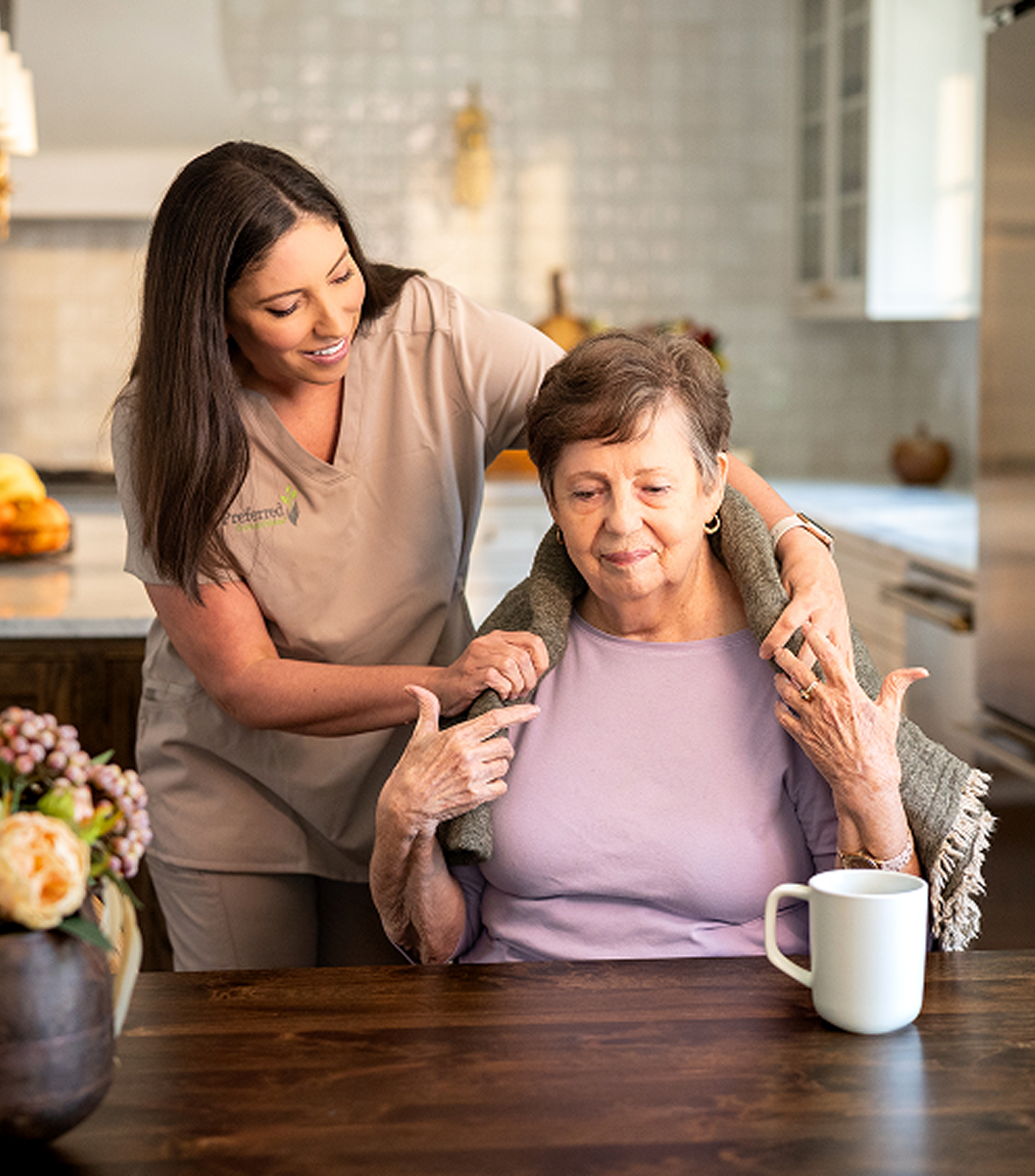

Loneliness creeps in when family members live across the Triangle. Companion care pairs your loved one with a compassionate caregiver for conversation, local activities, and genuine connection.
Companions help with grocery shopping at Harris Teeter, transportation services to medical appointments, and trips to Fuquay Mineral Spring Park. This is ongoing care that preserves independence and well being.
Keeping a home clean and a kitchen stocked is exhausting when mobility fades. Homemaker care handles light housekeeping, laundry, meal preparation, and grocery shopping so older adults can stay in their own homes. For seniors in the area, this means more time enjoying the picnic areas along the greenway and less time worrying about daily tasks that have become unsafe.


When daily living tasks like bathing, dressing, and safe mobility require hands-on help, personal care caregivers step in with patience. We build personalized care plans around your loved one’s individual needs. Personal care is available from occasional assistance to full daily coverage. Every caregiver is screened through our 7-step process and matched to your family for continuity.
More seniors in Wake County are aging in place with memory loss. Our dementia and Alzheimer’s care keeps your loved one safe at home in familiar surroundings while preserving routines that reduce anxiety. The Alzheimer’s Association reports 210,500 North Carolinians age 65 and older were living with Alzheimer’s in 2020, supported by 373,000 unpaid family caregivers. Live in home care with a trained caregiver can relieve that caregiver burnout.

Family caregivers give everything, and that takes a toll. Respite care gives you time to rest or handle your own appointments while a compassionate caregiver steps in to provide support for your loved one. Adult children managing care from across the Triangle use respite care to prevent burnout. North Carolina’s Family Caregiver Support Program reports 2.283 million adults in the state provide care to a family member or friend.


Step 01
You call Michael Murphy directly at (984) 246-8900 to talk through your family’s situation.

Step 02
We visit your loved one’s home to understand daily tasks, safety needs, and personal routines.

Step 03
We create personalized care plans based on your loved one’s unique needs and your family’s goals.

Step 04
We pair your loved one with a caregiver matched by personality, experience, and background.
Fuquay-Varina NC has grown rapidly, and southern Wake County’s aging population creates specific challenges for families considering senior home care and elderly care.
Challenge
What It Looks Like
How We Help
Rapid population growth outpacing local care options
What It Looks Like
The town grew from 34,152 to 46,617 residents between 2020 and 2024; 48% of Wake County growth came from people 55 and older. Families compete for a shrinking caregiver pool.
How We Help
We screen and match caregivers through a 7-step process. Michael Murphy coordinates care locally, not from a distant call center.
Challenge
Older adults aging in owner-occupied suburban homes
What It Looks Like
With 70.5% of housing units owner-occupied, more seniors are staying in homes with stairs, large yards, and layouts that become unsafe with age.
How We Help
Live-in caregivers provide safe mobility help, fall prevention, and daily living assistance inside the home your loved one already knows.
Challenge
Medicare exclusion catches families off guard
What It Looks Like
Medicare does not pay for long-term non-medical care. Families often discover this after a hospital discharge, losing time when recovery matters most.
How We Help
We walk you through payment options including private pay and long-term care insurance. NC DOI confirms LTC policies can cover custodial care at home.
Challenge
Confusion between live-in care and 24-hour care
What It Looks Like
Most agencies use “home care” broadly without explaining that live-in care uses one caregiver with rest periods, while 24-hour care uses rotating shifts with awake overnight coverage.
How We Help
We explain both models clearly and help you choose based on nighttime needs, wandering risk, and budget.
Challenge
Generic online listings make comparison impossible
What It Looks Like
Caring.com lists 77 in home care options in the area, and most pages make broad claims without screening details or local proof.
How We Help
You speak directly with a Certified Senior Advisor who lives in South Wake County. We provide Transparency Room access and personality-based matching.
Challenge
Dementia symptoms or caregiver exhaustion create urgency
What It Looks Like
Wandering, missed medication reminders, or family caregiver burnout can turn a stable situation into a crisis within weeks. North Carolina had 373,000 unpaid Alzheimer’s caregivers in 2020.
How We Help
Live-in care starts within days of your consultation. One consistent caregiver provides overnight presence, routine stability, and relief for exhausted family members.
Preferred Care at Home has continued this tradition by only referring the most reliable, compassionate, experienced, and affordable caregivers to client’s homes or care facilities.
Live-in care is often a more affordable alternative to around-the-clock care, when the care plan is a good fit. It can also be comparable to, and in many cases less than, the cost of moving into a facility.Beyond cost, one of the biggest advantages is that your loved one can remain in the comfort and familiarity of their own home, surrounded by the people, routines, and environment they know best.
Every situation is different. The right approach depends on overnight needs, level of support required, and overall care goals.
If you’re wondering whether live-in care could be a good option for your family, we’re happy to walk through it with you and provide clear, personalized recommendations.
We match caregivers by personality, screen through a 7-step process, and connect you directly to a local Certified Senior Advisor. Caring.com lists 77 home care in Fuquay options, and most make broad claims without backup. We pair caregivers to your loved one by personality, not just availability. Michael Murphy, CSA, lives in South Wake County and answers your call personally.
Care typically begins within days after your consultation, assessment, and caregiver matching. After you call (984) 246-8900, we schedule an in-home assessment and build personalized care plans around your loved one’s needs. Caregiver matching follows. Urgent situations like a hospital discharge or safety event can be prioritized for faster placement in the NC Fuquay-Varina area.
Live-in care uses one caregiver with scheduled rest periods, while 24-hour care uses rotating shifts with an awake caregiver overnight. Live-in care works when nighttime needs are mostly stable and one-caregiver consistency is valuable. Twenty-four-hour care fits when your loved one needs frequent overnight help. We explain both options during your consultation so you choose the right care journey for your family.
We can prioritize urgent placements after a hospital discharge, fall, or sudden safety change. The CDC reports more than one in four older adults falls each year, and a prior fall doubles future risk. Our Smooth-Transition Care program pairs your loved one with a coach for safe transportation to appointments, medication reminders, and daily check-ins. Care in Fuquay-Varina typically begins within days of that first call.
If your loved one has fallen, wanders at night, or cannot manage daily tasks alone, live-in care may be the right next step. Signs include missed medication reminders, nighttime confusion, and family caregiver burnout. AARP reports 75% of adults 50 and older want to stay home, and live-in care makes that possible as needs increase. We build care plans that scale from occasional assistance to the best possible care with full live-in coverage.
If your loved one has fallen, wanders at night, or cannot manage daily tasks alone, live-in care may be the right next step. Signs include missed medication reminders, nighttime confusion, and family caregiver burnout. AARP reports 75% of adults 50 and older want to stay home, and live-in care makes that possible as needs increase. We build care plans that scale from occasional assistance to the best possible care with full live-in coverage.
Most families pay privately or through long-term care insurance, because Medicare does not cover ongoing non-medical home care. Medicare states it does not pay for long-term care, and beneficiaries pay 100% for most non-covered services. North Carolina’s Department of Insurance confirms LTC insurance can reimburse custodial care at home up to a pre-selected daily amount for help with activities of daily living. We help you understand your options during the initial consultation.
Live-in dementia care keeps your loved one in familiar surroundings with a consistent caregiver who learns their routines. The Alzheimer’s Association reports 210,500 North Carolinians 65 and older were living with Alzheimer’s in 2020. For many families, the familiar layout of home and one trusted caregiver reduce confusion far more than a new facility. Live-in dementia care preserves routines while adding overnight supervision and safe mobility help.
Neighborhoods like High Grove, South Lakes, Downtown, and Willow Creek offer walkability, errand access, and community connection that help seniors in Fuquay-Varina stay home. The median home sale price sits at $458,000 per Realtor.com, and 70.5% of housing units are owner-occupied. Ballentine, Phillips Pointe, and Brighton Forest also have single-family home layouts where live-in care works well. Nearby Harris Teeter locations, primary care offices, and the Fuquay-Varina community center maintain the daily-errand access that keeps seniors connected.