

Fuquay-Varina grew 35.2% since 2020, reaching 46,317 residents by mid-2024. Nearly half of Wake County’s recent growth came from adults 55 and older. Preferred Care at Home has supported families here with reliable, affordable personal care services since 1984.
Michael Murphy, a Certified Senior Advisor, owns and operates this location. When you call, you reach him directly, not a call center. Every caregiver is screened through our 7-step process and matched by personality to your loved one.
Bathing, dressing, mobility support, and toileting help for elderly people who want to stay in their own homes in Fuquay-Varina. Personal care covers the everyday tasks that keep your parent safe and comfortable.
Our caregivers provide physical assistance with daily living activities on a schedule built around your family’s needs. Care plans adjust as needs change, so you’re never locked into a plan that no longer fits.
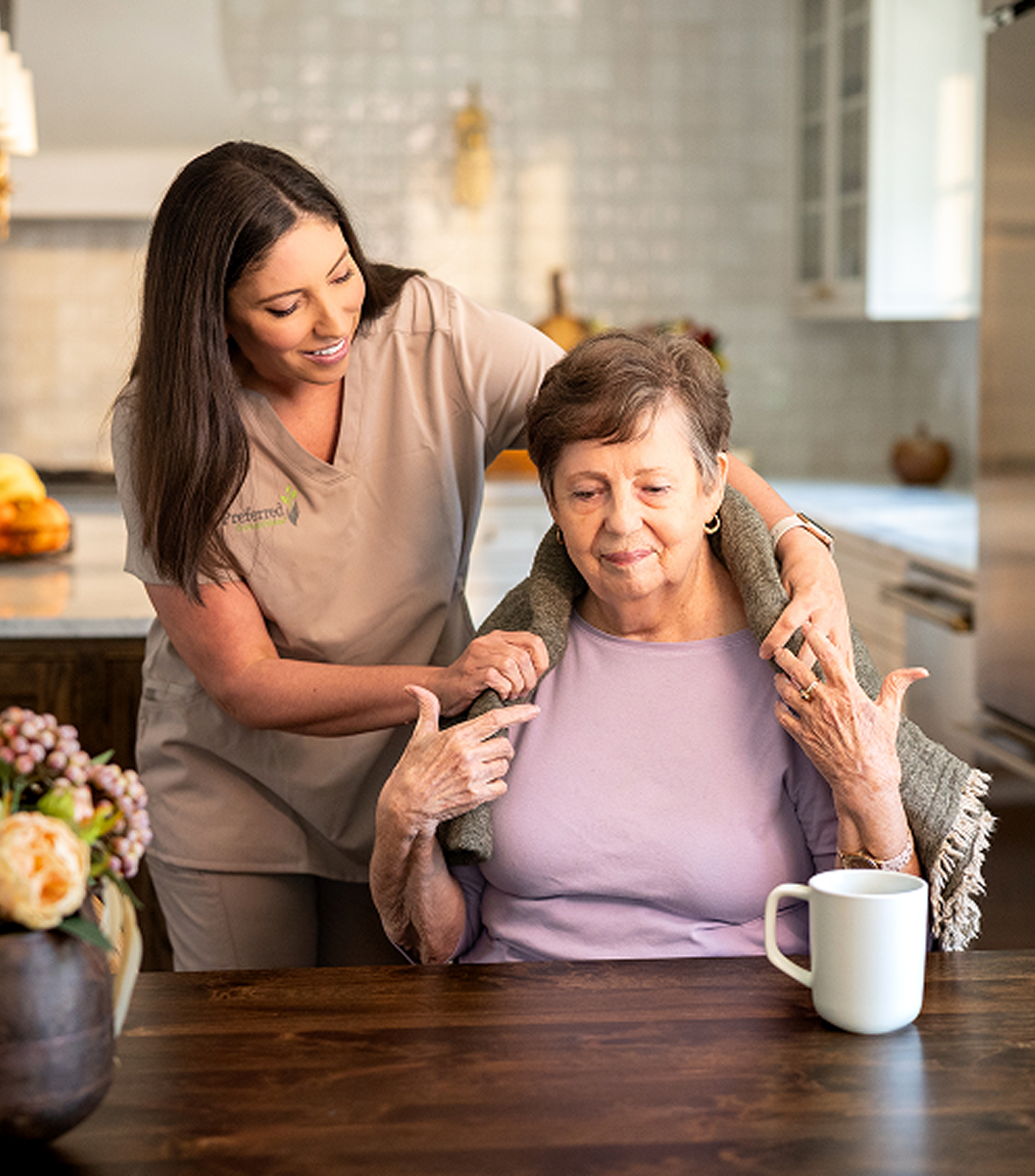

Loneliness doesn’t wait for a crisis. Companion care brings conversation, emotional support, and shared activities to seniors living alone in Fuquay-Varina.
Your caregiver becomes a familiar face who shows up on time, engages in real conversation, and provides the kind of ongoing care that helps your parent’s well being and daily routine.
Grocery shopping, meal preparation, light housekeeping, and laundry for older adults who manage personal hygiene but struggle with household upkeep. Homemaker care keeps the home clean and the pantry full.
A tidy, well-stocked home reduces fall risks, supports nutrition, and gives family members one less thing to manage during a 33-minute commute home from work.


For families facing serious illness, our 24-hour live-in care offers a steady presence and peace of mind. A matched caregiver stays around the clock so your loved one is never alone.
This is our specialty, and it has been since 1984. Live-in care provides overnight safety, continuous personal care, and all-inclusive household support without the emotional weight of a facility move.
Memory loss changes the entire household. Dementia care brings structure, safety monitoring, and cognitive engagement to seniors living with Alzheimer’s or related conditions in the Fuquay-Varina community.
Our caregivers are trained to manage behavioral changes, reduce wandering risks, and keep familiar routines intact. Consistency matters more for dementia care than almost any other type of specialized care.

Coming home from the hospital with a stack of instructions and no energy to follow them is overwhelming. Our Smooth-Transition Care program sends a trained coach to guide and empower your parent through recovery at home.
This evidence-based approach reduces hospital readmission risk by helping with medication reminders, follow-up scheduling, and transportation to medical appointments at WakeMed Fuquay-Varina Medical Park or primary care offices across the area.

Family caregivers carry a heavy load. AARP reports that 84% of employed caregivers say caregiving creates moderate or high stress. Respite care gives you a break without giving up control.
Scheduled relief means you can return to work, run errands, or simply rest, knowing a screened, personality-matched caregiver is providing support in your parent’s home.

Step 01
You call or reach out online. Michael Murphy, your local Certified Senior Advisor, answers directly.

Step 02
We visit your parent’s home to understand their daily tasks, healthcare needs, and personality.

Step 03
Your care plan is built around your parent’s specific routine, not a generic template.

Step 04
We match a caregiver by personality, life experience, and skill, not just availability.
Step 05
Care starts within days. Our portal gives you real-time updates from anywhere.
Fuquay-Varina’s rapid growth and commuter patterns create specific challenges for families managing elderly care.
Challenge
What It Looks Like
How We Help
Rapid population growth outpacing care supply
What It Looks Like
More seniors moving into South Wake County neighborhoods like South Lakes and Bentwinds, stretching local home care agencies thin.
How We Help
A local owner who prioritizes fast intake and direct communication from the first call.
Challenge
Aging in an owner-occupied home
What It Looks Like
74.2% of households here are owner-occupied. Elderly people delay asking for help because they associate care with leaving home.
How We Help
Personalized care plans start small (even one hour) so your parent stays home without disruption.
Challenge
Adult children commuting across the Triangle
What It Looks Like
A 33.1-minute average commute means family members can’t reliably cover morning bathing, midday meals, or medical appointments.
How We Help
Caregivers handle daily living tasks, safe transportation, and meal preparation on a schedule that fills your commute gaps.
Challenge
Confusion between personal care and Medicare coverage
What It Looks Like
CMS says Medicare generally does not cover long-term non medical personal care like bathing and dressing. Families compare wrong options.
How We Help
We explain what personal in home care includes, what it does not, and how to plan for the real cost.
Challenge
Caregiver inconsistency and poor communication
What It Looks Like
Competitor reviews cite unannounced substitutions, no-shows, and caregivers disengaged during visits.
How We Help
Our 7-step screening, personality matching, and Transparency portal keep you informed and your caregiver consistent.
Challenge
Waiting until a crisis forces action
What It Looks Like
7 in 10 Americans who reach 65 will need long-term support. Delayed action turns manageable help into emergency coordination.
How We Help
We build a care plan now, even for a few hours of help with everyday tasks, so the system is ready when needs grow.
Preferred Care at Home has continued this tradition by only referring the most reliable, compassionate, experienced, and affordable caregivers to client’s homes or care facilities.
Cost depends on the number of hours, the type of daily tasks involved, and whether you need daytime or overnight support. Care.com data shows home care in the Fuquay-Varina area has historically run below both the North Carolina and national averages. Your cost depends on how many hours you need and which personal care services are involved: bathing, medication reminders, transportation, or meal preparation. Michael Murphy walks through pricing during a free consultation with no obligation.
You reach a local Certified Senior Advisor, not a call center, and every caregiver is screened through a 7-step process and matched by personality. Our experienced caregivers are well trained and screened through a 7-step process that checks background, skills, and personality fit. Unlike agencies that rotate compassionate caregivers without notice, we assign dedicated caregivers matched to your parent. Our portal gives family members real-time access to schedules, notes, and updates from anywhere.
Most families begin care within days of their initial consultation. After your in-home assessment, we build a personalized care plan and match a caregiver to your parent’s personality, routine, and needs. Because Michael manages intake locally, there’s no corporate approval delay. Your care journey from first call to first caregiver visit is typically within the same week.
If your parent struggles with bathing, dressing, mobility, or toileting, they likely need personal care, not just companionship. Companion care focuses on conversation, errands, and emotional support, while personal care adds hands-on physical assistance with activities of daily living: bathing, grooming, dressing, transfers, and medication reminders. Many Fuquay-Varina seniors start with companion care and move to personalized care as healthcare needs increase. We adjust care plans as needs change without requiring a new contract.
Medicare generally does not cover long-term non medical personal care like bathing, dressing, or meal preparation. CMS states that custodial care, including help with daily living activities, is not covered by Medicare or most health insurance plans. In home care services like bathing help, grocery shopping, and transportation are typically paid privately or through long-term care insurance. We keep pricing affordable so families can access quality care without depending on coverage that usually isn’t available.
It depends on the level of supervision your parent needs, but 75% of adults age 50 and older say they want to stay in their current home. AARP’s 2024 report confirms that aging in place is the strong preference for most older adults. Personal in home care lets your parent stay in familiar surroundings while receiving one on one attention with bathing, meals, mobility, and daily tasks. Assisted living may fit when around-the-clock facility supervision becomes necessary, and we help you evaluate the difference honestly.
Yes. Safe transportation to medical appointments, pharmacies, and errands is part of our standard in home care services. WakeMed Fuquay-Varina Medical Park is expanding, and more specialists means more appointments for seniors here. Our caregivers provide safe mobility support getting into and out of the vehicle, accompaniment during visits, and help coordinating follow-up care at primary care offices, labs, and local stores.
We notify you immediately and send a backup caregiver who already knows your parent’s care plan. Your parent’s continuity of care is our top priority, and we handle it differently than what competitor reviews describe. If a caregiver cannot make a shift, you hear from us before the gap affects your parent. Backup caregivers receive a briefing on your parent’s routine and healthcare needs so the transition is smooth.
Yes. We provide support throughout Fuquay-Varina and surrounding communities in Wake County and Johnston County. Our caregivers provide senior home care in neighborhoods like Ballentine, Southern Oaks, Phillips Pointe, Bentwinds, Sunset Lake, High Grove, and both downtown districts across the NC area. Whether your parent lives near Fuquay Mineral Spring Park, along US-401, or off NC-55, we match a caregiver who can reach them reliably.
Yes. Our caregivers are trained in dementia care, fall prevention, and working with seniors who are uncomfortable accepting help. Resistance to bathing is one of the most common concerns adult children raise, and it signals a need for more specialized care, not a reason to delay. Our compassionate staff builds trust through patience, consistent scheduling, and familiar routines. For seniors living with Alzheimer’s or memory loss, we provide ongoing care with safety monitoring, cognitive engagement, and compassionate care.