
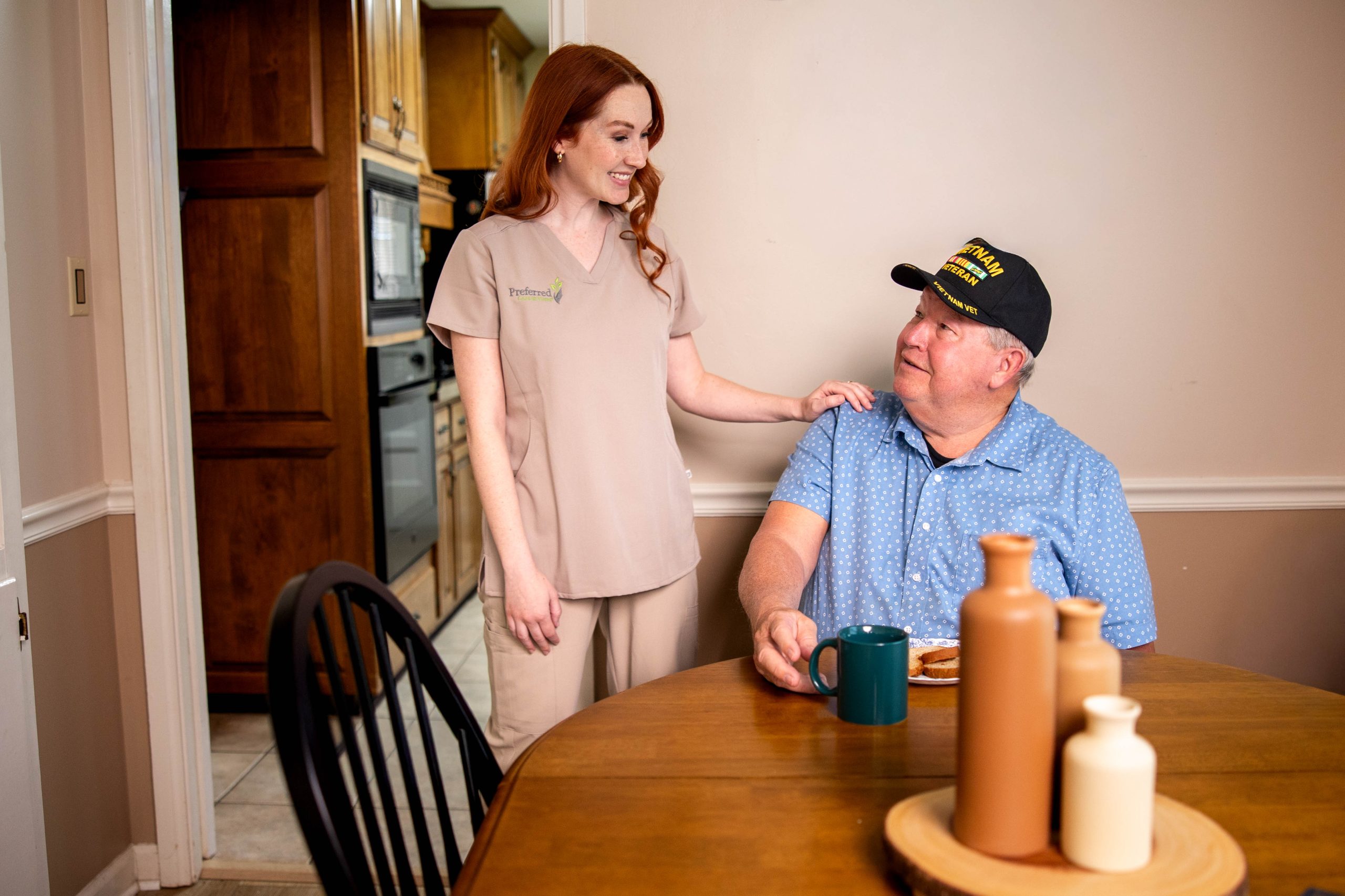
Most families assume an older man just needs smaller portions because he’s less active. The opposite is closer to the truth. A healthy diet after 65 means meeting nutrition needs with fewer calories, which is why a balanced diet matters more than ever. This guide from Preferred Care at Home of Apex, Garner, and Fuquay-Varina covers what changes after 65, the four nutrients that matter most, the signs that food advice alone has stopped working, and where to find help when meals become a daily struggle for older adults.
Key Takeaways
- About 33 out of 100 adults 60+ have constipation symptoms, per NIDDK
- Older adults often need more protein, not less, despite fewer calories
- B12 insufficiency affects 12.3% of adults 60+, per NIH ODS
- Watch for skipped meals, weight loss, and eating alone, not only food choices
Why Eating Habits Have to Shift After 65
The standard family assumption sounds reasonable: Dad moves less, so Dad eats less. Smaller plates, fewer snacks, problem solved. That’s actually the opposite of what happens in an aging body.
Calorie needs may fall after 65, but the need for protein, B12, vitamin D, and fiber does not fall in parallel, per MedlinePlus guidance on nutrition for older adults. The math gets tighter, not looser. As people age, dietary requirements shift in ways the average person doesn’t expect.
Protein is where this mismatch shows up first. A peer-reviewed expert recommendation review in PMC quantified the new target for older men.
According to a peer-reviewed expert recommendation review published in PMC, healthy adults age 65 and older should generally target 1.0 to 1.2 grams of protein per kilogram of body weight daily, above the 0.8 g/kg/day general adult guideline. This matters because muscle mass preservation depends on consistent protein intake at every meal.
For a 180-pound man, that’s roughly 80 to 100 grams of protein a day, spread across breakfast, lunch, and dinner. The daily calorie budget shrinks while the need for enough protein climbs, and certain medicines can blunt appetite further. Younger adults helping an aging parent often miss this shift, assuming less activity means less food across the board.
Four Nutrients That Matter Most for Older Men
Four nutrients carry most of the weight after 65: protein, vitamin B12, vitamin D, and fiber. Each one solves a problem specific to aging men, and each one has a food the reader can buy this week. When you choose foods with these nutrients in mind, you’re building a healthy diet that supports strength and independence.
Protein at every meal
Spreading protein across meals matters more than hitting a daily total at dinner. Older men hold onto muscle strength when each meal delivers 25 to 30 grams of protein, which is why a protein-only dinner falls short. Lean proteins and low fat dairy at breakfast are the easiest fix. Families helping with shopping or hands-on meal support can rely on personal care to keep the routine consistent when energy runs low.
Five protein anchors that work for most older men:
- Eggs or Greek yogurt at breakfast
- Cottage cheese or a handful of nuts mid-morning
- Tuna, chicken, or beans at lunch
- Fish, lean meats, or tofu at dinner
- Low fat milk with meals
Vitamin B12 and vitamin D
B12 is the nutrient most likely to slip even when an older man eats meat regularly. Atrophic gastritis, a thinning of the stomach lining, affects 8 to 9 percent of adults 65+ and reduces how much B12 the body pulls from food. Fortified breakfast cereals are absorbed more reliably than B12 from steak or pork, which is why a bowl of fortified cereal earns its place in the rotation, per the NIH Office of Dietary Supplements vitamin B12 fact sheet.
According to the NIH Office of Dietary Supplements, vitamin B12 insufficiency affects 12.3% of adults age 60 and older, and deficiency affects 3.7%.
Vitamin D is the other quiet shortfall. Skin synthesis from sunlight drops with age, so food and sometimes a clinician-guided supplement carry more of the load.
The NIH Office of Dietary Supplements notes that adults 71 and older need 20 mcg, or 800 IU, of vitamin D daily to support healthy bones and help prevent osteoporosis.
Fatty fish like salmon, fortified low fat milk, and eggs are the most reliable food sources, per the NIH vitamin D fact sheet. Bone health and muscle strength both depend on hitting these dietary needs. Certain vitamins like B12 and D become harder to absorb with age, which is why food sources and targeted supplementation matter. Limiting saturated fats while prioritizing these nutrients helps lower cholesterol and reduces heart disease risk.

Fiber, fluids, and the constipation connection
Constipation is one of the most common daily discomforts older adults face, and the fix is rarely fiber alone. Fiber rich foods need fluid to work. Adding bran or beans without adding water can make things worse.
Whole grains, leafy greens, and fruits and vegetables are the easiest food group to lean on, and pairing each one with a glass of water turns the strategy into a habit. Five pairings that actually get used:
- Oatmeal with a full glass of water at breakfast
- Bean soup with water or unsweetened tea at lunch
- Whole-grain bread with a water bottle on the table
- Apple or pear as an afternoon snack with water
- Roasted vegetables alongside water at dinner
When these nutrient dense choices are in place but meals still get skipped, the issue is no longer the food list. Healthy foods and healthy snacks only work when someone has the energy and support to prepare them consistently.
Signs That Food Advice Isn’t Enough Anymore
Nutrition advice works only when someone can act on it. When grocery trips become exhausting, when meals get skipped, or when eating alone becomes the routine, another printed handout will not change what’s on the plate. The questions families need to ask shift from “what should he eat” to “what’s getting in the way.” These warning signs often point to a higher risk of malnutrition, and they play a critical role in deciding when outside help is needed.
What an adult daughter could notice during a normal Sunday visit:
- [ ] Unopened mail and unopened groceries piling up on the counter
- [ ] Same shirt for several days, or signs grooming has slipped
- [ ] Weight loss visible in how pants fit at the waist
- [ ] Skipping breakfast or eating only one meal a day
- [ ] Eating alone for nearly every meal
- [ ] Trouble chewing harder foods, or complaints about dry mouth
- [ ] Forgetting the usual morning routine, including coffee or breakfast
- [ ] Certain medicines that have changed appetite or taste recently
When several of these show up together, the question shifts from food choices to support. Healthy weight, healthier food choices, and the energy to stay active all depend on someone helping the day run smoothly. That’s where companionship for aging adults starts to matter.
If the family caregiver is also worn down, respite care gives them room to step back without leaving Dad on his own. Catching these health issues early keeps weight gain or weight loss from turning into a bigger crisis. Conditions like heart disease and high blood pressure become harder to manage when nutrition slips, which is why families should watch for these patterns before a hospital visit forces the conversation. Live-in care becomes an option when round-the-clock support is needed.
Food First, Supplements, or Outside Help: How to Decide
Three decisions come up over and over: how to meet protein needs, how to prevent constipation, and how to keep meals consistent. The right answer for each one changes as an older man ages, and that’s normal. Staying hydrated, maintaining physical activity, and eating at a healthy level all depend on having the right support in place. When younger adults help an older parent stay healthy, they’re often balancing their own work and family demands, which is why knowing when to bring in outside help matters.
| Decision | Food First Works When… | Add Support When… | What That Looks Like |
| Meeting protein needs | He eats regular meals and tolerates eggs, dairy, fish, beans, and poultry | Appetite is poor, chewing is hard, or intake is inconsistent and a clinician suggests it | Smart food choices at each meal; clinician-guided supplements only when needed |
| Preventing constipation | Fluid intake is already steady through the day and he can stay hydrated | Hydration is unreliable, certain medicines cause constipation, or bowel patterns have changed | Fiber-and-fluid pairing at every meal; tracking water through the day |
| Keeping meals consistent | He shops, cooks, and is physically active enough to eat reliably on his own | He’s eating alone often, skipping meals, or has become frail, homebound, or isolated | Companion meal prep, grocery help, or home-delivered meal programs |
A man who was independent at 70 may need personal care services by 78. Eating healthily becomes a team effort somewhere in that window for most families. The work that matters is watching for the shift and acting before it becomes a crisis, not waiting for a hospital visit to force the decision.
Resistance training and regular physical activity help maintain muscle mass, but only when paired with consistent meals and enough protein. Alzheimer’s care and dementia care often include nutritional support when memory issues affect eating routines.
Meal Support Options for Wake County Families
According to the U.S. Census Bureau, 13.7% of Wake County residents were age 65 and older in 2024. That means nutrition shifts after 65 affect roughly one in seven of your neighbors across Apex, Garner, and Fuquay-Varina.
North Carolina runs a home-delivered meal program through DHHS for adults 60+ who are frail, homebound, or isolated, and that’s one starting point. For families who need more than a lunch drop-off, Preferred Care at Home of Apex helps families across Wake and Johnston counties figure out which path fits, whether that’s a few hours of companion meal prep each week or daily personal care. Michael Murphy, CSA (Certified Senior Advisor), takes the calls directly, not a corporate call center.
Healthy aging at home depends on getting the right level of health support at the right time. Nutrition policy at the federal and state level recognizes that older adults need more than food delivery alone, which is why programs now include companion meal support.

Frequently Asked Questions
What are five foods older men should eat every day?
Aim for protein at every meal, fortified cereal or dairy for B12, leafy greens, fatty fish, and a fiber-rich food like beans or whole grains.
Build the week around five anchors. Eggs, Greek yogurt, or fish cover protein. Fortified breakfast cereal helps with B12 absorption, which gets harder with age. Leafy greens like spinach and kale support bone health. Fatty fish like salmon adds vitamin D and healthy fats. Beans, whole grains, or fruit cover fiber. None of these foods are exotic, and most are at any grocery store in Apex. Eating healthy means choosing more nutrients per bite, not eating more food overall.
What can make it harder for an older man to eat well?
Common reasons include certain medicines that affect appetite, trouble chewing, dry mouth, eating alone, low energy for shopping, or forgetting meals.
Several barriers stack up. Some medications change taste or appetite. Dental issues make chewing harder. Dry mouth is common with aging. Eating alone leads to skipped meals. Shopping becomes exhausting. And memory shifts mean meals get forgotten entirely. When these stack up, a few hours of weekly companion meal prep and grocery help often does more than another diet handout. Preferred Care at Home of Apex, Garner, and Fuquay-Varina handles that kind of day-to-day support. Healthy snacks between meals can help, but only when someone is there to prepare them.
Do older adults need more fiber in their diet?
Older adults should aim for 22 to 34 grams of fiber daily, paired with enough water to make the fiber work.
According to the NIDDK guidance on fiber and constipation, adults should get 22 to 34 grams of fiber daily, and older adults often fall short. Just as important, fiber needs fluids to work properly. Adding more fiber without more water can make constipation worse, not better. Pair every fiber-rich meal, like oatmeal, beans, or whole-grain bread, with a glass of water. Staying hydrated throughout the day helps prevent constipation and supports overall health.
Should a man’s diet change between age 50 and age 75?
Yes, calorie needs drop, but protein, B12, vitamin D, and fiber needs stay the same or rise during those decades.
The biggest shift is the calorie-to-nutrient ratio. A man at 75 may need 200 to 400 fewer calories than at 50, but he still needs full nutrient intake. That means choosing nutrient dense foods over filler. Lean proteins, leafy greens, fatty fish, and whole grains crowd out empty calories from added sugars, sugary drinks, and processed foods. Cardiovascular disease and blood pressure concerns become more common after 65, which is why limiting sodium and saturated fats becomes part of the conversation. Some foods can raise blood pressure if eaten in excess, so portion control matters.
When should a family worry that an older man isn’t eating well enough?
Watch for unintended weight loss, skipped meals, eating alone for nearly every meal, and signs that shopping or cooking has stopped.
Concern grows when several signs appear together. Pants getting noticeably looser. An empty refrigerator or unopened groceries. Skipping breakfast regularly. Eating only one meal a day. Eating alone for nearly every meal. When these show up, the question shifts from “what should he eat” to “who is helping him eat.” Families in Apex, Garner, and Fuquay-Varina often reach Preferred Care at Home of Apex at exactly that point. Disease control becomes harder when nutrition slips, and conditions managed through diet require consistent meal routines.
What help is available in North Carolina if an older adult isn’t cooking regularly?
North Carolina offers home-delivered meal programs for adults 60+ who are frail, homebound, or isolated, plus in-home companion and personal care options.
According to the North Carolina Department of Health and Human Services, the state’s home-delivered meal program serves adults 60 and older who are frail, homebound, or isolated, and a single lunch meal provides about one-third of the recommended daily dietary allowance. For families wanting more consistent daily support, in-home companion or personal care fills the gap that a once-a-day meal program does not. These programs keep older adults eating healthy meals regularly, not just once a day.
Does a nutrition handout exist that we can print and use at home?
Yes, the National Institute on Aging and MedlinePlus both publish printable meal planning and nutrition guides for older adults.
For a printable resource, the National Institute on Aging publishes meal planning tips for older adults, and MedlinePlus maintains a nutrition resource hub with linked PDFs. The National Library of Medicine also hosts evidence-based nutrition guidance through its PubMed database, and the National Library maintains additional resources on healthy eating patterns. Either works as a starting point. For families who want help applying the guidance day to day, with grocery shopping, prep, and consistent meals, that’s where companion or personal care typically comes in. Call (984) 246-8900 to talk through what fits.