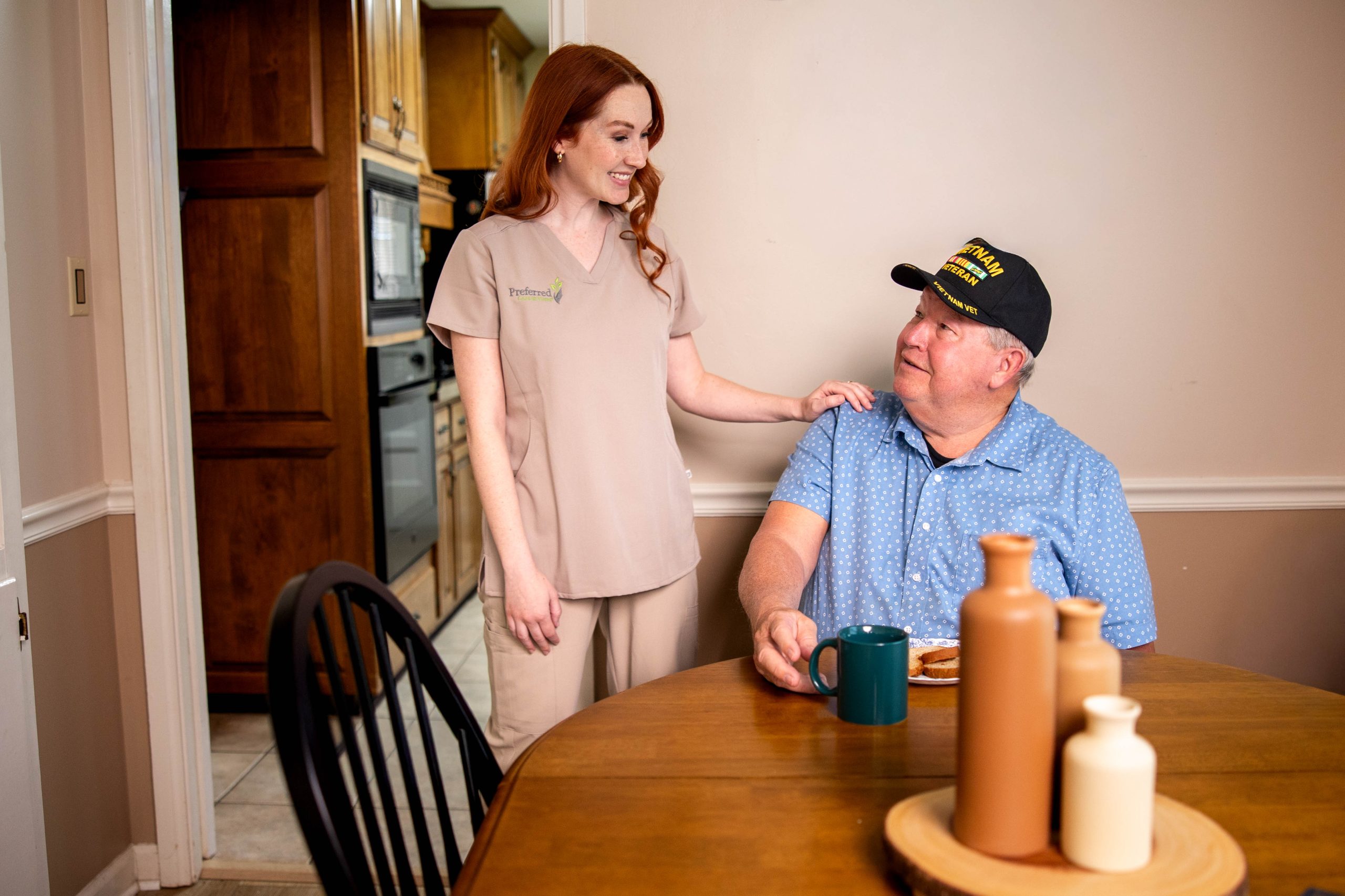

Caring for an elderly parent or spouse can feel rewarding and exhausting in the same hour, and the one person whose health almost no one tracks is the caregiver. You’ll find what family caregiver wellness actually means, how to spot strain early, and what to do when self-care alone runs out. Michael Murphy, CSA, and our local team in Wake and Johnston counties walk families through these decisions every week.
Key Takeaways
-
Caregivers report higher depression rates than non-caregivers per CDC
-
Wellness strain spans mental health, sleep, work, and finances
-
Federal support helps caregivers continue care longer than otherwise possible
-
Outside help often prevents nursing home placement
Why family caregiver wellness is a health issue, not optional self-care
According to the CDC, 25.6% of caregivers reported lifetime depression compared with 18.6% of non-caregivers in 2021 to 2022.
That gap is not a mood. It’s a measurable health outcome captured in the CDC’s caregiver health surveillance, and it shows up in family caregivers long before anyone calls themselves burned out. Family caregiver wellness covers more ground than stress relief tips suggest, and treating it as optional is what keeps the caregiver role from being sustainable.
Caregiver wellness has five dimensions worth tracking:
-
Mental and emotional well-being. Depression, anxiety, and chronic worry tied to the caregiving journey, not just a hard week.
-
Physical health. Blood pressure, weight, and the chronic health conditions that drift when your appointments get skipped.
-
Sleep. Enough sleep most nights, not catch-up sleep on weekends.
-
Social connection. At least one steady tie outside the household to prevent social isolation.
-
Help-seeking and support. Knowing which community resources, services, and people you can call before you need them.
If wellness is multi-dimensional, then so are the warning signs. The person providing care often overlooks their own well-being while managing a loved one’s daily needs.
Some families also bring in companion and homemaker care as one form of help-seeking, so a few hours each week stop falling on the same person. Protecting your own well-being is what makes the caregiver role last. Financial resources matter too, because out-of-pocket costs add another layer of strain to an already demanding life.
Signs your caregiver wellness is slipping
Wellness usually slips in patterns, not in one dramatic moment. According to the CDC, about 1 in 8 unpaid caregivers age 45 or older report worsening confusion or memory loss. That’s the kind of signal most caregivers explain away as “just tired,” when it’s actually the body telling on the daily routine. Stress builds when the caregiving load outpaces recovery time, and chronic stress affects both mental and physical health.
Run this checklist against your last 30 to 60 days. If three or more apply, your wellness is already slipping and the situation can feel overwhelming.
-
[ ] You are sleeping fewer than 6 hours most nights
-
[ ] You have skipped your own medical appointments in the last 60 days
-
[ ] You have stopped seeing friends or pulled back from family gatherings
-
[ ] You feel irritable, weepy, or overwhelmed more days than not
-
[ ] You are forgetting things you used to track easily
-
[ ] Your blood pressure, weight, or eating patterns have shifted noticeably
Per the CDC, caregivers had worse results than non-caregivers on 13 of 19 tracked health indicators in 2021 to 2022.
That’s not one bad metric. It’s a pattern across physical and mental health that points to the same root cause: the caregiving load is outrunning the recovery time. High blood pressure and chronic stress often appear together in caregivers who feel the daily demands are overwhelming.
Physical activity drops when there’s no time left in the day. Social isolation deepens when you cancel plans week after week. Dementia caregiving adds another layer, because the person you’re caring for may not recognize the strain you’re under.
If a loved one is ill and needs constant attention, the risk of caregiver burnout climbs even higher. These common experiences among caregivers show up in households across every community. The next question is which wellness habits actually move those numbers and which are folklore.
Wellness habits backed by research, not just advice
Per a 2026 West Journal of Nursing Research systematic review of 23 randomized trials covering 2,651 caregivers, 10 studies reduced caregiver burden, 7 of 15 reduced depression, and 3 of 8 reduced anxiety.
That review tells you something important: not every popular tip moves outcomes, but several do. Here are the wellness habits with the strongest evidence behind them. These help you take care of yourself while continuing to provide care.
-
Protect a sleep window. Schedule 7 to 8 hours and treat it as a care task, not a luxury you’ll catch up on later.
-
Add 20 minutes of physical activity most days. Walks count. Two 10-minute segments count. Consistency beats intensity for caregivers.
-
Keep at least one social connection alive each week. A friend, a support group, or a standing call with another family member helps you connect with life outside caregiving.
-
Try a structured mindfulness or online positive-emotion practice. These programs reduced depression and anxiety in randomized trials of dementia caregivers, more reliably than vague “relax more” advice. Mindfulness exercises help caregivers focus on the present rather than spiraling into worry.
The pattern is consistency, not perfection. None of these reverse the warning signs above on their own, but together they slow the slide and buy time. Self-care practices grounded in evidence give you a foundation to take care of your own needs without guilt.
For more on caregiving and aging at home, our senior home care blog is a place to keep learning. The next question is what happens when the job, not the caregiving itself, becomes the wellness threat.
Working while caregiving: protecting your wellness on the job
Work strain crosses into wellness territory when you can check more than one of these:
-
You have used most of your sick or vacation days for caregiving responsibilities
-
You are missing meetings or deadlines you used to handle without effort
-
You are turning down promotions or stepping back from projects
-
You are paying out of pocket for care just to keep working at all
-
You are losing sleep over scheduling, not over the caregiving itself
-
You are unable to balance work and family members’ care needs
According to the CDC, nearly 2 in 10 employed caregivers stop working entirely and 4 in 10 reduce their hours.
If your job is shrinking around your caregiving, that’s a wellness signal, not a personal failure, and the CDC’s caregiving public health strategy treats it that way. According to the CDC, about 80% of caregivers pay out of pocket for routine care expenses, averaging $7,200 per year and nearly $9,000 per year for dementia caregiving.
Financial strain is part of caregiver wellness, because managing finances under that kind of pressure feeds back into sleep, stress, and physical health. Many caregivers also juggle caring for a child while managing an elderly parent’s needs, which compounds the responsibility. Work-life balance becomes nearly impossible when you’re caring for multiple family members across different generations.
Some caregivers qualify for protection under the Family Medical Leave Act, which allows unpaid time off without losing your job. Breaking large tasks into smaller steps can help when you’re managing both work and caregiving, though it doesn’t solve the underlying time crunch.
For caregivers facing severe work disruption, live-in care covers the around-the-clock hours that kill careers. The earlier outside help enters the picture, the less likely the job becomes the casualty.
When self-care isn’t enough: family-only care vs. outside support
There comes a point where self-care alone runs out. According to the ACL’s National Family Caregiver Support Program, the program delivered nearly 6 million hours of respite to more than 604,000 caregivers in its most recent reporting cycle. Asking for help isn’t unusual. It’s already operational at federal scale, and local resources exist to support families in various ways.
|
Decision factor |
Family-only care |
Family care + outside support |
|
Caregiver sleep and own health |
Holding steady |
Already slipping or declining |
|
Work disruption |
Manageable adjustments |
Reduced hours or job exit |
|
Care complexity and hours |
Light to moderate, shareable |
Heavy, around-the-clock, or specialized |
|
Risk of nursing home placement |
Low |
Rising or already discussed |
Per the ACL, 74% of caregivers said support services helped them provide care longer than otherwise possible. The choice is not whether to keep caregiving. It’s how to make caregiving last. When a friend or family member can no longer manage alone, outside support becomes the bridge that keeps older adults at home. Aging in place becomes possible when the right support structure exists, and many aging parents want to stay in familiar surroundings as long as they can.
Per the ACL, nearly 62% of caregivers said that without support services, the care recipient would be living in a nursing home.
Other family members often want to help but need guidance on what tasks they can realistically take on. Friends sometimes offer support but don’t know where to start. Agencies like the Family Caregiver Alliance offer answers and connect families to local resources. When you contact a home care provider, you’re not giving up. You’re adding capacity so the person you care about can stay home. A support group can also provide emotional connection and practical advice from others who understand the caregiving journey.
Where Preferred Care at Home of Apex fits
Michael Murphy, CSA, owns the local team serving families across Wake and Johnston counties. When you call (984) 246-8900, you reach Michael directly, not a corporate call center. Depending on what your household actually needs, that might mean a few hours of senior companion care services each week, full-time live-in support, or transition care when a loved one is coming home from the hospital and the household isn’t ready to absorb the new routine alone.
Frequently asked questions about caregiver wellness
How can family caregivers take care of themselves?
Family caregivers protect their own wellness by tracking sleep, social connection, work strain, and finances, not just stress.
Self-care for caregivers is broader than relaxation tips. It includes guarding a sleep window, keeping at least one weekly social connection, watching for work disruption, and tracking out-of-pocket costs. According to the ACL, 88% of caregivers who use support services say those services help them be a better caregiver, which means asking for help is part of taking care of yourself. Self-care is not optional when you’re responsible for another person’s daily needs.
Why is respite care important for caregivers?
Respite care gives caregivers planned breaks so they can rest, work, or attend their own appointments without abandoning the loved one.
Respite care covers planned, short-term relief from caregiving. According to the ACL, the National Family Caregiver Support Program delivered nearly 6 million hours of respite to more than 604,000 caregivers in its most recent reporting cycle. Without that kind of break, caregivers often hit the work, sleep, and health thresholds described above. Preferred Care at Home of Apex offers in-home companion support and live-in caregiver services that give families this kind of breathing room.
How do I stop feeling guilty when I take a break from caregiving?
Guilt usually fades when caregivers see that breaks let them keep providing care longer, not less.
The guilt is real and common. It also misreads the data. Per the ACL, 74% of caregivers said support services helped them provide care longer than otherwise possible. A caregiver who burns out and steps away entirely cannot help anyone. A caregiver who takes scheduled breaks usually can. Reframe the break as part of the care plan, not a betrayal of it.
When does caregiving become too much for one person?
Caregiving has crossed the line when sleep, work, health, or family relationships are visibly suffering for more than a few weeks.
The clearest signs are stacked: missed sleep most nights, missed appointments of your own, work hours cut, and rising tension at home. When more than two of these are present for several weeks, family-only care has likely passed its limit. Preferred Care at Home of Apex helps Wake and Johnston County families decide what kind of in-home support fits, before things reach a crisis point.
How do working caregivers manage appointments, meds, and a full-time job?
Working caregivers keep a shared calendar, batch tasks where possible, and add outside help before missing work becomes routine.
The realistic answer is that most can’t do it alone for long. Practical fixes include shared family calendars, batching errands, and using companion care for daytime coverage so appointments and work meetings stop colliding. The earlier outside help enters the picture, the less likely the job becomes the casualty.
How do you ask family members for caregiving help?
Ask with a specific task and time window, not a vague request, and offer one concrete way each person can contribute.
Vague requests like “I need more help” rarely work. Specific ones do. List the tasks (rides, meal prep, overnight stays, financial paperwork), pick the family member best suited to each, and ask for a defined time commitment. Hold a short family meeting with one decision per topic. If the family pool can’t cover the gaps, that is useful information about whether outside support is needed next.
Does an older adult in your life need help at home?
An older adult likely needs help when daily routines, safety, or follow-through on appointments and meds are slipping.
Watch for missed bills, unopened mail, weight loss, falls, confusion about routines, or a home that no longer feels managed. Per the CDC, about 80% of adults with Alzheimer’s disease and related dementias receive care at home, which means most of these signals show up in familiar surroundings, not facilities. Preferred Care at Home of Apex serves families across Apex, Garner, Fuquay-Varina, and the surrounding Wake and Johnston County area when these signs start stacking.
If you are running on empty and the caregiving load is starting to break things at home, our team can help you build a plan that protects both of you. Call (984) 246-8900 or reach out today.
Michael Murphy, MBA, CSA
Agency Director & Owner
Certified Senior Advisor