The thought most family caregivers can’t say out loud sounds like this: if I accept help, I’m failing my mom, my dad, my spouse. That belief gets the story exactly backwards, and this post is here to flip it: what acceptance actually means, the signs that point to bringing help in before a crisis does, and the layered options that sit between “family only” and “facility.” Preferred Care at Home of Northwest New Jersey, owned by Jill Malanga, has walked alongside families across six counties through this exact moment.
Key Takeaways
- Over 11 million U.S. adults provide unpaid care and support for someone with dementia, per the CDC. You are not alone in this
- About 80% of adults with Alzheimer’s receive care in their homes, per the CDC. Accepting help usually keeps people home longer, not the opposite
- Acceptance is a process, not a single decision, per the Alzheimer’s Association
- Northwest New Jersey families can layer support: in-home care, respite, adult day care services, and state-funded relief
What “Accepting Alzheimer’s Care” Actually Means
In 2023, family caregivers in the United States provided about 18.4 billion hours of care to someone living with a form of dementia, according to the CDC.
That number is staggering, and it is also a kind of permission. Millions of families are doing this work, and most of them eventually accept outside support. The Alzheimer’s Association describes denial and fear as normal first reactions when someone is diagnosed with dementia, with acceptance unfolding in stages over months, sometimes years.
So what is acceptance, really? It is less a single moment and more a shift in how you see the road ahead.
- It is not abandonment, and it is not handing your loved one off
- It is not waiting until a fall, a wandering incident, or hospital stay forces a rushed decision
- It is building a care team while the person with Alzheimer’s disease can still participate in the choices
- It is recognizing that accepting help is not the same as being helpless
That last line is the one most families need to hear twice. Asking for help is not easy, and Jill Malanga and our team understand why. Acceptance is what makes the next set of decisions possible, which brings us to the signs that point to when help is appropriate.
Signs It’s Time to Bring In Help (Without a Crisis Forcing It)
Families who wait for a crisis usually find themselves making rushed decisions under stress. A fall at 2 a.m., a missed turn driving home, a stove left on. The earlier signals are quieter, and they are the ones worth watching for, because acting on them keeps choices in your hands instead of an emergency room’s.
Here are the signals we hear about most often from families across Sussex, Morris, and Warren counties:
- Bathing or dressing has become a daily struggle, with resistance or safety concerns around the tub
- Meals are being skipped, repeated, or prepared in ways that are no longer safe
- Nighttime confusion is interrupting sleep for the person with dementia, the caregiver, or both
- Medication reminders are not being followed reliably, even with notes and pillboxes
- The primary caregiver hasn’t taken a full day off in months and is running on empty
- Siblings are starting to argue about who is doing what, and decisions are stalling
Those last two points matter more than people realize. Caregiver strain is not a personal failing, it is a decision signal.
Nearly 2 in 10 employed caregivers report having to stop working entirely, and 4 in 10 have had to reduce working hours, according to the CDC.
When daily activities (bathing, dressing, meals, what clinicians call “activities of daily living”) tip past what one person can handle, that is the moment to bring in Companion and Homemaker Care services, or, when memory loss symptoms are more pronounced, dedicated Alzheimer’s Care. The signals tell you when. The next question is what.
The Staged Support Framework: It’s Not Just “Home” or “Facility”
About 80% of adults with Alzheimer’s disease and related dementias receive care in their homes, according to the CDC.
Most families never make the leap to a memory care facility. The reason that is possible is the set of layered options that sits between “family only” and “memory care unit.” Acceptance does not mean choosing the end state today; it means knowing where you are on the staircase and what the next step looks like.
|
Decision Point |
Option A wins when… |
Option B wins when… |
|
Family-only care vs. in-home Alzheimer’s care |
Care needs are light and caregiver capacity is stable |
Bathing, supervision, or caregiver strain are becoming unsustainable |
|
Ongoing in-home care vs. respite or adult day support |
Help is needed regularly at home each week |
The main issue is caregiver exhaustion or periodic coverage |
|
Continued home-based support vs. facility transition |
Safety can still be managed with added help at home |
24-hour oversight needs exceed what home support can safely provide |
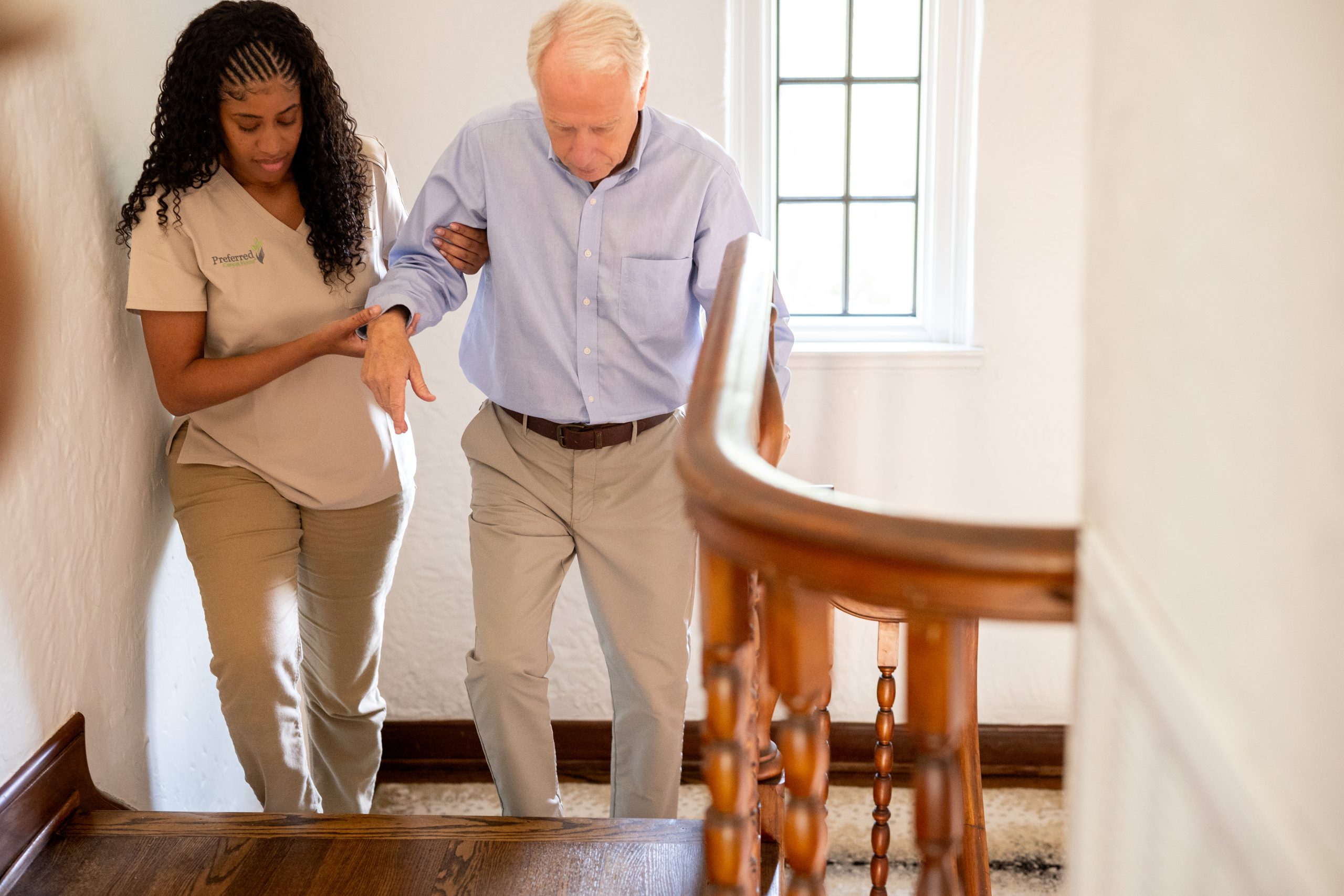
Most families move through these stages; they rarely skip from family-only directly to a nursing home or memory care facility. A few weeks of Respite Care can buy a worn-down spouse the rest needed to make a clear-headed decision about what comes next. If nighttime confusion is the issue, live-in care often closes the safety gap without a move.
When facility comparison enters the picture
If 24-hour memory care oversight eventually becomes necessary, the CMS Five-Star Quality Rating System gives families a way to compare nursing homes on health inspections, staffing, and care measures. It is one tool among several, used when the time comes. Most Northwest NJ families we work with use the framework above first, and many never need the last row.
Northwest New Jersey Resources That Ease the Transition
If you set this article down and make one call this week, here is what we’d point you toward:
- Contact your local New Jersey Area Agency on Aging for information, transportation, case management, and homemaker or respite referrals across Morris, Sussex, Warren, Hunterdon, Somerset, and Passaic counties
- Ask about the New Jersey Statewide Respite Care Program if the primary caregiver needs short-term breaks to rest, recover, or simply catch their breath
- Explore adult day support programs where people with dementia can stay engaged in a safe community setting while family members work or rest
- Build the team early: family members, the diagnosing doctor, and a personality-matched in-home caregiver who knows the person, not just the diagnosis
We provide Dementia Care across the six-county service areas, with caregivers matched to your loved one’s personality and the quiet rhythms of the home. Winter weather, lake-community access, rural Sussex roads, the commute from Morristown back to a parent’s house in Hackettstown: we plan around those realities so coverage stays reliable when families need it most.
Frequently Asked Questions
How do you accept an Alzheimer’s diagnosis and the need for care?
Acceptance is a process that unfolds over time, not a decision made in a single afternoon.
Acceptance unfolds over time, not in a single moment. The Alzheimer’s Association notes that denial and fear are normal first reactions when someone receives a diagnosis, and most families move through them in stages. Talking openly with the person diagnosed, the doctor, and other family members helps.
So does giving yourself permission to feel grief without confusing it with failure. Many families find that joining a support group or seeking advice from others who have walked this path makes the process less isolating. Discussing the diagnosis early allows the person with Alzheimer’s to participate in care decisions while they still can.
When should someone with Alzheimer’s get in-home care?
Most families bring in help when daily tasks like bathing, meals, or supervision start exceeding what the primary caregiver can sustain.
Most families bring in help when daily activities like bathing, meals, or supervision start exceeding what the primary caregiver can sustain. Nearly 1 in 3 family caregivers provides care for four years or more, per the CDC.
That length of time is unsustainable without support. Our Alzheimer’s Care scales from a few hours a week up to live-in coverage, so you can match the level of support to what your loved one actually needs.
How do caregivers cope with guilt?
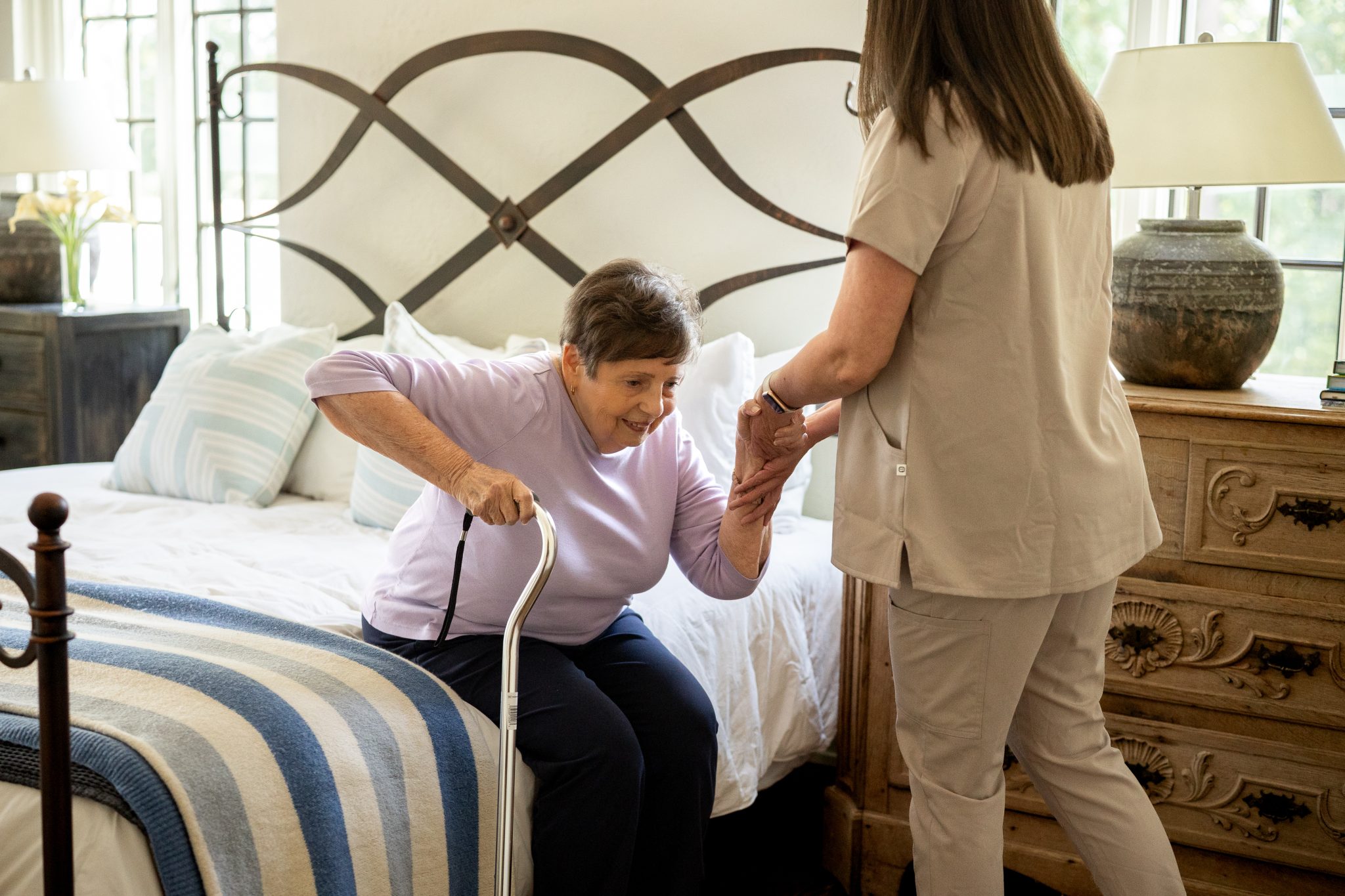
Guilt eases when you reframe accepting help as building a team around your loved one, not stepping away from them.
Guilt often eases when caregivers reframe accepting help as building a team around their loved one, not stepping away from them. The Alzheimer’s Association reminds families that accepting help is not the same as being helpless. At Preferred Care at Home, caregivers are matched to your loved one’s personality, so the help feels like an addition to the family rhythm, not a replacement of it.
Support groups can also provide a space to process those feelings with people who understand the emotional weight of this disease. Many family members find relief once they see the benefits of memory care at home.
My parent says nothing is wrong, so how do I bring in help without a fight?
Start small and frame the help around tasks, not the diagnosis.
Start small and frame the help around tasks, not the diagnosis. Many families introduce a caregiver as someone helping with housekeeping, driving, or meal prep, then let companionship grow naturally. The person with dementia keeps their dignity, and you avoid the head-on argument about needing care.
Within a few weeks, the relationship usually becomes the easy part. Problem behaviors often decrease when the person feels supported rather than managed. Friends and other family members can help reinforce that the caregiver is there to make life easier, not to take over.
At what point does staying home become unsafe?
Home becomes unsafe when supervision, wandering risk, or nighttime confusion exceed what the caregiver can manage even with outside help.
Home becomes unsafe when supervision, wandering risk, or nighttime confusion exceed what the caregiver can manage even with outside help. Falls, leaving the stove on, missed medication reminders, and nighttime wandering are the most common tipping points. Adding overnight or live-in coverage often resolves the safety question without requiring a move out of the home.
If those measures are not enough, a memory care facility may become the safer environment for the person with Alzheimer’s disease. Discussing these concerns with your doctor can help you determine when a nursing home or specialized memory care facility is the right next step.
How do siblings agree on care when one person is doing everything?
Sibling conflict usually eases when the family meets early, names who handles what, and includes the person with Alzheimer’s in planning while they can still participate.
Sibling conflict usually eases when the family meets early, names who handles what, and includes the person with Alzheimer’s in planning while they can still participate. The Alzheimer’s Association notes that timely diagnosis allows the person with dementia to be involved in decisions about their own care.
That shared responsibility, mapped out clearly, often stops resentment before it starts. When everyone agrees on a plan, and on what part belongs to each sibling, the arguments about “who’s doing enough” tend to quiet down.
Can respite care help before we make a bigger care decision?
Respite care gives the primary caregiver short-term coverage so a bigger decision doesn’t have to be made under exhaustion.
Respite care gives the primary caregiver short-term coverage so a bigger decision doesn’t have to be made under exhaustion. The New Jersey Statewide Respite Care Program can subsidize short-term breaks for families caring for someone with Alzheimer’s. Preferred Care at Home of Northwest New Jersey provides Respite Care by the hour, the day, or in overnight blocks, so you can rest before the next decision arrives.
That break is helpful for both your well-being and your ability to provide care when you return. Taking time away reduces anxiety and helps you return with clearer judgment.