
Expert Alzheimer's In-Home Care for Chattanooga Residents
Preferred Care at Home of Chattanooga provides Alzheimer’s in-home care for families across the greater Chattanooga area and Hamilton County — built around supervision, structured routines, and escalation from a few hours of help up to around-the-clock coverage. Our senior care adapts to each stage of memory loss so the plan fits the person, not a template. TennCare CHOICES, VA benefits, and long-term care insurance accepted. Tennessee PSSA License #L000000038642.
- Experienced and trained caregivers, including CNA/HHA professionals
- Bilingual support in English and Spanish
- Flexible schedules from one to twenty-four hours
- Experienced and trained caregivers, including CNA/HHA professionals
- Bilingual support in English and Spanish
- Flexible schedules from one to twenty-four hours

Why Choose Preferred Care at Home for Alzheimer's Care in Chattanooga?
The Alzheimer’s Association reports that 6 in 10 people with dementia will wander — which makes provider readiness for supervision and home-safety planning the most important question families can ask. Preferred Care at Home supports families with an active Alzheimer’s Association partnership that shapes how our caregivers approach memory loss day to day.
Our caregivers go through a seven-step screening process and are matched to your loved one by personality and history. Care escalates from a few hours up to around-the-clock home care without changing providers, so the relationship your loved one trusts stays intact as needs grow. Affordability, access, and compassion have been part of our mission since 1984. Tennessee PSSA License #L000000038642.
How Alzheimer's In-Home Care Works in Chattanooga
Alzheimer’s home care is not companion care with extra visits. It combines assistance with bathing, dressing, toileting, and mobility delivered through cueing — plus structured daily routines that lower agitation, home-safety management for stove and exit risks, and behavior support during sundowning. According to the CDC, about 80% of adults with Alzheimer’s disease and related dementias receive care in their homes. The Alzheimer’s Association reports that 6 in 10 people with dementia will wander, which is why home care centers on continuous supervision and home-safety planning.
Continuous Supervision and Safety
Caregivers manage wandering risk, exit awareness, stove monitoring, and fall hazards during the hours families cannot cover. According to the CDC, more than 1 in 4 adults age 65 and older fall each year — which is why supervised hours matter more than visit count in Alzheimer’s care. Continuous supervision protects overall well-being throughout the day and keeps a familiar voice present during moments of confusion.
Highlights:
- Wandering risk and exit awareness
- Stove and fall-hazard monitoring
- Familiar voice during moments of confusion

Structured Routines That Reduce Confusion
Predictable wake, meal, hygiene, and activity rhythms lower agitation and sundowning episodes. Caregivers follow the same sequence each day so the person with Alzheimer’s spends less energy reorienting and more in moments that feel familiar. These routines address unique needs and create a sense of stability that improves quality of life — the same matched caregiver returning each visit reinforces that predictability.
Highlights:
- Same caregiver, same sequence each day
- Predictable routines reduce sundowning
- Stability that improves quality of life
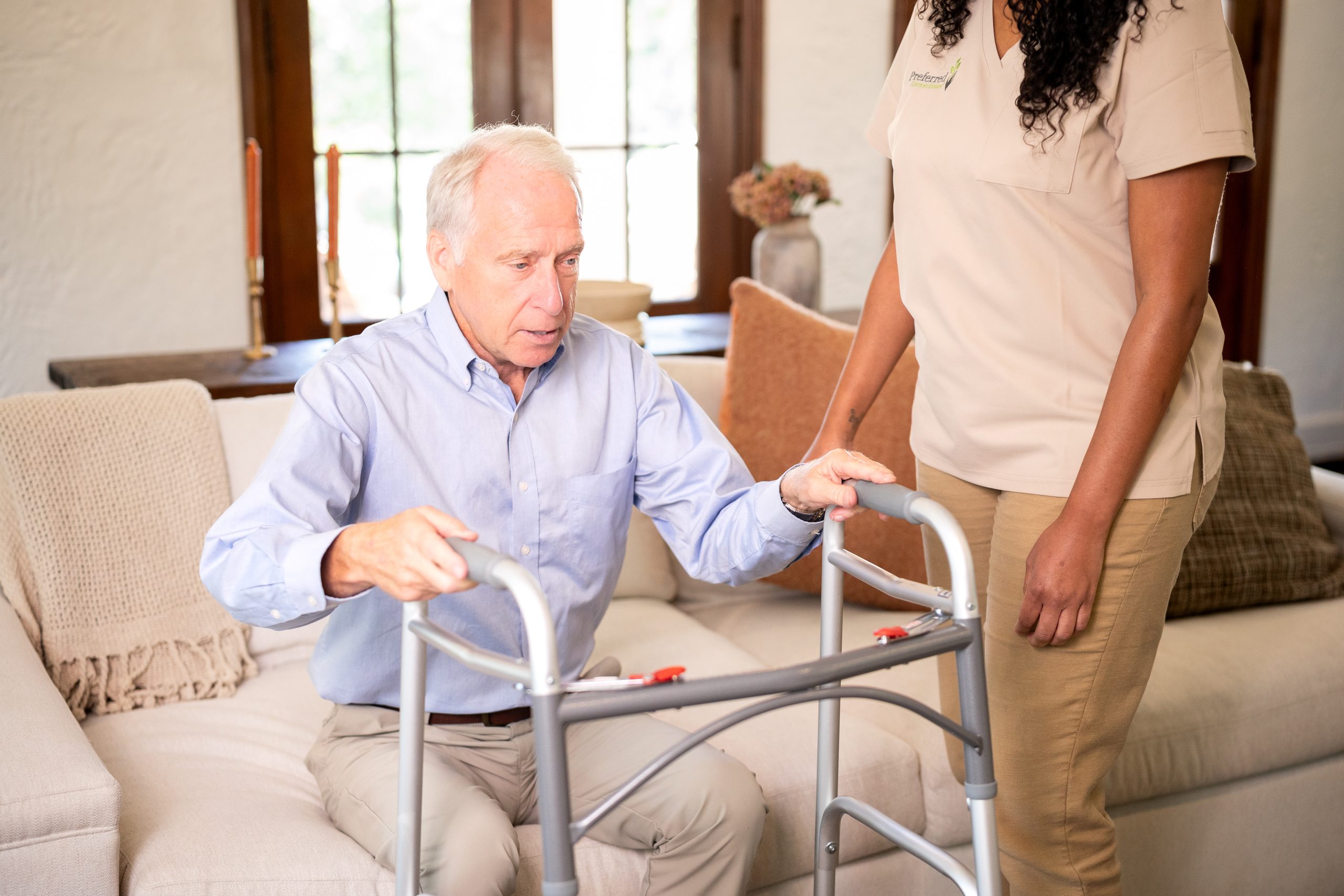
Family Relief Without Handing Over Control
Family caregivers regain sleep, work hours, and emotional bandwidth. Care plans flex from a few hours of respite up to 24-Hour Replacement Care without changing providers or rebuilding trust with a new agency. Emotional support extends to the whole family, not just the person receiving care. A family member managing care from a distance gains visibility and peace through the Transparency Room portal and regular updates.
Highlights:
- Care scales from hours to 24-hour coverage
- No provider change as needs escalate
- Transparency Room portal visibility
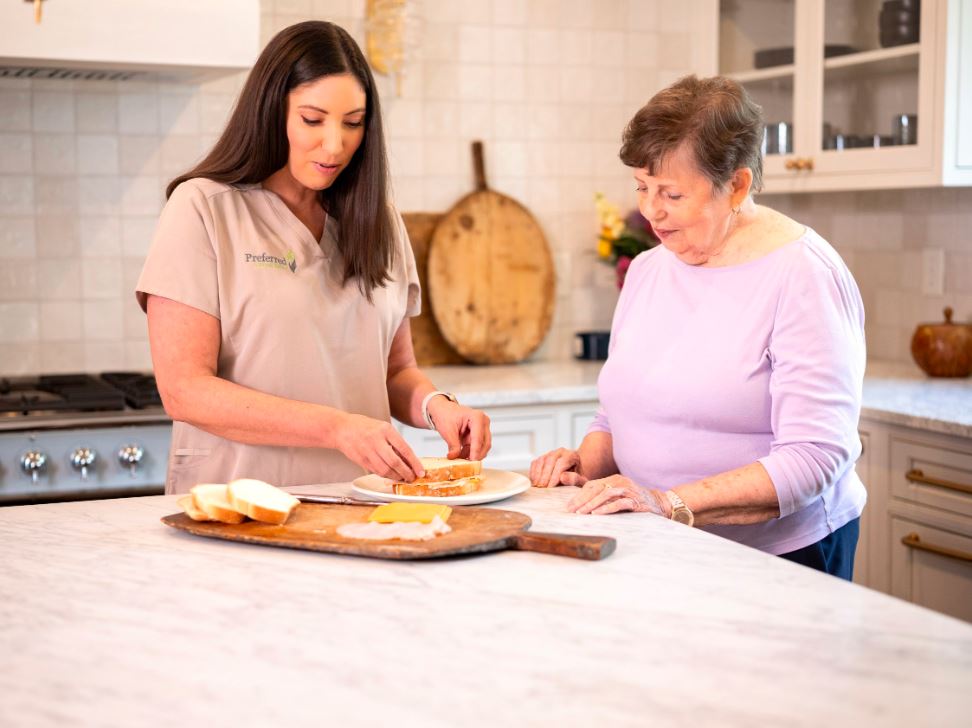
Caregivers Matched by Personality
We match caregivers to your loved one’s life history, temperament, and comfort cues. For a person with Alzheimer’s, a stable, well-matched caregiver reduces confusion and resistance — which protects dignity and independence inside their own home. Compassionate caregivers build trust through consistency and respect, creating relationships that honor the person behind the diagnosis. Mismatches get reassigned without a fight. Schedule a consultation today.
Highlights:
- Matched by life history and temperament
- 7-step screening before any visit
- Reassignment without a fight if needed

Home-Safety Planning and Management
Safety at home is engineered, not assumed. Our caregivers work with families to remove tripping hazards, monitor stove and exit risks, install nightlights along the bathroom path, and secure exterior doors. Hazard removal happens in the actual home — not a generic checklist. Home-safety planning is reviewed as the Alzheimer’s stage progresses and risk levels change.
Highlights:
- Hazard removal in the actual home
- Stove, exit, and fall risk assessment
- Updated as dementia stage progresses

24-Hour and Transition Care
Care scales from a few hours of respite to comprehensive coverage across all waking hours — and up to around-the-clock 24-Hour Replacement Care when needed. Transition Care bridges the critical first weeks after a hospital stay at Erlanger, CHI Memorial, or Parkridge, stabilizing routines during the discharge window before ongoing Alzheimer’s support begins. You never need to rebuild trust with a new provider as needs escalate.
Highlights:
- Transition Care after hospital discharge
- 24-Hour Replacement Care available
- Active Alzheimer's Association partnership
What To Expect: Our Alzheimer's In-Home Care Process

Step 01
Initial Contact
You reach Bill Tobin’s team by phone at (423) 531-8696 or email to describe the situation in plain words. No forms, no callbacks — just a conversation about what’s happening at home.

Step 02
Consultation and Assessment
We meet with you to review memory-loss patterns, supervision gaps, and home-safety risks — listening carefully to what matters most to your loved one and to your family.

Step 03
Care Plan Development
You receive a written care plan that names hours, tasks, and escalation triggers — with personalized plans that adapt as needs evolve. Payment pathways (TennCare CHOICES, VA benefits, LTC insurance, private pay) are confirmed at this stage.

Step 04
Caregiver Matching
We assign a caregiver matched to your loved one’s personality and history — not just shift availability. Every caregiver passes our 7-step screening process including background checks, registry verification, and personality evaluation.

Step 05
Care Begins
Care starts on the schedule you set. You monitor schedules and caregiver notes through the Transparency Room portal from anywhere — so family members managing care from a distance stay informed without constant phone calls.
When Chattanooga Families Need Alzheimer's In-Home Care
Not every family needs in-home Alzheimer’s care yet. These patterns signal it is time to plan — and some of them signal it is already overdue.
Situation
What It Looks Like
How We Help
Situation
What It Looks Like
A diagnosis has outpaced the family’s coverage — memory loss has moved past what calls, weekly visits, and a spouse can manage. Missed meals, lost mail piles, repeated phone calls, and uneasy conversations about driving are the early signs.
How We Help
We layer in daily living assistance at home so seniors are not left to manage the gaps by themselves — starting with as little as one hour per visit and scaling from there.
Situation
What It Looks Like
Description
Wandering or stove safety has become a real risk — an exit attempt at night, a scorched pot, a neighbor calling. The NIA treats wandering as a defining Alzheimer’s safety risk; when these events begin, the care required has already escalated.
How We Help
We provide structured supervision during the riskiest windows, exit awareness planning, and home-safety management to close the gaps before the next incident occurs.
Situation
What It Looks Like
Description
The family caregiver is running out of reserves — sleep is broken, work is suffering, and other family members are stepping back. A 2026 Alzheimer’s & Dementia report notes depression prevalence among dementia caregivers is 30% to 40% across multiple studies.
How We Help
Respite hours start at a single afternoon per week and scale to overnight and weekend coverage — protecting the family caregiver’s health while keeping your loved one safely at home.
Situation
What It Looks Like
Description
Families confuse Alzheimer’s care with companion care and hire for companionship, then find the caregiver is not equipped to handle wandering, sundowning, or ADL cueing — leaving supervision gaps that create safety risks.
How We Help
We explain the distinction between companion care and Alzheimer’s care on the first call and assign caregivers who are screened and matched specifically for dementia support — not just general senior care.
Situation
What It Looks Like
Description
Families assume Medicare will cover Alzheimer’s in-home care, then discover after a hospital stay that ongoing non-medical supervision, bathing, and dressing are not covered — leaving a sudden funding gap at the worst possible moment.
How We Help
We explain coverage pathways on the first call: TennCare CHOICES, ECF CHOICES, VA benefits (Aid and Attendance), and long-term care insurance with claims support. Private pay is also an option with no funding gap.
Situation
What It Looks Like
Description
A hospital discharge from Erlanger or CHI Memorial reveals how much support was already missing — and rushed caregiver choices at that stage mean less time to find the right personality match before the person is home and needs care.
How We Help
Transition Care stabilizes the routine during the first weeks home, with the same caregiver who will stay on for ongoing Alzheimer’s support — so no trust is lost during the most critical window of recovery.
Local Services Throughout the Chattanooga Area
Celebrating life, dignity and independence.®
Since 1984, the founders of Preferred Care at Home have had the privilege of assisting clients in improving their quality of life while still recognizing and maintaining their dignity and independence. Preferred Care at Home has continued this tradition by only referring the most reliable, compassionate, experienced and affordable caregivers to client’s homes or care facilities.
We understand that long-term care can be costly, which is why we have focused on building a reputation of offering access to quality services at affordable prices.
Ask about the wide range of non-medical services available from 1 to 24 hours per day, and about qualified live-in caregivers who can provide 24-hour peace of mind for you or your loved one.
We Serve:
- Apison
- Athens
- Cleveland
- Collegedale
- East Ridge
- Georgetown
- Harrison
- Lookout Mountain
- Lookout Valley
- Middle Valley
- Ooltewah
- Signal Mountain
- Snow Hill
- Soddy Daisy
- Walden
Frequently Asked Questions About Alzheimer's Care in Chattanooga
What is the difference between Alzheimer's care and companion care?
Companion care centers on conversation and engagement, while Alzheimer’s care adds supervision, cueing, home-safety management, and behavior support.
A companion may sit, talk, and accompany someone with mild memory issues. Alzheimer’s care assumes wandering risk, sundowning, and ADL cueing are present in daily life. That is why dementia-trained caregivers, structured routines, and exit awareness sit at the center of the service rather than companionship alone.
What ongoing support does Alzheimer's in-home care require?
Care plans are reviewed regularly because memory loss changes, so hours, tasks, and escalation triggers update as needs shift.
Most families start with part-time hours and increase coverage as supervision needs grow. Preferred Care at Home revises care plans when behavior, safety, or family capacity changes. Plans can escalate to 24-hour replacement care without changing the caregiver assignment when possible, which preserves continuity for the client.
Is it safe for someone with Alzheimer's to live at home?
Home can stay safe for someone with Alzheimer’s when supervision matches the person’s actual risk level.
Safety depends on whether wandering risk, fall risk, and stove safety are covered during all hours the person is awake. Seniors deserve to age in place and live independently when it makes sense for their situation, and peace of mind comes from knowing someone is always present during higher-risk hours. Home modifications layer with caregiver hours to engineer safety rather than assume it.
What are signs my parent needs dementia home care?
Missed meals, repeated calls, lost mail piles, exit attempts, and a caregiver running on broken sleep all signal it is time.
Three signal categories matter most: supervision gaps between visits, a wandering or stove-safety event, and family caregiver exhaustion. Any one of the three is reason to schedule a consultation rather than wait for the next event. Care can start with a few hours per week and scale — no family has to overcommit to start.
Does Medicare pay for Alzheimer's home care?
Medicare does not generally pay for non-medical Alzheimer’s home care, though other pathways may apply.
Medicare covers short-term medical home health under specific conditions. For ongoing non-medical Alzheimer’s supervision, families in Tennessee typically use TennCare CHOICES, ECF CHOICES, VA benefits including Aid and Attendance, long-term care insurance, or private pay. Preferred Care at Home accepts each pathway and helps families coordinate eligibility.
When should a person with Alzheimer's no longer live alone, even for an hour?
When wandering risk, stove safety, or confusion makes solo time unsafe even briefly, continuous supervision becomes the right plan.
NIA guidance treats wandering as a defining Alzheimer’s safety risk. Families often describe the trigger as the moment the situation no longer feels manageable or safe. That moment is when part-time check-ins shift to scheduled supervision tied to risk, not convenience.
Is respite care enough, or do we need ongoing Alzheimer's home care?
Respite covers a caregiver break, while ongoing Alzheimer’s home care covers the person’s continuous supervision needs.
A 2026 Alzheimer’s & Dementia report notes depression prevalence among dementia caregivers is 30% to 40% across multiple studies. Respite reduces caregiver strain but does not replace daily supervision for someone with moderate to advanced dementia. Many families combine both to protect the caregiver and the loved one.
How do Preferred Care at Home caregivers support clients with Alzheimer's?
Caregivers support structured routines, ADL cueing, supervision, home-safety planning, and emotional reassurance during confusion.
Each of our professional caregivers completes the seven-step screening process and is matched by personality and life history. Daily support covers bathing, dressing, mobility, medication reminders, meals, light housekeeping, and supervision tuned to the person’s dementia stage. Clients receive consistent, compassionate care from a dedicated caregiver who honors dignity and independence.
How does Preferred Care at Home support families navigating memory loss?
We coordinate care, answer questions as they arise, and connect families to local Alzheimer’s Association community resources.
Families monitor caregiver schedules, notes, and tasks remotely through the Transparency Room. Preferred Care at Home maintains an active partnership with the Alzheimer’s Association and refers families to support groups, education, and respite resources. Our goal is great care for your loved one and real support for the family member managing from a distance.
How quickly can Alzheimer's in-home care start in Chattanooga?
Care can start within days of the initial consultation and caregiver match. Hospital discharge coordination with Erlanger, CHI Memorial, or Parkridge is available.
After a phone call or email to our office, we schedule a home consultation, build the care plan, and match a caregiver — all within a few days in most situations. Preferred Care at Home of Chattanooga regularly coordinates with discharge planners so hands-on Alzheimer’s care is in place as soon as your loved one comes home. Call (423) 531-8696 to start.