
24/7 In-Home Care in Chattanooga That Feels Like Family
You’ve watched the day-to-day get harder. Bathing takes longer, the pillbox isn’t getting opened, and you lie awake wondering what happens if your parent gets up at 3 a.m. with the bathroom light off. Preferred Care at Home of Chattanooga builds live-in home care around one personality-matched caregiver, screened through our 7-step process, with a care plan shaped around your loved one’s actual day. Tennessee PSSA License #L000000038642.
- Experienced and trained caregivers, including CNA/HHA professionals
- Bilingual support in English and Spanish
- Flexible schedules from one to twenty-four hours
- Experienced and trained caregivers, including CNA/HHA professionals
- Bilingual support in English and Spanish
- Flexible schedules from one to twenty-four hours
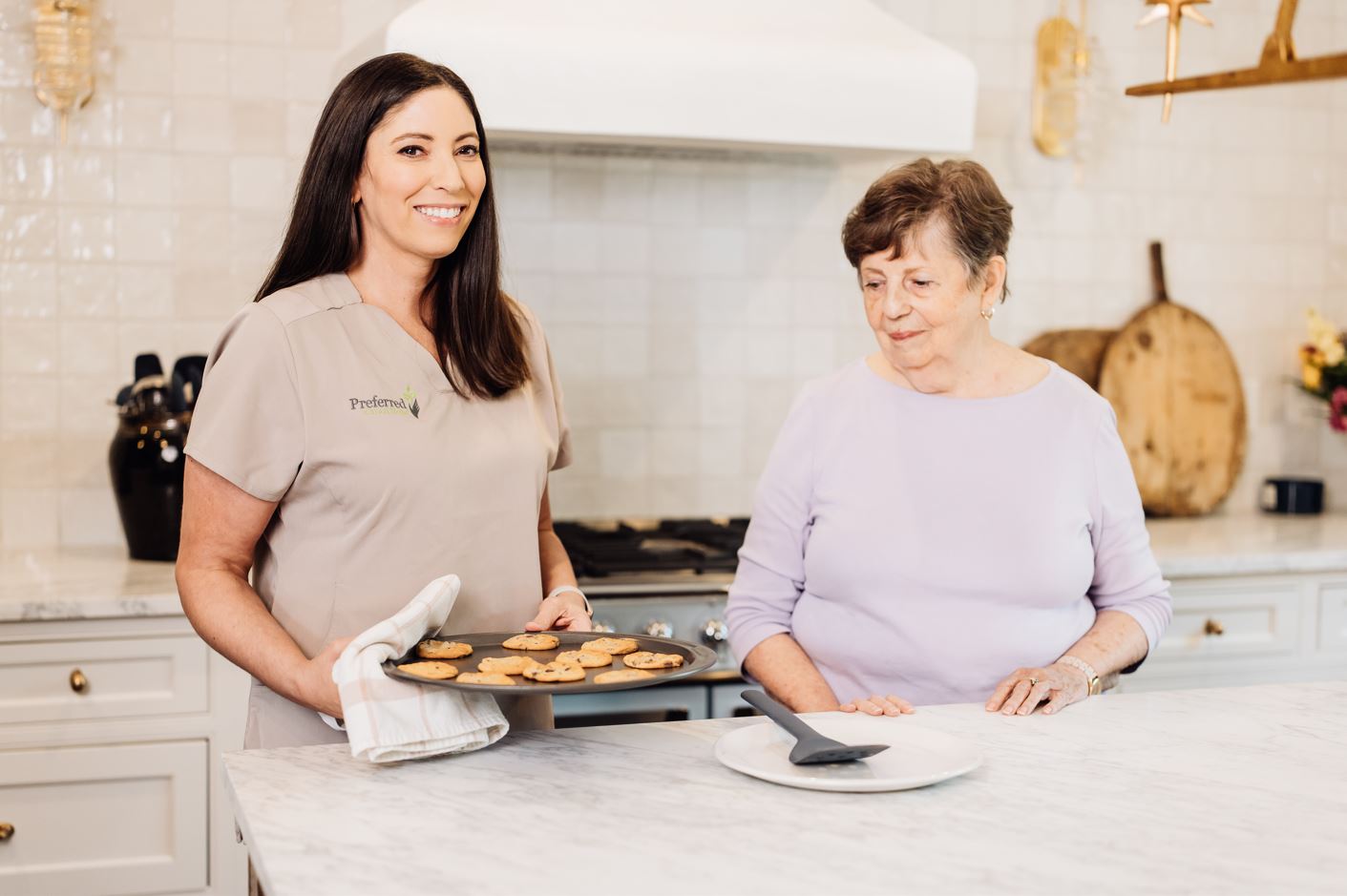
Why Families Choose Preferred Care at Home for Live-In Care in Chattanooga
Every caregiver clears a 7-step screen before stepping into your home: background checks, reference verification, skills assessment, personality evaluation, multi-touchpoint interviews, ongoing training, and quality monitoring. Families track the schedule, caregiver notes, and visit updates through the Transparency Room online portal from anywhere.
We accept TennCare CHOICES, ECF CHOICES, VA benefits (Aid and Attendance, VA Community Care, Guide Program), Long-Term Care Insurance, and private pay under Tennessee PSSA License #L000000038642. Families worried about who walks through the door get our answer: personality matching instead of availability matching, documented background checks, Transparency Room visibility for remote family, and the option to start with as little as one hour and scale up.
What Live-In Home Care Provides in Chattanooga
Live-in care means one caregiver lives in the home for an extended shift, sleeps overnight in a separate space, and is available through the day for assistance with bathing, dressing, mobility, toileting, medication reminders, meal prep, and light housekeeping. That’s a different model from 24-Hour Replacement Care, which uses a rotation of awake caregivers covering the clock in shifts. Caregivers are matched by personality and life experience — not whoever happens to be open.
Continuous Supervision Without Shift Handoffs
One caregiver, present overnight, closes the long gaps when most accidents happen. According to the CDC, about 1 in 4 adults age 65 and older report a fall each year. A familiar caregiver catches the small changes that predict the next one: a wobbly transfer, a new medication side effect, a rug that needs to go. That consistency provides peace of mind for families who can’t be there every hour of the day.
Highlights:
- One caregiver, no shift handoffs
- Catches small changes before they escalate
- Overnight presence closes the fall-risk gap

One Routine, One Familiar Face
Continuity is the mechanism. A single caregiver learns how your loved one takes coffee, which shirt is comfortable, and what time the afternoon slump hits. For memory care at home, that consistency reduces agitation and sundowning behavior — because the person in the room is never a stranger. Seniors with dementia respond better when the face is familiar and the routine is predictable.
Highlights:
- Same caregiver learns household rhythms
- Reduces sundowning and agitation
- Builds trust through consistency
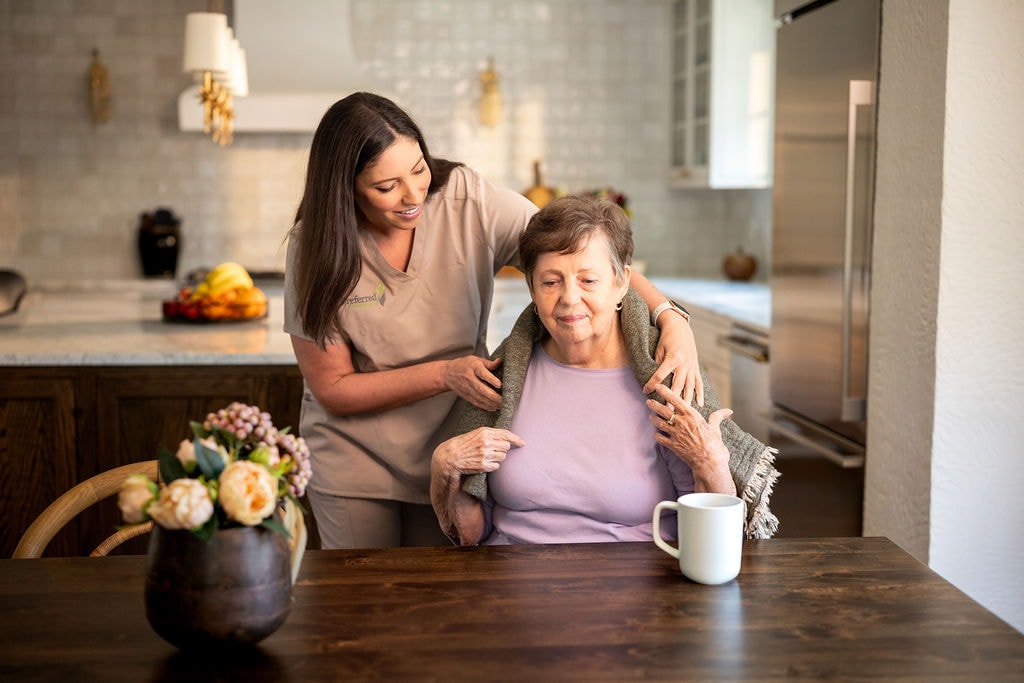
Lower Risk of Hospital Readmission
After discharge from Erlanger, CHI Memorial, or Parkridge, the danger window is the first thirty days. Medication reminders, recovery monitoring, and follow-up appointment coordination interrupt the readmission cycle. A caregiver in the home when prescriptions get filled, appointments get scheduled, and recovery routines get followed catches the small slips before they land your loved one back in the ER.
Highlights:
- Medication reminders and recovery monitoring
- Follow-up appointment coordination
- First 30 days after Erlanger/CHI Memorial
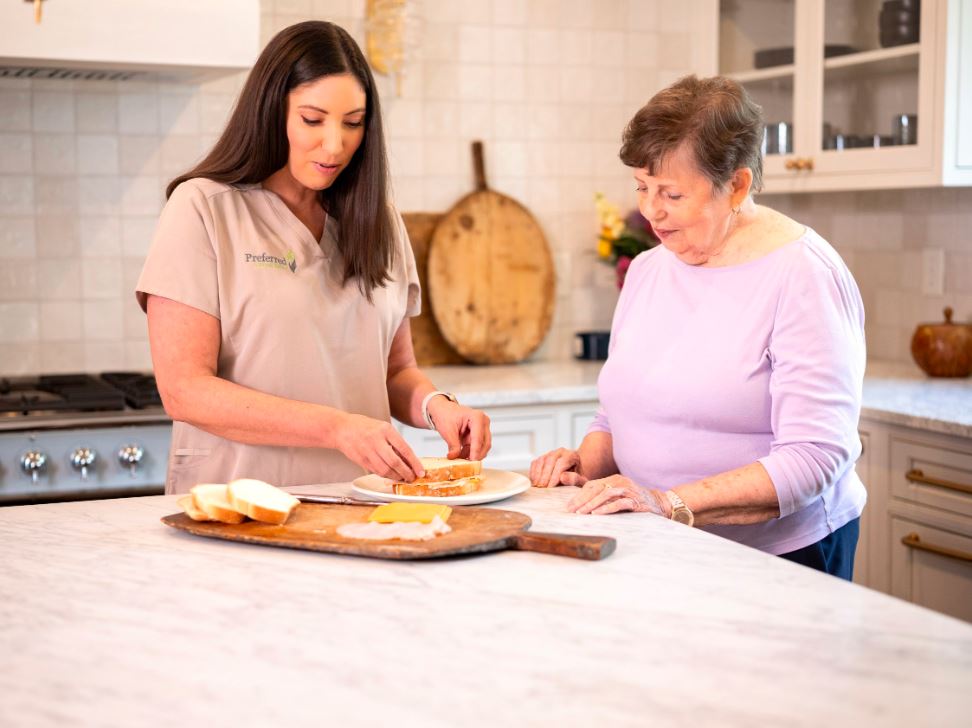
A Family That Can Sleep Through the Night
The spouse stops staying half-awake listening for footsteps. The adult child in another time zone stops opening the laptop at midnight to check on Mom. Visit notes, voice messages, and the day’s schedule are visible in the Transparency Room, so remote family members can verify what’s happening without calling for a status update. That visibility brings real peace of mind when managing care from a distance. Schedule a consultation today.
Highlights:
- Transparency Room portal visibility
- Remote family stays informed 24/7
- No overnight anxiety for spouse or adult child

Personality-Matched Caregivers
We match caregivers by personality, life experience, and work background — not just who happens to be available. Each care plan is built around your loved one’s unique needs and household routines, not a template. Every caregiver clears our 7-step screening process before stepping into your home. If the personality fit isn’t right, caregivers are rematched without a fight.
Highlights:
- 7-step screen before any visit
- Matched by personality, not availability
- Reassignment without a fight if needed

Flexible Escalation to 24-Hour Care
Live-in care fits clients who sleep reliably through the night. When overnight needs escalate — frequent repositioning, active wandering, or around-the-clock supervision — 24-Hour Replacement Care uses awake rotating caregivers without changing agencies. TennCare CHOICES, VA benefits, and Long-Term Care Insurance are accepted for both care models so families never face a funding gap as needs grow.
Highlights:
- Scales to 24-Hour Replacement Care
- TennCare CHOICES and VA Benefits accepted
- No provider change as needs escalate
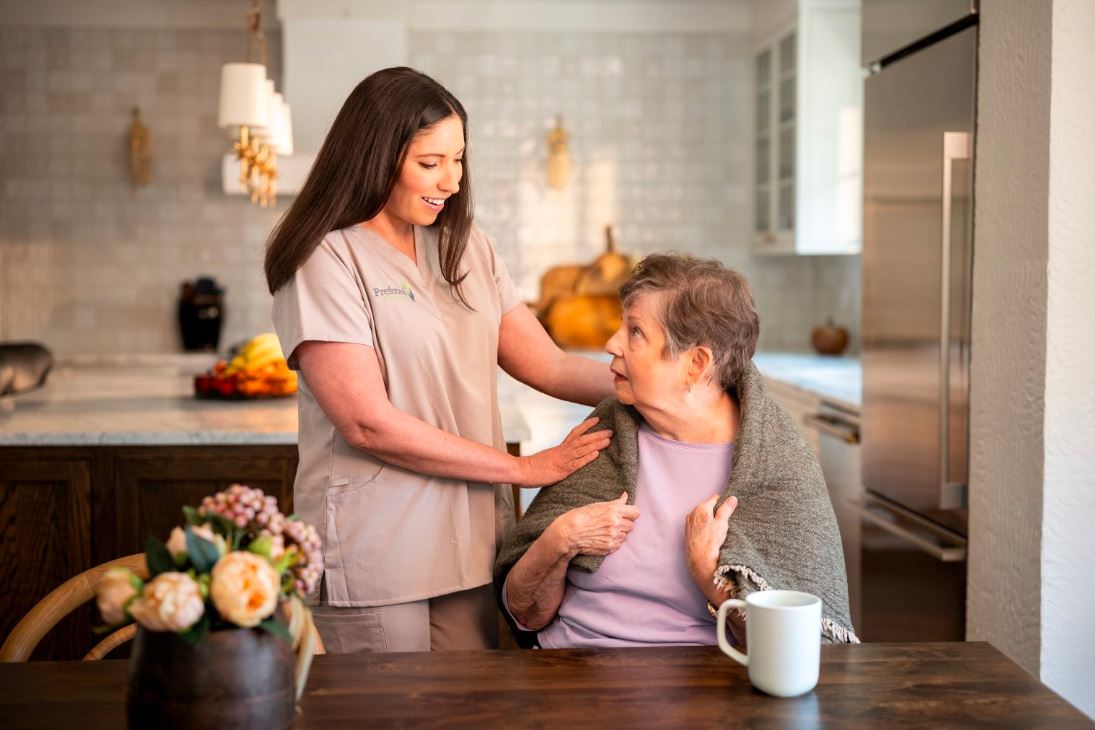
What To Expect: Our Live-In Care Process in Chattanooga

Step 01
Contact Our Office
Reach us at (423) 531-8696 or email billtobin@preferhome.com to discuss what’s happening at home. We respond the same day.

Step 02
Personalized Consultation
A personalized assessment covers daily routines, mobility, medication schedule, and overnight needs — so the care plan fits the actual day, not a standard template.

Step 03
We Write the Care Plan
Your plan is written around your loved one’s actual day — identifying the gaps where help is needed most and confirming the payment pathway: TennCare CHOICES, VA benefits, LTC insurance, or private pay.

Step 04
Caregiver Match
We match by personality, life experience, and work background — not just who is available. Every caregiver clears our 7-step screen including background checks, skills assessment, and personality evaluation.

Step 05
Care Begins — You Stay Informed
Care starts on your schedule. Track visits, caregiver notes, and task updates through the Transparency Room portal from anywhere — phone, tablet, or laptop — so remote family stays in the loop.
Who Live-In Home Care Is Right For in Chattanooga
Live-in care is not for everyone — it fits a specific decision point. If you’re at that point, these situations will confirm it. And if something else fits better, we’ll tell you that too.
Situation
What It Looks Like
How We Help
Situation
What It Looks Like
Bathroom trips at 2 a.m., a recent stumble, a parent living alone after losing a spouse. The fall risk does not pause when the lights go out, and a caregiver sleeping in the same house can respond before a fall becomes a fracture.
How We Help
A live-in caregiver is available overnight and can respond quickly — so aging in place holds up after the first close call instead of ending with a hospital admission.
Situation
What It Looks Like
Description
An adult child or spouse is covering daily care while holding down a full-time job. Sleep is short, work is suffering, and the loved one has started noticing the edge in the caregiver’s voice.
How We Help
Live-in care relieves the primary family caregiver of overnight responsibility — protecting their health so the relationship stays intact rather than breaking down under accumulated exhaustion.
Situation
What It Looks Like
Description
Coming home from Erlanger, CHI Memorial, or Parkridge with new mobility limits, a longer medication list, and follow-up appointments stacked across the week — the recovery window is the highest-risk period.
How We Help
A live-in caregiver handles the recovery routine, medication reminders, and transportation while the family focuses on healing — with post-discharge situations prioritized for fast placement.
Situation
What It Looks Like
Description
Sundowning, repetitive questions, and wandering risk are getting harder to manage alone. Part-time visits are no longer covering the supervision gaps and the family is considering a facility.
How We Help
One steady caregiver who knows the daily routine reduces confusion and creates the predictability that calms dementia behavior — often extending safe time at home significantly past what part-time visits can achieve.
Situation
What It Looks Like
Description
Families are not sure whether to choose live-in care or 24-Hour Replacement Care — and the wrong choice wastes money or leaves overnight supervision gaps.
How We Help
If the client sleeps reliably through the night, live-in care is the right fit. If the client needs awake overnight supervision (repositioning, active wandering), we recommend 24-Hour Replacement Care and explain the cost difference clearly.
Situation
What It Looks Like
Description
Families assume Medicare covers live-in home care after a hospital stay and delay planning when they discover it does not — creating a gap between discharge and the start of real support.
How We Help
We explain funding pathways on the first call — TennCare CHOICES, ECF CHOICES, VA benefits, and Long-Term Care Insurance — so no family goes without a plan while waiting on Medicare coverage that will not arrive.
Local Services Throughout the Chattanooga Area
Celebrating life, dignity and independence.®
Since 1984, the founders of Preferred Care at Home have had the privilege of assisting clients in improving their quality of life while still recognizing and maintaining their dignity and independence. Preferred Care at Home has continued this tradition by only referring the most reliable, compassionate, experienced and affordable caregivers to client’s homes or care facilities.
We understand that long-term care can be costly, which is why we have focused on building a reputation of offering access to quality services at affordable prices.
Ask about the wide range of non-medical services available from 1 to 24 hours per day, and about qualified live-in caregivers who can provide 24-hour peace of mind for you or your loved one.
We Serve:
- Apison
- Athens
- Cleveland
- Collegedale
- East Ridge
- Georgetown
- Harrison
- Lookout Mountain
- Lookout Valley
- Middle Valley
- Ooltewah
- Signal Mountain
- Snow Hill
- Soddy Daisy
- Walden
Frequently Asked Questions About Live-In Home Care in Chattanooga
What is the difference between live-in care and 24-hour care?
Live-in care uses one caregiver who sleeps in the home overnight; 24-hour care uses a rotation of caregivers who stay awake through the night.
Live-in care fits clients who sleep reliably and benefit from one familiar face. 24-Hour Replacement Care fits clients who need awake overnight supervision for repositioning, toileting, or wandering. The choice starts with one question: can your loved one sleep through the night without help? Preferred Care at Home assesses that during intake.
What ongoing support comes with live-in home care?
Care plans are updated as needs change, and families track every visit, caregiver note, and task through the Transparency Room online portal.
Care plans adjust as mobility, cognition, or medication routines change. Families access the Transparency Room from anywhere to see schedules and caregiver notes. If personality fit isn’t right, caregivers are rematched. Clients receive consistent support that adapts to their loved one’s unique needs.
Does Medicare pay for live-in home care?
Medicare does not pay for non-medical live-in home care; it covers limited skilled home health under specific clinical criteria.
Medicare covers short-term skilled home health (nursing, therapy) when ordered by a doctor — not non-medical companionship, personal care, or live-in support. For ongoing care at home, families typically combine private pay, Long-Term Care Insurance, VA benefits, or TennCare CHOICES. Preferred Care at Home accepts all four pathways.
Can a caregiver stay overnight in my home?
Yes. Overnight care can mean either live-in (caregiver sleeps in the home) or 24-Hour Replacement Care (awake overnight rotation).
A caregiver can stay overnight in two ways. Live-in care has one caregiver sleeping in the home and available if needed. 24-Hour Replacement Care has awake caregivers rotating through the night. The right choice depends on whether the client wakes frequently or sleeps through the night. Seniors who sleep reliably benefit most from live-in home care.
Is live-in care cheaper than assisted living?
Live-in care often costs less than equivalent 24-hour rotating care; whether it costs less than assisted living depends on care intensity and home setting.
Live-in care is usually less expensive than 24-hour rotating coverage because one caregiver covers a longer shift. Compared to assisted living, the math depends on hours needed and current home costs, including utilities, taxes, and maintenance. Families can compare home care costs during a consultation with our Chattanooga office.
What services are included with in-home senior care?
Assistance with bathing, dressing, mobility, toileting, medication reminders, meal prep, light housekeeping, and companionship — adjusted to each person’s care plan.
A typical care plan covers assistance with bathing, dressing, mobility and transfer support, toileting, medication reminders, meal preparation, light housekeeping, and companionship. Some clients need most of these; some need a few. The plan is built around what the day actually looks like, not a service menu.
How quickly can live-in home care start in Chattanooga?
Care can begin once the consultation, care plan, and caregiver match are complete; urgent post-hospital situations are prioritized.
Care starts once three things happen: an in-person or phone consultation, a written care plan, and a personality-matched caregiver assignment. Post-discharge situations from Erlanger, CHI Memorial, or Parkridge are prioritized. Preferred Care at Home does not commit to specific hour counts before assessment is complete. Families receive a clear timeline during the initial visit.
What should I look for in a live-in home care provider in Chattanooga?
Look for licensed agencies, documented screening, personality-based caregiver matching, multi-payer support, and transparent visit tracking.
Verify state licensing — in Tennessee, a Personal Support Services Agency license. Ask about the screening process: Preferred Care at Home uses a 7-step screen. Confirm the agency matches by personality, not availability. Ask about payment pathways and how you’ll see what’s happening day to day. Tennessee PSSA License #L000000038642.
Can TennCare help pay for care at home in Chattanooga?
TennCare CHOICES and ECF CHOICES can cover personal care at home for eligible Tennesseans 65+ or adults with qualifying disabilities.
TennCare CHOICES serves adults 65+ and adults with physical disabilities who qualify for home and community based services or nursing-facility-level care. ECF CHOICES supports adults with intellectual and developmental disabilities. Preferred Care at Home is an approved provider for both programs and helps families navigate eligibility. Seniors across southeast Tennessee use TennCare to access home care services.
How does Preferred Care at Home ensure caregiver quality for live-in care?
Every live-in caregiver clears a 7-step screen, is matched by personality, and is monitored through the Transparency Room portal and ongoing supervision by our Chattanooga office.
The 7-step process covers background checks against sex offender and abuse registries, reference verification, skills assessment, personality evaluation, multi-touchpoint interviews, training validation, and ongoing quality monitoring. Caregivers are matched by personality and life experience — not just availability. If the fit is not right, reassignment happens without resistance. Call (423) 531-8696 to learn more.