
Specialized Dementia In-Home Care for Chattanooga Families
Memory loss stops looking like forgetfulness the day your parent leaves the stove on or refuses a shower. Preferred Care at Home of Chattanooga structures dementia support around routines, hands-on personal care, and respite for the family — with the same personality-matched caregiver returning visit after visit. Tennessee PSSA License #L000000038642.
- Experienced and trained caregivers, including CNA/HHA professionals
- Bilingual support in English and Spanish
- Flexible schedules from one to twenty-four hours
- Experienced and trained caregivers, including CNA/HHA professionals
- Bilingual support in English and Spanish
- Flexible schedules from one to twenty-four hours

Why Choose Preferred Care at Home for Dementia Care in Chattanooga?
According to the Alzheimer’s Association Tennessee Facts and Figures, Tennessee dementia caregivers provide 686 million unpaid care hours valued at $13.1 billion each year. That is the workload families absorb before formal help enters the picture. Our team brings over 110 years of combined experience caring for seniors, and the Chattanooga office holds Pinnacle Award recognition as a top-performing Preferred Care at Home franchise.
Caregivers are matched by personality, life experience, and dementia comfort, then screened through our 7-step process before any visit begins. Family members monitor schedules, caregiver notes, and visit logs through the Transparency Room portal. An active partnership with the Alzheimer’s Association shapes how our team is trained. Home Care Pulse, an independent satisfaction research firm, consistently ranks Preferred Care at Home among the top senior care agencies nationwide. Tennessee PSSA License #L000000038642.
How Dementia In-Home Care Works in Chattanooga
A dementia caregiver’s visit is not a social call. Within the first hour, your caregiver helps with bathing, dressing, toileting, and a meal, then moves into supervision, meal prep, medication reminders, and light housekeeping. Structure is the second mechanism — predictable routines, the same matched caregiver, and communication techniques like redirection, validation, and single-step instructions reduce agitation and the late-day confusion known as sundowning. Per the Alzheimer’s Association BRFSS fact sheet, 29.3% of Tennessee dementia caregivers provide 40 or more hours of care per week.
Daily Personal Care at Home
Dementia care at home covers bathing, dressing, toileting, medication reminders, and mobility assistance — the parts of caregiving most families cannot sustain alone for long. Care begins at one hour per visit and can extend to around-the-clock care as the condition progresses. Activities of daily living sit at the center of every visit, giving your loved one the hands-on support needed to stay safely and independently at home.
Highlights:
- Care from 1 hour to around-the-clock
- Full ADL support including toileting
- Customized care plans reviewed regularly
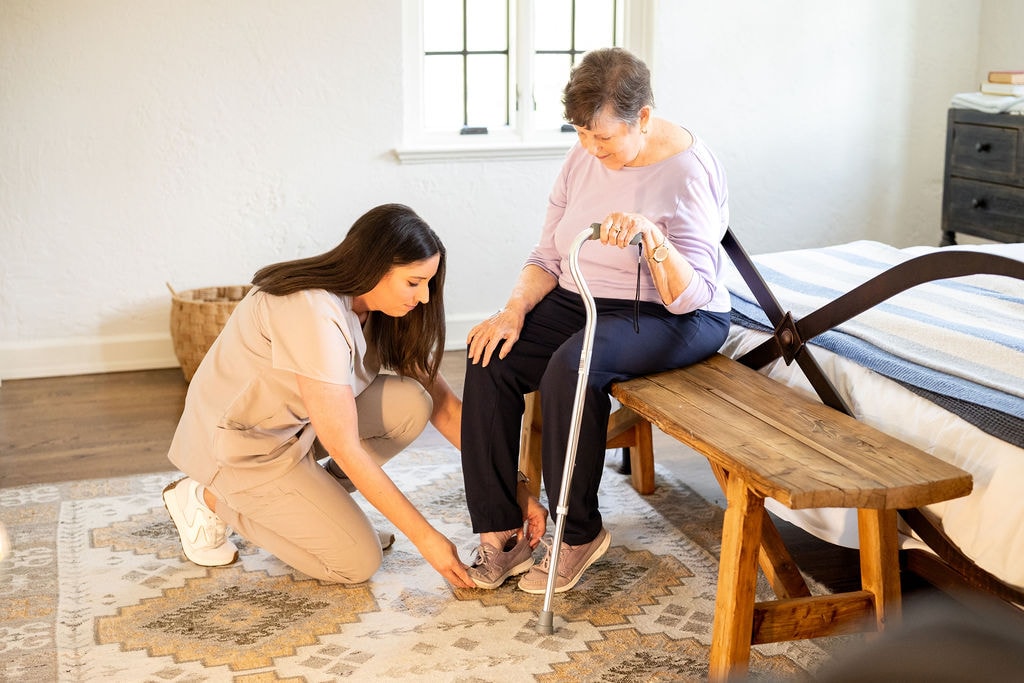
Routine and Sundowning Support
Consistent caregiver presence and a structured daily rhythm lower the agitation and disorientation that come with memory loss. Same meal times, same bathing window, and the same matched caregiver give the day a shape that dementia has been taking away. This stability helps your loved one live safely at home while maintaining dignity and well-being. Predictable routines are the most effective tool we have against sundowning.
Highlights:
- Same matched caregiver returns each visit
- Structured daily schedule reduces sundowning
- Redirection and validation techniques
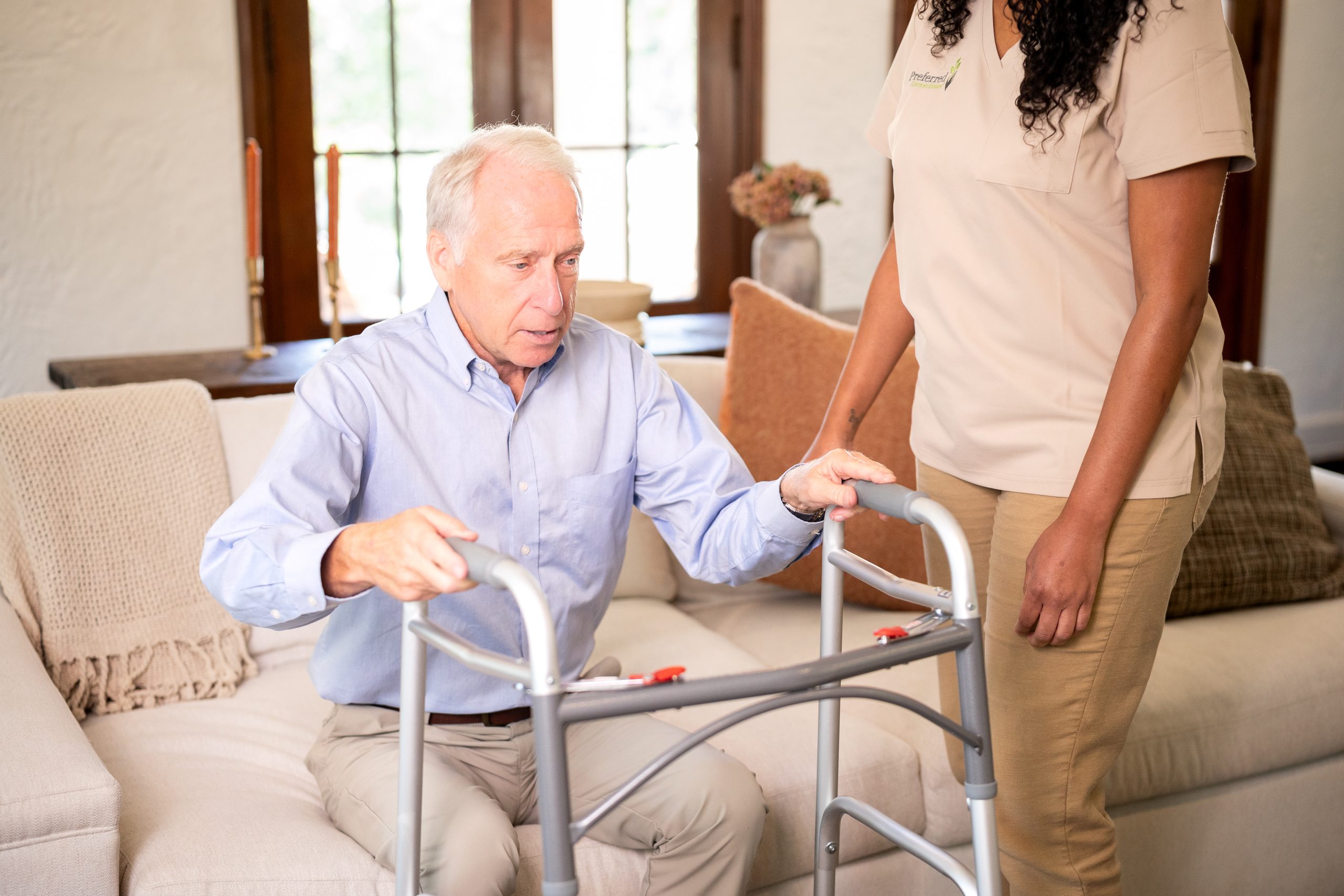
Supervision and Safety Monitoring
Wandering at night, leaving the stove on, and missed medications are safety signals that supervision needs to extend beyond family hours. Our caregivers provide structured oversight during the riskiest parts of the day, and can scale to 24-hour coverage when needed. Home modifications — grab bars, stove shutoffs, secured exterior doors, nightlights — layer with caregiver hours so safety is engineered, not assumed.
Highlights:
- Wandering risk managed with supervision
- Home modifications layer with caregiver hours
- 24-hour coverage available as needs grow

Family Caregiver Respite
According to the Alzheimer’s Association Tennessee Facts and Figures, 30.6% of Tennessee dementia caregivers report depression. In-home support protects the family caregiver’s health, not just the schedule. Respite hours can start at a few visits per week and scale as needs change — giving families breathing room to keep their own life going. Per CMS, the GUIDE Model includes respite services valued at up to $2,500 annually per eligible patient. Schedule a consultation today.
Highlights:
- Respite starts at a few visits per week
- Scales to overnight and weekend coverage
- CMS GUIDE Model may cover up to $2,500/year

Dementia Communication Support
Our caregivers use redirection, validation, single-step instructions, and sensory cues rather than correcting or arguing. When someone asks the same question repeatedly, answering calmly and shifting attention reduces distress. Photos, music, and familiar objects often reach what words cannot. An active partnership with the Alzheimer’s Association informs how our team approaches every memory care visit — helping families and seniors feel less alone.
Highlights:
- Alzheimer's Association partnership
- Redirection, validation, single-step cues
- Photo and sensory engagement techniques

24-Hour and Transition Care
Continuous dementia supervision keeps caregivers rotating in shifts so coverage never lapses overnight. Transition Care bridges the critical first weeks after a hospital stay at Erlanger, CHI Memorial, or Parkridge — stabilizing routines during the discharge window before ongoing dementia support begins. Most families who start with a few hours per week find that early routines hold longer and protect their loved one’s overall well-being.
Highlights:
- Transition Care after Erlanger/CHI Memorial
- Shift-based 24-hour coverage available
- Care starts with one hour and scales
What To Expect: Our Dementia Care Process

Step 01
You Call or Email
Reach Bill Tobin’s office at (423) 531-8696. We ask about routines, safety concerns, and what has been changing at home — and we listen with compassion before any plan is written.

Step 02
We Schedule a Consultation
A member of our team meets with you to understand the dementia stage, daily needs, and what family caregivers are carrying right now. We listen carefully to what matters most to your loved one and your family.

Step 03
We Build a Care Plan Around Routines
Your personalized care plan covers personal care, supervision, household tasks, and respite hours — adjustable as needs change. Payment pathways (private pay, TennCare CHOICES, VA benefits, LTC insurance) are confirmed at this stage.

Step 04
We Match a Caregiver by Personality
Caregivers are matched by personality, experience, and dementia comfort — not just availability — so the relationship can hold over time. Every caregiver passes our 7-step screening process before any visit begins.

Step 05
Care Begins and You See It in Real Time
Care starts at the schedule you set. You watch visits, caregiver notes, and updates through the Transparency Room portal from anywhere — so you stay informed without constant phone calls back and forth.
When Families in Chattanooga Need Dementia Home Care
Dementia home care fits some family situations better than others. Here is how to recognize the right moment — and the signals that should not wait.
Situation
What It Looks Like
How We Help
Situation
What It Looks Like
A spouse or adult child is doing dementia care plus personal care plus household work alone. 29.3% of Tennessee dementia caregivers provide 40 or more hours per week — the math stops working before the year is out.
How We Help
Respite hours start at a few visits per week and scale as needs change. Clients who reach out early often hold their routines together longer and protect their own peace of mind.
Situation
What It Looks Like
Description
Wandering at night, leaving the stove on, refusing medications, or late-day agitation that worsens as the sun goes down — these are safety signals, not just personality changes.
How We Help
Structured supervision during the riskiest windows, redirection techniques, and home modifications work together to close the safety gaps before a fall or wandering incident occurs.
Situation
What It Looks Like
Description
A new Alzheimer’s diagnosis or a hospital stay at Erlanger or CHI Memorial reveals how much support was already missing — and informal arrangements often crack under the pressure of a rushed transition.
How We Help
Transition Care stabilizes the routine during the first weeks home, then shifts into ongoing dementia support that protects daily life and well-being as the condition evolves.
Situation
What It Looks Like
Description
Depression, sleep loss, or chronic conditions in the primary caregiver are not bystander problems. The Alzheimer’s Association reports 30.6% of Tennessee dementia caregivers report depression.
How We Help
Scheduled respite hours — from a single afternoon to overnight coverage — protect the family caregiver’s health so the primary relationship can continue alongside professional care.
Situation
What It Looks Like
Description
Families assume a dementia diagnosis automatically means a move to a memory care facility, and delay starting in-home support while waiting to decide — missing the window when routines hold most effectively.
How We Help
Home care is not the right fit when wandering cannot be managed safely even with 24-hour coverage. But for most stages, in-home support with the right caregiver extends safe, dignified time at home significantly.
Situation
What It Looks Like
Description
Families say they will wait until things get worse. The pattern we see is the opposite: routines added early hold longer, and families who wait for a crisis end up paying more in hours and stress.
How We Help
Care starts with one hour per visit and scales to around-the-clock coverage — so families never have to choose between waiting and overcommitting before they know what fits.
Local Services Throughout the Chattanooga Area
Celebrating life, dignity and independence.®
Since 1984, the founders of Preferred Care at Home have had the privilege of assisting clients in improving their quality of life while still recognizing and maintaining their dignity and independence. Preferred Care at Home has continued this tradition by only referring the most reliable, compassionate, experienced and affordable caregivers to client’s homes or care facilities.
We understand that long-term care can be costly, which is why we have focused on building a reputation of offering access to quality services at affordable prices.
Ask about the wide range of non-medical services available from 1 to 24 hours per day, and about qualified live-in caregivers who can provide 24-hour peace of mind for you or your loved one.
We Serve:
- Apison
- Athens
- Cleveland
- Collegedale
- East Ridge
- Georgetown
- Harrison
- Lookout Mountain
- Lookout Valley
- Middle Valley
- Ooltewah
- Signal Mountain
- Snow Hill
- Soddy Daisy
- Walden
Frequently Asked Questions About Dementia Care in Chattanooga
What's the difference between dementia home care and a memory care facility?
Home care keeps your loved one in familiar surroundings with a matched caregiver; memory care relocates them to a secure facility with shift-based staff.
The deeper difference is caregiver continuity and family routine. At home, the same caregiver returns, the pets stay, and neighbors still wave. In a facility, supervision is continuous and built into the unit, but routines and faces rotate. Many families start with home care and revisit the decision if wandering or behaviors outpace what a house can hold safely.
What ongoing support does dementia care at home involve as the condition progresses?
Care plans scale: hours grow, personal care deepens, and supervision extends as memory loss advances and daily capacity narrows.
Early-stage dementia often needs companionship, medication reminders, and light housekeeping. Middle stages add bathing, dressing, toileting, and closer supervision for sundowning and wandering. Late stages may require around-the-clock care. We review the plan as needs change and will tell you honestly when home care has reached its limit and a facility conversation needs to happen.
What does a dementia caregiver actually do in the home?
A dementia caregiver handles bathing, dressing, toileting, meal prep, medication reminders, mobility help, and structured engagement through the day.
Specifically: assistance with bathing, dressing, and toileting; meal planning and preparation; medication reminders; mobility and transfer assistance; light housekeeping; and supervision for safety. Caregivers also use redirection and single-step communication to reduce agitation. If the day calls for companionship elements like reading aloud or a walk, those fit inside the same visit.
When does someone with dementia need home care?
Home care becomes appropriate when supervision, medication reliability, or personal care moves beyond what one family caregiver can sustain.
Practical signals include wandering at night, missed or doubled medications, refusing to bathe, weight loss from skipped meals, falls, and the family caregiver running on no sleep. None of these need to be a crisis to justify starting. Most families who wait for a crisis end up paying more in hours and stress than those who start with a few visits a week.
Can a person with dementia stay at home safely?
Yes, with the right combination of structured caregiver support, home modifications, and supervision matched to the dementia stage.
Safety at home is engineered, not assumed. Remove tripping hazards, install grab bars and stove shutoffs, secure exterior doors, and add nightlights along the path to the bathroom. Then layer in caregiver hours that cover the riskiest parts of the day. The CMS GUIDE Model exists specifically to help people with dementia stay home longer with coordinated support.
How do you handle communication when memory loss makes conversation hard?
Our caregivers use redirection, validation, single-step instructions, and sensory or photo cues rather than correcting or arguing.
When someone asks the same question for the fifth time, correcting them creates distress; answering calmly and shifting attention does not. When a memory is wrong, validation respects the emotion behind it. Single-step instructions work better than chained directions. Photos, music, and familiar objects often reach what words cannot. This compassionate approach helps combat loneliness and supports well-being.
How do you find the right dementia caregiver for my loved one?
We match by personality, life experience, and dementia comfort, then put your input on routines and preferences into the assignment.
Preferred Care at Home of Chattanooga runs a seven-step screening process before any caregiver meets a client, covering background checks, references, skills assessment, and personality evaluation. From there, the match comes from conversation: what your loved one likes, what they do not, what time of day is hardest, and which personalities they gravitate toward. Mismatches get reassigned without a fight.
Is respite care available for family caregivers of someone with dementia?
Yes, respite is built into most dementia care plans, and federal coverage may apply through the CMS GUIDE Model.
Per CMS, the GUIDE Model includes respite services valued at up to $2,500 annually per eligible patient. Tennessee provider notifications began July 1, 2025. Separate from GUIDE eligibility, Preferred Care at Home schedules respite hours from a single afternoon a week up to overnight and weekend coverage, often paired with Transition Care after a hospital stay.
How do I choose a dementia home care provider in Chattanooga?
Evaluate providers on five criteria: dementia-specific approach, full ADL and IADL coverage, respite awareness, documented visit verification, and fit for the current dementia stage.
Ask how the agency trains caregivers on dementia specifically. Confirm they cover bathing, dressing, and toileting — not just companionship. Ask how respite is scheduled and how visits are documented and verified. Ask how they match caregivers to dementia stage. Preferred Care at Home holds Tennessee PSSA License #L000000038642 and partners with the Alzheimer’s Association for ongoing caregiver training. Call (423) 531-8696 to start the conversation.
What does Tennessee PSSA licensure mean for dementia care families?
Tennessee licenses Personal Support Services Agencies under Tennessee Code § 52-2-420, requiring background checks, training, and supervision standards that informal caregivers are not held to.
A PSSA license means caregivers are registry-checked, the agency is accountable to the state, and families have a documented recourse if standards are not met. Preferred Care at Home of Chattanooga holds license #L000000038642. For families choosing dementia care in Chattanooga, a license number is the first thing to request from any provider.