
Skilled In-Home Care Services for Chattanooga Seniors
You noticed it. Your parent in Chattanooga is managing more than conversation can fix — prescriptions that need tracking, a blood pressure cuff that goes unused, a wound from recent surgery that needs daily attention. Preferred Care at Home brings trained caregivers into the home to handle medically-oriented tasks that sit between basic companionship and licensed nursing. Skilled support care keeps Chattanooga seniors safer at home and reduces the risk of readmission after a hospital stay.
- Experienced and trained caregivers, including CNA/HHA professionals
- Bilingual support in English and Spanish
- Flexible schedules from one to twenty-four hours
- Experienced and trained caregivers, including CNA/HHA professionals
- Bilingual support in English and Spanish
- Flexible schedules from one to twenty-four hours
Why Choose Us for Skilled Care in Chattanooga?
Skilled care needs in Chattanooga often arrive after a hospitalization, a new diagnosis, or a gradual decline in the ability to manage complex medication schedules. Preferred Care at Home caregivers are trained to provide structured support — medication reminders on a logged schedule, blood pressure and blood sugar tracking, wound dressing assistance directed by a physician, and post-discharge follow-through that prevents a second hospital stay.
Our team coordinates with physicians, therapists, and family members to keep everyone informed. The Transparency Room portal lets out-of-state family follow every visit, note, and completed task in real time.
Our Skilled Care Services in Chattanooga
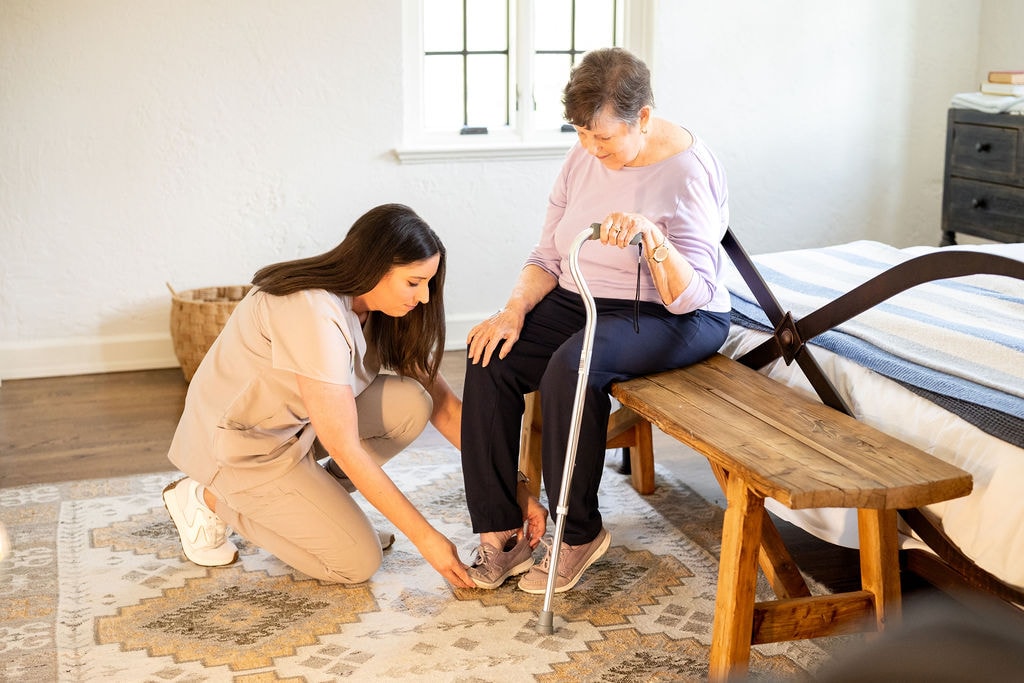
A skilled care caregiver arrives prepared — medication list reviewed, vitals log ready, wound care supplies in hand. Each visit follows a structured care plan developed with input from the family and the care team. Services adapt as medical needs change.
Medication Reminders & Management
Caregivers follow a written medication schedule, prompt clients at the correct time and dose, log each reminder, and flag missed doses or concerning reactions to the family coordinator. Complex regimens — multiple prescriptions, timed insulin, post-surgical antibiotics — are managed consistently and without confusion.
Highlights:
- Regular conversation and social engagement
- Familiar face on a predictable schedule
- Loneliness reduced with consistent visits
Vital Signs Monitoring
Blood pressure, pulse, temperature, weight, and blood glucose are checked on a scheduled basis and logged in the visit record. Caregivers report readings outside the physician’s target range to the family and care coordinator the same day so adjustments can be made before a small change becomes a crisis.
Highlights:
- Light housekeeping on the same day each week
- Meal prep and medication reminders
- Grocery runs and errand support
Post-Hospitalization Support
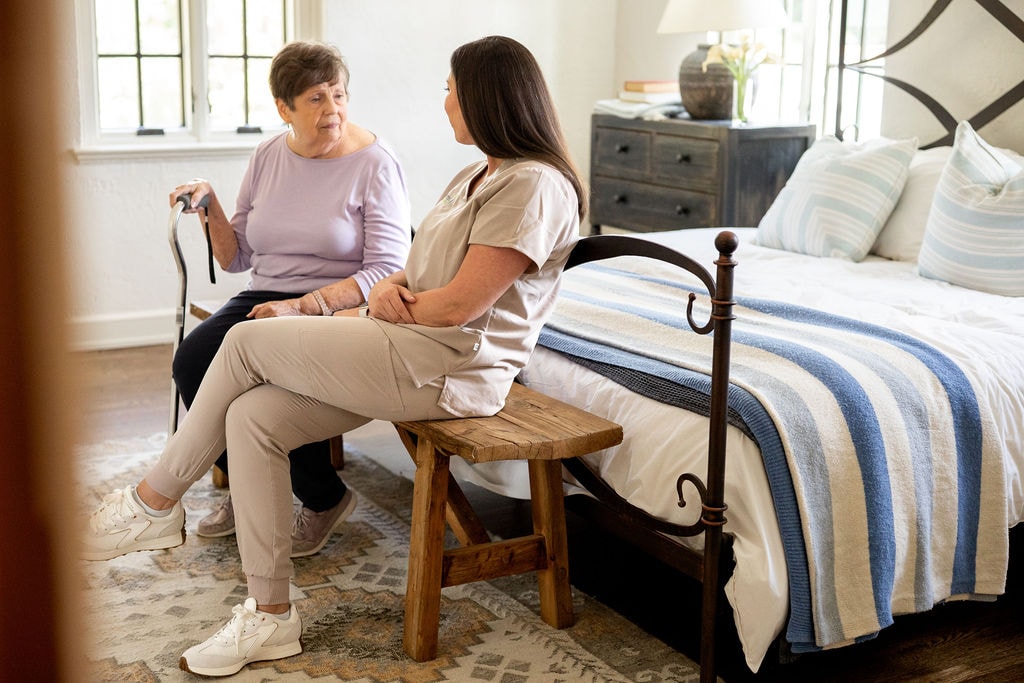
Seniors leaving Erlanger, CHI Memorial, or a Chattanooga rehabilitation facility need structured support to prevent readmission. Caregivers provide medication adherence, wound care assistance, transportation to follow-up appointments, and daily check-ins that bridge the gap between discharge and full recovery.
Highlights:
- Early observation of small changes
- Safety supervision during high-risk tasks
- Flags concerns before they become emergencies
Chronic Disease Management Support
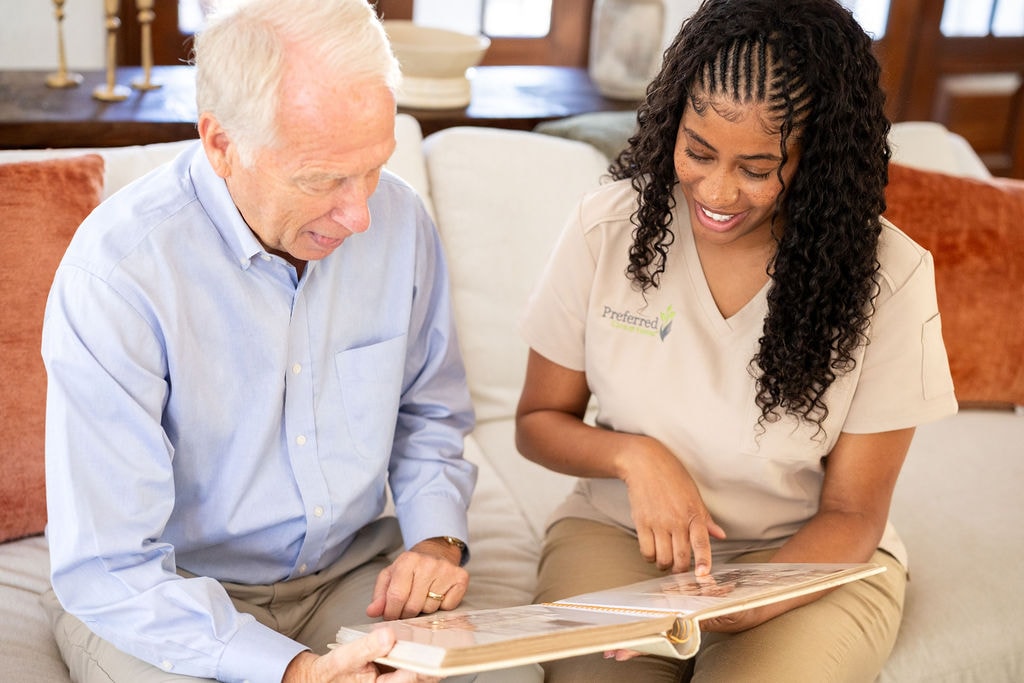
Clients managing diabetes, COPD, congestive heart failure, or Parkinson’s disease need consistent daily monitoring alongside their care routines. Caregivers track symptoms, support prescribed exercise, assist with respiratory equipment, and maintain logs physicians can review at appointments. Schedule a free consultation today.
Highlights:
- Scheduled hours give caregivers predictable relief
- Transparency Room portal visibility
- Distance does not mean disconnection

Medical Appointment Accompaniment
Caregivers accompany clients to physician, specialist, and therapy appointments — handling transportation, taking notes during the visit, and relaying care instructions to the family. Post-visit directions are written into the care plan so nothing is forgotten between the office and home.
Highlights:
- 7-step screened caregivers
- Matched by personality, not availability
- Bilingual English and Spanish available
Fall Prevention & Safety Monitoring
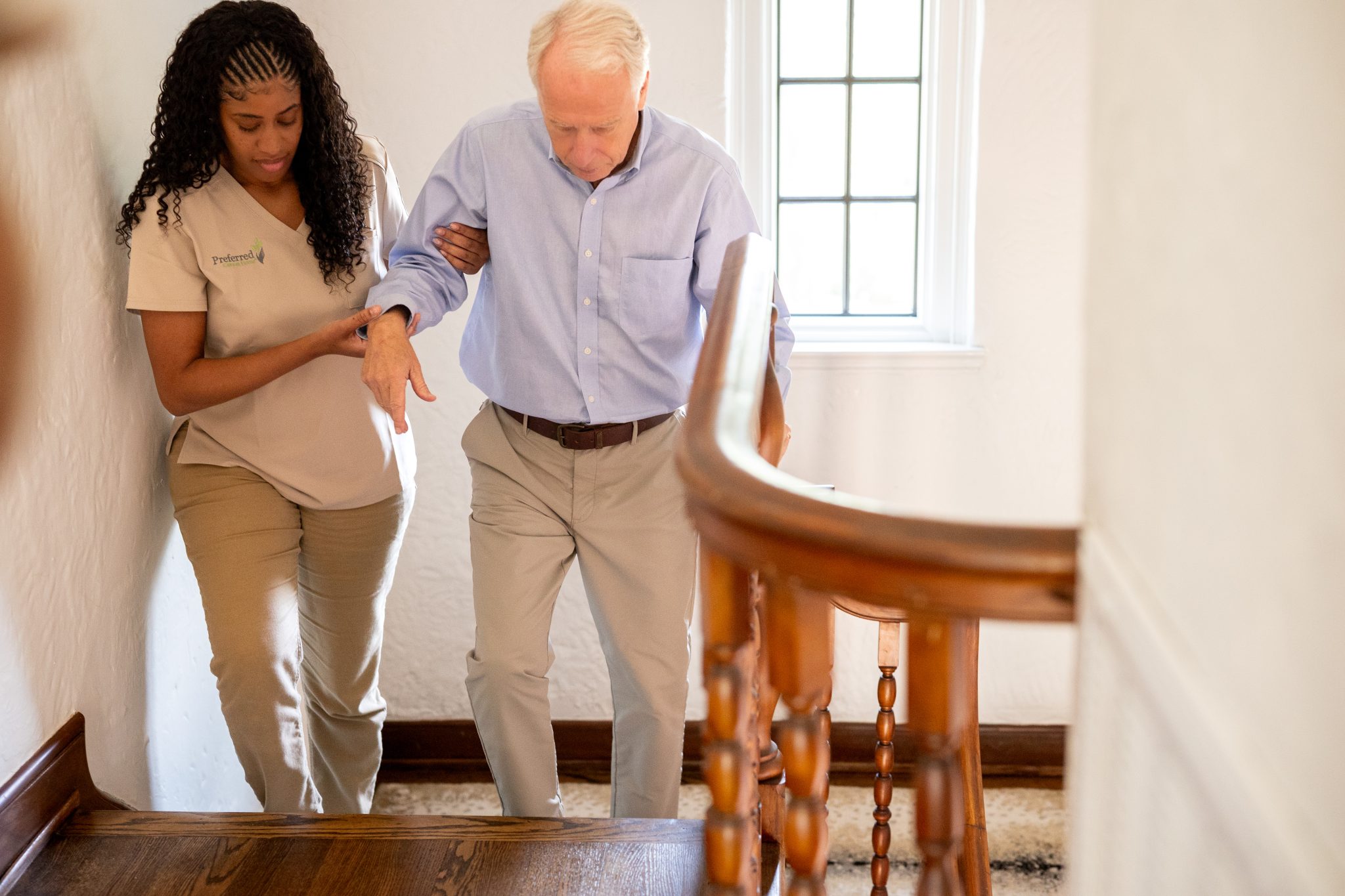
Skilled caregivers conduct ongoing home safety assessments, assist with mobility and transfers, and identify hazards before they cause a fall. Grip rails, clear pathways, and safe bathroom routines are standard parts of every skilled care visit in Chattanooga homes.
Highlights:
- From 1-hour visits to 24-hour coverage
- 24-Hour Replacement Care available
- TennCare CHOICES and VA Benefits accepted
What To Expect: Our Skilled Care Process

Step 01
Reach Out by Phone or Email
Call (423) 531-8696 or email to share what is going on at home — recent hospitalization, new diagnosis, medication complexity, or post-surgery recovery needs. We respond the same day and help you decide whether skilled care is the right fit.

Step 02
Free In-Home Assessment
We meet with your loved one and family at home to assess current medical support needs — medication schedule complexity, vitals monitoring requirements, wound care, and mobility risks. We review existing physician instructions and identify gaps in daily care coverage.

Step 03
Build a Skilled Care Plan
Together, we map out visit hours, specific tasks, vitals targets, medication schedules, and escalation contacts. The plan is shared with the family and updated whenever the physician adjusts the care protocol.

Step 04
Meet Your Skilled Care Caregiver
You meet your caregiver before care begins — matched by relevant experience, training in your loved one’s specific conditions, and scheduling fit. No surprises on day one.

Step 05
Care Begins and You Stay Connected
Care starts and the Transparency Room portal shows visits, vitals logs, medication reminders, and completed tasks from anywhere — so out-of-state family members and physicians stay informed without making daily phone calls.
Common Skilled Care Challenges in Chattanooga
Skilled care needs in Chattanooga rarely arrive in isolation. They cluster around post-hospitalization recovery, complex medication regimens, and chronic disease management that families cannot safely handle alone. Here are the situations we most commonly step in to address.
Challenge
What It Looks Like
How We Help
Challenge
What It Looks Like
A client on multiple medications misses doses or takes the wrong pill on a complicated post-discharge schedule — the prescribing team at Erlanger or CHI Memorial is unaware until the next appointment.
How We Help
A skilled care caregiver tracks the full medication schedule on every visit, logs each dose, and alerts the family and care coordinator if a discrepancy is found before it compounds into a medical event.
Challenge
What It Looks Like
Description
Blood pressure, blood glucose, or oxygen saturation drifts out of safe range between doctor visits and neither the family nor the client notices until symptoms become serious enough for an ER visit.
How We Help
Our caregivers check and record vital signs on every visit per the physician’s care plan, flagging readings outside the physician-specified thresholds so the medical team can intervene early.
Challenge
What It Looks Like
Description
Families navigating TennCare CHOICES, ECF CHOICES, or a long-term care insurance policy stall in the application process because they cannot identify which services are covered or which forms to submit first.
How We Help
We walk families through TennCare and insurance documentation and clarify which skilled care services qualify for coverage before the first visit is scheduled so there are no billing surprises.
Challenge
What It Looks Like
Description
Families assume Medicare will cover non-medical skilled support at home, then discover it only covers medically-ordered licensed nursing or therapy after a qualifying hospital stay — too late to plan ahead.
How We Help
We explain the distinction between Medicare-covered home health and our skilled support services on the first call so families make an informed decision before coverage assumptions derail the plan.
Challenge
What It Looks Like
Description
A parent is discharged from Erlanger Baroness or CHI Memorial after surgery or a serious illness and comes home alone — medication instructions are unclear, follow-up appointments are missed, and recovery stalls within the first week.
How We Help
We begin post-hospitalization skilled care within 24 to 48 hours of a hospital call, handle appointment transportation, and coordinate with the discharge team so recovery milestones are met on schedule.
Challenge
What It Looks Like
Description
Families wait until a fall, a medication error, or a readmission before calling for skilled support — by which point the window for smooth recovery has narrowed and the situation is already in crisis.
How We Help
We begin with an assessment call as soon as discharge is scheduled so skilled care is in place from day one — not after the first preventable setback pushes the timeline back.
Local Services Throughout the Chattanooga Area
Celebrating life, dignity and independence.®
Since 1984, the founders of Preferred Care at Home have had the privilege of assisting clients in improving their quality of life while still recognizing and maintaining their dignity and independence. Preferred Care at Home has continued this tradition by only referring the most reliable, compassionate, experienced and affordable caregivers to client’s homes or care facilities.
We understand that long-term care can be costly, which is why we have focused on building a reputation of offering access to quality services at affordable prices.
Ask about the wide range of non-medical services available from 1 to 24 hours per day, and about qualified live-in caregivers who can provide 24-hour peace of mind for you or your loved one.
We Serve:
- Apison
- Athens
- Cleveland
- Collegedale
- East Ridge
- Georgetown
- Harrison
- Lookout Mountain
- Lookout Valley
- Middle Valley
- Ooltewah
- Signal Mountain
- Snow Hill
- Soddy Daisy
- Walden
Frequently Asked Questions About Skilled Care in Chattanooga
What is skilled care, and how is it different from companion care?
Skilled care at Preferred Care at Home involves medically-oriented support performed by trained caregivers — medication reminders, vital signs monitoring, wound care assistance, and chronic disease support — carried out under a care plan directed by your physician. It goes beyond companion care’s social and routine focus, but is not the same as licensed skilled nursing from an RN or physical therapist.
What ongoing coordination does skilled care require from the family?
Families receive real-time updates through the Transparency Room portal — visit notes, vitals logs, and completed tasks are visible from anywhere. Care plans are reviewed regularly and adjusted whenever the physician updates protocols. A care coordinator is available by phone for any questions between visits.
Is skilled care covered by Medicare or long-term care insurance?
Medicare does not cover non-medical skilled support. Medicare covers licensed skilled nursing ordered by a physician after a qualifying hospital stay. Our skilled care services are private pay. Long-term care insurance often covers them — we can help you review your policy. TennCare CHOICES may cover some in-home supports for eligible older adults.
What specific tasks does a skilled care caregiver perform?
Medication reminders and schedule logging, blood pressure and blood glucose monitoring, wound dressing assistance as directed by a physician, post-hospitalization recovery support, chronic disease symptom tracking, medical appointment accompaniment, fall prevention assessments, and care coordination with the family and medical team.
Is skilled care available around the clock in Chattanooga?
Yes. We schedule skilled care from short daily check-ins to around-the-clock coverage. Post-hospitalization clients often start with multiple visits per day that taper as recovery progresses. Care hours are adjusted as medical needs change.
Do we need skilled care or just companion care?
We assess that on the first call. If your loved one needs medication reminders, vitals tracking, wound care assistance, or structured post-discharge support, skilled care is the right level. If the primary need is social engagement and light housekeeping, companion care may be sufficient. Many clients use a combination of both.
Why choose an agency over a private caregiver for skilled support?
Agency care covers caregiver screening, background checks, supervision, backup coverage if a caregiver is ill, liability insurance, and Tennessee licensing compliance. For medically-oriented tasks, oversight and accountability matter — an agency ensures the right caregiver shows up trained and on time, every visit.
What should I ask when evaluating a skilled care agency in Chattanooga?
Ask about caregiver training for your loved one’s specific conditions, how vitals and medication logs are documented, backup coverage if the assigned caregiver is unavailable, how the agency communicates with the family and physician, and what happens when care needs escalate beyond non-medical support.
Are there Tennessee programs that help cover skilled care costs?
TennCare CHOICES and ECF CHOICES cover certain in-home supports for eligible older adults and adults with disabilities in Tennessee. Long-term care insurance policies frequently cover skilled support services — we can help you submit documentation. Call us to review your specific situation on the first call.
How do you match skilled care caregivers to clients in Chattanooga?
We match by the caregiver’s experience with your loved one’s specific conditions — diabetes management, post-surgical recovery, COPD, Parkinson’s — alongside scheduling compatibility and personality fit. For skilled care, relevant training and demonstrated experience with similar clients are the primary matching criteria.