
Families often assume keeping a parent with dementia at home is the safer, cheaper, more loving choice. Parts of that are true. Parts of it fall apart fast.
This guide covers what in-home dementia care actually includes, what Medicare won’t pay for, and the specific signs that home is no longer enough. Preferred Care at Home has served Central Florida families since 2008 under owner Robin Wilkie-Naylor, with dementia-trained caregivers matched by personality, not availability.Key Takeaways
- Most dementia care already happens at home, not in facilities
- Medicare does not pay for hands-on daily care like bathing and dressing
- Middle-stage dementia often requires around-the-clock supervision
- The CMS GUIDE program now offers respite support for eligible families
What In-Home Dementia Care Actually Covers
According to the Alzheimer’s Association 2025 Facts and Figures, 11.475 million caregivers provided 19 billion hours of unpaid dementia care in 2024, valued at $413.4 billion.Most of that care looks like non-medical daily support, not home health. In-home dementia care is the work of keeping a person safe, fed, clean, and oriented inside their own home, so that family members don’t carry every hour alone. It is not nursing, and it is not a replacement for a doctor’s care plan.
Daily living and personal care support
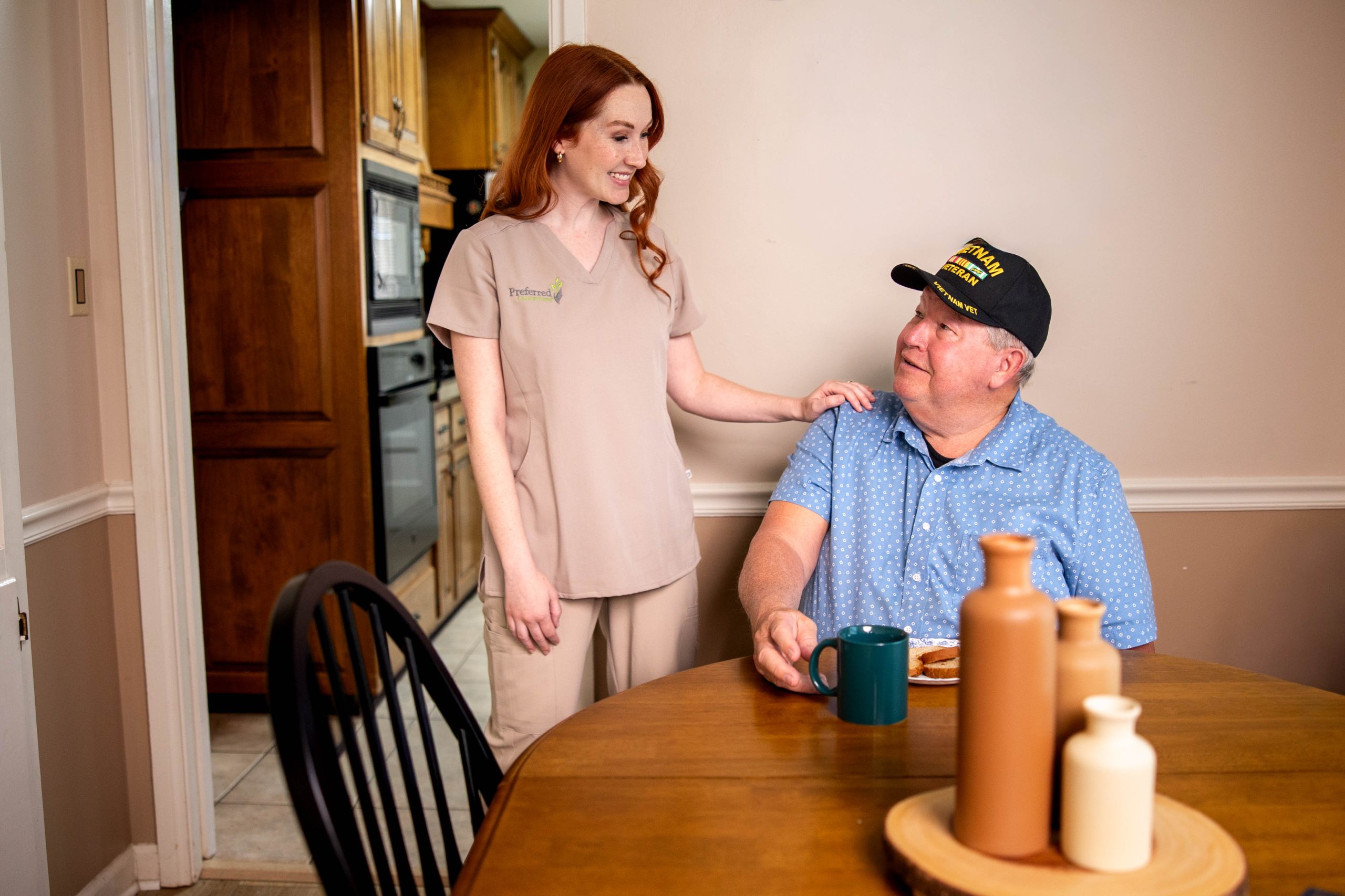
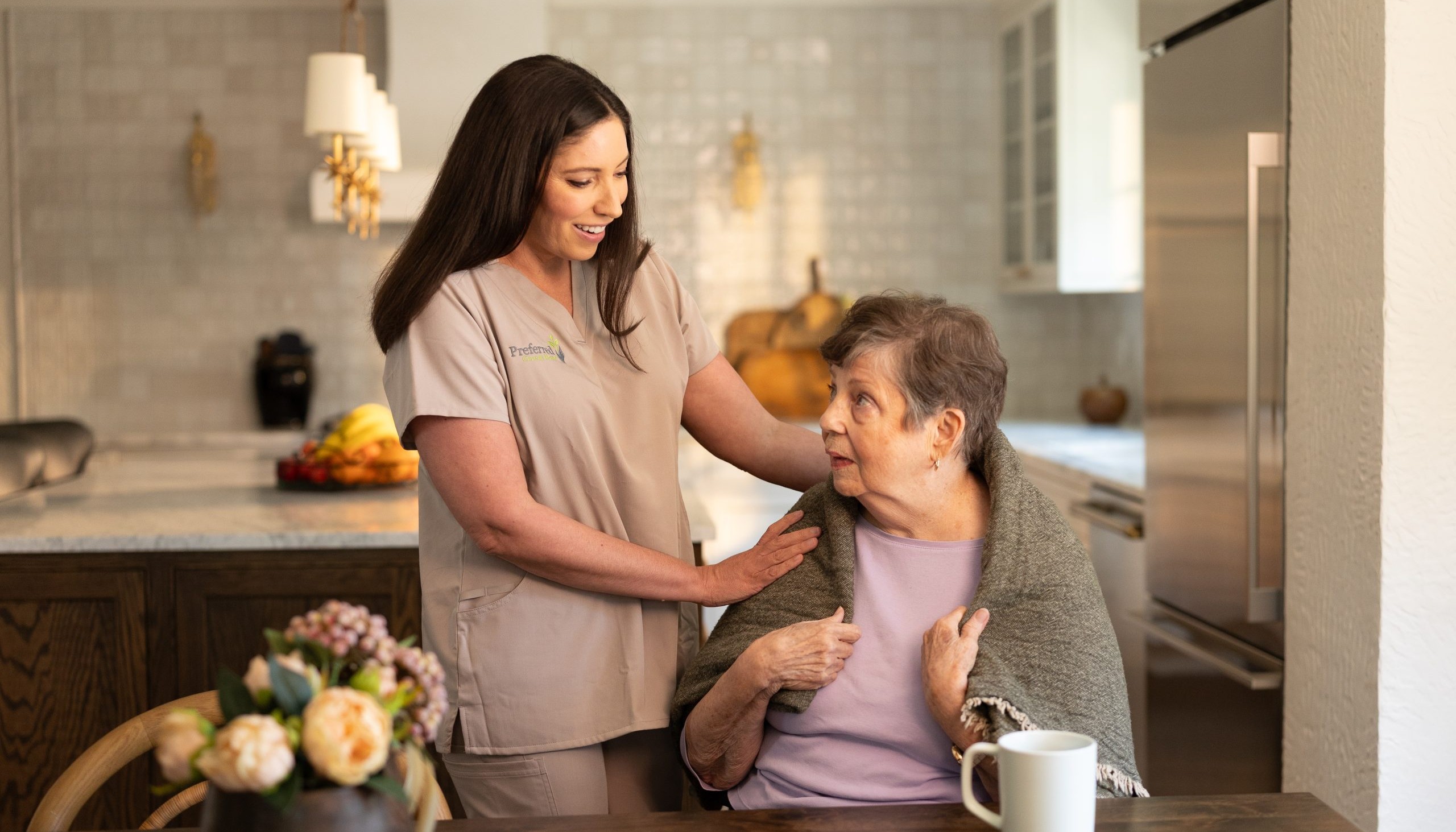
A trained caregiver handles the tasks that become harder as the disease progresses. On a weekday afternoon, that often looks like a concrete list:- Bathing assistance, dressing, and grooming in a familiar order
- Meal preparation and help with eating at a pace that works
- Medication reminders so doses aren’t missed or doubled
- Light housekeeping and laundry that keeps the home safe to move through
- Transportation to appointments, standing walks, and social outings
Supervision, routines, and cognitive engagement
For a person living with dementia, the day itself is the treatment plan. Structured routines reduce agitation because the brain does less work when the next step is predictable. A caregiver runs that structure: morning cues lead to breakfast, a late-morning walk leads to lunch, and a quiet afternoon activity heads off the confusion that often rises before dinner. Cognitive engagement is part of that structure, not a separate activity: reminiscing, photo albums, card games, music from a specific decade, short reading aloud. These are ordinary moments that create meaning in daily life, run on purpose. Our Dementia and Alzheimer’s Care is built around that patient rhythm, with specialized training that helps caregivers respond to your loved one’s needs in ways that preserve dignity and quality of life as memory loss deepens. The services describe the “what.” The next question is always the “who pays.”What Medicare Actually Covers (and What It Doesn’t)
According to Medicare home health coverage, Medicare does not cover custodial or personal care like bathing, dressing, and using the bathroom when that is the only care needed. That single sentence rewrites most families’ financial plan and changes how they think about the costs of in home dementia care. So what does Medicare actually cover? Medicare pays for intermittent skilled nursing or therapy ordered by a doctor for a homebound patient, which is a separate benefit from ongoing daily dementia support. It is short-term, medical care, and prescription-driven. That’s not the same as the day-to-day supervision and help this article is about. For a fuller picture, read how Medicare fits with home care. There is one newer piece of good news. Per the CMS GUIDE Model, the program includes respite services up to $2,500 annually for eligible participants. GUIDE also covers caregiver education, care navigation, and 24/7 support line access for people with dementia and their family caregivers. It’s worth asking your loved one’s doctor whether participation is available. Long term care planning often begins with understanding what Medicare will and won’t cover, and many care providers can walk you through how different payment sources and resources work together. Even with the right payment mix, in home care has a ceiling. What comes next is how to recognize it.When Home Care Is No Longer Enough
Home care works until a specific set of risks exceeds what part-time help can manage. The honest threshold isn’t a feeling. It’s a checklist most families can walk through in ten minutes.Signs that part-time help isn’t enough
Check any that apply. If two or more are true, the care plan needs to change, not just the caregiver’s hours. Reviewing the seven stages of Alzheimer’s can help you place where your loved one is on this path.- Your loved one is unsafe alone for any stretch of daytime
- Night wandering has happened even once
- Medications are being missed or doubled
- Falls or near-falls are happening monthly
- Family caregivers are missing work, sleep, or their own doctor visits
- Bathing, toileting, or eating have become a daily struggle
Why wandering can’t be solved with one device
More than half of persons with dementia experience night-time wandering, according to night-time wandering research published in 2021. NIHR reviews have found no robust evidence that any single non-pharmacological intervention reliably prevents wandering in dementia. A GPS tracker helps find someone who has already wandered. It does not stop the front door from opening at 2 a.m. That’s why wandering safety is a layered plan, not a product: overnight supervision, door and window sensors, a predictable bedtime routine, nightlights on the path to the bathroom, and security measures that protect your loved one while preserving dignity.The Alzheimer’s Association reports that the middle stages of Alzheimer’s often require 24-hour supervision to keep the person safe.When those thresholds show up, the question shifts from “can we keep them home?” to “what care mix actually works?” Factors like wandering frequency, overnight safety needs, and family caregiver capacity all shape that answer.
Choosing Between Home Care, 24-Hour Care, and Memory Care
Most families weigh three real options: part-time in-home dementia care, in-home 24-hour or Live-in Care, and residential memory care. Each fits a different combination of stage, safety, and family capacity. Better care decisions begin with understanding your loved one’s specific needs and what each option actually provides.| Factor | Part-time home care | 24-hour home care | Residential memory care |
| Best when | Routines stable, early-stage symptoms | Middle-stage, wandering risk, overnight safety | Progressive needs exceed family and caregiver capacity |
| Who pays | Private pay, LTC insurance, GUIDE respite | Private pay, LTC insurance | Private pay, LTC insurance; some Medicaid paths |
| Medicare role | Does not cover ongoing custodial care | Does not cover ongoing custodial care | Does not cover long-term custodial care |
| Supervision | Hours-based, gaps present | Continuous, same or rotating caregivers | 24/7 facility staffing |
| Home environment | Preserved | Preserved | Changed; cues and routines reset |
According to the Alzheimer’s Association, the total lifetime cost of care for someone with dementia is estimated at $405,262, with 70% borne by family caregivers through unpaid care and out-of-pocket costs.Many families discover that community-based memory care costs exceed what they expected, while 24-hour in home dementia care becomes more affordable when long-term care insurance applies. For seniors aging with dementia, understanding the costs early creates more options later.