
For seniors in Corinth who are mostly independent but feeling isolated since a spouse passed or family moved away, companion care covers conversation, errands, meal company, and safety check-ins. Visits run from 1 hour to a full day depending on what your loved ones actually need.
Whenever the schedule allows, the same caregiver returns each visit. We match caregivers to clients based on hobbies, work background, and life experience, not just by who’s available that morning. That continuity is what turns companionship into well-being.
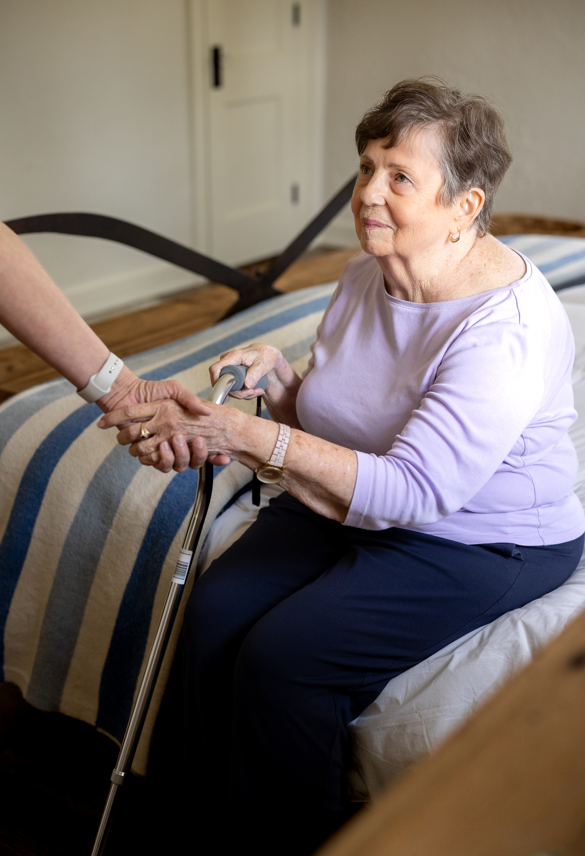

For Corinth households where a parent needs hands-on help with bathing, dressing, toileting, or moving safely through the home, personal care does the physical work. Older single-story and split-level homes in Oakmont and Meadow Oaks weren’t built for aging in place, and that’s where most of the daily risk lives.
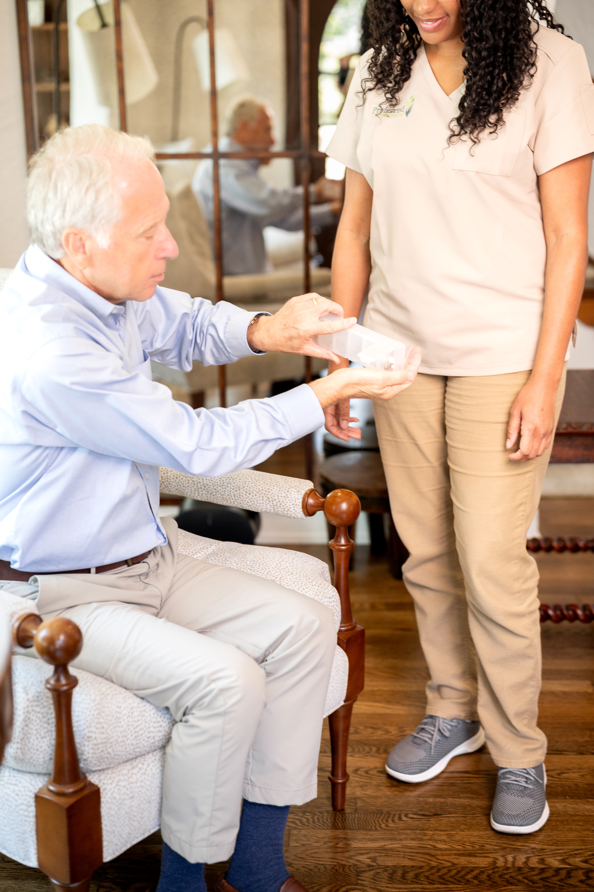
The plan adjusts as needs change, from verbal prompts and reminders to full physical assistance with daily tasks and hygiene. Medication reminders are part of the visit, though we do not administer or manage medications. Independence at home holds longer when the right support shows up at the right hour.
For Corinth families managing memory loss at home, dementia care brings structured routine, redirection, and supervision so a parent can stay in the home they recognize. Familiar surroundings matter more as memory fades.
Our caregivers are trained in dementia approaches, and we coordinate with family on routines and known triggers. Supervision is available up to 24 hours when behaviors or wandering require continuous presence. These senior care services are built around the rhythms your loved ones already know.
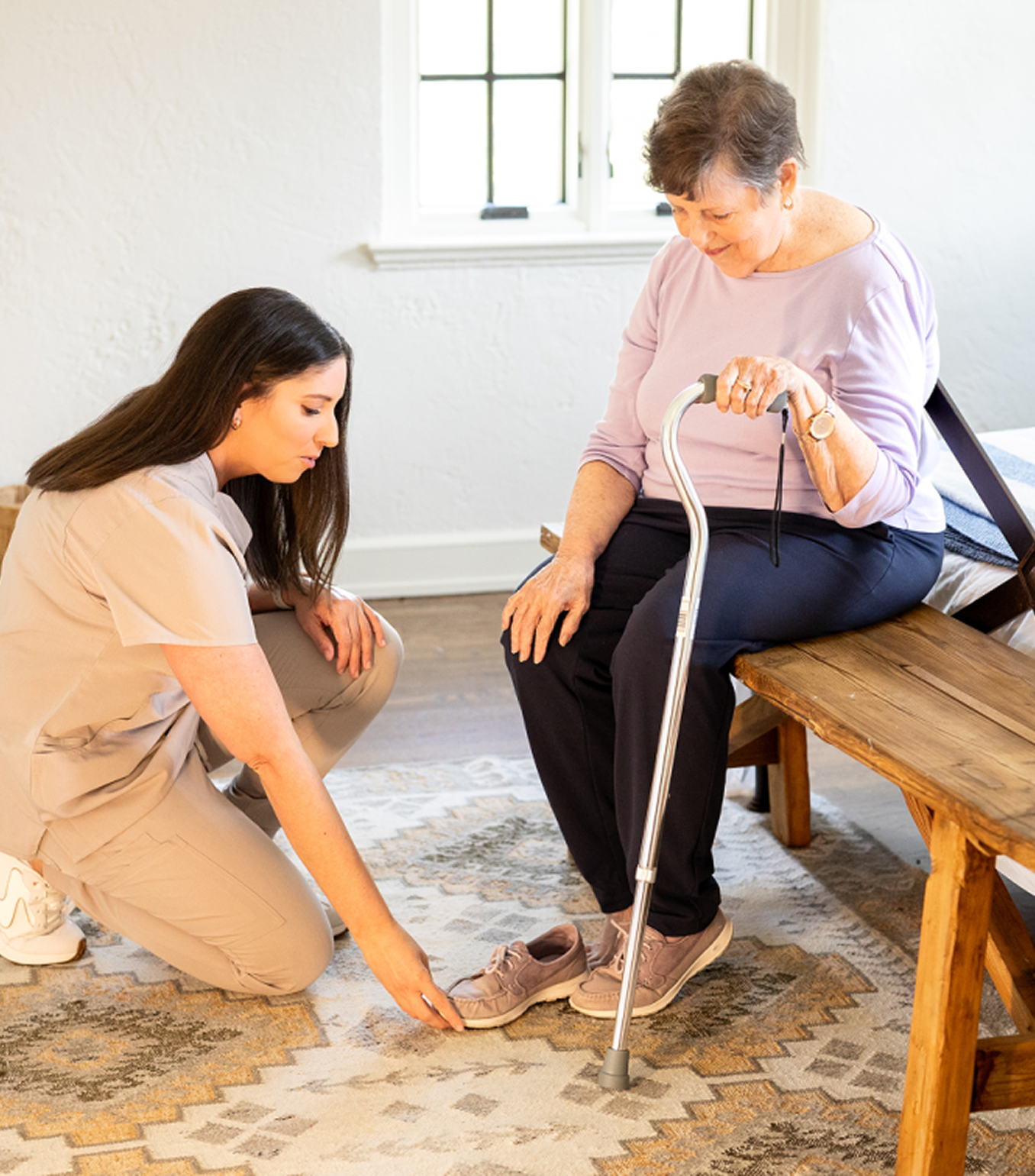
Co-owner Drew White watched his grandfather lose dignity in a memory care unit, and Alzheimer’s care exists so Corinth families don’t have to repeat that story. We support stage-specific needs at home through every progression of the disease.
The care plan covers wandering prevention, communication strategies that match where your loved one is, and family respite when the day-to-day becomes too heavy. 24-hour care is available when the family needs it. Familiar walls, familiar routines, and one steady caregiver keep dignity intact when memory will not.
One caregiver stays in the Corinth home with scheduled rest periods, built for seniors who shouldn’t be alone overnight but don’t want to leave home. For full-day needs, live-in care is often a cost-effective alternative to a facility.
The same person handles personal care, overnight assistance, and emergency response presence. Routines build over weeks rather than resetting with every shift change. That continuity is what keeps your loved ones comfortable in their own homes through the night.
After a hospital stay at Texas Health Presbyterian Denton or Medical City Denton, the first 30 days at home are when readmission risk peaks. Transition care covers daily activities, appointment transportation, and recovery support for seniors recovering from surgery or illness, all on the non-medical side.
We coordinate with discharge instructions and family schedules. Recovery progress is visible to the whole family through the Transparency Room portal, including caregiver notes from each visit. That kind of communication brings peace of mind during the weeks when small setbacks land hardest.
For Corinth family caregivers who are stretched thin, homemaker and respite care covers light housekeeping, meals, laundry, and errands, plus scheduled relief so a spouse or adult child can actually rest. Burnout in the family caregiver is its own crisis, and respite is the prevention.
Schedules can be short-term, weekly, or recurring. The home stays clean, meals stay on schedule, and the family gets time off without the household falling behind. We flex the hours up or down as your week changes.
For Corinth families during hospice, end of life care brings companion presence, family respite, and personal care so the household isn’t navigating the final chapter alone. We coordinate with the hospice provider; we are not the medical hospice provider ourselves.
Caregivers are available 24 hours a day in this season. The focus stays on comfort for your loved one and steady support for the family through a hard time.
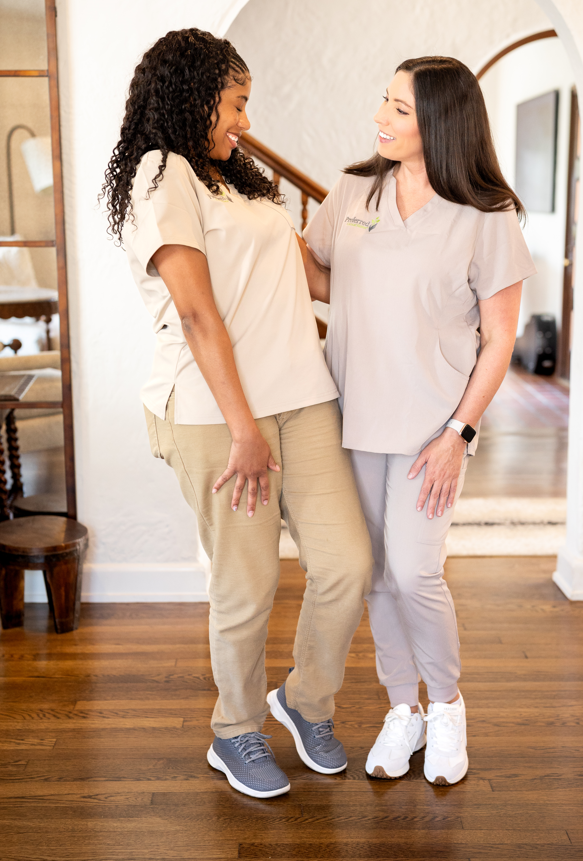
Preferred Care at Home of Denton serves Corinth households from our office in downtown Denton, working under Texas license #024695. Our team is part of a national franchise network founded in 1984, and the Denton location is locally owned by Morgan Peters, Joseph Peters, and Drew White, who all live and work in Denton County. The in home care services your family relies on come from neighbors, not a call center.
Every caregiver clears our 7-step screening process before working in a home. We match caregivers to clients based on personality, life experience, and work background, not just by who’s open that day. Through the Transparency Room portal, family members can see schedules, read caregiver notes, and handle invoicing from anywhere. That transparency brings peace of mind when you can’t be there yourself.

Step 01
Call (940) 399-5080 and one of the Denton owners may answer or return your call directly. We’re ready to listen. Calling us connects you with someone who understands senior care in Corinth.

Step 02
We come to your Corinth home (or talk by phone) and listen before recommending anything. This is where we meet you and find out what matters most.

Step 03
The plan flexes from 1-hour visits to 24-hour live-in, with a caregiver matched by personality based on your family’s needs. Each plan is built around what your loved one actually requires.

Step 04
Care typically begins within days, and the family sees real-time updates through the portal, allowing you to stay connected no matter where you are.
Choosing in-home care in Corinth involves more decisions than most families expect, especially with the area growing on both ends of life. These trade-offs are essential to understand before you start.
Challenge
What It Looks Like
How We Help
North Texas summer heat
What It Looks Like
Hot Corinth summers create dehydration and fall risk for parents living alone in homes around Lake Sharon and Corinth Farms; even a short trip to the mailbox can become a medical event
How We Help
Companion care builds in hydration prompts and welfare check-ins, and personal care covers safe bathing and mobility help so heat exhaustion gets caught early
Challenge
Older single-family housing stock
What It Looks Like
Established Corinth neighborhoods like Oakmont and Meadow Oaks have multi-step entries, narrow hallways, and tubs that weren’t built for aging in place; bathing and transfers grow harder each year
How We Help
Personal care handles hands-on bathing and transfers, and homemaker care keeps pathways clear so the home itself doesn’t become the danger
Challenge
Texas HCSSA scope rules
What It Looks Like
Non-medical home care in Texas is licensed under HCSSA Chapter 558, separate from Medicare-certified home health, and most families don’t know which one they actually need
How We Help
We’re a licensed non-medical agency (Texas #024695); at the consultation we explain what we cover (bathing, supervision, companionship) versus what requires medical home health
Challenge
Confusing non-medical care with home health
What It Looks Like
Families assume Medicare will pay for daily bathing or supervision because a hospital mentioned home health; weeks pass before they learn it doesn’t, and the parent goes without help
How We Help
Our consultation walks through what Medicare does and doesn’t cover and matches the right tier (companion, personal, or live-in) to the actual need
Challenge
Hospital discharge windows
What It Looks Like
The first 30 days after discharge from Medical City Denton or Texas Health Presbyterian Denton are when readmission risk peaks; without daily support, recovery stalls and a second hospitalization follows
How We Help
Transition care covers the discharge window with appointment transportation and daily activities, and dementia care handles supervision when memory loss complicates recovery
Challenge
Choosing the wrong service tier
What It Looks Like
Families pick companion care to keep costs down when a parent really needs hands-on personal care, or pick live-in when rotating 24-hour might fit better; either choice gets corrected after a fall or burnout
How We Help
The plan is built from the assessment, not from a price sheet, and we shift between companion, personal, and live-in as needs change without restarting the relationship
Our Denton-based team reaches Corinth and the surrounding Denton County communities, with care coordinated from one local office. Families across Texas trust our team to keep their loved ones comfortable at home.
We Serve:

Preferred Care at Home of Denton is a locally owned franchise of Preferred Care at Home, a national company founded in 1984. We provide non-medical in-home senior care across Denton County and surrounding North Texas communities under Texas license #024695. The Denton location was established in 2025 and is owned by Morgan Peters, Joseph Peters, and Drew White. We continue to serve families who want their loved ones to stay in their own homes with the wellness support they need.
Yes, Preferred Care at Home of Denton provides in-home care to families across Corinth and Denton County.
Our office is in downtown Denton, and we cover Corinth alongside Argyle, Aubrey, Krum, Pilot Point, Ponder, and Sanger. Call (940) 399-5080 to speak with our local team about care in Corinth for your loved ones. We’re here to bring peace of mind to families throughout the area.
We offer companion care, personal care, dementia and Alzheimer’s care, live-in care, transition care, respite, and end-of-life support.
Most Corinth families start with companion care or personal care and adjust from there as needs change. The same caregiver and the same plan can scale up to 24-hour or live-in support without restarting the relationship. Our services provide the comfort and assistance your family needs.
You call us, we set a free consultation, we build a care plan, and care typically begins within days.
The consultation happens in your home or by phone, and we listen before recommending anything. Once the plan is set, we select a caregiver by personality and life experience, and Preferred Care at Home opens Transparency Room access so the whole family can follow along.
Home health is medically ordered skilled care for homebound patients; in-home care covers daily living, supervision, and companionship without medical treatment.
Home health requires a doctor’s order and is typically intermittent visits from nurses or therapists who provide skilled nursing, physical therapy, or speech therapy. In-home care, what we provide, is non-medical: bathing, dressing, meals, supervision, errands, and overnight presence. Texas licenses non-medical home care under the HCSSA framework, separate from Medicare-certified home health. Families often need both types of care during recovery.
Medicare does not pay for non-medical in-home care, including 24-hour live-in care or help that’s only with daily activities.
Per Medicare.gov, the program covers home health (skilled, intermittent, homebound) but not custodial care, homemaker services, or 24-hour care at home. Most non-medical in-home care is funded through private pay, long-term care insurance, or VA benefits, and the free consultation is the right place to map out funding.
Yes, transition care covers the recovery weeks at home with daily activities, appointment transportation, and recovery support, separate from medically ordered home health.
Transition care reduces readmission risk by covering the non-medical gaps: getting to follow-ups, keeping the household running, and being present during the early recovery days. It works alongside medically ordered home health when a doctor has prescribed both. Physical therapy and speech therapy may be part of the medical home health plan, while we assist with daily routines.
Companion care fits when the main need is conversation, meals, and check-ins; personal care fits when bathing, dressing, or transfers need hands-on help.
If your parent is mostly independent but lonely, no longer driving, or just unsafe alone for long stretches, companion care is usually the right starting place. If they’re struggling with bathing, toileting, or moving safely through the home, that’s personal care. Plans can shift between them as needs change without changing the caregiver in the home.
Yes, families coordinate care from anywhere through our Transparency Room portal with caregiver notes, schedules, and secure messaging.
Adult children in Dallas, across Texas, or out of state use the portal for real-time schedule visibility, caregiver notes after each visit, voice messages, and online invoicing. When something needs more than a portal note, the Denton owners are reachable directly by phone. Preferred Care at Home provides that access to bring peace of mind when distance makes it hard to be there in person.
24-hour care typically rotates caregivers across full shifts; live-in care has one caregiver in the home with scheduled rest periods.
The two staffing models look similar from the outside but cost differently and feel very different inside the home. Live-in care is often more cost-effective for full-day needs and creates a single relationship over time. 24-hour rotation fits when overnight care must be active rather than on-call, like with advanced dementia or post-surgical supervision.
Cost depends on hours per day, level of care, and whether you choose hourly, 24-hour, or live-in coverage; live-in is typically the most cost-effective for full-day needs.
We don’t publish set rates because plans flex from 1-hour visits to 24-hour live-in, and the right number depends on the assessment. The free consultation produces a written plan with the actual rate. Long-term care insurance, VA benefits, and private pay are the most common funding sources for Corinth families. Call (940) 399-5080 for a tailored quote.