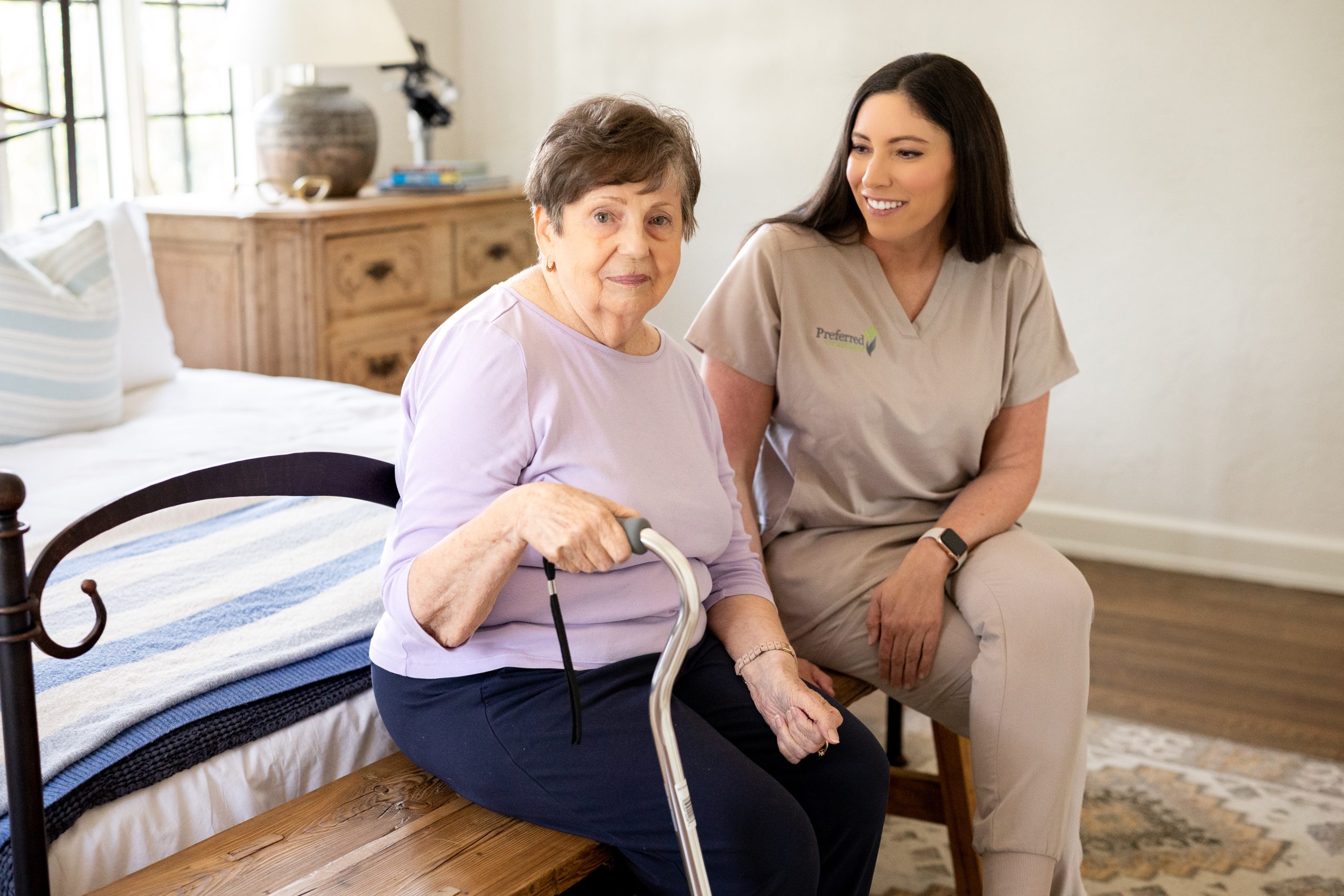
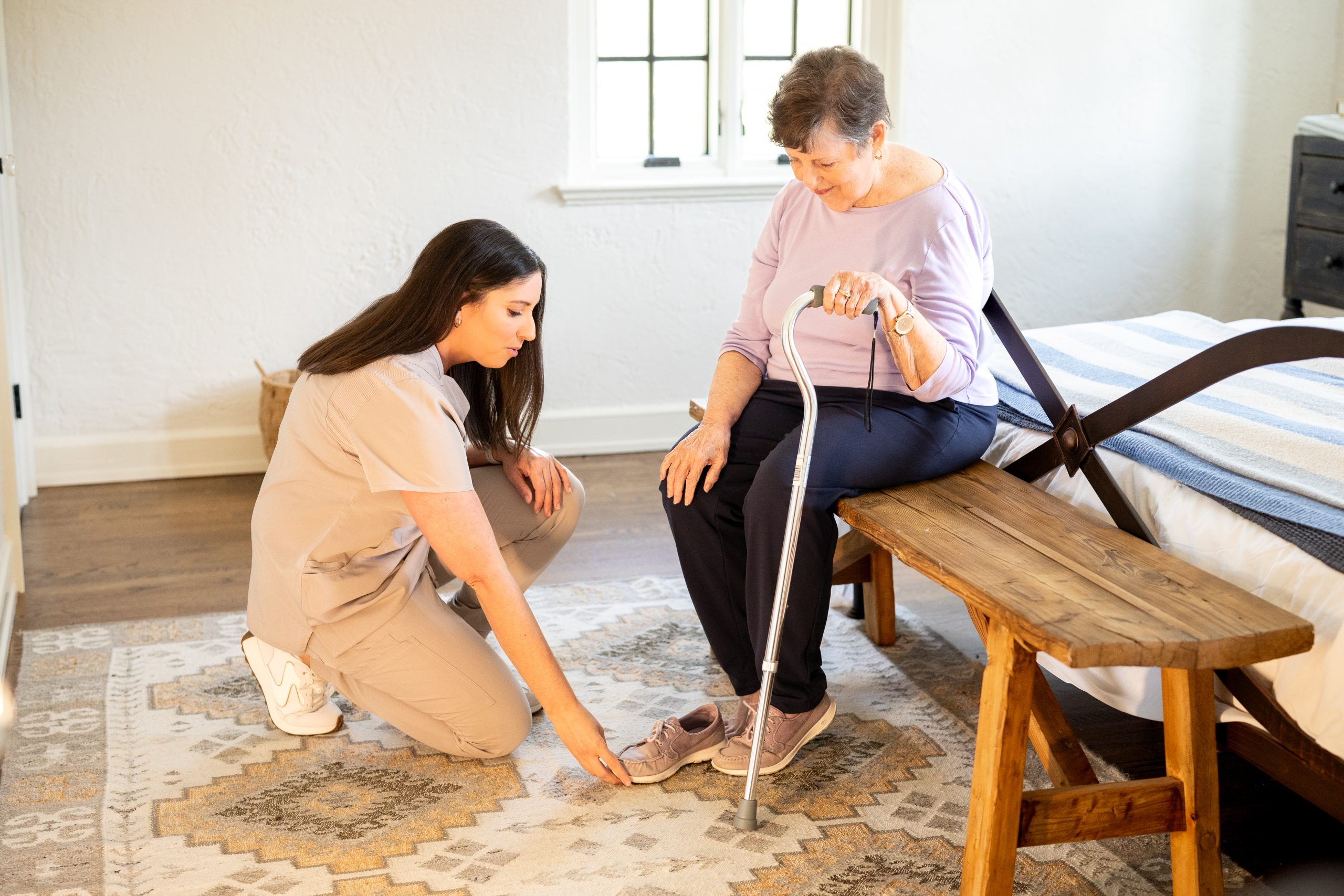
The wheelchair rolling out the hospital doors doesn’t mean the hard part is over. Most families don’t realize a 30-day coordination period is just starting until they’re already home wondering who handles what. This post sorts out what those first 30 days actually require, what Medicare covers, and where non-medical home care fits. Preferred Care at Home is a third-generation family-owned home care company supporting families across Denton and the surrounding area.
Key Takeaways:
- Per Medicare.gov, transitional care management covers the first 30 days after a return home and requires an in-person clinical visit within two weeks
- A 2025 PMC analysis found that follow-up within 7 days cuts the odds of 30-day readmission by 63%
- Hospital discharge planning, home health, transitional care management, and non-medical home care are four different services with four different funding sources
- Non-medical caregivers cover bathing, meals, transportation, supervision, and medication reminders, the daily-living layer Medicare-covered services don’t fill
What “Hospital to Home Transition Care” Actually Covers
Hospital to home care is the coordination work that happens between the day a person leaves the hospital and the point when their normal care routine is stable again. It includes clinical pieces, managed by the discharge team and the primary care physician, and daily-living pieces, managed by family members or a hired non-medical caregiver.
Per Medicare.gov, transitional care management services cover the first 30 days after a patient returns to the community from an inpatient stay, and require an in-person clinical visit within two weeks.
The Medicare.gov transitional care management page defines the coverage scope. Our transition care work sits in that second layer, beside the Medicare-covered services rather than replacing them.
Medicare-covered transitional care management (TCM) typically includes:
- Phone or electronic contact with the patient or caregiver within 2 business days of discharge
- A medication review with the prescribing physician
- Referrals to community resources
- Appointment scheduling for follow-up care
- An in-person clinical visit within 14 days of discharge
What TCM does not include: ongoing companionship, personal care like bathing or dressing assistance, meal prep, transportation to non-medical errands, or overnight supervision. Those gaps are why the first month carries the most risk.
Why the First 30 Days Carry the Most Risk
The data on the first month after discharge is sobering, and it’s the reason this period needs active coordination rather than wait-and-see.
A peer-reviewed review published in PMC found approximately 1 in 5 patients experience adverse events after hospital discharge.
The hospital to home transition is challenging for elderly people and their relatives, particularly when complications arise or chronic conditions like congestive heart failure or chronic obstructive pulmonary disease require ongoing support and resources.
The first appointment after a hospital stay is not a formality. It’s where medications get reconciled, recovery is assessed in person, and small problems get caught before they send someone back to the emergency room. Physicians and care teams use follow-up appointments to identify concerns early and address them before they escalate into hospital readmission.
A 2025 transitional care analysis published in PMC found that patients with ambulatory follow-up within 7 days had 63% lower odds of 30-day readmission than those without 7-day follow-up.
That changes what good discharge planning looks like. Confirm follow-up appointments scheduled before discharge papers are signed. Arrange transportation for that visit so it isn’t skipped because the ride fell through. Build in a buffer for paperwork and waiting room time. Our companion care often covers exactly this: the ride, the wait, and the trip home.
The bottle that comes home from the pharmacy doesn’t always match what the hospital sent home on paper. New prescriptions get added, old ones get stopped, doses shift, and a patient who is tired and recovering is the person trying to track all of it.
Medication error during care transitions is a critical risk that social workers and discharge planners work to prepare families for. A 2024 study published in the Journal of the American Medical Directors Association identified 1,148 medication discrepancies in the week after older adults were discharged from post-acute care to home.
A relative or non-medical caregiver can do real work here without practicing medicine. The role is verification, not management:
- Keep one written list of every prescription, including over-the-counter products
- Compare that list to the hospital discharge plan within 24 hours of returning home
- Note any change in pill color, dose, or schedule and write down the question
- Bring the list and the bottles to the first follow-up visit
- Flag any new symptom or side effect to the physician’s office, not the caregiver
Knowing the risk explains why families need to know which service handles which piece.
Sorting Out Home Health, Transitional Care Management, and Non-Medical Home Care
Most families discover at discharge that “home care” can mean four very different things, paid for in four different ways. Sorting them out before the wheelchair leaves the hospital saves a lot of confused phone calls later.
|
Service |
What it covers |
Who pays |
Who provides it |
|
Hospital discharge planning |
Discharge instructions, equipment orders, agency referrals before the patient leaves |
Built into hospital stay |
Hospital case manager or social worker |
|
Medicare-covered home health |
Skilled clinical services ordered by a physician for a defined recovery period |
Medicare Part A or B if eligibility met |
Licensed home health agency (HHA) |
|
Transitional care management |
30-day coordination after discharge: contact within 2 business days, medication review, in-person visit within 14 days |
Medicare Part B |
Primary care physician’s office |
|
Non-medical home care |
Bathing, dressing, meals, transportation, supervision, medication reminders, companionship |
Private pay, long-term care insurance, some VA benefits |
State-licensed agency (in Texas, an HCSSA non-skilled category) |
These four overlap in time but not in funding or scope. A family can have all four operating in the first 30 days and still find a 2 a.m. gap nobody filled. Our hospital-to-home recovery care usually slots in beside the other three rather than replacing any of them. One useful detail when choosing a home health agency: CMS publicly reports home health quality measures on Care Compare, so families have time to compare agencies on readmission rates and patient experience before picking one. If the discharge planner offers a list, ask for it in writing.
Knowing the four categories is step one. Knowing what to do with them across 30 days is step two.
Your First-30-Days Roadmap After a Hospital Discharge
This is a usable roadmap for a relative, not a comprehensive nursing plan. The clinical work belongs to the discharge team, the home health agency, and the primary care physician. The coordination work in front of you is more practical, and most of it can be done with a clipboard and a phone.
The hour before discharge is the most useful hour you’ll get. The hospital is required to walk through certain topics, but families who treat those topics as a checklist leave with fewer surprises. The five areas below come from AHRQ’s IDEAL discharge framework:
- Confirm what daily life at home will require: mobility, supervision, equipment, who is in the house
- Get the medication list in writing and ask which prescriptions are new, changed, or stopped
- Ask which warning signs warrant a phone call to the physician and which warrant 911
- Get a contact for any pending test results and the date they’re expected
- Confirm follow-up appointments are scheduled, ideally within 7 days, before discharge papers are signed
The first month doesn’t move at one speed. The first 48 hours are dense, week one is about catching problems early, and weeks two through four are about routine settling in. The first three days after a hospitalized patient returns home are when the emotional and physical demands are highest.
- Pre-discharge: the hospital case manager files referrals and, under federal discharge planning rules, must share quality data on home health agencies if one is being arranged
- Day 1 (return home): if a Medicare-certified home health agency is involved, CMS requires the agency complete a resumption-of-care assessment within 48 hours of return from a hospital stay of 24 hours or more
- Days 2-3: the physician’s office under transitional care management makes contact within 2 business days; medications are reviewed against the discharge sheet
- Week 1: the ambulatory follow-up visit is ideally completed within 7 days; symptoms and medication reactions are watched daily
- Days 14-30: the in-person clinical visit at the 14-day mark closes the TCM coordination period; daily-living routines stabilize; family or caregiver coverage is reassessed
This is also where the daily-living gaps become visible, and where many families realize they need a second pair of hands.
Where a Non-Medical Caregiver Fits During Recovery
A non-medical caregiver does the daily things that don’t appear on a discharge sheet but determine whether someone actually recovers: getting in and out of the shower safely, prepping a soft-food meal, driving to the seven-day follow-up, and being awake at 3 a.m. when sleep is bad. This ongoing support helps your loved one achieve a successful transition from a care facility back to home.
Specific tasks our team handles during the recovery window:
- Bathing and grooming assistance during a period when balance and energy are low
- Meal prep aligned with new dietary instructions from the hospital
- Transportation to follow-up appointments and pharmacy stops, often with in-home companionship services before and after
- Medication reminders matched against the written discharge sheet
- Overnight presence during the first week or two through live-in care
- Light housekeeping while the patient rests, including respite care for family caregivers when the relative doing the work needs a break
- Companionship for someone who came home alone after a long stay
Joseph Peters, who co-owns Preferred Care at Home of Denton with his wife Morgan and Drew White, spent nearly a decade in healthcare before moving into home care, first as a combat medic, then as a licensed radiologic technologist. That background shapes how the Denton team thinks about the days right after a hospital discharge: what hospitals expect of a caregiver in the home, and what families actually need help with at 9 p.m. on day three.
You can read more on our About Us page. Caregivers in Denton are matched to clients by personality, life experience, and work background, not just availability, through our 7-step screening process.
Most families have specific questions before they pick up the phone. A few of the ones we hear most often are below.
What is hospital-to-home transition care?
Hospital to home transition care is the coordinated support between hospital discharge and a stable recovery routine at home, covering both clinical follow-up and daily-living help.
It’s not a single service. It includes Medicare-covered transitional care management run by the primary care physician’s office, any home health visits a doctor orders, and the non-medical caregiver work that fills the daily-living gaps. Preferred Care at Home of Denton handles that last layer for families across Denton County during the 30-day window after discharge.
Does Medicare pay for someone to stay with my loved one after they get home?
Medicare typically pays for skilled clinical visits and transitional care coordination, but not for a non-medical caregiver who stays with your loved one for daily help.
Transitional care management coordinates clinical follow-up: the 2-business-day contact, the medication review, and the in-person visit within 14 days. It does not put a person in the house. Non-medical around-the-clock senior care fills that role and is generally private-pay, long-term care insurance, or in some cases VA benefits.
What’s the difference between personal care and home health care?
Personal care is non-medical help with daily activities like bathing and meals; home health care is physician-ordered clinical services delivered by a licensed agency.
In Texas, the two categories are licensed differently. Home health agencies provide skilled services such as nursing or physical therapy under a physician’s order. Personal care agencies are licensed by Texas Health and Human Services as a non-skilled HCSSA category and handle daily-living tasks. Both can serve the same household at the same time. You can read more about how our team is structured on our About Us page.
Who is supposed to set up follow-up appointments and equipment before discharge?
The hospital’s discharge planner or case manager arranges referrals and equipment, but families should confirm every detail in writing before discharge papers are signed.
The case manager or social worker is the responsible party inside the hospital. The family’s job is to verify, not assume. Walk through the AHRQ five areas as a checklist: life at home, medications, warning signs, test results, and follow-up appointments. If any of the five is vague, ask the question before you leave the room. An effective transfer from hospital to home depends on clear communication during this window.
What should we watch for in the first few days after discharge?
Watch for the warning signs the discharge team flagged, any change in medication response, falls or near-falls, and confusion or unusual fatigue.
Most discharge sheets list condition-specific symptoms to call the physician about. Beyond those, common early-week issues include reactions when a new prescription is added, dizziness on standing, sudden swelling, fever, or noticeable changes in appetite. Medication mismatches between the bottle and the discharge sheet are also common, and worth flagging to the physician’s office rather than fixing on your own. Conditions like diabetes or complications from surgery require close monitoring during this window.
How do I know if my loved one is safe to come home instead of going to rehab?
Safety depends on whether someone can manage bathing, meals, mobility, and medication reminders at home, and whether a caregiver is available when the patient cannot.
Walk through five questions: independence with daily activities, supervision needs overnight, follow-up appointment access, equipment readiness at home, and family or caregiver coverage. Adding non-medical home care often closes the gap between “needs rehab” and “ready for home.” Our homemaker and respite care is one option families use when a loved one wants to come home but the household can’t cover every shift alone. Adaptive equipment like grab bars can also help your loved one maintain independence during recovery.
What do hospital-to-home caregivers do?
Non-medical caregivers handle bathing, dressing, meals, transportation, medication reminders, supervision, and overnight presence during the recovery window.
The work is built around what the discharge sheet doesn’t cover. That includes safe shower transfers, soft-food meal prep, rides to follow-up appointments, comparing the medication list to the hospital sheet, sleeping in the home during the first week, and quiet companionship for someone recovering alone. Preferred Care at Home of Denton matches caregivers to each client by personality and uses a 7-step screening process before anyone is placed.
How should families choose a home health agency after discharge?
Compare agencies on Medicare’s Care Compare for readmission and patient-experience scores, and ask the discharge planner for the quality data the hospital is required to share.
CMS publicly reports measures including acute hospitalization, emergency department use, discharge to community, and potentially preventable 30-day readmission. This is the home health agency selection process, not the non-medical caregiver selection process. The two services are licensed differently, paid differently, and chosen on different criteria, so it’s worth running each search separately. Some agencies also offer occupational therapy as part of their skilled services, which can help with mobility and daily function during recovery.