
The diagnosis lands, and at first not much seems to change. A tremor your dad has been brushing off. A shuffle in his step you noticed at Thanksgiving. Then, somewhere between the second and third year, the gap between what he can do and what he needs starts to widen — and the family caregiver who has been quietly absorbing the difference begins to wear thin. This guide walks through what Parkinson’s home care actually looks like at each stage, why medication timing matters more than most families realize, and how non-medical support fits alongside the movement disorders specialists at Banner-University Medical Center and Tucson Medical Center.
Preferred Care at Home has supported Tucson families through long-term illness since 1984.
Key Takeaways
- The Parkinson’s Foundation estimates that nearly 1 million Americans are living with Parkinson’s disease, and that number is projected to reach 1.2 million by 2030.
- Parkinson’s medications must be taken on a strict schedule — sometimes every two to three hours — and missed doses can trigger sudden loss of mobility, making medication reminders one of the most critical pieces of in-home care.
- Falls are the leading cause of injury for people living with Parkinson’s, and the Parkinson’s Foundation reports that roughly 60% of those with the disease fall each year, often due to freezing of gait and balance changes.
- A personalized care plan should evolve as the disease progresses — from a few hours of weekly support in early stages to around the clock care in later stages.
- Family caregiver burnout is one of the strongest predictors of a senior moving out of their home, and respite care delays that outcome for many families.
Understanding Parkinson’s as a Progressive Neurological Disorder
Parkinson’s disease is a progressive neurological disorder that affects motor skills first and, over time, far more than that. The Parkinson’s Foundation describes it as a long-term illness that develops gradually, with symptoms that vary widely from one person to the next. Tremor is the symptom most people recognize, but muscle stiffness, slowed movement, balance changes, and a long list of non motor symptoms — sleep disruption, constipation, mood changes, cognitive shifts — shape daily life just as much.
The American Parkinson Disease Association emphasizes that no two cases look the same, which is why generic care plans rarely fit. What works for someone in their second year after diagnosis won’t work in year ten. A care plan built around a person living with Parkinson’s has to anticipate the trajectory, not just the moment.
For most families, the practical question isn’t the neurology. It’s how to keep a loved one safe, engaged, and at home as the disease progresses. That’s where in home care fits in.
What Parkinson’s In-Home Care Looks Like at Each Stage
Care needs shift in identifiable patterns as Parkinson’s progresses. Mapping support to the stage — rather than reacting after a crisis — is what keeps a senior at home longer and the family caregiver from breaking down.
Early Stages: Independence with Light Support
In the early stages, most people living with Parkinson’s are still largely independent. Symptoms are mild, medications are working well, and daily living looks much like it did before diagnosis. What families often need at this stage is a few hours of weekly help: a ride to medical appointments at Banner-University Medical Center, light housekeeping, meal prep that supports a healthy diet, and someone to encourage the exercise programs neurologists almost always prescribe.
This is also the stage where building a relationship with a paid caregiver pays off later. Familiarity matters. A caregiver who has known your dad for two years, who knows how he takes his coffee and what makes him laugh, brings a kind of compassionate support that a stranger introduced during a crisis cannot.
Mid-Stage: Mobility, Personal Care, and Medication Management
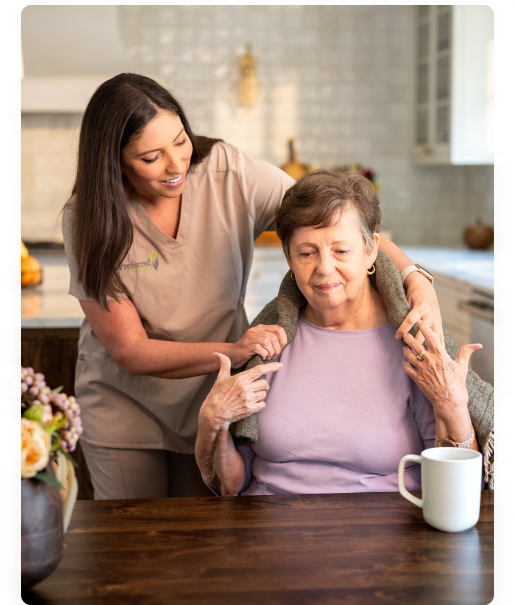
As Parkinson’s progresses into the middle years, the gap between what a senior wants to do and what their body cooperates with widens. Bathing becomes risky. Dressing takes longer. Cutting food, buttoning shirts, getting out of a low chair — the small mechanics of daily living all get harder.
This is when personal home care assistance typically enters the picture. Hands on care with bathing, dressing, personal hygiene, and transfers reduces fall risk and preserves dignity at the same time. Trained caregivers know how to cue movement when freezing of gait sets in — a brief pause, a counted step, a visual target on the floor — without making the senior feel rushed or managed.
Medication management also becomes more demanding. Carbidopa-levodopa and similar Parkinson’s medications often need to be taken every two to three hours, sometimes around food restrictions, and a missed or late dose can cause a sudden, frightening loss of mobility. Caregivers in the home provide medication reminders that keep the schedule tight even when the senior’s own sense of time is shifting.
Later Stages: Around-the-Clock Care
In later stages, as Parkinson’s disease advances, supervision becomes nearly continuous. Mobility challenges, swallowing difficulties, cognitive changes, and disrupted sleep mean someone needs to be available at all hours. This is the point where families weigh a skilled nursing facility against staying home with live-in or 24-hour care.
For many families, around the clock care at home is the choice that preserves quality of life. Familiar surroundings matter for someone whose cognition is changing. So does the consistency of the same caregivers, who learn the rhythms of a particular person’s good and bad hours. When the disease advances to the point of needing hospice support, end-of-life care at home is often what families want most.
The Medication Timing Problem Most Families Underestimate
If there’s one thing that separates Parkinson’s home care from other kinds of senior care, it’s the unforgiving nature of medication timing. Most chronic conditions tolerate a missed dose or a late one. Parkinson’s does not.
Carbidopa-levodopa wears off quickly. When a dose is late, the senior may suddenly freeze, struggle to walk, or lose the ability to speak clearly until the next dose kicks in. The Parkinson’s Foundation has campaigned for years on the importance of “on-time medications,” particularly during hospital stays and other healthcare transitions where standard medication rounds don’t match the patient’s home schedule.
In the home, this is where caregivers play a critical role. Medication reminders are not casual prompts. They’re scheduled, sometimes every two hours, sometimes adjusted around meals because protein affects levodopa absorption. A trained home health aide who has worked with Parkinson’s patients understands why the 10:00 dose cannot become the 10:45 dose, and why letting the senior “finish lunch first” might cost them their afternoon.
For families managing this on their own, the cognitive load is substantial. Bringing in expertly trained Parkinson’s caregivers takes that load off the family caregiver and replaces it with a system that runs on schedule.
Fall Prevention When Freezing of Gait Is in the Picture
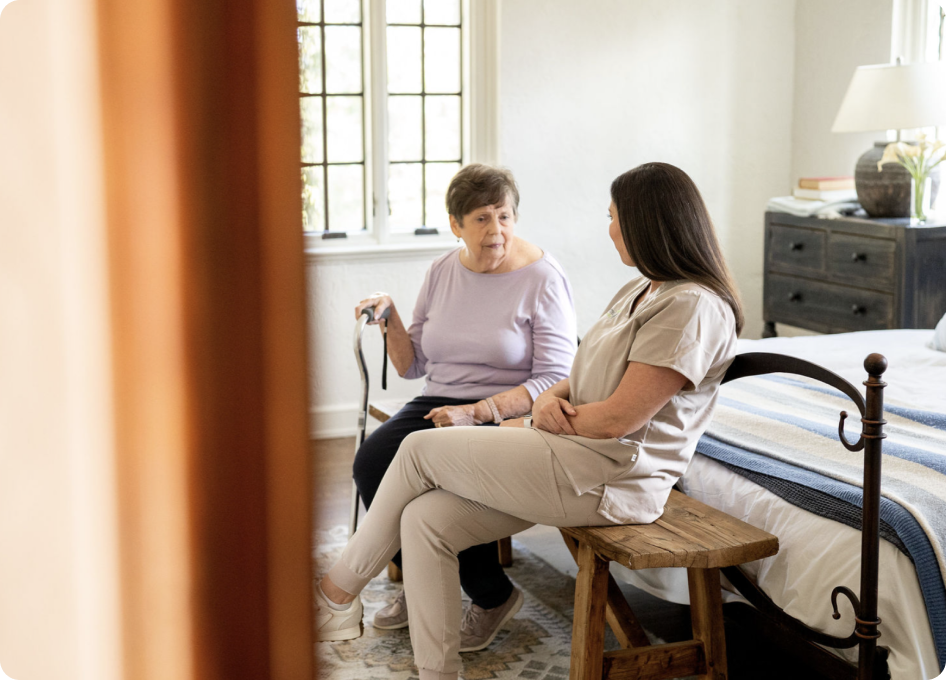
Falls are the most common reason a senior with Parkinson’s ends up in the emergency room, and they’re the most common reason families abandon the goal of aging at home. The Parkinson’s Foundation reports that about 60% of people with Parkinson’s fall each year, and many fall multiple times.
The mechanics are different from typical senior falls. Freezing of gait — that sudden, brief inability to start walking or to keep going — happens most often at thresholds, in doorways, when turning, or under time pressure. Postural instability means the usual reflex to catch oneself doesn’t fire correctly. The combination is dangerous in ways that standard fall prevention doesn’t fully address.
Effective fall prevention for Parkinson’s patients in the home includes:
- A trained caregiver who recognizes early signs of freezing and uses verbal or visual cues to break it
- Clear pathways through the home, especially at doorways and around furniture
- Grab bars and a shower chair in the bathroom, plus a raised toilet seat where helpful
- Adequate lighting, particularly at night between bed and bathroom
- Footwear that grips, not socks or loose slippers
- A medication schedule tight enough that “off” periods don’t catch the senior in the middle of the kitchen
The Tucson home environment adds its own variables — uneven outdoor surfaces, summer heat that affects medication metabolism, cooler tile floors that can be slick. A home assessment that names these specifics is part of any serious Parkinson’s disease care plan.
Nutrition, Swallowing, and the Quiet Side of Parkinson’s Disease Care
Two parts of Parkinson’s care that families don’t anticipate are nutrition and swallowing. The Parkinson’s Foundation flags both as areas where small problems compound into hospital visits.
Swallowing changes — dysphagia — develop gradually. Coughing during meals, taking longer to chew, food pocketing in the cheek, weight loss without an obvious cause. Speech language pathologists assess and treat swallowing issues, and many people living with Parkinson’s benefit from speech therapy that addresses both voice and swallow function. In the home, caregivers reinforce the techniques speech language pathologists recommend: smaller bites, chin-tuck swallows, sitting upright for thirty minutes after meals.
Nutrition matters in another way too. Protein interferes with levodopa absorption, so meal timing has to coordinate with the medication schedule. A healthy diet for someone with Parkinson’s often means moving most protein to the evening, keeping breakfast and lunch lighter on meat and dairy, and emphasizing fiber and hydration to manage the constipation that almost always accompanies the disease. Meal prep that respects all of this is part of competent Parkinson’s home care.
Supporting Exercise Programs at Home
Exercise is one of the few interventions that researchers consistently link to slower progression in Parkinson’s. The Parkinson’s Foundation, the American Parkinson Disease Association, and most movement disorders specialists recommend programs like LSVT BIG (which trains larger, more deliberate movements), Rock Steady Boxing, tai chi, cycling, and structured physical therapy.
Tucson has good local options — Rock Steady Boxing affiliates, dedicated Parkinson’s exercise classes, and physical therapists with movement-disorder experience — but getting there reliably is its own challenge. Caregivers help with transportation, encouragement, and follow-through on the home exercises that physical therapists and occupational therapists assign between sessions.
This is where in home care services connect to the rest of the medical team. Caregivers don’t replace physical therapists or occupational therapy professionals. They make the work those clinicians prescribe actually happen day to day, which is what determines whether a senior maintains function or loses it.
How In-Home Care Complements the Medical Team
Tucson families coordinating Parkinson’s disease care typically work with a movement disorders neurologist — often through Banner-University Medical Center or Tucson Medical Center — plus some combination of physical therapists, occupational therapists, speech language pathologists, registered nurses for periodic check-ins, and sometimes social workers when care logistics get complex.
Non-medical home care fills a different role than any of these. The medical team sets direction. They diagnose, prescribe, and treat. They see the patient for an hour every few weeks or months. The family and medical team rely on someone to translate that direction into daily life: making sure exercises happen, medications stay on schedule, meals fit the plan, and changes get noticed and reported.
That’s what trained caregivers in the home do. They see the senior every day, often for hours at a time, and they notice the things a quarterly appointment cannot: a new tremor pattern, increased confusion in the evenings, a decline in appetite, a fall that didn’t quite happen. Communication between caregivers and other healthcare professionals — through families or directly, depending on the arrangement — turns those observations into adjustments before small problems become hospital admissions.
For families navigating a recent diagnosis or a hospital discharge, transition care is often the entry point.
Family Caregiver Burnout Is the Other Patient
The Parkinson’s Foundation and most patient advocacy groups now talk openly about caregiver health as part of the disease itself. A spouse or adult child providing primary care for a person with Parkinson’s is at elevated risk for depression, sleep deprivation, their own health decline, and social isolation.
The math is hard. Parkinson’s progresses slowly, which means the caregiving role can stretch ten or fifteen years. The basic caregiving duties expand as the disease advances — from occasional rides and reminders in the early years to hands on care, medication management, overnight supervision, and emotional support around the clock in the later years. Family caregivers often absorb this gradually, without ever deciding to, until they realize they haven’t slept a full night in months and haven’t seen their friends in a year.
Respite care is the structured response. A few hours a week, a weekend, or a longer stretch — whatever lets the family caregiver step out of the role and recover. Respite isn’t a luxury or an admission of failure. It’s what keeps the primary caregiver healthy enough to keep going. Families who use respite care regularly report that their loved one stays home longer and that the caregiving relationship stays warmer.
Companion care often serves as the entry point for respite, especially in earlier stages when the senior mostly needs supervision, conversation, and light help during the hours the family caregiver is away.
Matching the Care Plan to Your Loved One’s Needs
A care plan for someone living with Parkinson’s disease has to do two things at once: meet today’s needs accurately, and anticipate where the disease is heading. Personalized care plans built around the specific person — their stage, their symptoms, their home, their family situation — outperform generic schedules every time.
What belongs in a Parkinson’s-specific customized care plan:
- The current medication schedule, written down to the minute, with food restrictions noted
- Mobility status, including known triggers for freezing and the cues that help break it
- Bathroom and bathing routines, with safety equipment and personal care preferences
- Meal preferences, swallowing precautions, and protein-timing considerations
- Exercise routines from physical therapists or occupational therapists, plus class schedules
- Medical appointments and the names of the movement disorders specialist and other healthcare professionals
- A list of warning signs that should trigger a call to the family or medical team
- The family caregiver’s schedule, so respite care fits the gaps that actually exist
Plans evolve. A plan built at diagnosis won’t fit year five, and year five’s plan won’t fit year ten. Reassessing regularly — and after any fall, hospitalization, or medication change — is what keeps the plan useful.
Frequently Asked Questions
When should a family consider in-home care for a senior with Parkinson’s?
Most families benefit from bringing in some level of support earlier than they think — often in the mid-stage years, when daily tasks start taking longer and the family caregiver is absorbing more than they can sustain.
There’s no single right moment, but common signals include: missed or late medications, the first fall (even one without injury), increasing difficulty with bathing or dressing, weight loss, sleep disruption for the family caregiver, and a sense that medical appointments and daily care are crowding out everything else. Starting with a few hours of companion or personal care a week often delays the need for around the clock care later. Start Care Now to schedule a free in-home assessment.
What’s the difference between a home health aide and a non-medical caregiver for Parkinson’s?
A home health aide working under a Medicare-certified home health agency typically provides short-term, physician-ordered support after a qualifying event. Non-medical caregivers from a private agency provide ongoing daily support that isn’t time-limited.
For most families managing Parkinson’s at home long-term, the consistent presence is non-medical. After a hospitalization, Medicare home health may briefly send a registered nurse, a physical therapist, or a home health aide for a defined period. Once that benefit ends, ongoing personal care, medication reminders, meal prep, and supervision continue through privately arranged care services. The two often overlap during transitions and complement each other rather than substitute.
How do caregivers handle medication timing for Parkinson’s?
Trained caregivers follow a written medication schedule precisely, prompt the dose at the exact time, observe whether it’s taken, and document what happens — including any “off” episodes or side effects.
Caregivers don’t prescribe or adjust medications, but medication reminders for Parkinson’s are far more structured than for most other conditions. Doses are tied to the clock, sometimes adjusted around meals because of protein interactions, and consistent timing is what keeps mobility steady through the day. Caregivers also note any patterns worth reporting back to the family or medical team — a dose that seems less effective, new dyskinesia, longer “off” periods — so the neurologist can adjust the regimen at the next appointment.
Can in-home care help my parent stay out of a skilled nursing facility?
For many families, yes — particularly when care is layered in gradually as the disease progresses, rather than introduced only after a crisis.
The Parkinson’s Foundation and the American Parkinson Disease Association both note that most people with Parkinson’s prefer to remain at home, and that consistent in-home support, fall prevention, and family caregiver respite are the factors most likely to make that possible. Senior living communities and skilled nursing facilities become necessary when care needs exceed what can be provided safely at home, but with appropriate live-in or 24-hour support, that threshold often comes much later than families expect.
What does respite care look like for a Parkinson’s family caregiver?
Respite care can be a few hours a week, a regular weekend, or longer stretches — whatever pattern lets the family caregiver step out of the caregiving role and recover.
In practice, respite often starts small. A caregiver comes for four hours twice a week so the spouse can run errands, attend appointments, or simply rest. Over time, as the disease advances, respite typically grows to longer shifts, overnight coverage, or full weekends. The goal is consistency — the same trusted caregivers, building a relationship with the person living with Parkinson’s — so that respite doesn’t feel like an interruption but like a normal part of the household rhythm.
How do you find caregivers experienced with Parkinson’s in Tucson?
Look for an agency that screens caregivers carefully, trains them on Parkinson’s-specific issues like medication timing and freezing of gait, and matches them on personality and continuity rather than scheduling convenience.
Experience with Parkinson’s matters. Caregivers who have supported other clients living with the disease recognize the patterns — the difference between an “off” period and a fall risk, when a cue helps and when it frustrates, how to support exercise programs without pushing too hard. Preferred Care at Home matches caregivers to clients by personality and life experience, screens through a 7-step process, and adjusts care plans as the disease progresses. Start Care Now to schedule a complimentary in-home consultation in the Tucson area.