
Colorado splits home care into separate Medicaid pathways: Community First Choice, IHSS, HCBS waivers, and skilled home health services. Each has different rules. Getting Medicaid home care Colorado families trust starts with knowing your pathway, not guessing. We walk families through which home care services fit before you spend weeks on the wrong application.
Colorado Medicaid, known as Health First Colorado, doesn’t work as one benefit. It splits into separate pathways with separate rules, and our Northern Colorado team sees families arrive confused about which one applies to them. Since July 1, 2025, IHSS in Colorado is available only through Community First Choice, per HCPF, and many guides online still describe the old system.
Colorado Medicaid splits in-home care across separate programs with separate rules, so the first step is knowing which pathway to ask about. Long term care needs often route through waiver programs or the CFC program, while acute conditions may qualify for home health services.
Coverage varies by pathway. Skilled home health care, personal care services, homemaker services, and home modifications each sit under different benefits. Home and community based services can include adult day care, medical services, and support from trained home care providers, whether you need daily treatment or occasional help.
In Larimer and Weld counties, the case management agency is the usual first stop, not a private phone call.
No agency can guarantee Medicaid approval. Anyone who says otherwise has skipped the parts that actually decide it. Eligibility requirements follow state health care policy that shifts year to year, so we’ll tell you what’s true today, not what’s easy to hear.
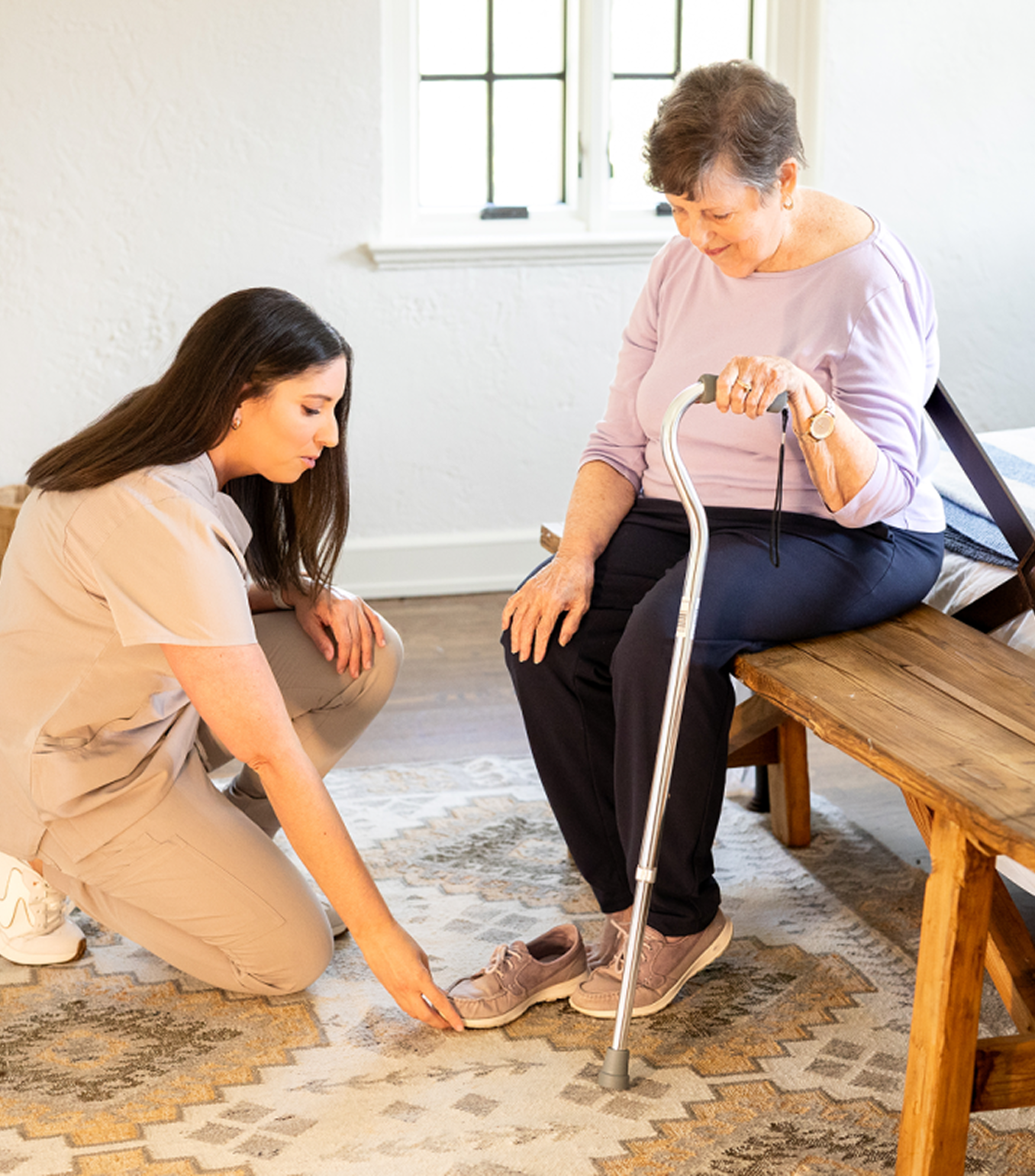
For someone leaving UCHealth Poudre Valley, Medical Center of the Rockies, or Banner Health with new care needs. Skilled home health services may cover the first weeks, but longer-term personal care and homemaker help sit under different Medicaid pathways.
The EBD (Elderly, Blind, Disabled) waiver serves adults 65+ with a functional impairment and adults 18-64 who are blind, physically disabled, or have HIV/AIDS and need long-term community supports to stay at home, per HCPF. The CMHS waiver serves adults with a mental illness who need similar community support. Community First Choice may also apply depending on eligibility. Low income residents who meet both financial and functional criteria can access waiver programs.
For sons and daughters living in Denver, out of state, or working full-time along the Front Range. Understanding the Medicaid pathways lets you help a parent locally without guessing at the process. Family members often need clarity on how companion care fits alongside Medicaid-covered services before coordinating from a distance.
For households where English is not the primary language. Our team serves families in English and Spanish from the first conversation, so pathway questions don’t get lost in translation.
Instead of guessing whether Medicaid “covers” home care, you get a plain-English read on whether your situation looks more like Community First Choice, an HCBS waiver, skilled home health services, or something else. That clarity comes before you spend a week on the wrong application track. Many services exist across different pathways, and knowing which one fits saves time.
Larimer County families work with different case management contacts than Weld County families. We help sort out which office starts your process: Foothills Gateway, Weld County CMA, the ADRC, or Colorado PEAK for status. You won’t be calling from a random Google list.
While Medicaid eligibility is being reviewed, families still need help at home today. Our caregivers can start on a private-pay basis and coordinate the transition once personal care benefits are confirmed, so care doesn’t stop and start with paperwork. Working with homemaker care providers who understand the Medicaid timeline can bridge the gap between application and approval.

Here is what happens when you reach out to our Northern Colorado team. Call or text (970) 590-7608 to get started.

Step 01
Reach us at (970) 590-7608. We listen first: what changed, what you need help figuring out, and whether Medicaid, VA, or private pay is on the table.

Step 02
We walk you through the likely Medicaid pathway (CFC, HCBS waiver, skilled home health) in plain English, name the county contact that starts your process, and point you to Colorado PEAK. Some skilled tasks require services from a specific class of provider, and we help you understand which one.

Step 03
A member of our team visits the member’s residence to understand daily routines, safety, mobility, and family involvement. We build a care plan around what your loved one needs, not a template. Our caregivers bring training in personal care and health care tasks.

Step 04
We match a caregiver by personality and experience, not by whoever is on the schedule. Our caregivers are screened through our 7-step process before they set foot in your home.

Step 05
Care starts on the timeline that works for your family. If Medicaid benefits are still being reviewed, we can coordinate the private-pay-to-Medicaid transition once approval is confirmed.

Matt and Linda Dollar have spent more than 15 years working inside the long-term care and healthcare community across Larimer and Weld counties. That means we know the case managers, the hospital discharge planners, and the county offices by name, not from a script. As Linda puts it, “I am humbled to serve our community and their loved ones.”
We don’t get paid more when a family picks a specific Medicaid pathway. If skilled home health from a nurse agency is the right first step and not us, we’ll say so.
For the growing Spanish-speaking population across Northern Colorado, we serve families in Spanish and English from the first conversation, not through a translator added later. Every family deserves to feel heard from the start.
Not sure which Medicaid pathway fits, basic support or advanced care? Let’s talk it through. A short call clarifies your pathway and next county contact. No pressure, no guarantees, just a straight read.
Call or text: (970) 590-7608
Most families either try to sort out Colorado Medicaid on their own or work with a local team who does it weekly. The acute home health period covers immediate post-hospital needs, while long term home health for ongoing illness management sits under different rules and requires prior authorization.
| Dimension | Navigating Alone | With Our Team |
|---|---|---|
| Pathway clarity | Trial and error | Same-day read |
| First county contact | You look it up | We name it |
| Time to first call | Days to weeks | 24-48 hours |
| Cost | Free time-wise | Consult free |
Preferred Care at Home has continued this tradition by only referring the most reliable, compassionate, experienced and affordable caregivers to client’s homes or care facilities.
We Serve:
Yes, Health First Colorado (Colorado Medicaid) can pay for home health care services, but the rules split into two tracks: acute home health services for short-term skilled needs and long term home health for ongoing skilled care. Acute home health is allowed for up to 60 calendar days without prior authorization or until the acute condition resolves, per HCPF. Long term home health requires prior authorization and a physician order.
Personal care and homemaker support sit under different pathways entirely, including CFC, IHSS, and HCBS waivers. Understanding which track applies to your situation is the first real question to answer.
Colorado’s home health benefit exists because the home is often the most effective setting for care required after a hospital stay, more so than an outpatient treatment office. Not every discharge will require home health services, but many do. That’s the acute health care standard behind a physician’s order for skilled visits.
Depending on the pathway, Colorado Medicaid may pay for skilled services from a registered nurse or licensed practical nurse, therapy visits such as physical therapy, occupational therapy, and speech therapy, personal care services like bathing and dressing, homemaker services including meal preparation and light housekeeping, health maintenance activities, and in some HCBS waivers, home modifications. The Home Modification benefit carries a $14,000 lifetime maximum in the EBD, CIH, BI, and CMHS waivers, per HCPF.
What you actually qualify for depends on your eligibility and the assessment your county case manager completes. Colorado’s Medicaid program treats each of these as separate benefits, not one bundled service. Home repairs fall outside the home modification benefit.
To qualify for Community First Choice, a member must meet full Health First Colorado financial eligibility and institutional level-of-care requirements, or already be enrolled in an HCBS waiver receiving at least one waiver service per month. HCBS waivers like EBD have their own criteria, generally covering adults 65 and older with a functional impairment, or adults 18 to 64 with a qualifying disability.
Eligibility requirements differ by waiver, so the same person might qualify for one program and not another. Your county case management agency is the one that ultimately confirms which pathway fits.
Colorado Medicaid does not publish a single flat rate for home caregivers. Payment depends on the pathway (CFC, IHSS self-direction, or agency-based delivery), the service provided, and the county-approved care plan.
Self-directed models like IHSS and CDASS let members direct payment differently than agency-based delivery does, giving families more say in the application process.
In some cases yes, through self-direction pathways like IHSS or CDASS, but Colorado has caregiver-rule limits that change what is possible. A 2026 HCPF memo addressed limits on paid homemaking by legally responsible persons, which can affect whether a spouse or parent qualifies as a paid caregiver.
Rules like this change, so confirm current guidance with your county case management agency before assuming a relative can be paid.
A licensed Colorado home care agency can explain the pathways, help you prepare questions for your county case manager, coordinate assessments, and deliver approved services. No agency can approve Medicaid or promise a specific benefit amount. Colorado licenses agencies as Class A, which can provide skilled services and personal care, or Class B, limited to personal care only, per CDPHE.
The county and Health First Colorado make the eligibility and coverage decisions, not the agency. A home health aide, certified nursing assistant, or certified nurse aide can deliver personal care under either class, but skilled tasks route through a Class A provider. Some physical and behavioral health services run through a Colorado managed care program using a managed care organization model, separate from the long-term services pathway that covers home care.
Timelines vary by county and pathway, but most Northern Colorado families see the process take several weeks from first county contact through assessment and authorization. Larimer County residents can check status through Colorado PEAK or the Human Services Benefits line at 970-498-6300; Weld County routes families through its Case Management Agency.
Call us early to avoid the two most common delays we see families run into.
No, and no honest agency in Colorado can. Medicaid approval depends on financial eligibility, level-of-care assessments, and authorization decisions made by the county and HCPF.
What we can guarantee is a straight read on your likely pathway, a specific first county contact, and coordinated care when you start with us.
One call gets you clarity on your Medicaid pathway. We serve Fort Collins, Loveland, Windsor, and Greeley families with peace of mind that starts on the first call.
Call or text: (970) 590-7608