
An outdoor hobby does not have to feel like a workout to count. This guide sorts outdoor hobbies for seniors by what your loved one can actually do on a normal day, not by what looks good in a brochure.
Key Takeaways:
- Weekly activity targets include aerobic work, strength training, and balance practice
- Fall risk shapes which outdoor hobbies fit safely, not just personal preference
- Evidence shows certain gentle hobbies protect against falls better than others
What Outdoor Hobbies for Seniors Actually Do for the Body
The body needs three things from activity: aerobic work, strength, and balance. The CDC physical activity guidance for older adults specifies that adults 65 and older need at least 150 minutes of moderate aerobic activity each week, plus muscle-strengthening on at least two days and balance-improving activities.
According to the CDC, that guidance has three parts, not one, and outdoor activities hit more than one box at the same time better than most indoor routines.
The CDC calls a hobby that touches multiple goals a multicomponent activity. Outdoor hobbies the CDC names as multicomponent include:
- Gardening (lifting, kneeling, walking between beds)
- Yoga
- Tai chi
- Several recreational sports
The takeaway for families: a hobby can replace a formal workout if it touches more than one box. A morning of gardening covers strength and light physical exercise at once. A tai chi class in a local park covers balance and gentle movement together.
Spending time outdoors while staying active supports both physical health and overall well being. The mental benefits show up whether the hobby is loud and group-based or quiet and personal. Creative pursuits like outdoor photography or nature journaling add another layer by giving older adults a way to express themselves while they stay active. But not every hobby is right for every body. Matching the hobby to your loved one’s mobility comes next.
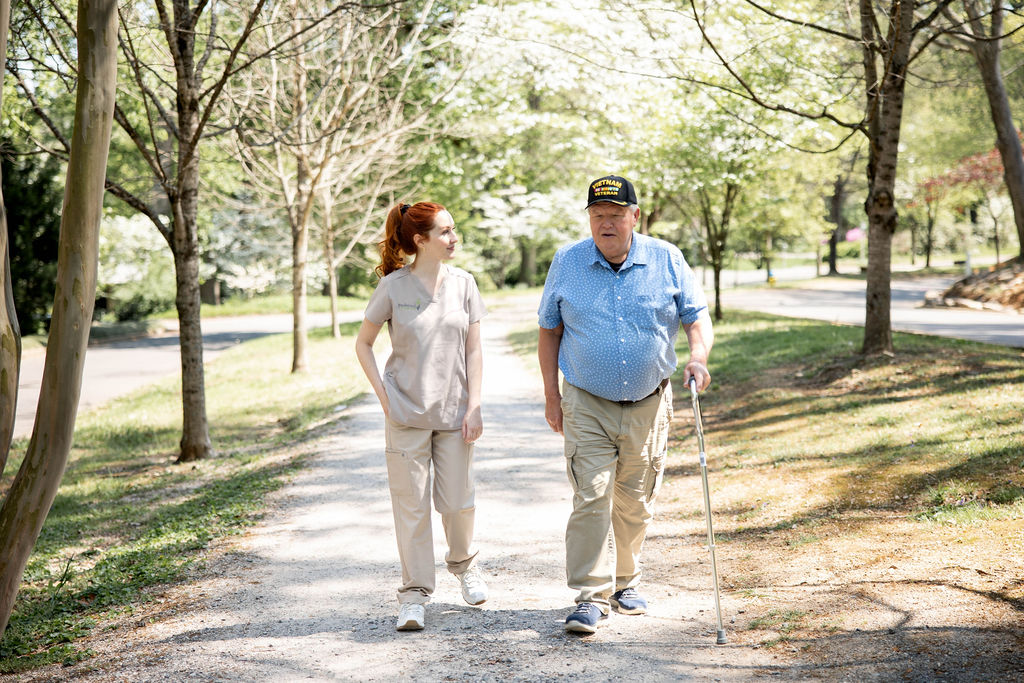
How to Match Outdoor Hobbies to Mobility, Energy, and Fall Risk
Three honest mobility levels cover most older adults: comfortable walking with steady balance, walks but tires with shaky balance, and limited mobility or seated only. The right outdoor hobby looks different in each row.
Fall risk makes ability-matching the first step in hobby selection. The CDC falls data confirms over 14 million older adults, or 1 in 4, report falling every year.
Over 14 million older adults report falling annually, which means the hobby that fits today’s balance and stamina matters more than the hobby that sounds appealing.
| Mobility Level | Hobbies That Fit | Why It Works |
| Comfortable walking, balance solid | Walking groups, birdwatching on trails, photography hikes, fruit picking | Aerobic plus light strength, social options |
| Walks but tires, balance shaky | Tai chi in a park, container gardening, farmers markets, scenic drives | Low impact activity, balance-building, paced |
| Limited mobility or seated | Bird feeder watching, raised-bed gardening, porch concerts, scenic drives | Fresh air, sensory engagement, low fall risk |
When supervision or transportation is what stands between your loved one and outdoor time, Companion Care is the bridge. A caregiver can drive to the trailhead, sit on the porch during birdwatching, or walk the farmers market at a paced speed.
Five Questions to Ask Before Picking a Hobby
- Can your loved one stand or walk for the time the hobby needs?
- Is there shade, comfortable seating, and water nearby?
- Does your loved one need a companion for transportation or supervision?
- Is there a fall hazard like uneven ground, stairs, or a slippery deck?
- Does the hobby fit their energy in the afternoon, when fatigue tends to peak?
Once the ability fit is right, the next question is who else is there.
Outdoor Hobbies That Bring People Back Together
Connection is not just a feel-good benefit. For older adults, it is associated with sharper cognition over time, which makes social outdoor hobbies different in kind from solo ones.
The National Institute on Aging published findings on social engagement and cognitive health that matter for hobby selection.
According to the NIA, researchers analyzing data from more than 7,000 adults age 65 and older found that high social engagement, including visiting neighbors and volunteer work, was associated with better cognitive health later in life.
Outdoor activities for seniors that build social interaction without demanding a marathon:
- Walking groups that meet at a trailhead or community center
- Volunteering at animal shelters
- Community garden plots shared with neighbors
- Farmers markets visits with a friend or grandchild
- Outdoor concerts and live music in a park
- A book club that meets on a patio or under a pavilion
- Board games or card games at a community pavilion
When a parent’s mobility limits group attendance, a caregiver companion can make these hobbies possible again. That is the practical use of senior companion services: not replacing the friend group, but getting your loved one to the friend group. And when the family caregiver needs a break so the older adult can join a standing weekly outing, Homemaker and Respite Care is what gives the family that breathing room.
Social interaction through outdoor activities helps your loved one stay connected to the people and places that matter. So which low impact activity is the right starting point?
Walking or Tai Chi: Choosing a Low-Impact Outdoor Hobby
Walking is the obvious starting point. Tai chi is the underrated one. The choice is rarely either-or, and matching the hobby to today’s energy matters more than picking a single answer.
| Factor | Walking | Tai Chi |
| Best for | Building stamina, daily routine | Balance confidence, fall prevention |
| Equipment | Supportive shoes | Open space, optional class |
| Social option | Walking groups, neighbors | Park classes, community center groups |
| Fall-risk evidence | Standard moderate-activity benefit | Lower fall incidence in research |
The evidence for tai chi’s protective effect is specific. A 2023 meta-analysis published on PubMed examined multiple studies on tai chi and fall prevention in older adults.
According to the meta-analysis, Tai Chi was associated with lower fall incidence in older adults, with a pooled risk ratio of 0.48.
When walking already feels comfortable, keep it and add one weekly tai chi session in a local park. When fear of falling is the reason a parent has stopped going outside, tai chi is where to start, ideally in a class or group on level ground rather than solo on uneven terrain. For older adults who need hands-on help with mobility before they can safely join either, Personal Care covers the dressing, footwear, and steady-hand support that makes the first outing possible.
Both walking and tai chi support cardiovascular health while giving older adults time in fresh air. Families often have a few more questions before they pick a starting hobby.
What outdoor hobbies are safe for seniors with limited mobility?
Container gardening, bird feeder watching, scenic drives, and seated tai chi are safe outdoor hobbies for seniors with limited mobility, depending on fall risk.
A raised-bed garden, a bird feeder watched from a porch, a scenic drive through a familiar route, and seated tai chi all keep older adults outside without asking for distance or balance they no longer have. The CDC names gardening as a multicomponent activity, which means even a seated session counts. When supervision or driving is the real barrier, Preferred Care at Home offers respite care for family caregivers so a trained companion can make the outing possible.
Are outdoor hobbies good for senior mental health?
Outdoor hobbies that include social contact are linked to improved mood and stronger cognitive health in older adults, per CDC and NIA evidence.
The CDC links supportive relationships to less stress and lower loneliness in older adults, and social outdoor hobbies create those relationships naturally. Even solo outdoor time, like quiet birdwatching or tending a garden, helps reduce stress in ways indoor screen time does not. The mental stimulation and emotional benefits show up whether the hobby is loud and group-based or quiet and personal, which is why both types belong in the same plan.
What can my elderly parent do outside if walking long distances is hard?
Try short porch sits with a bird feeder, raised-bed gardening, a scenic drive, or a 10-minute neighborhood loop with a companion.
Distance is not the only measure of an outdoor hobby. Sensory time outside, like listening to live music in a park or watching blooming flowers from a chair, still counts as outdoor time and still lifts mood. Pairing your parent with a caregiver builds confidence for the short loops, and Preferred Care at Home matches caregivers by personality through in-home companionship care so the outings feel like time with a friend.
Are there outdoor hobbies that do not feel like exercise?
Gardening, birdwatching, photography, fruit picking, and farmers markets visits feel like enjoyable pastimes but still count as physical activity.
The CDC names gardening as a multicomponent activity, which is the technical way of saying it builds strength and cardiovascular health at the same time. Outdoor photography and journaling outdoors do something extra by giving older adults a creative outlet, which is rarely connected to physical activity benefits but should be. The hobby that works is the one your loved one wants to keep doing.
How do I get my older parent interested in hobbies again?
Start small with a family favorite or a routine outing, like a weekly farmers market or porch coffee, and build from there.
Loss of routine, not loss of interest, is often the real barrier. A standing weekly outing, same day, same time, same person, rebuilds the rhythm that retirement and reduced mobility quietly took away. Pick one hobby that already has positive memories attached, anchor it to a fixed time, and let the routine do the work of motivation. Many seniors find that spending time outdoors with loved ones creates a deeper connection and helps them stay active in a fulfilling lifestyle.
Is walking or tai chi better for older adults?
Walking builds stamina; tai chi targets balance and fall prevention, and most older adults benefit from doing both each week.
The two hobbies do different jobs. Walking is the most accessible aerobic activity and slots easily into a daily routine, while tai chi is gentler on the joints and more protective of balance. If fall risk is the main concern, lean tai chi first. If a parent has stopped moving and needs the simplest possible re-entry, walking is the place to begin, and tai chi can join later in the week.