

Dementia Care · A Pillar Guide from Preferred Care at Home
Your mom repeats the same question three times in an hour, but still remembers your childhood address down to the zip code. Is that normal aging, or something more? Dementia stages aren’t a clean countdown — but once you understand the pattern, you can stop guessing and start planning. This guide maps both stage models to real behaviors, and the point where Central Florida families typically bring in extra hands.
Dementia progression gets described two different ways, and that is where most of the confusion starts. Here is what the two models answer before anything else.
One is the Alzheimer’s Association’s 3-stage model (early, middle, late). The other is the seven-stage Global Deterioration Scale, developed by Dr. Barry Reisberg in 1982, which breaks progression into finer functional steps.
No. Alzheimer’s is the most common cause, but vascular, Lewy body, frontotemporal, mixed dementia, and normal pressure hydrocephalus each follow different patterns — some faster or slower than the standard charts suggest.
People 65 and older survive an average of 4 to 8 years after a dementia diagnosis, though some live as long as 20, per the Alzheimer’s Association. Stages may overlap — charts work better as planning tools than exact timelines.
Most families assume home care is a late-stage decision. It usually starts earlier — around the GDS stage 5 threshold, when common daily tasks start requiring a hand.
 01
01
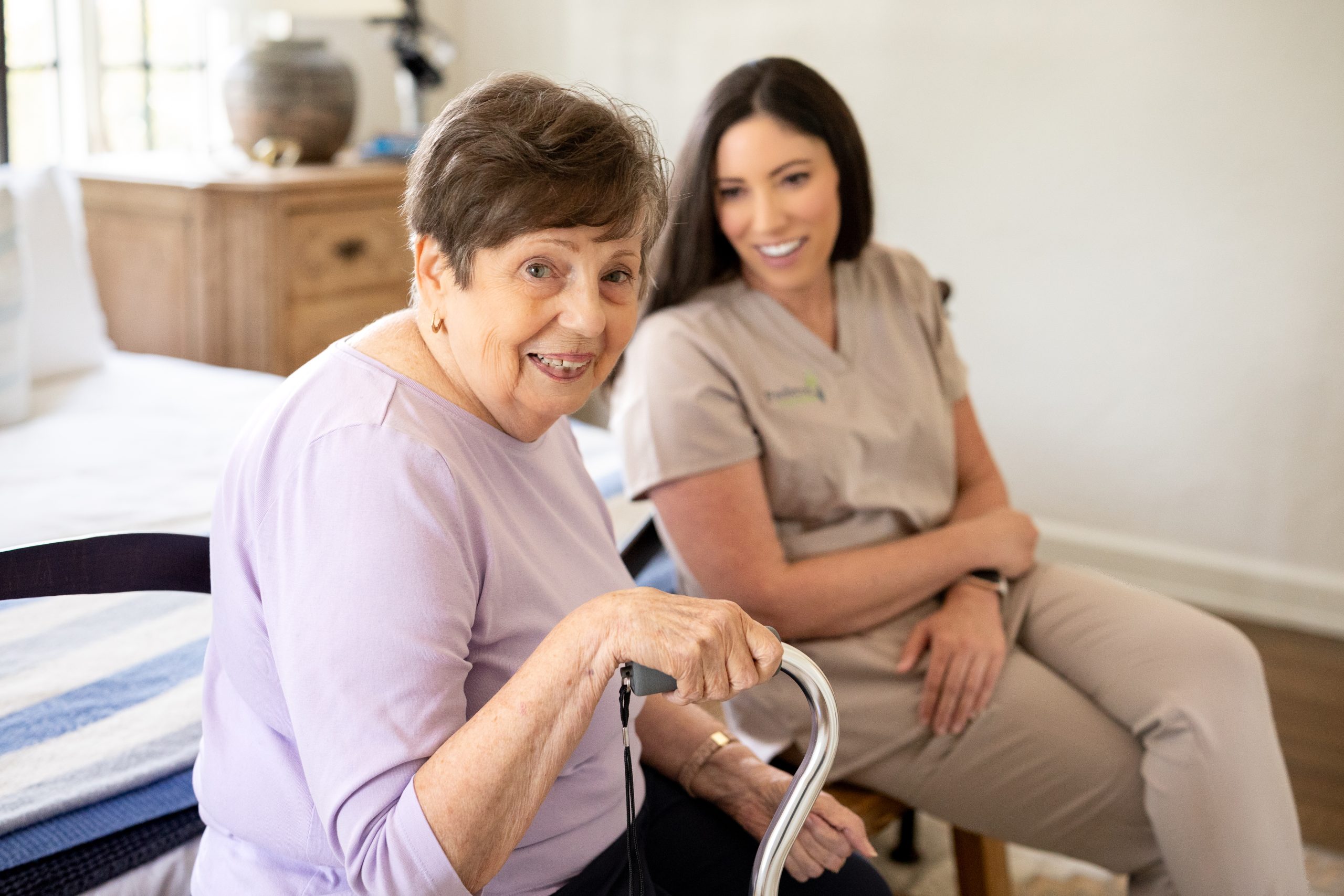
Forgetting recent events but recalling distant ones in sharp detail, unusual words for familiar objects (“the cutting thing” instead of “knife”), getting lost on the short hop between Casselberry and Winter Park, missed bills or the same bill paid twice. The need isn’t heavy support — it’s the same consistent help, every week.
 02
02
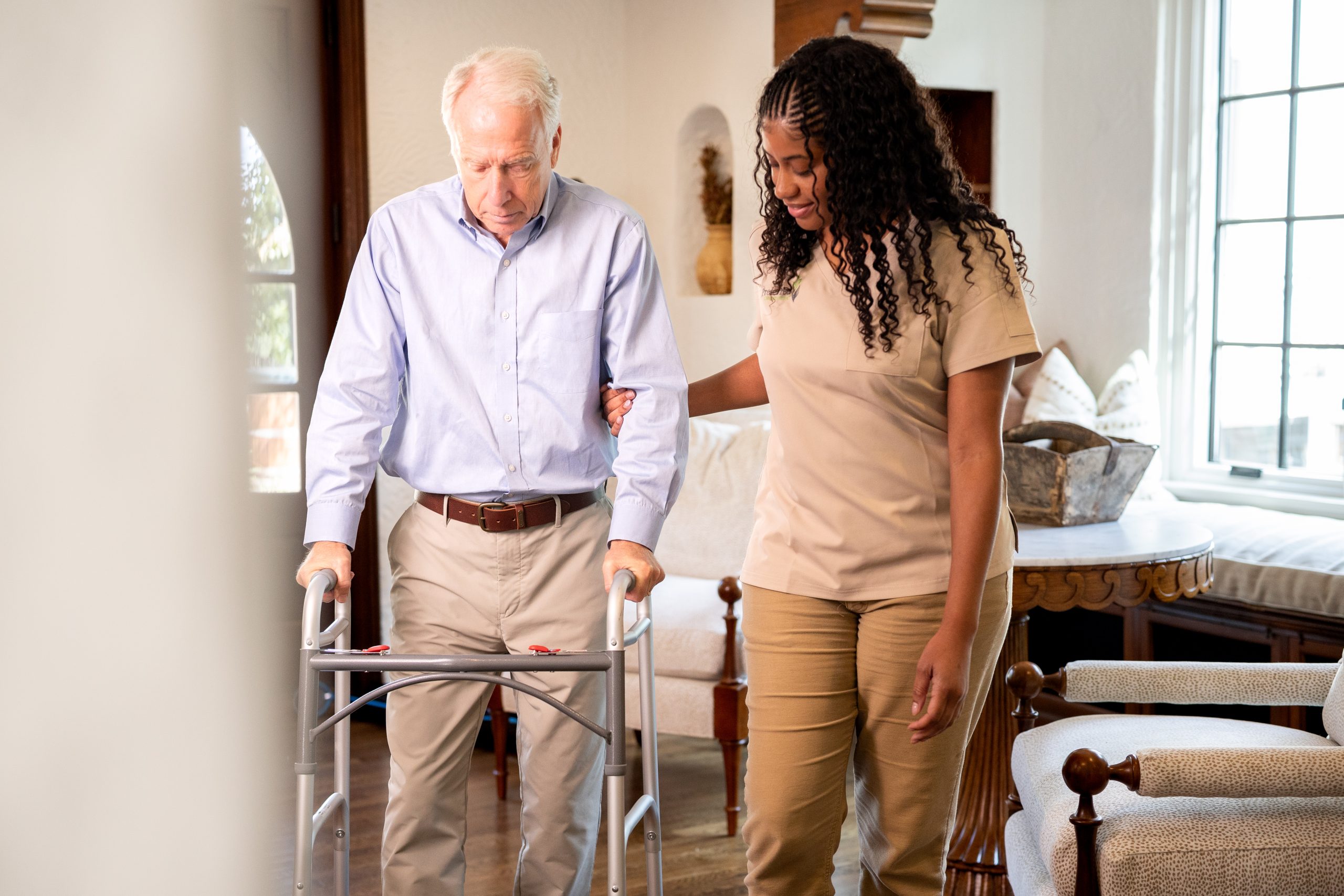
Checking in stops being enough. Dressing, bathing, and cooking start needing a prompt or a hand; sundowning agitation rises in late afternoon; wandering and bath refusal appear. Daily visits, structured routines, and someone present through the sundowning hours — plus respite for the primary caregiver — matter more than most families expect.
 03
03
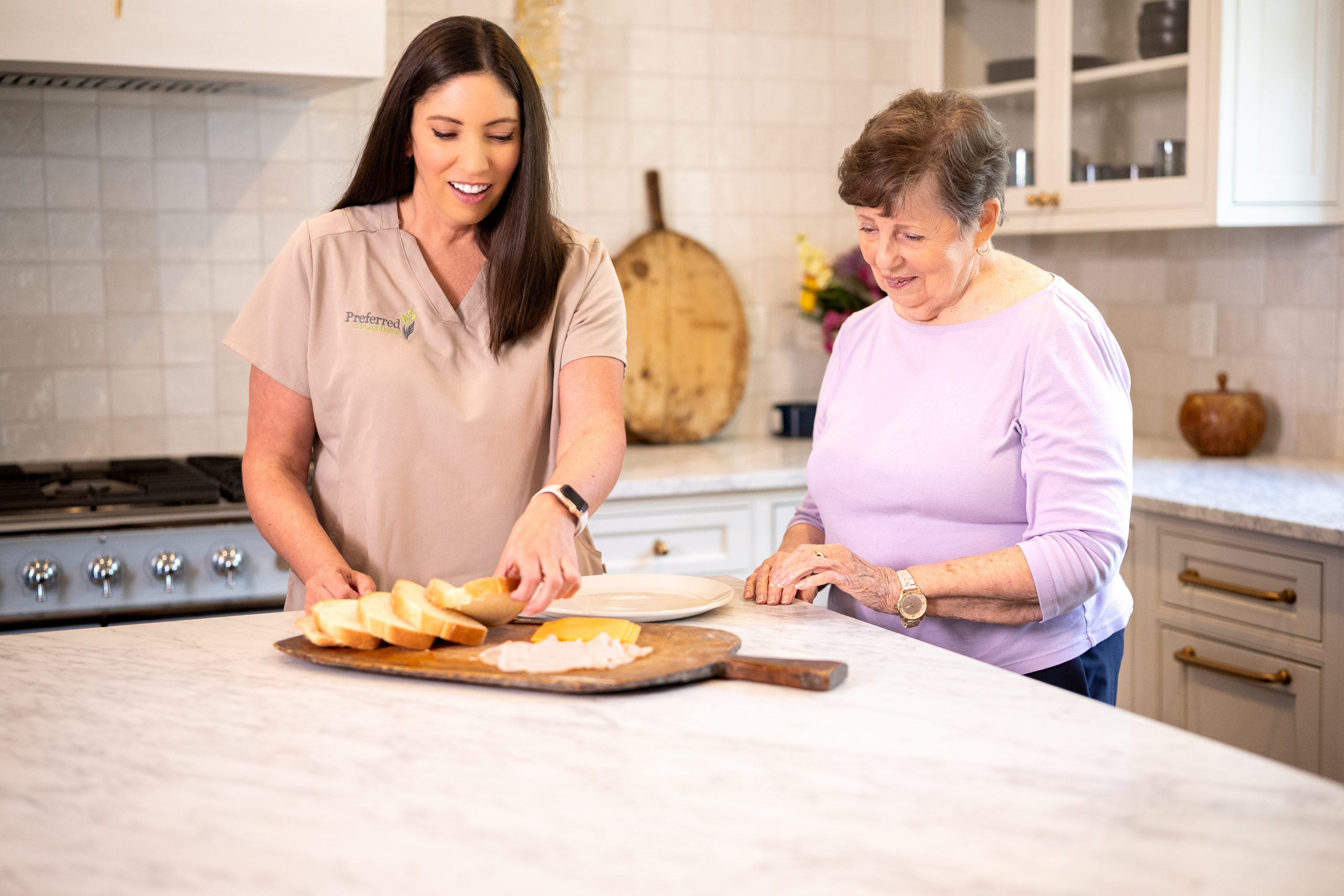
Loss of walking or sitting independently, feeding help, incontinence, loss of verbal communication — though emotional recognition often remains. At home this usually means live-in care, overnight caregivers, or 24-hour presence, with end-of-life care working alongside hospice, focused on comfort and companionship.
Part-time companion visits fit the early stage (GDS 3–4): loneliness, missed appointments, medication reminders. Daily care — personal care plus supervision — fits the middle stage (GDS 5): bathing refusal, meal skipping, sundowning. Overnight or 24-hour live-in care fits GDS 6–7: wandering, nighttime confusion, feeding help.
The Medicare Annual Wellness Visit requires cognitive assessment for beneficiaries 65 and older, per the National Institute on Aging — a covered, no-cost opening to raise early memory concerns with a doctor.
Per CDC caregiver guidance, caregivers of people with dementia are at greater risk for anxiety, depression, and lower quality of life than caregivers of people with other chronic conditions. Adding support is not a sign of failing your parent — respite exists to give you room to breathe before you are running on empty.

Where a local home care team fits — from the first “is this normal aging?” call to 24-hour presence.
We take your call at (407) 601-3960, listen to what a normal week looks like, and help you sort normal aging from patterns worth acting on.
Our dementia care starts with understanding which type your loved one is living with — not a generic timeline. Vascular, Lewy body, and Alzheimer’s each get planned differently.
Companion care for conversation and connection, medication reminders, rides to appointments, and help keeping the calendar straight. Not much help — but the same help, every week.
Personal care for bathing and dressing, meal preparation, structured routines, and someone present through the hours when sundowning tends to hit.
Live-in care, overnight caregivers, or 24-hour presence keeps your loved one in familiar surroundings — with end-of-life care working alongside hospice when the time comes.
Preferred Care at Home of Northeast Orlando serves families across Casselberry, Winter Park, Maitland, Apopka, and Seminole County — building each care plan around which type of dementia your loved one is living with, not a generic timeline.
For adult children spread across Seminole County, a quick check-in from Winter Park or Downtown Orlando can turn into a two-hour round trip once traffic gets involved. Scheduled in-home care closes that gap before occasional drop-ins stop being enough.
Caregiver burnout is a real trigger, not a failure: per the CDC, dementia caregivers face greater risk of anxiety and depression than other caregivers. Respite and homemaker care exist exactly so you can breathe before you are running on empty.
From no impairment to memory slips, missed appointments, and trouble with complex tasks like recipes and appointment calendars. Family often notices before the person does.
Trouble with recent events, then needing help with daily living. GDS stage 5 is where checking in stops being enough — and where most families add scheduled daily help.
Dressing and bathing need hands-on help; personal history fades; close family members become hard to recognize. Supervision needs to become constant, per the CDC’s safety signs.
Feeding assistance, incontinence, and motor decline, per the NCBI GDS summary. At home this means live-in or 24-hour presence, with hospice-adjacent comfort care.
Specific incidents usually force this decision: getting lost on a familiar drive, missed medications, an unsafe attempt at cooking, or wandering at night. Here is how the signals split.
The Global Deterioration Scale (GDS) is the 7-stage framework clinicians use, developed by Dr. Barry Reisberg in 1982, running from stage 1 (no impairment) through stage 7 (severe decline needing full-time care).
Stages 4 through 7 correspond to what most people mean by “dementia,” and boundaries between stages often overlap rather than switching cleanly.
MCI is a measurable decline in memory or thinking that doesn’t yet disrupt daily life. It sits between normal aging and mild dementia, and not everyone with MCI goes on to develop dementia.
Some people stay stable for years, and a smaller group even improve — which is why doctors track it rather than treat it as a diagnosis on its own.
Stage 4 marks mild or early Alzheimer’s: clear memory loss, trouble managing finances, difficulty planning a complex meal, and personality changes like social withdrawal.
Most FDA-approved Alzheimer’s drugs work best in the early or middle stages, per the NIA — making this a meaningful window for treatment discussions with a doctor.
Bathing refusal commonly emerges in the middle stages, when judgment, task sequencing, and awareness of personal care needs start to decline.
It’s often less about hygiene and more about fear — of water, of falling, of lost privacy. Personal care support can make the routine feel less like a confrontation.
Most families add in-home support well before facility placement becomes necessary — often around GDS stage 5, when everyday tasks start requiring consistent help.
We build the care plan around what your loved one needs right now, rather than assuming a facility is the only next step.
Support looks different at every stage. Early on, it’s reminders, transportation, and companionship. In the middle stage, it becomes daily help with personal care and meals. The final stage usually means overnight or 24-hour presence, feeding help, and hospice-adjacent support — a plan built around the stage your loved one is actually in.
Specific incidents usually force this decision: getting lost on a familiar drive, missed medications, an unsafe attempt at cooking, or wandering at night — safety signs that often coincide with the GDS stage 6 threshold.
If the family caregiver is running on empty, that exhaustion is its own warning sign worth acting on — live-in care can fill the gap before a crisis forces the decision.
Moderately severe dementia corresponds to GDS stage 6: memory lapses become more pronounced and basic tasks like dressing or bathing require hands-on help.
People at this stage may forget their personal history, struggle to recognize close family members, and need constant supervision to stay safe at home.