
Dementia Care · A Pillar Guide from Preferred Care at Home
Sundowning doesn’t wait for the sun to actually go down, and it isn’t a diagnosis your doctor writes on a chart. It’s a late-day pattern of restlessness and confusion that builds quietly through the afternoon — and it gets easier to manage the moment you stop treating it like a mystery. This guide covers what sundowning is, why evenings turn hard, a real routine you can start today, and when the hardest hours call for more than one tired caregiver.
The NIA describes sundowning as restlessness, agitation, irritability, and increased confusion that build during the evening as daylight fades. It isn’t a separate disease — and it looks different in every household. Here is what to understand first.
No — it’s a recurring late-day pattern, not a formal diagnosis. Per the Alzheimer’s Association, the exact cause is unknown, which is part of why it gets treated as one fixed thing when it’s really a stack of small things.
A 2025 review in Brain Sciences reports prevalence estimates ranging from 1.6% to 66% — reflecting how inconsistently sundowning is defined across studies. Chasing a benchmark is the wrong goal; what matters is your household’s pattern.
A urinary tract infection, sudden pain, a new prescription, or sleep issues can look exactly like sundowning but need medical attention instead. Sudden, sharp, or fever-accompanied confusion deserves a doctor call, not an assumption.
Routine plus relief handles most cases at home. Non-drug approaches — routine adjustments and environmental changes — often work better than medication, because they address multiple triggers at once.
 01
01
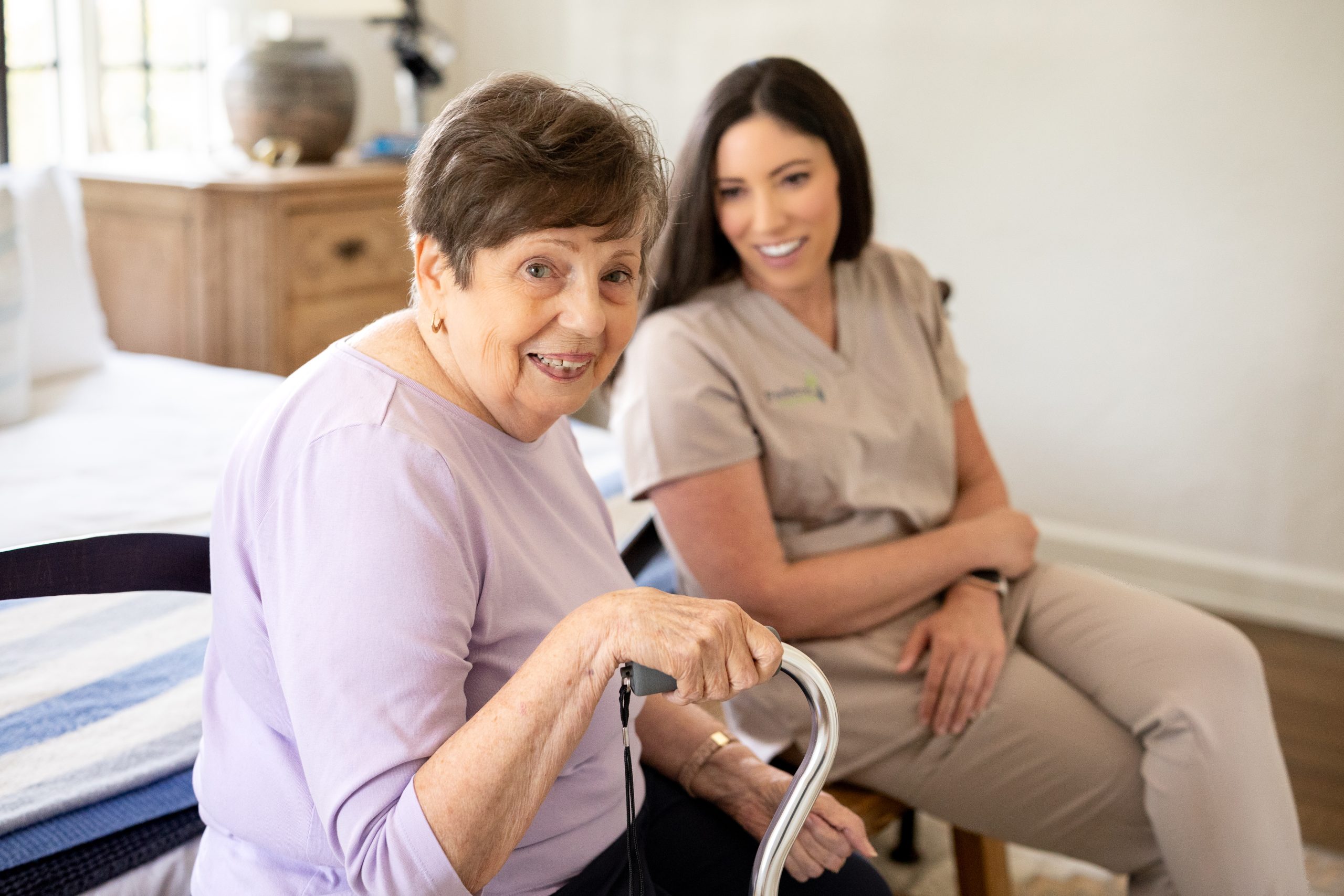
Use gentle touch before speech, offer short simple instructions, reduce noise, and redirect rather than correct. Don’t argue with the confusion — meet the person where they are in that moment.
 02
02
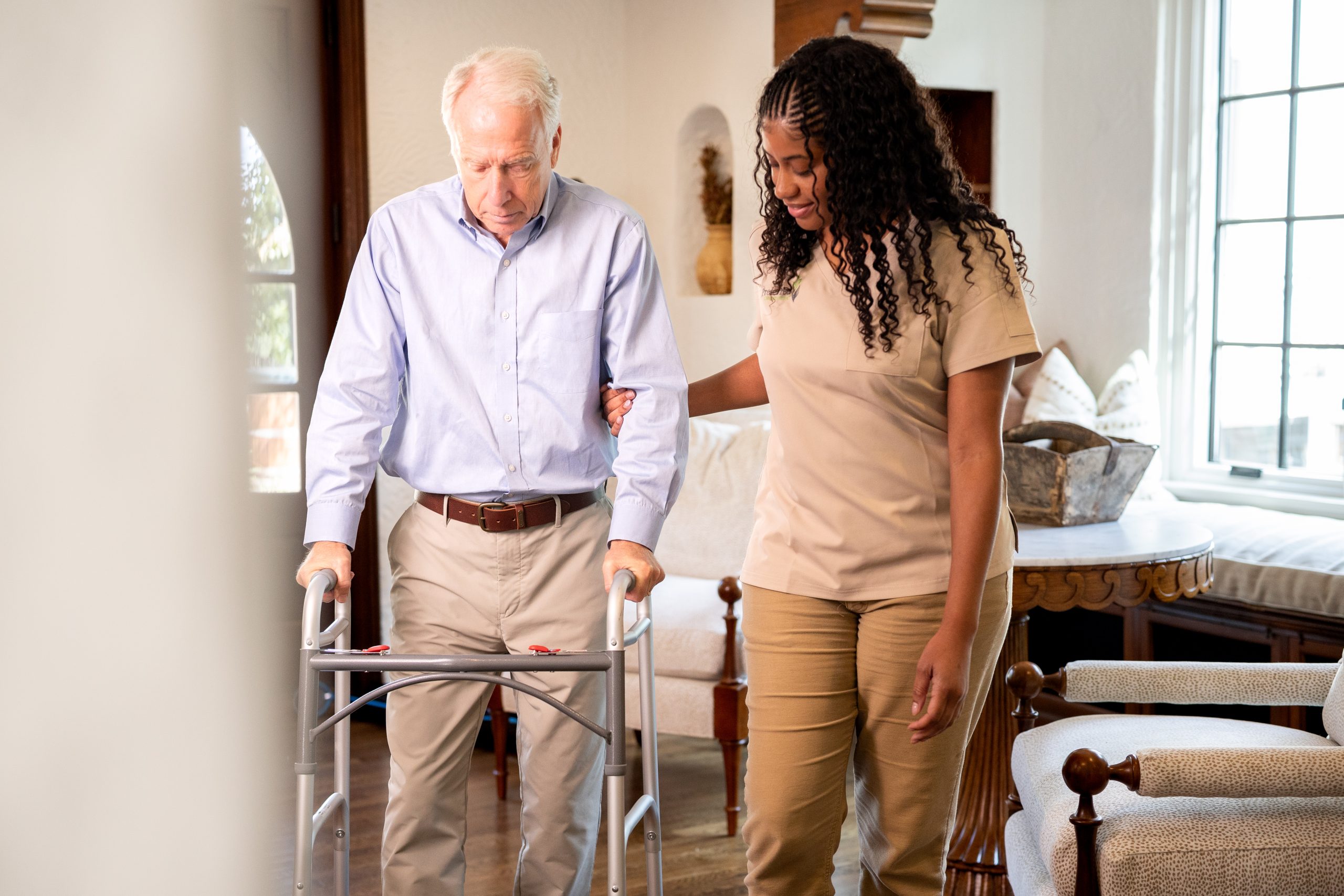
Calming music, low warm lighting, and a familiar object often help within minutes. The goal isn’t to control your loved one — it’s to shape the hours around them so triggers stack more slowly and the evening never gets a chance to snowball.
 03
03
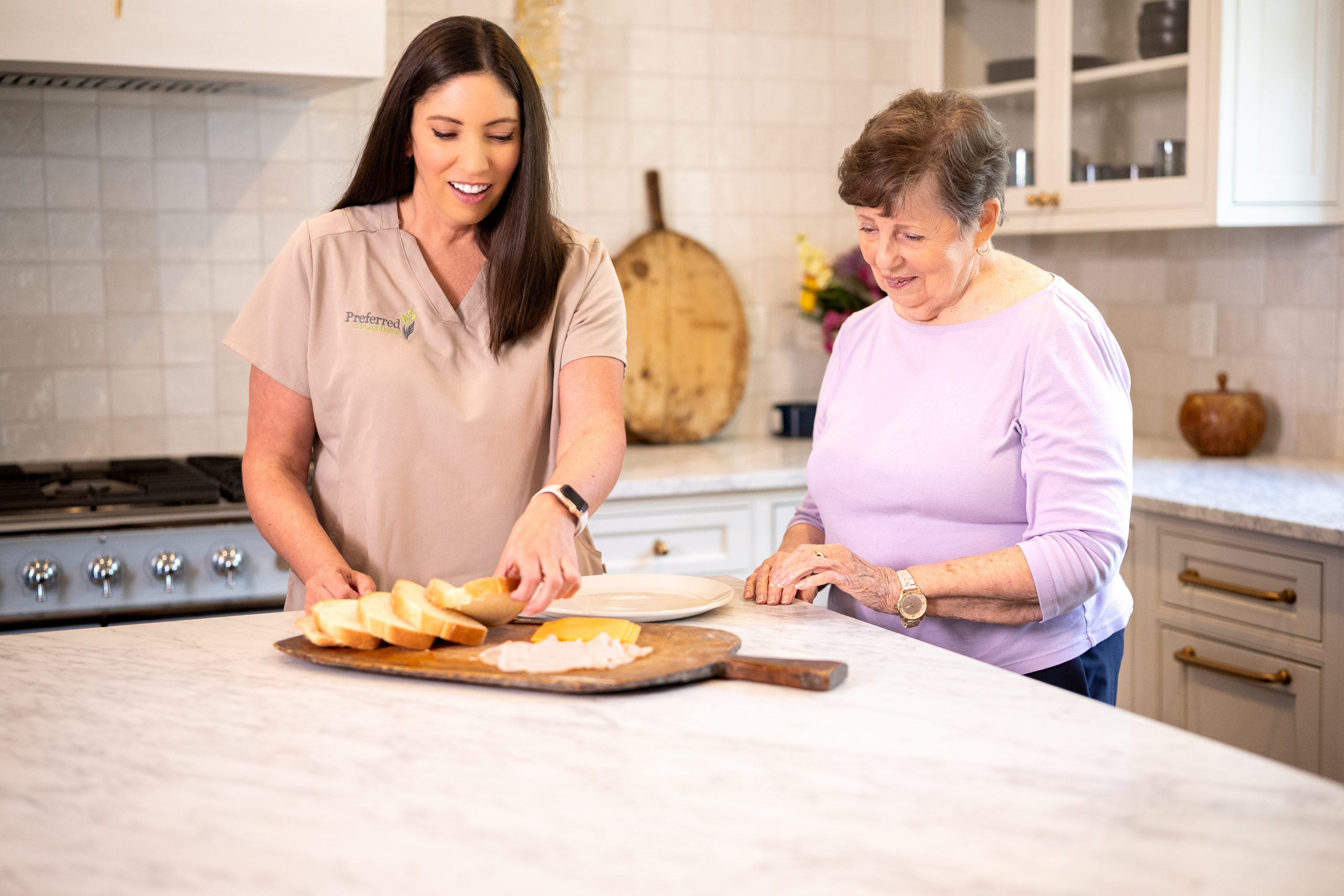
If nothing works after 20 minutes and safety is at risk, that’s a signal support beyond routine is needed — a fresh, trained presence during the hardest hours, when the person often responds better to someone who isn’t visibly tired.
Evening is the tipping point because several triggers converge at once: daylight fades, tiredness peaks, sensory processing weakens, and any single trigger lands on top of the others. Physical activity earlier in the day helps regulate energy and reduce evening restlessness.
Per NIA and Alzheimer’s Association guidance, sleep and behavior changes deserve a conversation with a doctor rather than an assumption that it’s just the disease progressing — UTIs, pain, and new prescriptions can look identical.
Florida’s DOEA RELIEF program includes evening and weekend respite for families caring for someone with a memory disorder, and Share the Care in Orange and Seminole counties covers 4 hours a day, 1 day a week, plus overnight respite. Private in-home care fills the gaps between program hours.

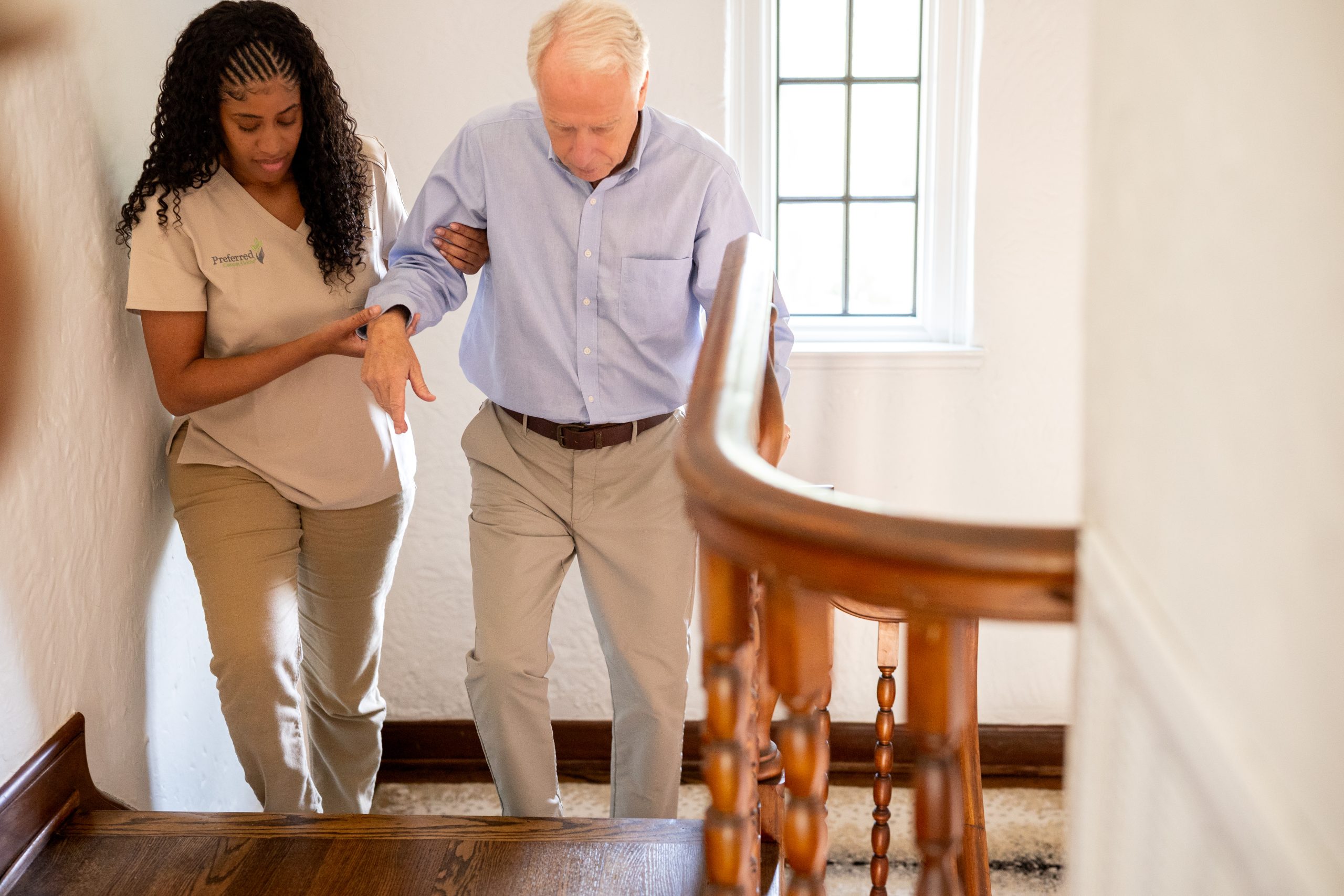
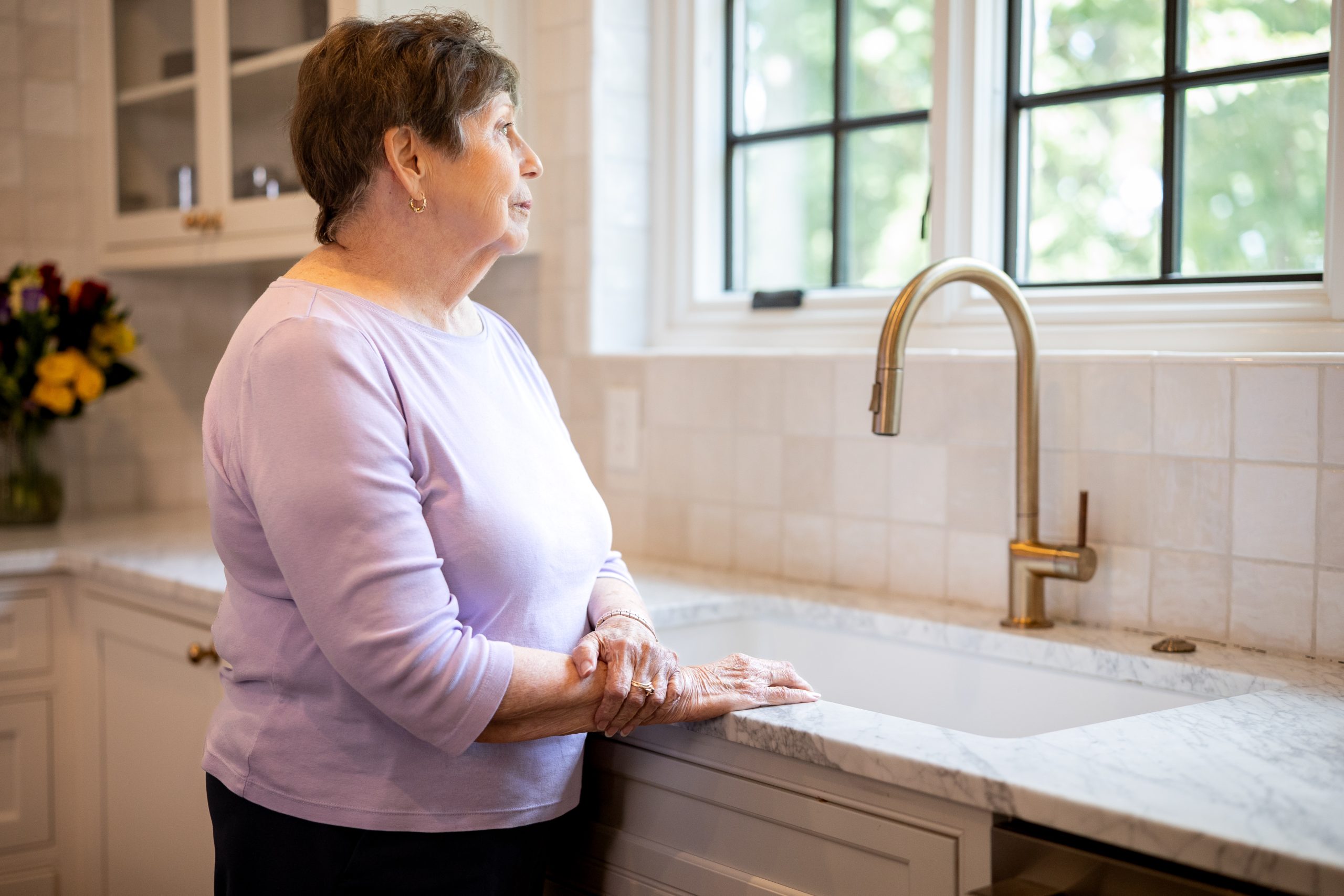
The fix isn’t a single tactic — it’s a routine that heads the trigger stack off before it builds, shaped around your household’s pattern.
Bright light exposure and physical activity early in the day regulate the body’s internal clock and burn restless energy before it banks up for evening.
Limit long naps and late-day caffeine or alcohol — both disrupt an already fragile sleep-wake pattern, and reserves are gone by 4 p.m. anyway.
Hunger, thirst, a full bladder, and pain all show up as agitation instead of a complaint — meet them before dusk, not after the restlessness starts.
Turn lights on before shadows lengthen, lower the noise, keep evening plans small and familiar — reduced stimulation as daylight fades.
A consistent wind-down at the same time nightly, with medications timed consistently — drowsiness-causing medicines at the wrong hour worsen everything.
Preferred Care at Home has helped Central Florida families sustain aging in place for years — even as a loved one’s sundowning gets harder to handle alone. The move-out question is really about safety and caregiver sustainability, not the sundowning itself.
Local public options exist too: Florida’s Department of Elder Affairs RELIEF program includes evening and weekend respite for memory-disorder families, and Senior Resource Alliance’s Share the Care covers 4 hours a day, 1 day a week, plus overnight respite in Orange and Seminole counties.
Evening and overnight respite brings a fresh, trained presence into the home during the hardest hours — when the person often responds better to someone who isn’t visibly tired. Even a few hours a week can change the shape of a caregiving month.
Long daytime naps and being overly tired rob the internal clock of its cue for when the day should end — the foundation most other triggers land on.
Visual confusion increases as shadows lengthen and lighting drops — which is why lights go on before dusk, not after the agitation starts.
Hunger, thirst, a full bladder, arthritis, a headache, or a dental problem — physical discomforts the person often can’t name, surfacing as agitation instead of a complaint.
Late-day caffeine or alcohol, overstimulation that drains reserves by 4 p.m., and medication-timing changes that shift how the day’s chemistry resolves by evening.
They can look identical in the moment — but one is a recurring pattern to manage and the other is a medical change to treat. Getting this wrong delays care in both directions.
Sundowning is a late-day pattern of restlessness, agitation, and confusion in people with dementia, not a separate diagnosis. It usually builds in the late afternoon or early evening as daylight fades.
The exact cause is unknown, but fatigue, sensory overload, and disrupted sleep all worsen it — and not everyone with dementia experiences it.
It’s most commonly reported during the middle stages of Alzheimer’s disease, though it can appear earlier or later depending on the person.
Published prevalence estimates vary widely because researchers define sundowning differently — two families can compare notes and describe completely different experiences under the same term.
Sundowning is a recurring late-day behavior pattern; delirium is a sudden change in mental state that can happen at any time of day and usually signals a medical issue like infection, dehydration, or a medication reaction.
If confusion appears suddenly, worsens sharply, or comes with fever or physical symptoms, call the doctor rather than assuming it’s sundowning.
Use gentle touch before speech, offer short simple instructions, reduce noise, and redirect rather than correct — don’t argue with the confusion. Calming music, low warm lighting, and a familiar object often help within minutes.
If nothing works after 20 minutes and safety is at risk, that’s a signal support beyond routine is needed.
Rarely on its own. Most families manage sundowning at home successfully with routine adjustments and, when evenings become too much for one caregiver, in-home support.
The move-out question is really about safety and caregiver sustainability, not the sundowning itself — we’ve helped Central Florida families sustain aging in place for years.
Yes, in two ways at once: it gives the family caregiver rest, preventing the exhaustion that makes de-escalation harder, and it brings a fresh, trained presence into the home during the hardest hours. Even a few hours of evening or overnight respite each week can change the shape of a caregiving month.
That’s a signal, not a personal failure. The CDC reports dementia caregivers face greater risk for anxiety and depression than caregivers of other chronic conditions.
If evenings are consistently overwhelming, the answer is usually reinforcement, not more willpower — a conversation can map what a few hours of the right support would look like.
Yes. Florida’s Department of Elder Affairs RELIEF program includes evening and weekend respite for families caring for someone with a memory disorder, and Senior Resource Alliance’s Share the Care covers 4 hours a day, 1 day a week, plus overnight respite in Orange and Seminole counties.
Private in-home care fills the gaps between public program hours and matches the specific evening pattern in your household.