
Dementia Safety · A Pillar Guide from Preferred Care at Home
You may assume wandering starts late in dementia. It doesn’t — it can begin the same year as diagnosis, often before a family notices any other change. This guide covers a room-by-room checklist and response plan built for Oviedo, Winter Springs, Casselberry, and Sanford, where heat and storms turn a short walk outside into an emergency. We’ve cared for Central Florida families since 2008.
Six in 10 people living with dementia will wander at least once during the disease, per the Alzheimer’s Association — and it can happen at any point after diagnosis, because the triggers show up early. Here is what to understand first.
No. It can begin the same year as diagnosis, often before a family notices any other change — the triggers behind it (memory loss, unmet needs, anxiety, confusion) are early-stage realities.
Unmet basic needs like hunger, a full bladder, or untreated pain; anxiety that builds through the day; a pull toward former homes or a favorite restaurant; boredom; and overstimulation from noise, crowds, or a change in routine.
CMS lists heat exposure, dehydration, drowning, and being struck by a vehicle among the risks tied to elopement — and Central Florida stacks several of those together in summer.
Most families start with one lock, one alarm, or one GPS device. None of those on its own is a plan — a layered framework covers four jobs: preventing the urge to leave, alerting the moment an exit happens, identifying your loved one quickly, and responding fast.
 01
01
A keyed deadbolt placed high or low, out of the line of sight; a STOP or DO NOT ENTER sign at eye level; doorknob covers or camouflaged doors to reduce exit fixation; warning bells or a smart doorbell that chimes when a door opens; and a pressure-sensitive mat inside the primary exit for nighttime alerts.
 02
02
Car keys, purses, and wallets out of sight to reduce exit motivation; knives and heavy cookware secured; medications locked with reminders on a schedule; throw rugs and clutter cleared. Motion-activated night lights along the bedroom-to-bathroom path, a pressure mat beside the bed, and bathroom lights on a low glow overnight.
 03
03
In Central Florida the yard is part of the plan: perimeter fencing with self-latching gates, shaded outdoor areas for supervised time, window sensors on ground-floor openings, and special attention to pools, retention ponds, and drainage ditches nearby.
Wandering risk in Seminole County isn’t just heat — it’s heat combined with sudden afternoon thunderstorms, lightning, and standing water near retention ponds and drainage ditches. A loved one who wanders outside here faces several hazards stacked together, not just one.
Per CMS elopement guidance, alarms do not replace necessary supervision, and they require scheduled maintenance and testing. The Alert layer only matters if someone can respond to it.
An ID bracelet or necklace worn daily rather than kept in a drawer, a recent photo on your phone updated every few months, and enrollment in a local safe return program give police a faster match if your loved one is found by a stranger.

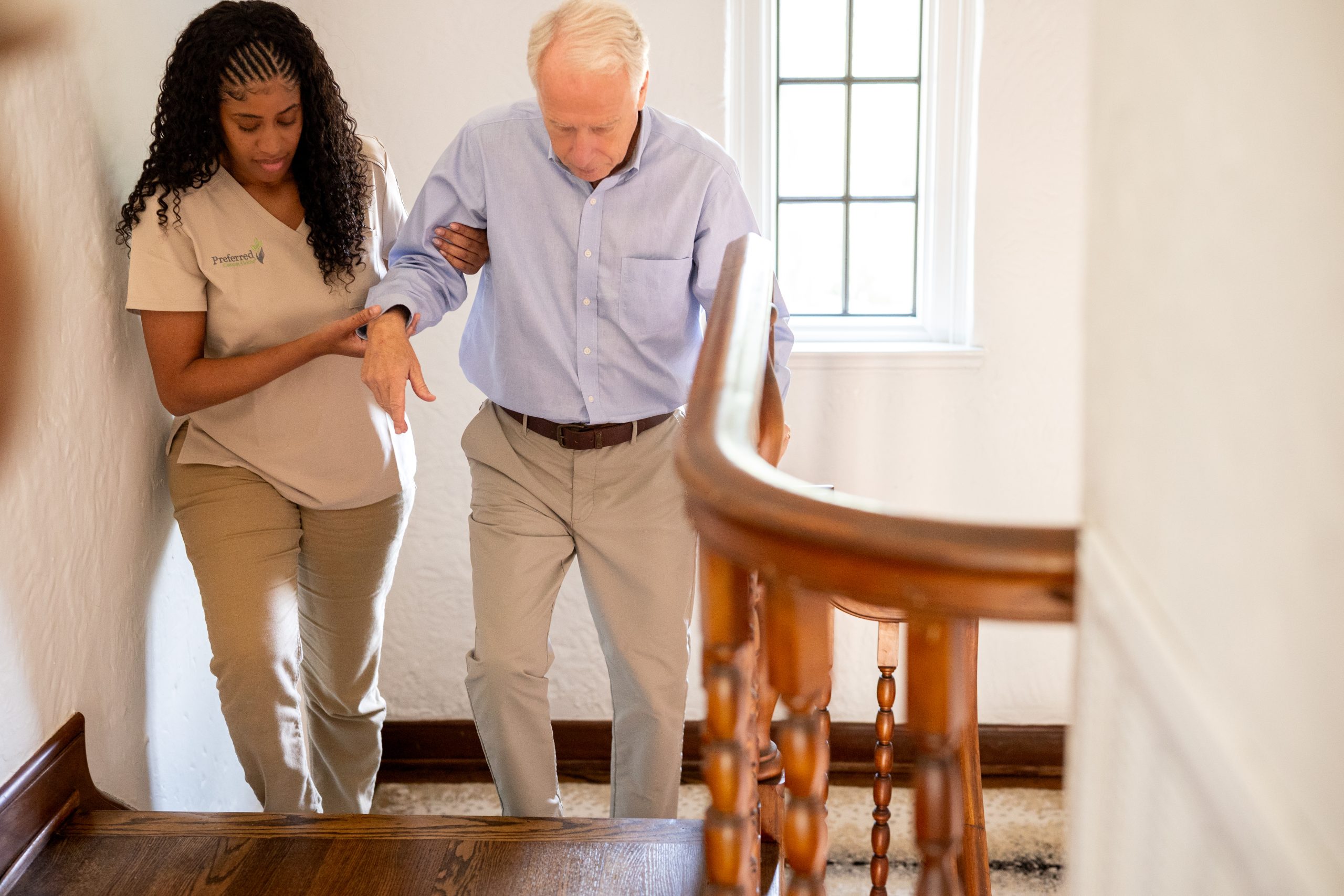
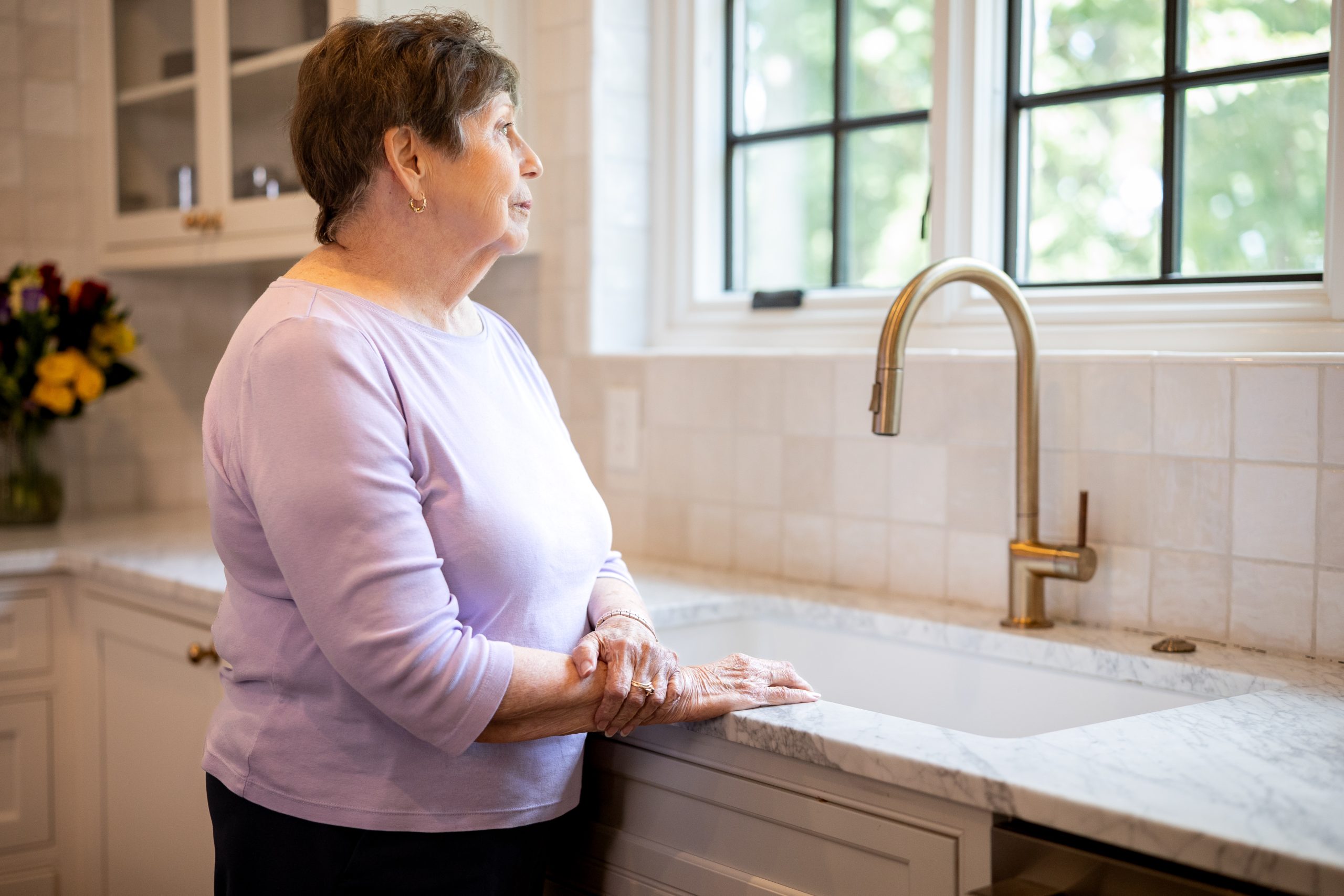
Built from National Institute on Aging, Alzheimer’s Association, and CMS guidance — four jobs, each covered before the first incident.
A consistent daytime routine built around meaningful activities; bathroom, food, and water on a schedule before restlessness builds; morning outdoor exercise to reduce early-evening restlessness.
Chime-style door alarms or a smart doorbell on every exterior door, window sensors on ground floors, and a pressure mat near the bedroom door to catch nighttime wandering early.
ID bracelet worn daily, a recent photo updated as appearance changes, and safe-return program enrollment where available.
Neighbors, local police, and a 1-mile immediate search perimeter form the core of the first-hour plan — built and shared before minutes matter.
Companion care carries the daytime structure prevention depends on; live-in care covers the overnight supervision no alarm can replace.
Preferred Care at Home has supported Central Florida families since 2008 — across Oviedo, Winter Springs, Casselberry, and Sanford — and our local team builds wandering plans around each household specifically.
Wandering risk in Seminole County isn’t just heat: it’s heat combined with sudden afternoon thunderstorms, lightning, and standing water near retention ponds and drainage ditches. Perimeter fencing and shaded areas matter as much as any indoor alarm here.
Companion care carries the daytime structure that prevention depends on, and live-in care covers the overnight supervision that no alarm can replace — the human layers of the framework.
Consistent routine, needs met on schedule, clear paths, familiar surroundings, favorite objects and photos visible to anchor a sense of place, and morning exercise to ease sundowning.
Door chimes and smart doorbells on every exterior door, ground-floor window sensors, and pressure mats near the bed and primary exit — maintained and tested on a schedule.
An ID bracelet worn daily, a recent phone photo updated every few months, and safe-return program enrollment so police can match your loved one fast if a stranger finds them.
Neighbors briefed, police called fast, and a 1-mile immediate search perimeter — the plan that exists before it’s needed, with one person staying home in case they return.
Most families need both, not one or the other — the NIA recommends alarms as a first layer, and MedlinePlus recommends GPS for loved ones who may travel beyond the yard.
Anyone diagnosed with Alzheimer’s or another dementia is at risk — and a recent move, a hospital discharge, or new nighttime restlessness raise it further.
Watching for these changes, rather than waiting for a first incident, gives families time to put prevention in place before an exit happens.
Wandering isn’t limited to any single stage — it can begin before a formal diagnosis and continue as the disease progresses. The triggers behind it, like confusion and unmet needs, show up early.
Setting up support sooner rather than later gives a household more time to adjust before risk peaks.
Memory loss, unmet physical needs, anxiety, and a pull toward a former home or routine are the most common causes — with sundowning adding restlessness right before dinner or bedtime.
Recognizing which trigger applies on a given day helps a caregiver respond before an exit attempt starts.
No — door alarms alert caregivers to an exit but don’t stop one from happening or prevent injury afterward. They work as the Alert layer in a larger plan built around supervision, routine, and identification.
Homemaker and respite care fill the supervision gap that alarms alone can’t cover, especially overnight or during a caregiver’s break.
Motion-activated night lights along the bedroom-to-bathroom path reduce the confusion that often triggers nighttime wandering, and a pressure mat beside the bed adds an early alert before the hallway.
Daily activities earlier in the day also reduce the early-evening restlessness that frequently carries into the night.
It isn’t just heat — it’s heat combined with sudden afternoon thunderstorms, lightning, and standing water near retention ponds and drainage ditches. A loved one who wanders here faces several hazards stacked together, which is why perimeter fencing and shaded areas matter as much as any indoor alarm.
Most families need both. The door alarm handles instant notification the moment an exit happens; the GPS tracker handles finding your loved one if that exit already occurred.
The NIA recommends alarms as a first layer, and MedlinePlus recommends considering GPS for loved ones who may travel beyond the yard.
When supervision needs exceed what family members can safely cover alone — especially once nighttime wandering starts, or a first-hour response plan has no second person to run it.
We’ve supported Central Florida families with this kind of planning since 2008, and our local team can build a plan around your household specifically.