

Preferred Care at Home has served families for over 40 years, and our Lexington team brings that experience to home care services across Lexington KY and Central Kentucky. Ethan Guerrieri leads our local office with a deep personal commitment to seniors and their families, backed by a rigorous 7-step screening process for every caregiver.
What sets us apart is how we match caregivers to clients. We pair your loved one with someone based on personality, life experience, and dementia care training, not just schedule availability. Our Transparency Room portal gives family members, adult children, and other family members real-time updates, caregiver notes, and visit tracking from anywhere, improving quality of life for everyone involved.
Loneliness creeps in when dementia changes someone’s daily life. Our companion care gives your loved one a meaningful connection and engagement right at home in Lexington, where familiar surroundings and family photos provide comfort.
Companions provide conversation, cognitive activities, and reassurance of safety throughout the day. This support helps maintain routines and gives families peace of mind knowing someone compassionate is there.


As dementia progresses, daily tasks like bathing, dressing, and hygiene become more difficult. Our personal care services provide gentle, respectful assistance with these activities of daily living for Lexington seniors.
Caregivers help with walking support, mobility transfers, and personal hygiene while preserving dignity and independence. We adapt our approach as your loved one’s needs change through each stage of the disease.
A clean, organized home helps reduce confusion and fall risks for a person living with dementia. Our homemaker care handles meal preparation, light housekeeping, and errands so your loved one can remain comfortable at home.
Consistent routines around meals and household tasks help stabilize the day. Caregivers handle grocery shopping, laundry, and home organization so families can focus on quality time together.
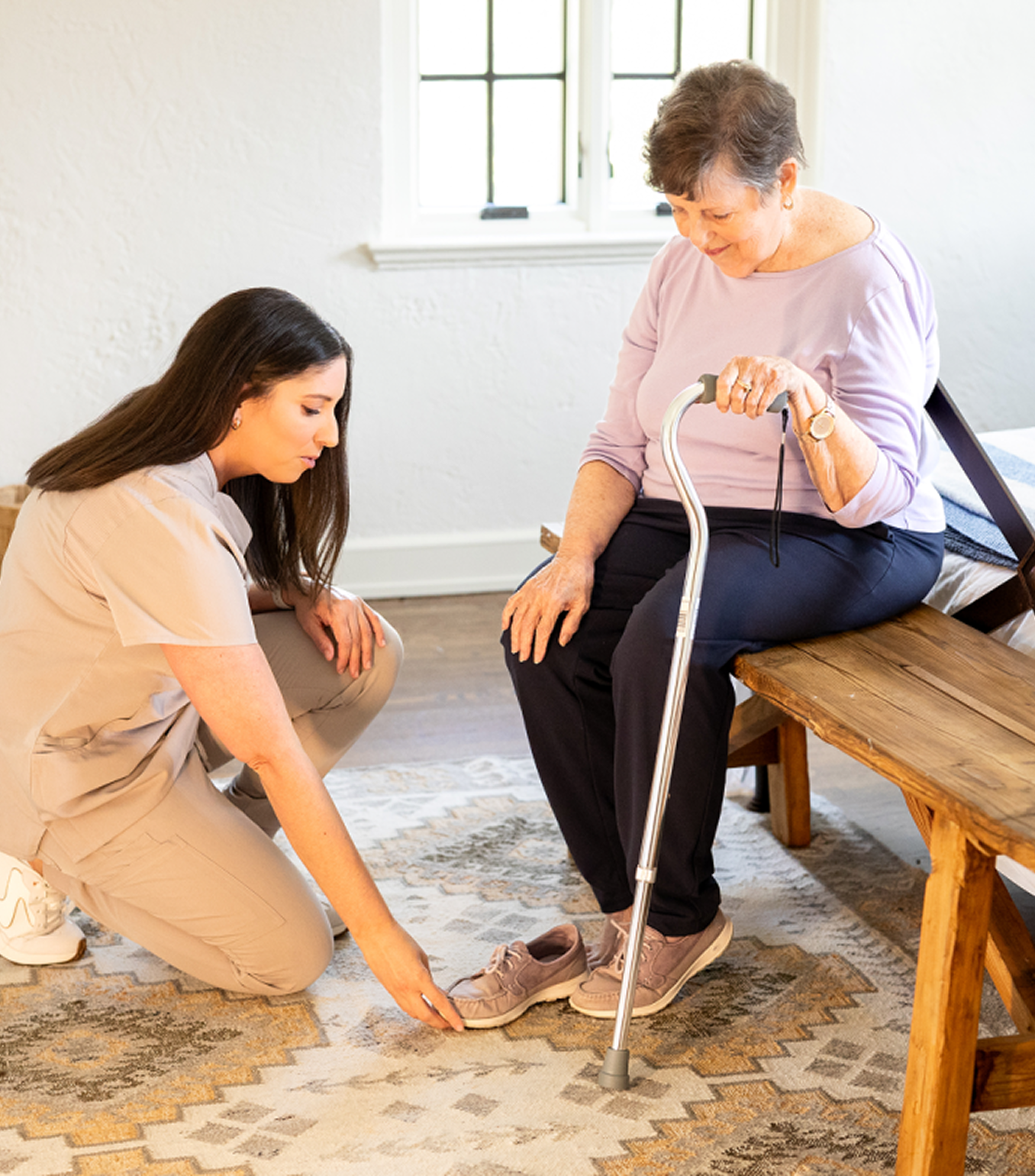

When dementia requires around-the-clock supervision, our live-in care provides 24-hour support in the comfort and privacy of your loved one’s own home. This is especially important when wandering or nighttime confusion becomes a concern.
A dedicated caregiver provides continuous assistance, medication reminders, and overnight supervision. Our Lexington team works to match your loved one with someone who understands the unique challenges of providing care through every stage of Alzheimer’s and dementia.
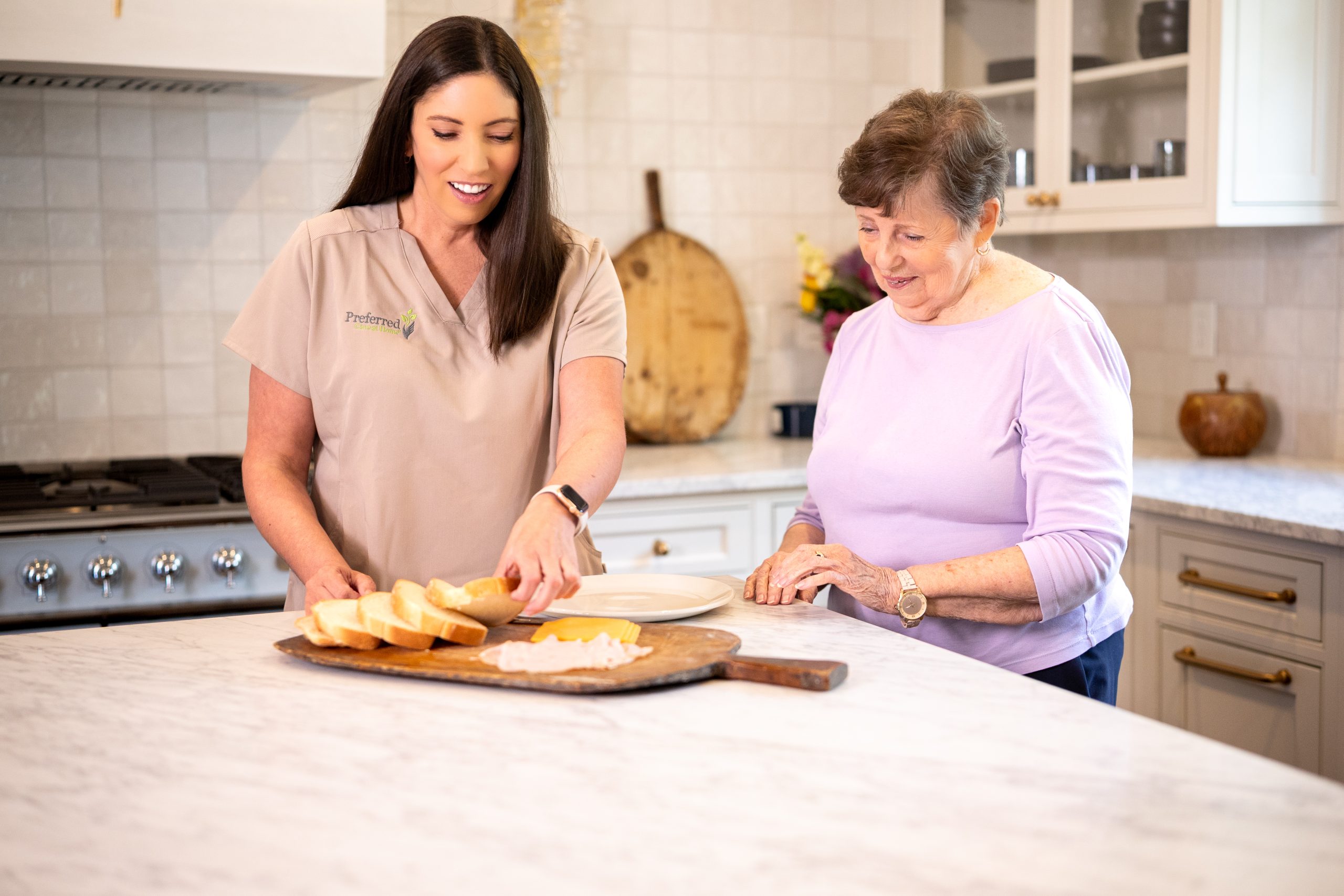
A hospital stay or surgery recovery can accelerate confusion for someone living with dementia. Our transition care helps your loved one move safely from hospital to home, helping with medication scheduling, follow-up appointments, and recovery routines in the Lexington area.
With major hospital systems like UK Chandler, Baptist Health Lexington, and CHI Saint Joseph discharging patients daily, transition support prevents readmission. A familiar, trained caregiver at home makes all the difference during recovery.
Family caregivers in Kentucky provided 307 million hours of unpaid care in 2024, valued at $4.9 billion, according to the Alzheimer’s Association. Respite care gives you a break while a trained caregiver steps in, helping you avoid caregiver burnout.
Even a few hours a week allows you to rest, handle personal responsibilities, or simply recharge. Our caregivers follow established care plans so routines stay consistent and your loved one feels secure.

Step 01
Call us at (859) 800-6237 or reach out online to start a conversation about your needs.

Step 02
We visit your home to understand your loved one’s daily routine, safety concerns, and care needs.

Step 03
Your care plan addresses medication schedules, hygiene, meals, safety, and cognitive support for your specific situation.

Step 04
We match a caregiver to your loved one based on personality, dementia training, and life experience.

Step 05
Care starts on your schedule, with regular updates through our Transparency Room and adjustments as needs change.
For families seeking dementia in-home care, Lexington offers several trusted options, but few combine 40 years of experience with true personality-based caregiver matching. Understanding local challenges helps you plan ahead and choose the right support.
Challenge
What It Looks Like
How We Help
Winter fall risks in Central Kentucky
What It Looks Like
Cold weather and icy conditions increase fall risks for seniors with balance and mobility issues. About 1 in 4 adults 65 and older fall each year, per the CDC.
How We Help
Caregivers assist with walking, mobility, and home safety checks. We help reduce hazards and provide steady, reliable support during high-risk seasons.
Challenge
Distance between Lexington and surrounding counties
What It Looks Like
Families in Georgetown, Versailles, and Nicholasville may struggle to check on a parent in Lexington daily, and coordinating care across distances adds stress.
How We Help
Our Lexington team serves Fayette County and surrounding areas, providing consistent in-home care so families can stay connected without daily drives.
Challenge
Limited geriatric specialist access in Kentucky
What It Looks Like
Kentucky had just 48 geriatric certificate providers in 2021. Families wait longer for guidance, often managing complex dementia symptoms alone.
How We Help
We provide daily support while families wait for specialist appointments, keeping routines stable and monitoring changes in health and behavior.
Challenge
Medicare coverage confusion
Many families expect Medicare to cover long-term dementia supervision at home. Medicare home health coverage is eligibility-based and does not cover ongoing custodial care.
How We Help
We help families understand their options during the initial consultation and connect them with local resources like the Bluegrass Area Agency on Aging for additional aid.
Challenge
Caregiver burnout from nonstop demands
Providing care for a person with dementia is exhausting. Missed sleep, constant supervision, and emotional weight lead to burnout, missed medications, and safety lapses.
How We Help
Respite care gives family caregivers scheduled breaks while trained caregivers maintain routines, hygiene, meals, and safety.
Challenge
Wandering and disorientation at home
Six in 10 people living with dementia will wander at least once, according to the Alzheimer’s Association. Nighttime confusion and door-seeking behavior put seniors at serious risk.
How We Help
Caregivers provide structured supervision, redirect safely, and help families create a wandering prevention plan with door alerts, routine anchors, and environmental cues.
Preferred Care at Home of Lexington continues this tradition by only referring the most reliable, compassionate, experienced and affordable caregivers to clients’ homes or care facilities throughout the Lexington area and surrounding Central Kentucky communities.
We Serve:
Three things set us apart. First, we match caregivers by personality and dementia training, not just availability. Second, our 7-step screening process ensures every caregiver is thoroughly vetted. Third, our Transparency Room gives family members real-time access to caregiver notes, visit schedules, and care updates from anywhere. We have served families for over 40 years as a third-generation home care company.
It depends on your loved one’s safety needs and your family’s capacity to coordinate support. In-home care works well when routines can be stabilized and supervision covers the highest-risk hours. A memory care community may be better when 24-hour supervision is needed and the home cannot be safely adapted. Our team can help you evaluate both during a no-pressure consultation.
After your initial consultation and assessment, we develop a care plan and match a caregiver as quickly as possible. Many families begin care services within days of first contact. Timing depends on the complexity of the schedule and specific caregiver match, but our goal is to provide support before a crisis forces a rushed decision.
Look for changes in daily routines: missed medications, skipped meals, difficulty with bathing or dressing, confusion about time or place, and increased fall risks. If you find yourself constantly worried about safety, losing sleep, or struggling with dealing with the demands of an advancing illness, those are signs it is time to explore support. The early stages are often the best time to start because consistent routines slow the disruption that comes with the disease.
Once care starts, our Lexington team monitors quality through the Transparency Room portal, regular check-ins, and care plan adjustments as your loved one’s needs evolve. Family members can view caregiver notes, track visits, and communicate with the team in real time. If health changes or a hospital stay occurs, we adjust the care plan to maintain stability and safety.
A strong care plan covers daily living assistance (bathing, dressing, hygiene, meals), medication reminders, a wandering prevention strategy, fall risk reduction, cognitive engagement activities, and a communication schedule for family members. It should also include escalation triggers so everyone knows when to seek additional medical advice or adjust the level of care.
Lexington families have access to the UK Sanders-Brown Center on Aging, an NIH-funded Alzheimer’s disease research center at the University of Kentucky. The Bluegrass Area Agency on Aging and Independent Living (BGAAAIL) provides resources for seniors and adults with disabilities across the region. The annual Walk to End Alzheimer’s at Kentucky Horse Park also connects families to education and community support.
Yes. Transition care after a hospital stay helps with medication reminders, follow-up appointments, and recovery routines, all of which reduce readmission risk. For a person with dementia, the confusion of a hospital discharge can lead to missed medications, falls, and rapid decline. Having a trained caregiver at home to assist with the transition makes a measurable difference in outcomes.
Respite care gives family caregivers scheduled time to rest, handle responsibilities, or simply step away from the constant demands of providing care. Even a few hours each week helps reduce exhaustion, improve your own health, and let you return to caregiving with more patience and energy. Kentucky’s 160,000 unpaid dementia caregivers carry an enormous burden, and asking for help is not a sign of weakness. It is a sign of love and good planning.