

Dementia Safety · A Pillar Guide from Preferred Care at Home
Wandering can happen at any stage of dementia — even inside a house someone has lived in for forty years. This guide walks through four layers of prevention: environment, daily supervision, identification tools, and a first-fifteen-minutes response plan, shaped by the local owners of Preferred Care at Home of Hendersonville.
Six in 10 people living with dementia will wander at least once, per the Alzheimer’s Association — and it isn’t just a late-stage problem. Here is what families need answered first.
Yes. Someone in the early stage can walk out a front door they’ve used for decades and become disoriented within minutes — memory loss and confusion don’t wait for a “late” stage to show up.
Wandering usually has a trigger behind it, not random chance — and recognizing the trigger is what turns a scary moment into a preventable one.
No — a person who paces the hallway or checks the same door twice is showing common symptom behavior, not necessarily departure risk. Support focuses on recognizing that difference before it becomes an emergency.
Layered controls work better than any single device, per the National Institute on Aging. A lock on one door doesn’t help if a window across the house is left open — combine environment, supervision, and identification tools.
 01
01
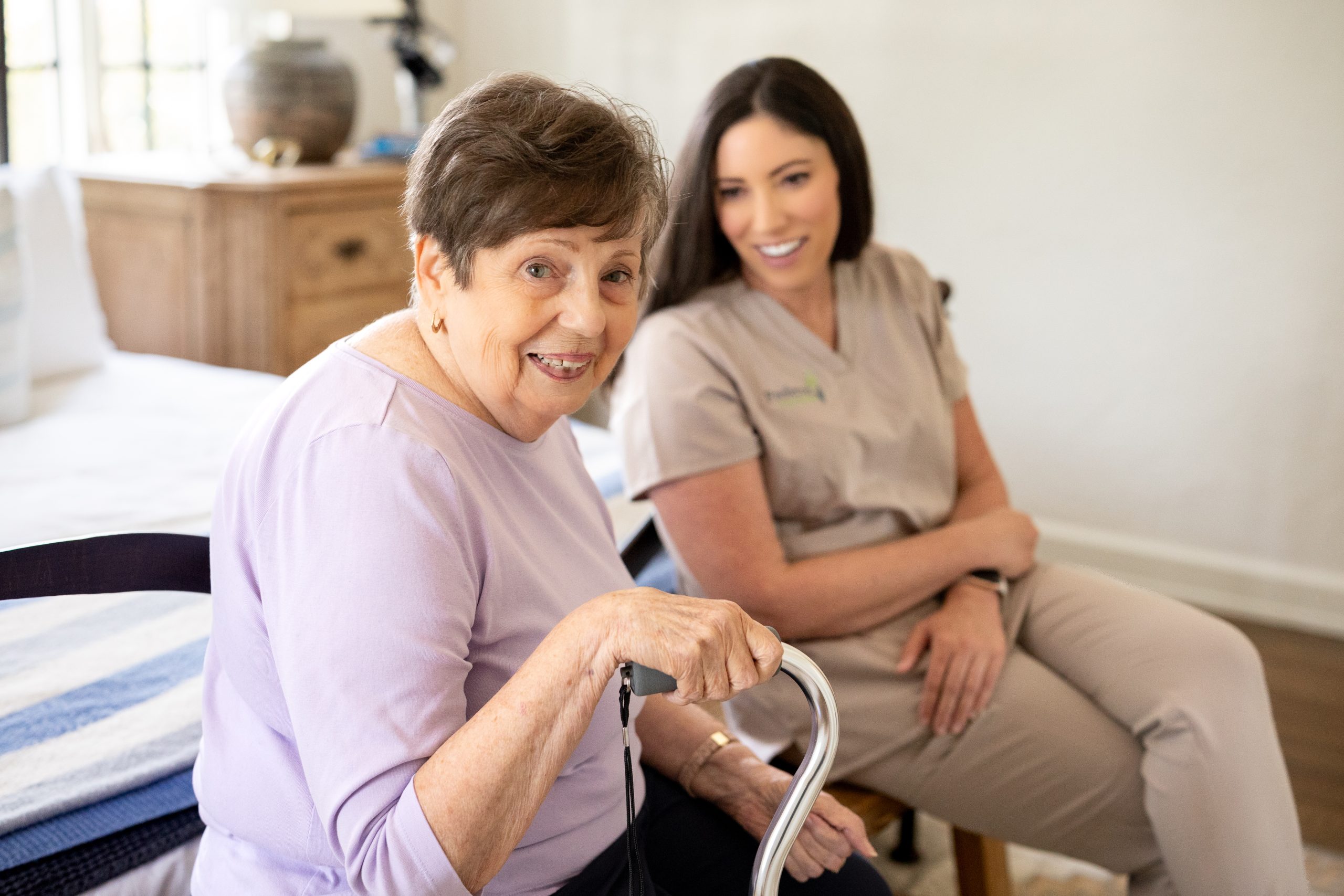
Motion-activated night lights on the path to the bathroom, car keys and coats out of sight, shoes and purses in a locked cabinet, and a bed sensor or floor-mat alarm for night rising. Reducing visible signs of departure — keys, shoes, coats by the door — lowers the trigger. Keep a recent close-up photo saved on your phone.
 02
02
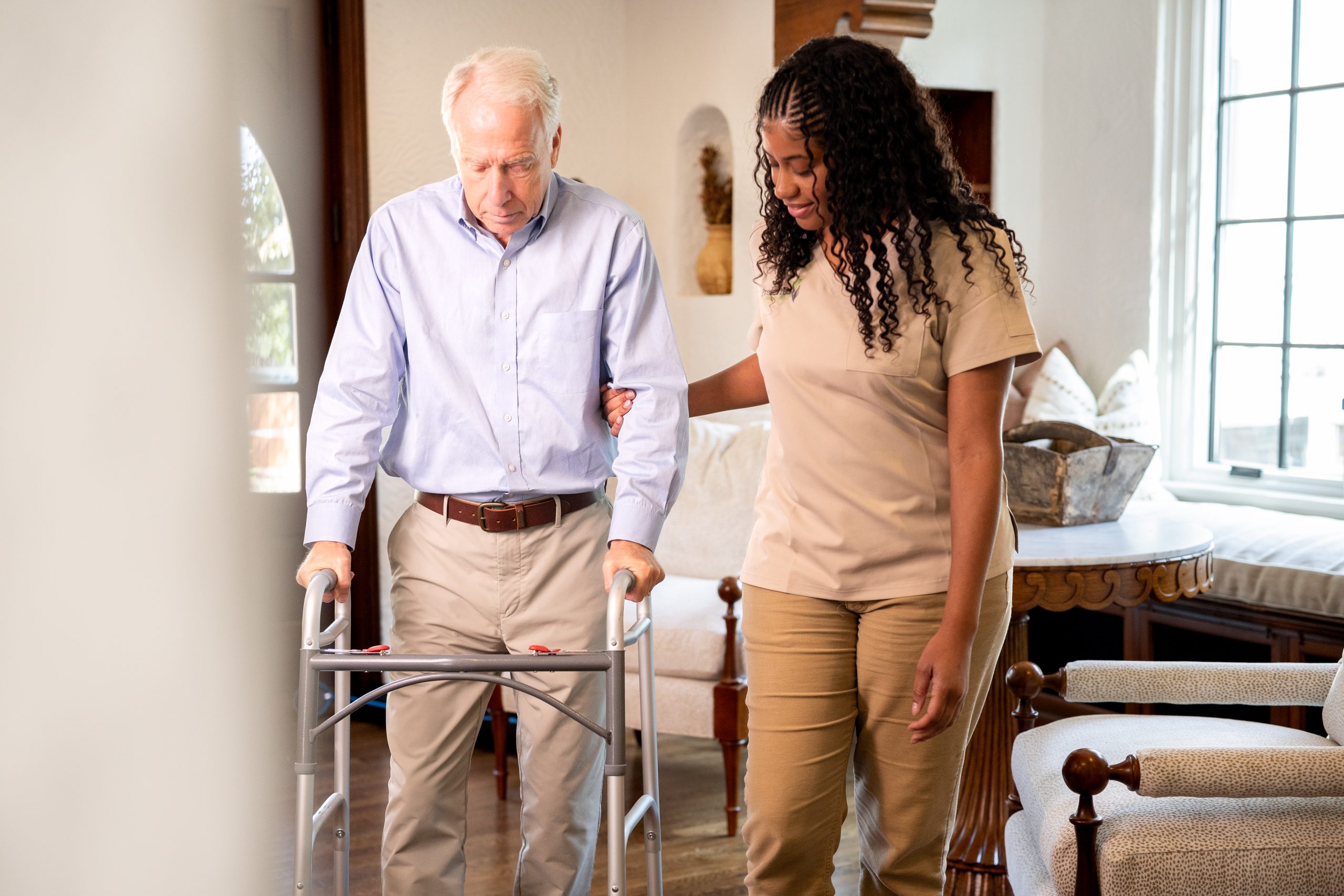
Kitchens are the most common site of unsupervised risk: remove or disguise stove knobs, lock away chemicals and sharps. Use a contrasting toilet seat color, cover mirrors if reflections agitate, and paint doors to unsafe rooms the same color as the wall — disguise exits without creating a fire hazard.
 03
03
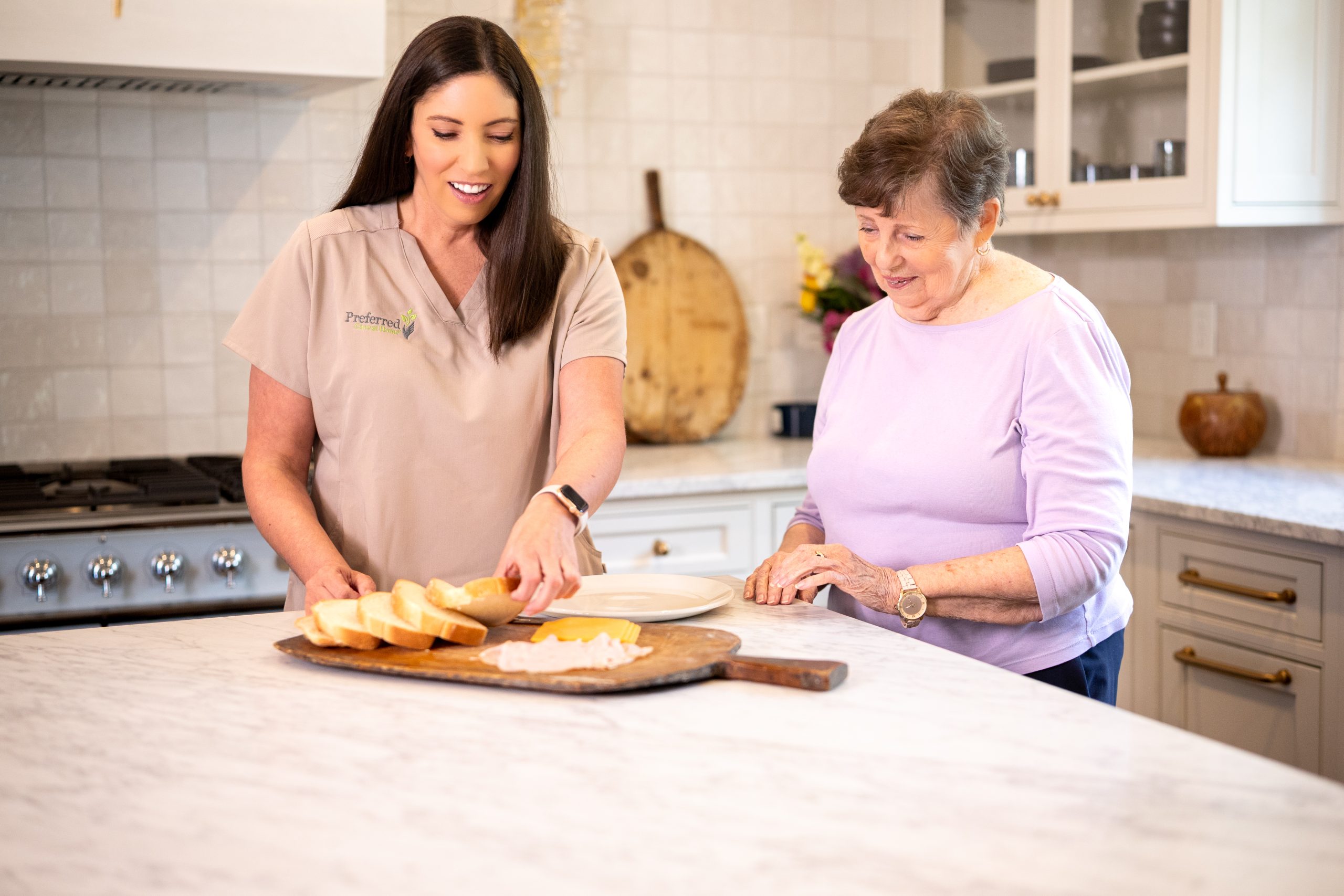
A fenced yard with a locked gate if outdoor time matters, window-opening limiters on ground floors, clear porch paths, and exterior motion lighting. Identify dangerous areas near home before an incident: bodies of water, bus stops, brush lines, and busy roads all deserve a second look from your own yard.
Most who wander are found nearby: many within 1.5 miles of where they disappeared, per the Alzheimer’s Association. A community study found 53% of missing walkers within one mile and 75% within five — which is why searching outward from home, not calling around town first, is the right first move.
Start searching the areas closest to home immediately: yard, neighbors, cars, sheds. If you have not found your loved one within 15 minutes, call 911 and tell dispatch the person has dementia.
Telling 911 dispatch the person has dementia lets local police activate Tennessee’s Silver Alert protocol, which can go live within hours — one more reason the response plan should exist before the crisis.

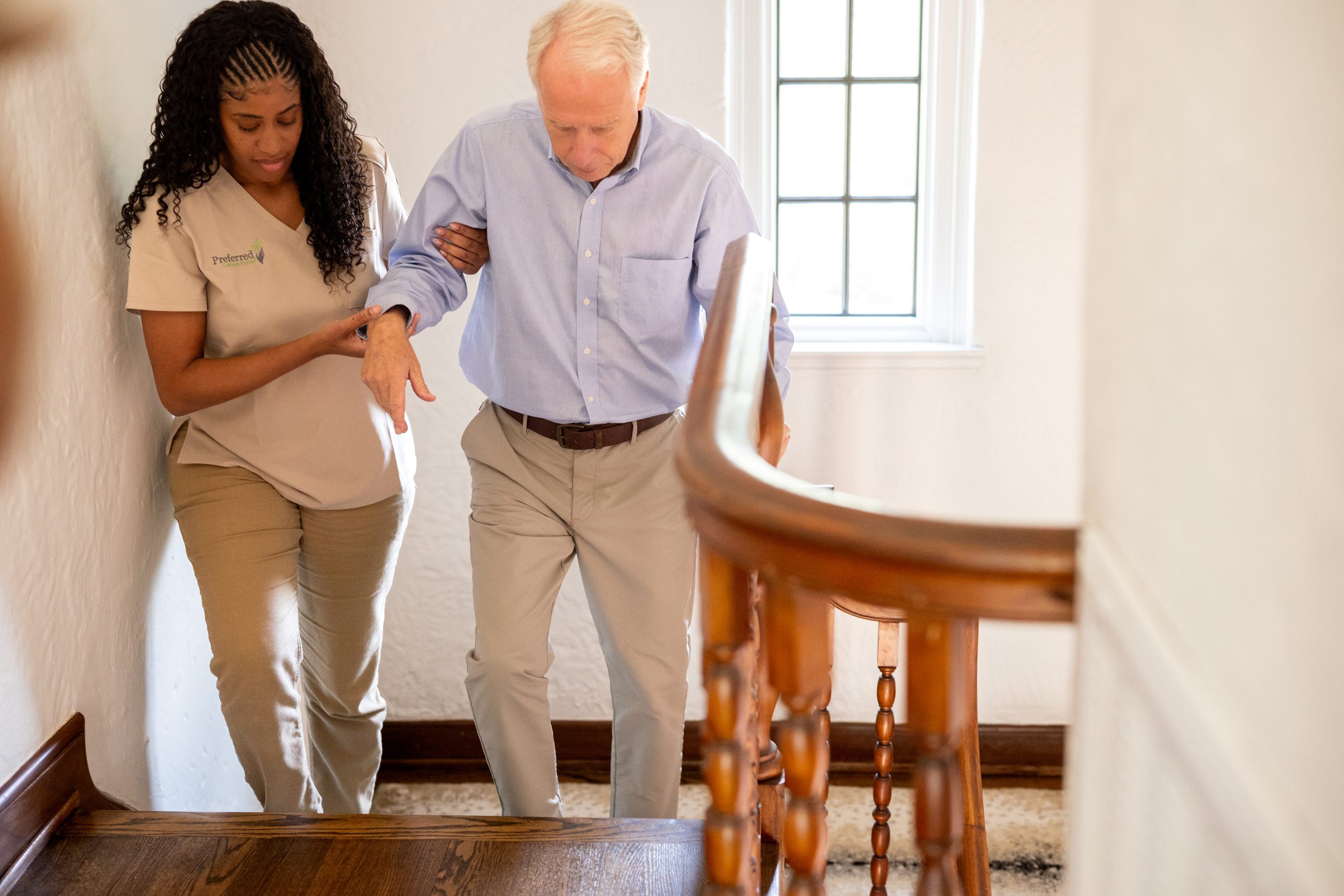
A response plan built before a crisis is what turns a missing-person emergency into a fifteen-minute scare.
Yard, neighbors, cars, sheds — immediately. Most people who wander are found within 1.5 miles of home, so search outward from the house.
Not found within 15 minutes? Call 911 and say the person has dementia — that phrase activates the right protocols.
Tennessee’s Silver Alert can go live within hours once police know a person with dementia is missing.
A recent close-up photo on your phone and a medical ID with a dementia note give responders what they need in seconds.
A near-miss reveals the gaps — we help families adjust the home setup and add the supervision layer before it happens again.
Quin Christensen and Richard Patterson, the local owners of Preferred Care at Home of Hendersonville, built this location after living through their own families’ care needs — and that experience shapes how our team thinks about wandering risk.
Dementia in-home care support focuses on recognizing the difference between ordinary pacing and true departure risk before it becomes an emergency — the supervision layer that no lock can replace.
We provide around-the-clock in-home dementia support so families can rest without leaving a loved one unsupervised — and we help families build the first-15-minutes response plan before a crisis happens.
Best in the early stage, while the person still responds to visual cues. Loses effectiveness as the disease progresses — plan the next layer before it does.
Door chimes, smart doorbells, and bed or floor-mat sensors work at any stage — but require a caregiver in earshot or a phone-notification setup to matter.
A keyed deadbolt placed high or low works when the person no longer looks up or down instinctively. Fire safety rule: the key must stay nearby for emergencies.
Doors covered with removable curtains or painted wall-color reduce exit-seeking during sundowning — cover, never lock, in a fire path. A fenced yard with a locked gate allows outdoor time without street access, but is not a substitute for supervision.
An ID bracelet handles the moment a stranger or responder finds your loved one. A GPS tracker handles the moments before that, while you’re still searching. Most families use both — they solve different problems.
Every person living with Alzheimer’s or another form of dementia carries wandering risk, at any stage. Someone in the early stage who still drives can become disoriented in places they’ve known for years.
The risk grows as the disease progresses, but there is no stage where wandering can be ruled out entirely.
Wandering is usually a response to an unmet need or a trigger, not random behavior: anxiety, stress, boredom, hunger or toileting, or searching for a former home or favorite restaurant.
Early-evening restlessness and disorientation in familiar surroundings also lead to exit-seeking behavior.
Nighttime wandering usually comes from a physical need — the bathroom, water — or sundowning confusion. Schedule toileting and hydration before bed, add night lights on the bathroom path, and install a door chime or bed sensor.
Building daytime activity and exercise into the routine helps sleep come easier, which prevents the night rising in the first place.
Start searching the areas closest to home immediately: yard, neighbors, cars, sheds. If you have not found your loved one within 15 minutes, call 911 and tell dispatch the person has dementia.
That phrase lets local police activate Tennessee’s Silver Alert protocol — and we can help families build this response plan before a crisis happens.
Yes — many are found within 1.5 miles of where they disappeared, per the Alzheimer’s Association. A community study found 53% of missing walkers within one mile and 75% within five miles.
That’s why searching outward from home, rather than calling around town first, is the right first move.
An ID bracelet or medical ID with a dementia note handles the moment a responder finds your loved one; a GPS tracker handles the moments before, while you’re still searching. Most families use both — and GPS only works if your loved one will keep it on without removing it.
Signs and warning bells work best in early stages; alarms, high-or-low deadbolts, and disguised doors carry more weight as sundowning and disorientation increase.
Most families combine two or three controls and pair the physical setup with a supervision layer that no lock can replace — covering, never locking, doors in a fire path.
When your loved one cannot be safely left alone even briefly, when nighttime wandering keeps you from sleeping, or when a recent missing incident revealed gaps in your setup — a person with a history of wandering should not be left unattended.
We provide around-the-clock in-home dementia support so families can rest without leaving a loved one unsupervised.