

Dementia Care · A Pillar Guide from Preferred Care at Home
A doctor says “stage 4” and a support group says “middle stage” in the same week — and nobody tells you those are two different systems. This page walks through both frameworks in plain language, with the cues Hendersonville and Sumner County families usually notice first at home, and when most families decide to add in-home support.
Most families reach this page after hearing a stage number from a doctor or a support group. Here is what the two staging systems answer before you read anything else.
Doctors and support groups are not disagreeing — they use two different tools built for two different jobs, and both describe the same condition.
The behaviors matter more than the number. Repeating questions and missed bills point early; bathing conflict, wandering, and sundowning point to the middle; loss of speech and mobility mark the late stage.
There is no single right stage. Most Hendersonville families call in the middle stage — usually after a wandering incident, a fall, or the moment the primary caregiver realizes they are running on empty.
The Alzheimer’s Association reports an average of 4 to 8 years after diagnosis, though some people live as long as 20. Type matters: vascular dementia often moves in step-wise drops, Lewy body varies more.
 01
01
Forgetting familiar words mid-sentence, asking the same question three times at a holiday gathering, losing the drive home from the Gallatin grocery store, or struggling with a checkbook kept for forty years. A little companion care at this stage eases the bill-paying and appointment load before it becomes a conflict.
 02
02
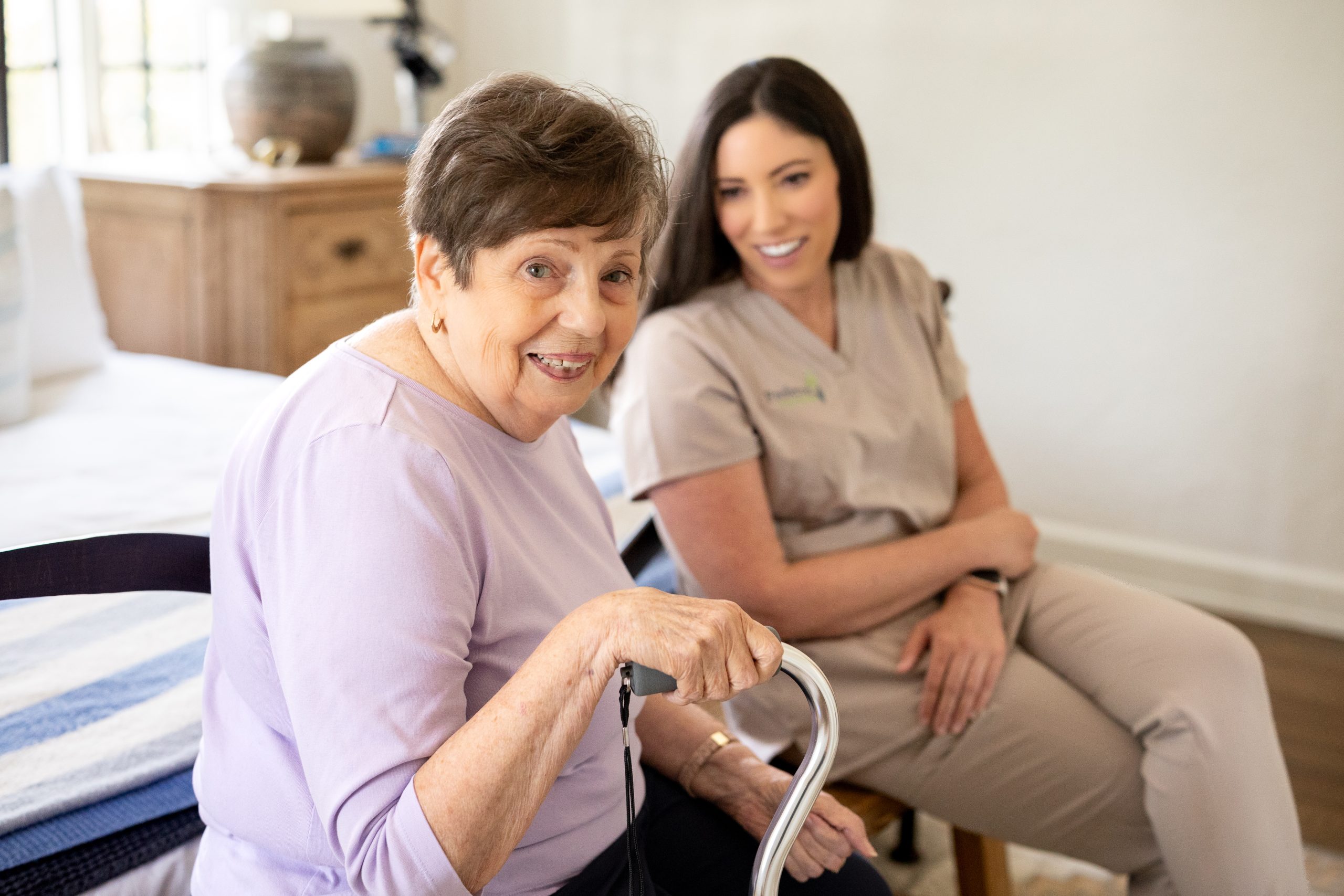
Trouble choosing weather-appropriate clothes becomes routine, wandering starts, and sundowning agitation shows up late in the afternoon. Bathing needs help — and a caregiver outside the family relationship can often handle it without the tension. This is when most families first call.
 03
03
Speech narrows to a few words, walking and swallowing become difficult, and care needs become total. Focus shifts from managing behaviors to protecting comfort and dignity — many families pair hospice with in-home support, and planning conversations about directives and comfort goals matter most here.
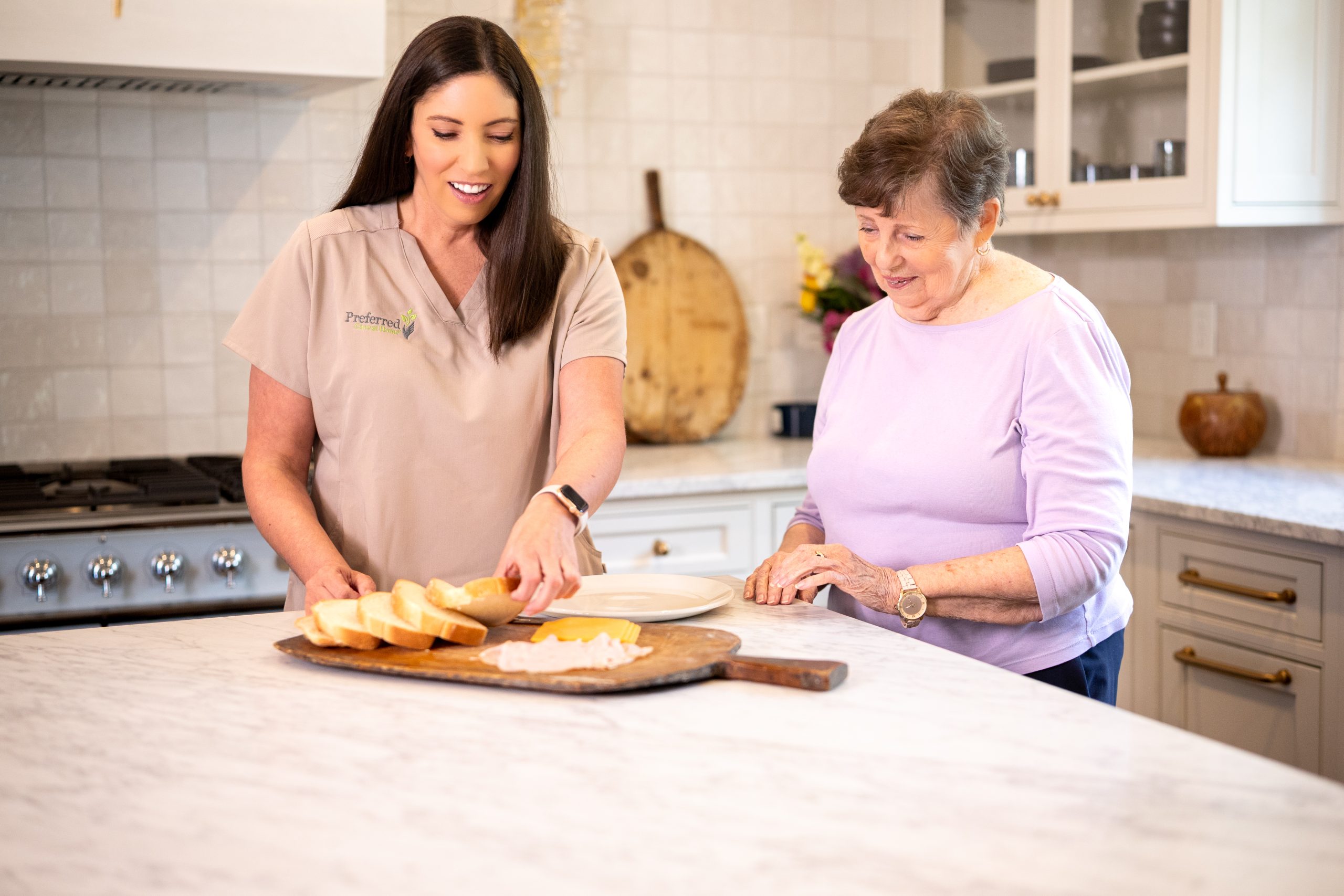
Middle-stage care usually requires more than one family member can provide alone. Signs it is time to bring help in: the stove left on more than once, bathing turned into a weekly conflict, a missed medication routine, a wandering incident, or a caregiver who hasn’t slept a full night in a month.
Vascular dementia can drop step-wise after strokes rather than slide slowly. Lewy bodies often add visual hallucinations. Frontotemporal dementia can start with personality change instead of memory loss — so two families describing “stage 5” may be describing very different weeks.
Reading across the row is what matters more than the stage number. The behaviors and the support needs are what families act on, whether the chart says “stage 5” or “middle stage.” The CDC’s distinction hinges on whether thinking and function are staying intact overall — not whether one thing slipped once.


Where a local home care team fits — from the first “is this normal aging?” call to around-the-clock late-stage support.
We take your call at (615) 970-3737, listen to what a normal week looks like, and help you sort normal aging from patterns worth acting on. No stage label required.
Early stage may mean a few companion visits a week; middle stage usually means personal care hours; late stage often means extended coverage coordinated with hospice. We build around the week you are actually having.
Dementia care lives on trust and routine, so we match caregivers by personality rather than availability — and keep the same faces coming back.
When wandering starts or sundowning deepens, hours and routines adjust without starting over. Our LPN provides clinical oversight as needs shift.
Our Transition Liaison helps families coordinate with hospice and hospital teams — Vanderbilt and Sumner Regional are frequent partners — so comfort stays at the center of daily life at home.
Preferred Care at Home of Hendersonville is owned by Quin Christensen and Richard Patterson, who both came to this work after watching close family members age. Richard found his calling at 14, working in an assisted living facility; the relationships he built there gave him purpose that never left.
Our care team includes Melissa Maxfield, a Licensed Practical Nurse who provides clinical oversight, and Lisa Barry, our Transition Liaison, who helps families coordinate with hospice and hospital teams so nothing falls through the cracks between care teams.
We hold Certified Preferred Provider status and have been recognized by Home Care Pulse as an Employer of Choice. Caregivers are matched by personality, not just availability — which matters twice as much when dementia is part of the picture.
From no memory changes, to occasional word-finding and misplaced keys, to repeating questions and missed appointments. Support ranges from none to reminders and light companionship.
Trouble with bills and complex tasks, then needing help choosing clothes and staying oriented to dates. This is where companion hours typically grow into daily in-home help — and where most families call.
Help needed with bathing and dressing, personality changes, wandering risk, and pronounced sundowning. Extended in-home care hours usually enter the picture here.
Loss of speech beyond a few words, loss of mobility, difficulty swallowing, and total dependence. Medicare hospice guidelines often use FAST stage 7c plus complications to estimate prognosis; families typically pair hospice with around-the-clock support at home.
Early on, reminders and family check-ins usually work. The question is what a sustainable week looks like once bathing conflict, wandering risk, or caregiver exhaustion arrives — and both answers below are legitimate.
The 3-stage model is a caregiving framework from the Alzheimer’s Association (early, middle, late), while the 7-stage model is the Global Deterioration Scale, a clinical tool introduced by Barry Reisberg in 1982.
Doctors lean on the seven stages because they track specific cognitive and functional markers; families lean on the 3-stage model because it maps to daily caregiving decisions.
There is no single stage. Middle-stage dementia usually requires greater care and late stage requires intensive care, but the trigger for most Hendersonville families is a specific event — a wandering incident, a fall, or caregiver burnout.
Preferred Care at Home often starts with a few hours a week of dementia in-home care and adjusts as needs change.
Stage 4 on the Global Deterioration Scale is moderate cognitive decline: trouble with complex tasks like managing finances, short-term memory gaps for recent events, and reduced ability to handle bills, travel, or shopping alone.
Many families notice changes for the first time at stage 4, though the underlying decline usually started well before it became obvious.
Bathing refusal typically appears in the middle stages (GDS 5–6), when the person struggles with the sequence of showering, may feel cold or exposed, or no longer recognizes the need for hygiene.
Caregivers matched by personality often help where family relationships make the task harder — it is the single most common reason families look into personal in-home care.
Sundowning — increased confusion and agitation in late afternoon and evening — appears most often in the middle and later stages, and becomes most pronounced around GDS stage 6 for many families.
Fatigue, lower light, and disruption to the body’s internal clock all seem to play a role, which is why routines and consistent evening lighting often help more than reasoning does.
The Alzheimer’s Association reports an average of 4 to 8 years after an Alzheimer’s diagnosis, though some people live as long as 20 years depending on age, dementia type, and other health conditions. Vascular dementia typically progresses faster than Alzheimer’s; Lewy body dementia varies more from person to person.
End-stage dementia (GDS stage 7) includes loss of speech beyond a few words, inability to walk without assistance, difficulty swallowing, and total dependence for personal care.
Medicare hospice guidelines often use FAST stage 7c plus complications to estimate prognosis; families at this stage typically pair hospice with end-of-life in-home care to keep comfort and familiarity at the center.
Mild cognitive impairment (MCI) is measurable memory or thinking change beyond normal aging that does not yet interfere with daily living. It is not dementia, though it can be an early point on the Alzheimer’s continuum for some people.
The CDC reported that in 2023 caregivers provided about 18.4 billion hours of dementia care — a signal of how large the load becomes once MCI progresses into something more.