
More than 17 percent of Hendersonville residents are 65 or older. That means thousands of families are quietly asking the same question: what kind of care does Mom or Dad actually need right now? Elder care options explained in plain language can be surprisingly hard to find. The terminology alone stops many conversations before they start. Assisted living. Memory care. Nursing home. Continuing care retirement community. Independent living. Each phrase means something different, and understanding those differences helps families choose confidently instead of reacting in a crisis.
This guide gives Hendersonville families a clear map of the main senior living options available, what each one includes, how Tennessee costs compare, and a simple way to figure out where to start.
Elder Care Options at a Glance
Before diving into each option, it helps to see them side by side. The table below organizes the core senior care and senior living options by who they serve best, the typical level of daily help included, whether medical professionals are on-site around the clock, and how pricing generally works. Think of it as a starting reference, not a final answer.
| Option | Best For | Daily Help Provided | Around-the-Clock Medical Staff | Typical Pricing |
|---|---|---|---|---|
| In-home care | Seniors who can remain at home safely | Varies: a few hours to full live-in | No (LPN oversight available in some agencies) | Hourly or monthly |
| Independent living | Active older adults who want community | Minimal to none | No | Monthly fee |
| Assisted living | Seniors needing help with daily tasks | ADLs, meals, reminders | Varies by community | Monthly fee |
| Memory care | Those with Alzheimer’s disease or memory loss | Structured, specialized | Yes (nursing coverage) | Monthly fee |
| Nursing home care | Those with serious medical conditions | Full personal care | Yes | Monthly or per-day |
| CCRC | Seniors planning for multiple future needs | All levels on one campus | Yes (in higher-care areas) | Entry fee plus monthly |
These categories overlap more than most people expect, and that overlap is actually good news. It means families have more options than a simple “stay home or move” choice. The right fit depends almost entirely on the specific needs, preferences, and living situation of your aging loved one.
Start Here: Home, Community, or Medical Facility?
When elder care options feel overwhelming, the clearest starting point is a three-part question: Can the person manage daily tasks safely at home? Are social connection and lifestyle support the main need? Or are complex medical needs driving the conversation?
The First Question Is About Safety and Daily Tasks

Activities of daily living, often called ADLs, are often the deciding factor in care decisions. Bathing, dressing, mobility, meal preparation, and managing medication reminders are the areas where many older adults first require assistance. If someone can handle most of these independently but needs light help or companionship for a few hours a day, in-home care is often the least disruptive and most cost-effective path.
According to the Administration for Community Living, there is almost a 70 percent chance that a person turning 65 today will need some form of long-term care at some point in their life. Planning before a crisis gives families far more choices.
When Home Still Works Well
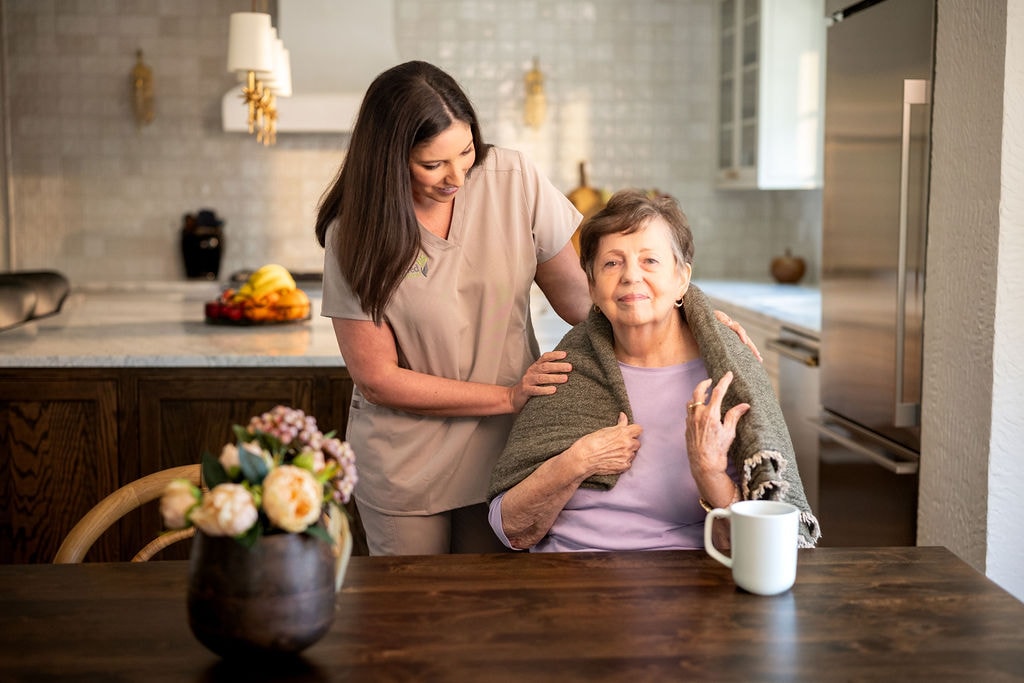
Hendersonville’s homeownership rate is approximately 71.7 percent, which means most older adults already live in a familiar home with established routines, neighbors, and memories. For many seniors, aging in place is not just a preference. It is a deeply held priority. When daily tasks become harder but the person is otherwise stable, trained professionals can come into the home for a few hours or around the clock. This preserves independence while adding the safety net that families need.
When Moving Becomes the Safer Choice

Some situations genuinely require a community setting or a higher level of around-the-clock care. Significant memory loss, repeated falls, social isolation that has grown severe, or complex medical needs that require consistent clinical oversight are signals worth taking seriously. Moving is not a failure. It is a different kind of support, and for some people, the right living community becomes a place where they truly thrive.
In-Home Care Explained: What Daily Support Actually Looks Like
In-home senior care is often the most misunderstood of all the senior care options, partly because it covers such a wide range of support. At one end, a home health aide or companion caregiver comes by for a few hours each day to help with meals, errands, and conversation. At the other end, a live-in caregiver provides continuous support, full personal care, and round-the-clock supervision without requiring a move from home.
- Companion and homemaker care addresses daily tasks like light housekeeping, transportation to medical appointments, meal preparation, and social engagement.
- Personal care goes deeper, providing hands-on help with bathing, dressing, and mobility support.
- Dementia care is a specialized type of in-home support tailored to the behavioral and safety needs of older adults living with memory loss.
- Respite care offers family caregivers temporary relief, whether for a weekend or a longer stretch, by bringing a trained professional into the home.
For Hendersonville families, in-home companion care and personal in-home care for ADLs are available through a locally owned team that lives in the community it serves.
Pro Tip: When comparing in-home care options, ask specifically whether the agency offers consistent caregiver assignment rather than rotating staff. Continuity of care makes a meaningful difference for both quality of life and safety, especially for older adults managing memory loss or anxiety.
Independent Living and Assisted Living: Who They Fit and What’s Included
Two of the most commonly confused senior living options are independent living and assisted living. They share some surface similarities, but they serve very different needs.
Independent Living Communities

Independent living is designed for older adults who are largely healthy, self-sufficient, and looking for a maintenance-free lifestyle in a community setting with peers. Residents live independently in private apartments or cottages. Common amenities include dining rooms with three meals a day, recreational activities, fitness programs, and transportation.
What independent living does not typically include is personal care assistance. There are no caregivers helping with bathing or dressing. If that level of help becomes necessary, a resident would need to arrange home care separately or transition to assisted living. These communities are well-suited for many seniors who feel isolated at home and want social connection without giving up their autonomy.
Assisted Living Facilities

Assisted living communities are built for older adults who need regular help with activities of daily living but do not require the intensive medical care of a nursing home. Residents have private or semi-private rooms within a homelike environment, with meals, laundry, housekeeping, medication reminders, personal care, and recreational activities typically bundled into the monthly fee.
Assisted living facilities employ trained professionals on-site, and most offer some nursing coverage. They are regulated at the state level, with Tennessee’s standards requiring specific staffing ratios and care planning processes. For families comparing in-home care versus assisted living communities, the monthly costs in Tennessee are actually closer than most people expect. More on that below.
Memory Care and High-Acuity Needs: When Complexity Changes the Answer
Memory Care
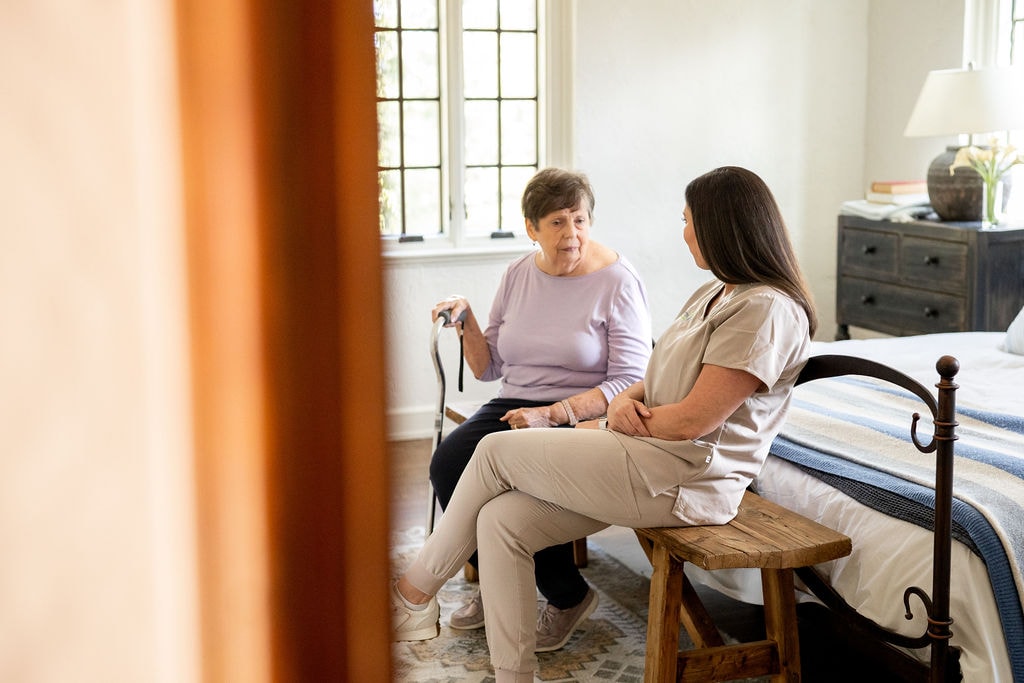
Memory care is a specialized type of senior living designed specifically for people living with Alzheimer’s disease or other forms of memory loss and cognitive decline. These communities are typically secured environments with structured routines, staff trained in dementia care, and programming built around cognitive engagement.
They differ from standard assisted living in that the physical environment and the staffing approach are both purpose-built for the safety and behavioral needs of residents with significant cognitive impairment. Memory care is not simply “more care.” It is a different kind of care, shaped by how Alzheimer’s disease affects perception, behavior, and daily experience.
Nursing Care

Nursing home care, sometimes called residential care, serves older adults with serious medical conditions that require continuous clinical oversight, including those recovering from hospitalization, strokes, or major surgical procedures. Rehabilitation services are often delivered in this setting for short-term recovery before a person returns home.
It is worth understanding, though, that most people do not stay in a nursing home long-term. Research from the Urban Institute found that only about 15 percent of older adults spend more than two years in a nursing home. The assumption that a nursing home placement is permanent causes many families to overlook it as a short-term recovery option.
Continuing Care

Continuing care retirement communities, or CCRCs, combine independent living, assisted living, memory care, and nursing home care on one campus. Residents can transition between levels of care as their needs change without leaving the community or their social connections. The trade-off is that CCRCs typically require a substantial entry fee along with a monthly fee, making them a larger financial commitment than other senior living options.
For Hendersonville families navigating dementia, in-home dementia care is available as an alternative to memory care communities, particularly in the earlier and middle stages when living at home remains safe with proper support. Respite care for family caregivers can also extend a person’s time at home by giving primary caregivers the recovery time they need.
Costs and How to Pay: Tennessee Snapshot, Medicare, and VA
Cost is often the conversation families are most afraid to start. The Genworth CareScout Cost of Care Survey 2024 provides annual state-level medians that give a realistic baseline. Here is what Tennessee families were looking at in 2024.
- In-home homemaker care: approximately $5,720 per month at the state median
- In-home home health aide: approximately $5,911 per month at the state median
- Assisted living: approximately $5,358 per month at the state median
- Nursing home semi-private room: approximately $9,125 per month at the state median
- Nursing home private room: approximately $9,855 per month at the state median
- Adult day health care: approximately $1,842 per month (partial-day option)
These figures make clear that for many families, in-home care is cost-competitive with assisted living, especially when care is scoped to actual hours needed rather than a flat monthly rate. A few hours of daily home care often costs far less than full residential care.
One common misconception about paying for care is worth addressing directly.
Medicare does not pay for long-term custodial care in nursing homes or assisted living. It covers specific short-term services under qualifying conditions, such as limited post-hospital nursing care, but it does not fund ongoing personal care or room and board in any senior living community. Families relying on Medicare as a long-term solution will run into a coverage gap. Private pay, Medicaid (for those who qualify), long-term care insurance, and VA benefits are the primary pathways.
Veterans in Hendersonville and the surrounding area, including the Clarksville and Fort Campbell community, may be eligible for in-home care through the VA Community Care Network. This program allows veterans to receive authorized and funded care at home when VA facilities are not the right fit. VA Community Care Network home care is available through Preferred Care at Home of Hendersonville, which works directly with veterans and their families to navigate the approval and matching process.
Putting It Together

Elder care options do not have to feel overwhelming. They become manageable when you start with the right questions: What help is actually needed today? What matters most to the person receiving care? What is realistic financially? For many Hendersonville families, the answer begins at home.
Preferred Care at Home of Hendersonville is a locally owned, award-winning team serving Davidson, Sumner, Wilson, and surrounding areas. Owners Quin Christensen and Richard Patterson live here and are personally invested in every family they serve. If you are trying to understand which level of care fits your situation, or if you are ready to start services, the team is ready to help.
Frequently Asked Questions
Does Medicare pay for nursing homes or assisted living?
Medicare does not pay for long-term custodial nursing home care or any form of assisted living. It may cover short-term care in a nursing facility after a qualifying hospital stay, but only for a limited time and under specific conditions. For full details, see the Medicare skilled nursing facilities coverage page.
What is the difference between assisted living and nursing home care?
Assisted living is for older adults who need help with daily tasks but are otherwise stable. Nursing homes serve people with complex medical conditions requiring continuous clinical oversight. The staffing ratios, physical environment, and regulatory requirements are significantly different between the two.
What is the difference between memory care and assisted living?
Assisted living provides personal care support in a community setting. Memory care is a specialized type of assisted living designed specifically for people with Alzheimer’s disease or significant cognitive decline. The environment, staff training, and daily programming are all built around memory loss in ways that standard assisted living is not.
Is home care cheaper than assisted living?
It depends on how many hours of care are needed. At the Tennessee median, in-home care and assisted living are comparable in monthly cost. But in-home care is often scoped to actual need, meaning families who need a few hours of help each day pay far less than the full monthly rate. Around-the-clock live-in care is typically more expensive than assisted living but may still be preferred by families committed to aging in place.
When is it time to consider assisted living?
There is no single trigger, but several patterns together are worth taking seriously: repeated falls or close calls, inability to manage meals or personal hygiene safely, significant loneliness or social withdrawal, a diagnosis like Alzheimer’s disease that is progressing, or caregiver burnout in the family. A conversation with a physician and a local care team is the most reliable starting point.