
A fan and a glass of water are not always enough to keep an older adult comfortable on a 95-degree afternoon. This guide walks through the cooling environment that actually works in hot weather, the warning signs that turn discomfort into a 911 call, how often to check in, and when summer comfort needs more than a phone call. We’ve been helping families across Montgomery and Robertson Counties keep older parents comfortable at home for over 40 years, supporting their well-being through every season and the hot summer months.
– Air conditioning beats a fan in extreme heat, and CDC says do not rely on a fan as the main cooling source on really hot days
– 103°F is the line: a body temperature at or above 103°F signals heat stroke and a 911 call
– Twice a day, minimum, is CDC’s caretaker checklist standard for older adults in hot weather
– About 1 in 10 Montgomery County residents and roughly 15% of Robertson County residents are 65 or older
Why warm weather hits older adults harder than people expect
A 78-year-old who feels fine indoors can still be in trouble. As NIH explains, older adults are the most heat-sensitive group because the body’s ability to cool itself changes with age. Sweat glands work less efficiently. Circulation slows. The thirst signal weakens, which means dehydration starts before older adults feel thirsty.
That gap between what the body needs and what it senses is why generic "drink water and sit by a fan" advice falls short. The same outdoor temperature that feels warm to a grandchild can push an older parent into real risk without much warning. Comfort and safety are tied together here: better hydration and cooler indoor temperatures protect energy levels, sleep, and overall well-being through the summer months.
What raises heat-related risk for older adults:
- Less efficient sweating and slower circulation, so body heat builds up faster
- A weaker thirst cue, so dehydration starts before they feel thirsty
- Chronic conditions like heart disease, diabetes, or kidney issues
- Certain medications, such as diuretics or some heart and blood pressure drugs, can affect how the body handles heat (per NIH)
- Cognitive changes that make it harder to notice or report a dry mouth, dizziness, or pale skin
Heat-related illness becomes more likely when these factors combine. The cooling strategy itself matters more than most families realize.
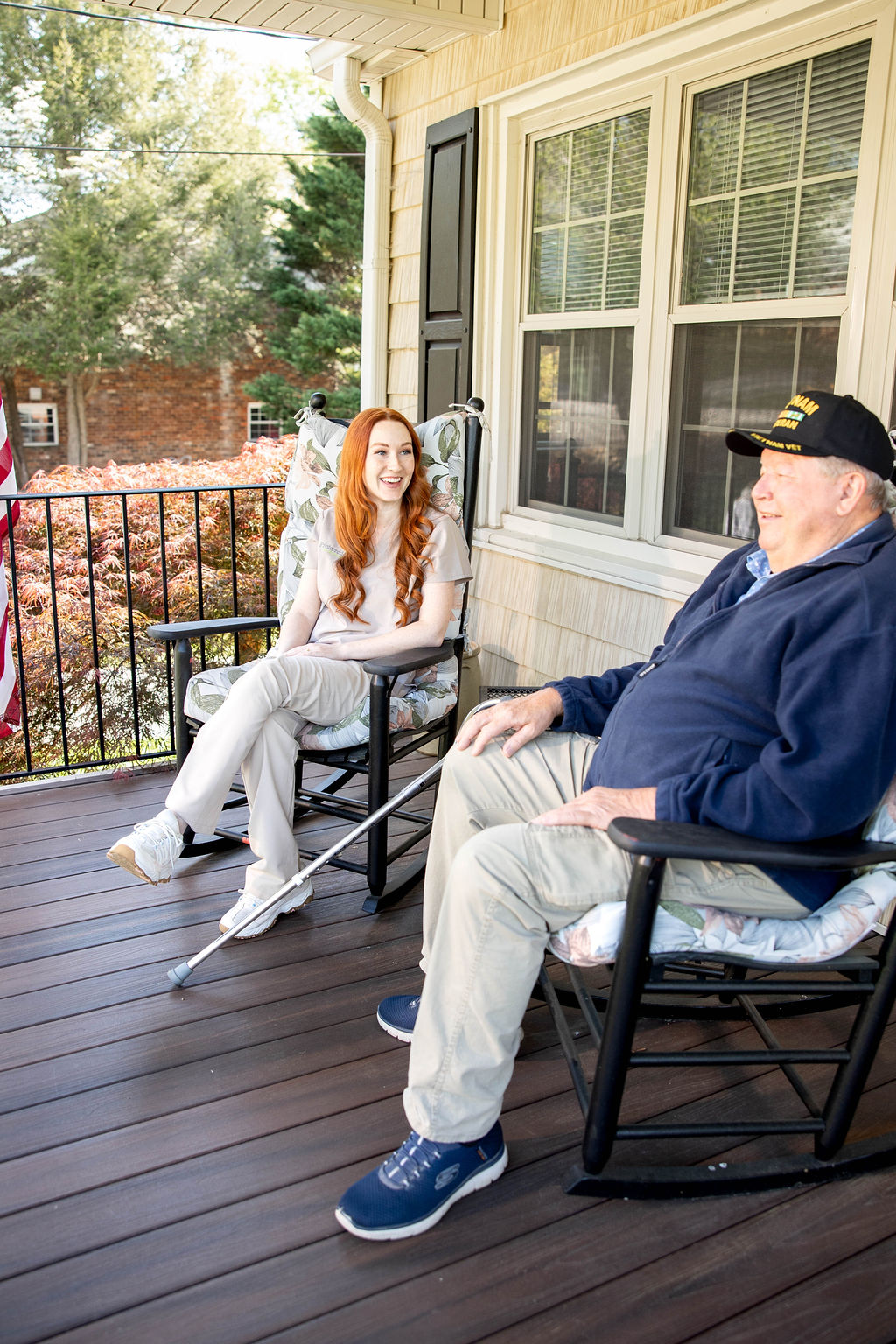
A fan is not air conditioning, especially during extreme heat
Per the National Weather Service, heat indices of 103°F or higher can lead to dangerous heat disorders with prolonged exposure or physical activity.
NIH research found that sitting in front of a fan actually increased older adults’ body temperature during extreme heat. CDC says explicitly not to rely on a fan as the main cooling source when it is really hot outside. The heat index, what it feels like once humidity is added to the air temperature reported by the National Weather Service, is the number that should drive the decision, not the dry-bulb forecast.
A fan is still useful in milder conditions. Once humidity climbs and the heat index passes the mid-90s, moving air over hot skin can speed dehydration instead of cooling the body. During the hottest part of the afternoon, air conditioners provide the reliable cooling that helps older adults stay safe indoors.
When fresh air feels good but the temperature climbs, air-conditioned spaces become necessary. Dry air from AC units works better than circulating hot, humid air with a fan. Shaded areas outdoors offer brief relief on sunny days, but they’re not a substitute for climate control when extreme weather arrives.
|
Strategy |
When it works |
When to switch |
|
Fan only |
Mild heat, low humidity, a healthy older adult who is hydrating well |
Once heat index passes the mid-90s, or during heat alerts |
|
Air-conditioned room at home |
Most summer days for most older adults |
If home AC fails or can’t keep indoor temperatures comfortable |
|
Air-conditioned community space (senior center, library, mall, cooling center) |
Heat advisories, AC outages, or when the home stays warm |
When transportation or mobility is a barrier, that’s a caregiver call |
The practical read: treat a fan as a supplement to air conditioning, not a substitute. On heat-advisory days, an air-conditioned space is the floor, whether that’s a working AC at home or a cooling center nearby. That decision sets up the next one, which is knowing the moment cooling stops being enough.
The warning signs that turn summer discomfort into a 911 call
Heat exhaustion is uncomfortable. Heat stroke is a medical emergency. Most families don’t know exactly where the line sits.
Per CDC heat-related illness guidance, a body temperature of 103°F or higher is a warning sign of heat stroke and means calling 911 right away.
Heat exhaustion usually shows up as heavy sweating, weakness, pale skin, dizziness, dark urine, and a dry mouth. Get the older adult into an air-conditioned space, offer cool fluids, apply cool cloths, and watch them closely. Heat stroke is different. It looks like an abnormally high body temperature, confusion or slurred speech, a rapid pulse, possible loss of consciousness, and skin that may be hot and dry instead of sweating. That combination is life threatening and requires medical attention immediately.
A short bedside check anyone can run:
- Skin: hot and dry, or still sweating?
- Pulse: rapid and strong, or steady?
- Speech and awareness: confused, slurring, or alert?
- Body temperature, if you can take it: at or above 103°F?
- Hydration signals: dark urine, dry mouth, no urination in hours?
- Movement: can they stand and respond, or is consciousness slipping?
If any answer points to heat stroke, the right call is 911, not "wait and see." Older adults often don’t feel thirst until dehydration has already started, which makes early detection critical. Recognizing heat-related symptoms quickly can prevent a medical emergency. That decision is easier when somebody is checking often enough to catch the change.
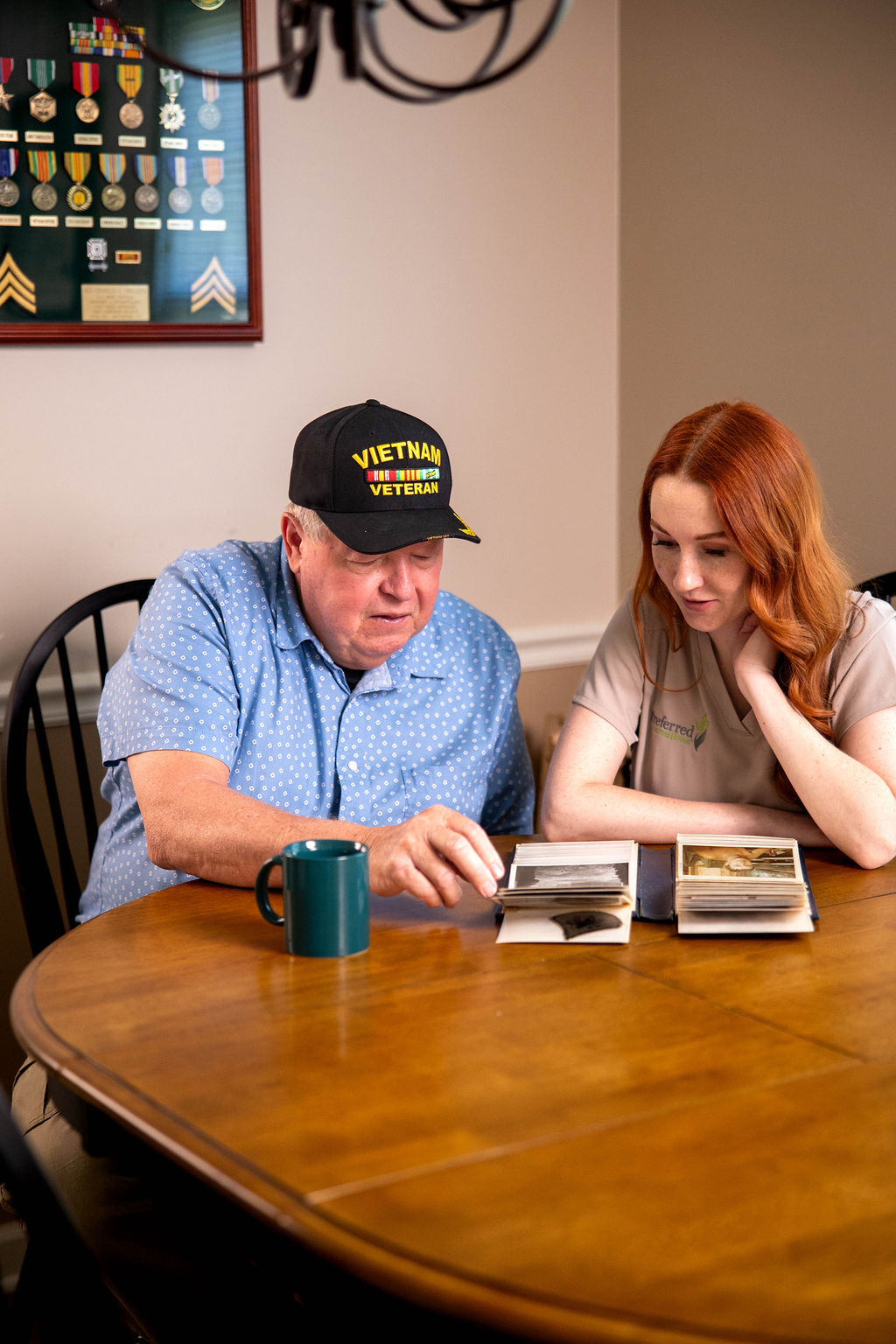
How often you should actually check in during a heat wave
What CDC’s caretaker checklist asks you to verify on each visit:
- Are they drinking enough fluids?
- Is the home actually cool, with working AC or a clear way to reach an air-conditioned space?
- Do they know the warning signs of heat illness and what to do?
- Are there any signs of heat stress already, like confusion, weakness, dark urine, or hot dry skin?
According to the CDC’s caretaker checklist for older adults in hot weather, caregivers should visit at least twice a day to check hydration, cooling access, cooling knowledge, and signs of heat stress. Twice a day is the floor, not the ceiling, and the right cadence depends on the older adult.
Helping older adults stay cool during the hottest part of the day requires more than a phone call. In-person visits let you verify that older adults stay hydrated, that cooling systems work, and that warning signs haven’t appeared. Senior centers often provide air-conditioned gathering spaces during heat waves, but transportation and mobility can be barriers. That’s where structured support to help older adults adapt makes a big difference.
When twice-a-day is not enough
|
Situation |
Check-in cadence |
Why |
|
Independent older adult with reliable AC and good awareness |
Once a day, plus a phone call |
Lower risk, established cooling routine |
|
Older adult with chronic illness, mobility issues, or living alone |
At least twice a day, in person |
CDC’s standard for hot weather |
|
Older adult with dementia or recently discharged from the hospital |
Multiple structured visits or live-in support |
Reduced ability to recognize or report heat stress, plus recovery factors |
Most families land in the middle row, and that’s where in-person check-ins start to matter more than phone calls. Preventing falls becomes more urgent when dehydration affects balance and awareness. When the cadence pushes past what one adult child or spouse can sustain through a long heat wave, structured homemaker care services can fill the gaps without flipping the household into full-time care. These visits help older adults stay connected to family routines and support their overall well-being.
When summer comfort needs more than a daily phone call
According to U.S. Census Bureau QuickFacts, 10.5% of Montgomery County, Tennessee residents and 15.4% of Robertson County, Tennessee residents are 65 or older.
In two counties with that many older adults, summer comfort isn’t abstract, per U.S. Census Bureau QuickFacts. It’s a steady stream of families noticing a parent who can’t quite manage the heat alone anymore: an older parent with early memory changes who forgets to drink fluids, a recently discharged hospital patient recovering in a warm home, a veteran whose medications affect heat tolerance.
Helping older adults adapt to warmer months means addressing the unique challenges each household faces. Some need reminders to drink plenty of water throughout the day. Others need help managing outdoor activities safely or choosing light-colored clothing that reduces sun exposure. Water-rich foods like melon and cucumber support hydration when drinking plain water feels like a chore. Cool showers offer relief during peak afternoon heat. Breathable fabrics like cotton help older adults stay cooler than synthetic materials.
That’s why we match caregivers by personality, not just availability. A caregiver your loved one actually likes is one they’ll let in twice a day during a heat wave. Every caregiver moves through our 7-step screening process before they ever step into a home, and the Transparency Room portal lets out-of-state family members see check-ins, hydration notes, and updates in real time without flying in. Compassionate care means understanding that summer brings different needs than cold weather, and adjusting routines to support older adults through both.
If a daily phone call isn’t enough this summer, our Companion Care handles steady check-ins and cooling routines, Dementia Care supports families managing memory changes through hot weather, and Care for Our Veterans connects eligible veterans to in-home support through the VA Community Care Network. Get Care Now and we’ll build a summer plan that fits your family. You can also find services through our local office to support older adults in your area.
Why are older adults more sensitive to heat in warmer months?
NIH says the body’s ability to cool itself changes with age, so older adults respond to heat differently than younger adults.
The physiological reasons stack up. Sweat glands work less efficiently, circulation slows, and the thirst signal weakens, which means dehydration can start before older adults feel thirsty. Chronic conditions and certain medications add another layer. The result is that the same hot afternoon a younger family member shrugs off can push an older parent into real risk. Heat-related conditions become more likely as these factors combine.
Is a fan enough to keep an older adult comfortable during extreme heat?
Not in extreme heat. CDC says do not rely on a fan as the main cooling source on really hot days.
NIH research found that fan use actually raised older adults’ body temperature in very hot conditions, because moving hot air over skin can speed dehydration. Use a fan as a supplement to air conditioning, not a substitute. On heat-advisory days, plan around an air-conditioned space, whether that’s home AC, a senior center, or a cooling center. Caregivers offering daily living assistance can build that routine into the day.
What temperature is considered dangerous for heat stroke?
Per CDC, a body temperature of 103°F or higher is a warning sign of heat stroke and means calling 911 right away.
This is different from a fever from illness. Heat stroke usually pairs that high body temperature with confusion, a rapid strong pulse, hot dry skin, and possibly loss of consciousness. If you see those signs together, don’t wait it out at home. Cooling the person while waiting for emergency responders can help, but the 911 call comes first.
How often should I check on an older parent during a heat wave?
CDC’s caretaker checklist says at least twice a day during hot weather, with more frequent checks for higher-risk older adults.
Higher risk usually means living alone, dementia, recent hospital discharge, or certain medications that affect heat handling. For those situations, twice a day in person is the floor, and structured visits or live-in support may fit better. Preferred Care at Home offers structured senior companionship services that build hydration checks, cooling-room verification, and warning-sign monitoring into every visit. Spending time with a familiar caregiver during the hottest part of the day helps older adults stay comfortable and safe.
Can medications make hot weather harder on older adults?
Yes. NIH identifies diuretics and some heart and blood pressure drugs as factors that can affect how the body handles heat.
Diuretics increase fluid loss, which makes dehydration easier to trigger in hot weather. Other drugs can affect circulation or sweating. The right move is to ask the older adult’s prescribing physician whether any current medication raises heat sensitivity, and what to watch for. Caregivers can support this with medication reminders and hydration prompts during summer check-ins.
How can I keep a loved one with dementia comfortable in summer?
Keep routines steady, control the indoor temperature, and add structured check-ins, because dementia reduces a person’s ability to recognize or report heat stress.
Practical specifics matter. Quiet, cool rooms reduce agitation. Light meals and water-rich foods support hydration when a glass of water gets refused. Hydration cues built into routine, the same time each day, with the same caregiver, work better than reminders from a stranger. A familiar caregiver matched by personality through our memory care services reduces resistance to cooling routines. Seasonal depression can also affect mood and appetite during temperature extremes, so monitoring emotional well-being alongside physical comfort matters.
Why does this topic matter in the Clarksville area specifically?
Per Census data, 10.5% of Montgomery County and 15.4% of Robertson County residents are 65 or older, so summer comfort is a household-level issue here.
Across both counties, that’s tens of thousands of older adults whose families think about hot weather every June through September. Many local families have at least one older relative who needs more structured summer support than a daily phone call provides. Preferred Care at Home has been working with families across both counties for over 40 years at the brand level, with locally owned operations right here in Clarksville.