
Most families call us thinking Aid and Attendance and VA homemaker care are the same program. They aren’t. One is an added monthly pension payment; the other is a VA-arranged service that comes through the veteran’s care team.
Confusing the two costs families weeks of waiting on the wrong phone tree. This post separates the three real pathways for in-home care for aging veterans so you can call the right place first. Preferred Care at Home is a VA Community Care Network provider serving Montgomery and Robertson County families, and the brand has helped families sort this decision for over 40 years.
Key Takeaways:
- Per the U.S. Census Bureau, 8.1 million U.S. veterans were age 65 or older in 2021, so this is a common family situation, not a rare one
- Aid and Attendance is an added monthly pension payment, not the same as VA-arranged in home care
- VA homemaker and home health aide services are non-medical help with bathing, meals, and light housekeeping, supervised by a registered nurse but not provided by one
- Caregiver Support Coordinators at the local VA medical center are often the right first call, not a private agency
The Three Pathways for In-Home Care for Aging Veterans
The Department of Veterans Affairs runs two distinct home and community based programs and one caregiver-support track, and a fourth option sits outside the VA entirely: private non-medical home care services. Families confuse these because the names overlap and the rules don’t.
Per VA Community Care, a veteran must meet at least 1 of 6 eligibility criteria, in addition to basic VA health care benefits requirements and care team approval, before Veterans Affairs can pay for community care services outside VA facilities. That threshold alone changes how a family should plan the first phone call.
|
Pathway |
What it is |
Who qualifies |
What it pays for |
How to start |
|
VA Homemaker and Home Health Aide Care |
Non-medical aide help (bathing, meals, light housekeeping) supervised by a registered nurse |
Enrolled veteran with clinical need approved by VA care team |
Help with daily living in the veteran’s residence |
Through the VA care team and community care approval |
|
An added monthly payment to a VA pension |
Wartime veterans and surviving spouses on pension who need help with daily activities or are housebound |
Cash to offset care costs; the recipient arranges care |
Apply through the VA pension office |
|
|
Respite and Caregiver Support |
Short-term respite plus the Program of Comprehensive Assistance for Family Caregivers (PCAFC) |
Clinical eligibility; outside-provider respite often requires community care criteria |
Intermittent breaks or ongoing caregiver assistance |
Through the local VA medical center’s Caregiver Support Coordinator |
|
Private Non-Medical Home Care |
Companion, personal, and homemaker services from a private agency |
Anyone; no eligibility gate |
Flexible hourly through 24-hour live-in support |
Call the agency directly |
The most common mistake families make is assuming Aid and Attendance pays an agency directly. It doesn’t. The Attendance benefit is cash that lands in the veteran’s account each month, and the family decides how to spend it.
VA home care programs like homemaker and home health aide care come through the VA care team, not the pension office. Once that distinction is clear, the next question is what the veterans home care program actually does in your loved one’s home. Eligible veterans may also access home and community based services through VA coverage when their priority group and service connected disability status meet the threshold.
Private non-medical Care for Our Veterans sits alongside these VA programs for families who need flexibility VA pathways can’t always match. Many veterans who served in active military, the National Guard, or Air Service qualify for financial assistance through one or more of these programs, and monthly payments vary by pathway. Surviving spouses of wartime veterans may also qualify for VA benefits when they meet the pension and care need requirements.
What VA Homemaker and Home Health Aide Care Actually Covers
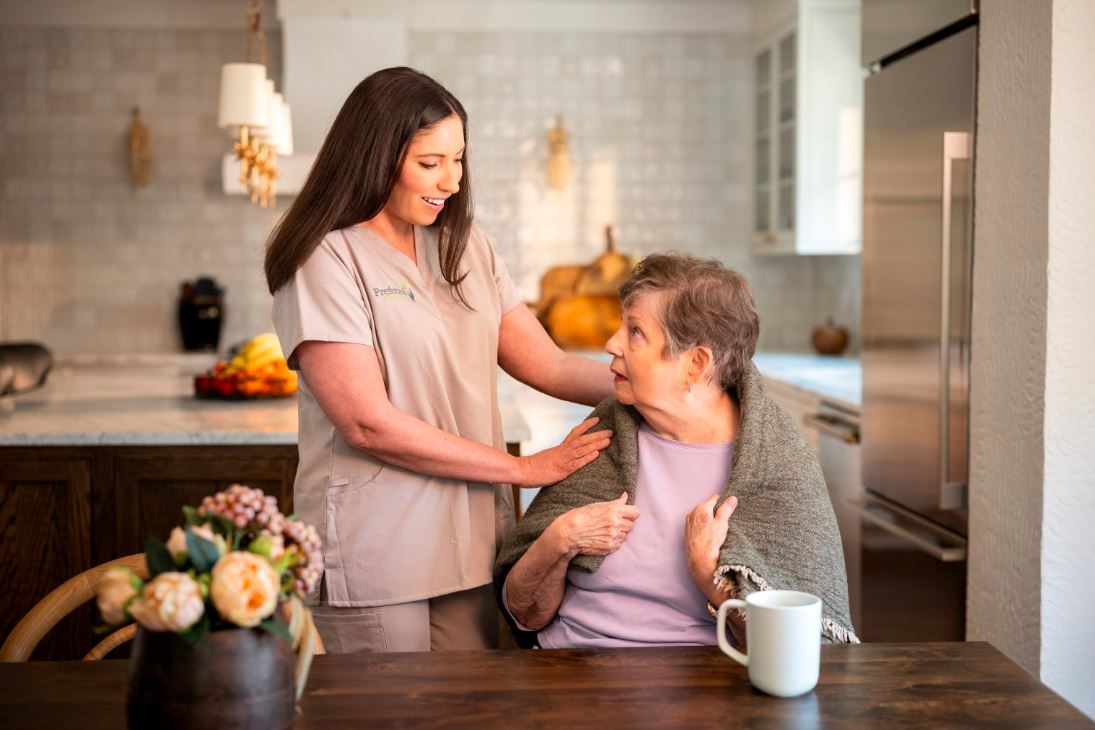
VA homemaker and home health aide care is non-nursing help delivered in the veteran’s own home. A registered nurse supervises the home health aide program, but the aide who shows up in the morning is not a nurse. That single fact corrects most of the misconceptions families bring to the first VA phone call.
A typical week of H/HHA support includes:
- Help with bathing, getting dressed, personal grooming, and other daily routines
- Preparing meals and light house cleaning
- Medication reminders (the aide prompts; the veteran takes)
- Accompanying the veteran to appointments
- Companionship and supervision so the veteran is not alone for long stretches
- Laundry, basic tidying, and other homemaker tasks
Skilled home health care services are a different VA pathway. Physical therapy, home health nurses, and other clinical services route through a separate referral and a different provider. H/HHA does not include those medical services.
When a family needs both non-medical daily living assistance and clinical care, the VA care team coordinates them as two separate authorizations. Home health aides provide in home care benefits that keep veterans comfortable in their own homes, and adult day health care is another option for families balancing home health assistance with daytime structure. Hospice care is also available through VA when a veteran’s condition requires it.
Senior companionship services follow a similar non-medical scope when families fill in privately. Home health aides deliver both personal care and homemaker services, supervised by a registered nurse but focused on daily living support rather than clinical treatment. That distinction matters most when caregivers are stretched thin, which is where the next pathway comes in.
When Caregiver Burnout Means It’s Time for Respite
A national care survey published in the Journal of the American Geriatrics Society surveyed 1,509 family caregivers of veterans and found high levels of burden, distress, and financial strain, confirming that caregiver burnout is a structural reality, not a personal failure.
The VA offers two relief mechanisms for family caregivers. Short term respite services provide intermittent breaks, and outside-provider respite often requires community care eligibility. The longer-term option is the Program of Comprehensive Assistance for Family Caregivers, which offers ongoing caregiver assistance to families who meet the VA’s clinical and continuity criteria.
The two programs serve different needs and use different applications, so it is worth asking the local VA medical center which fits. Many veterans need support from other family caregivers or trained aides to assist veterans and their families through difficult transitions. A VA social worker can help families navigate these options and connect with the right resources.
If you are the caregiver, these are the signs that respite care is overdue:
- Missing your own medical appointments month after month
- Snapping at the veteran or other family members in ways that feel unlike you
- Sleep disruption that has lasted weeks, not nights
- Skipping or forgetting your own meals
- Declining invitations from friends for months at a time
- Physical symptoms (headaches, chest tightness, persistent fatigue) you keep dismissing
Family members who recognize three or more of these signs are usually past the point where a weekend off solves it. That’s when family caregiver relief becomes a planning conversation, not a luxury, and the question becomes who to call first. VA aid programs can support veterans and their families through these transitions.
Who to Call First When You Need Help Now
The default move for most families is to search online for a private agency. That isn’t always wrong, but it isn’t always first. If your loved one is enrolled in VA health care, the Caregiver Support Coordinator at the local VA medical center is usually the right first call. Here is the order that saves most families a week of dead ends:
- Confirm whether the veteran is enrolled in VA health care. If yes, the VA care team can assess for homemaker and home health aide care or respite.
- Call the Caregiver Support Coordinator at the local VA medical center. They help families find in-home care services and explain caregiver programs. The VA Caregiver Support Line is 1-855-260-3274. In Clarksville, the Clarksville VA Clinic is part of the Tennessee Valley Healthcare System and a starting point for these conversations.
- Ask the VA care team about community care eligibility if VA-arranged services aren’t available locally or wait times are long. A VA social worker can walk you through the following criteria and help determine whether your loved one qualifies.
- Call a private non-medical home care agency if you need help now, your loved one is not enrolled in VA health care, or you need scheduling flexibility VA pathways can’t match.
Many Clarksville-area families end up needing both: the VA pathway in motion for long-term support, plus immediate private non-medical help filling the gap this week. As a VA Community Care Network provider, Preferred Care at Home of Clarksville works with private-pay families and VA-authorized care, and the team can also coordinate around-the-clock support when overnight hours matter as much as daytime ones.
Veterans qualify for different levels of support based on their service connected disability and other factors, so a VA facility assessment is often the right starting point. Call our office for a free in-home consultation, or Schedule a Consultation online to talk through your veteran’s situation.
Is Aid and Attendance the same thing as VA home care?
No. Aid and Attendance is an added monthly pension payment, not a VA-arranged home care service.
Per the Veterans Administration, Aid and Attendance is an added monthly payment to a VA pension for qualified veterans or surviving spouses who need help with daily activities or have housebound benefits. VA homemaker and home health aide care is a separate, VA-arranged service supervised by a registered nurse. Different application, different rules, and different VA pay and funding source.
How much does in-home care for an aging veteran cost if you pay privately?
Private non-medical home care is paid hourly or as a 24-hour live-in rate, with cost driven by hours and care level.
According to the Bureau of Labor Statistics, the median annual wage for home health and personal care aides was $34,900 in May 2024, which is one driver of hourly private-pay rates. Live-in care typically offers better per-hour value than hourly scheduling. VA offers several VA programs that may offset cost when the veteran qualifies for in-home care services through community care.
What is the difference between non-medical home care and skilled home health?
Non-medical home care is help with daily living. Skilled home health adds clinical services like therapy or nursing through a different VA pathway.
Non-medical home care covers bathing, meals, light housekeeping, medication reminders, and companionship. Skilled home health, including physical therapy and home health nurses, is a separate clinical service routed through different VA pathways and providers. Most aging veterans start with non-medical senior care, and skilled clinical services are added when a condition requires them.
Can I get respite help if I am the one doing everything for my spouse?
Yes, both VA respite programs and private agencies offer caregiver relief, depending on eligibility and how soon you need help.
VA respite care is available to enrolled veterans who meet clinical criteria, and respite delivered by an outside agency may also require community care approval. When VA respite is not available quickly enough, Preferred Care at Home of Clarksville provides private-pay Homemaker and Respite Care hours for family caregivers in Montgomery and Robertson County who need a break this week.
What does the Program of Comprehensive Assistance for Family Caregivers require?
PCAFC requires the veteran to need personal care services for at least 6 continuous months and meet other VA criteria.
According to the VA Caregiver Support Program, the Program of Comprehensive Assistance for Family Caregivers requires the veteran to need personal care services for a minimum of 6 continuous months. Eligibility also depends on service-connected conditions and other clinical factors, so the local VA medical center’s Caregiver Support Coordinator is the right contact to confirm whether a family qualifies.
Who should I call first about home care for an aging veteran?
Call the Caregiver Support Coordinator at the local VA medical center first if the veteran is enrolled, or a private agency if you need help now.
For enrolled veterans, the Caregiver Support Coordinator at the local VA medical center can assess eligibility for homemaker and home health aide care, respite, or PCAFC. The VA Caregiver Support Line is 1-855-260-3274. When you need help this week or your loved one is not enrolled, Preferred Care at Home of Clarksville offers a free in-home consultation. Get Care Now to talk it through with our team.