

Memory Care · A Pillar Guide from Preferred Care at Home
Most families assume dementia moves through one fixed timeline, stage by stage, on a predictable schedule. It doesn’t work that way. This guide translates the 3-stage and 7-stage models into plain language, walks through what actually changes at each point, and names the specific moments when Fairfield County families start adding help at home.
Dementia is not one disease — it is an umbrella term for memory loss, cognitive decline, and trouble with complex tasks, caused by different underlying conditions. Here is what the staging systems answer before anything else.
Some sources describe 3 stages (early, middle, late); others describe seven. Both are valid, and they map to each other — they just cut the same journey at different resolutions.
No. Alzheimer’s follows a gradual decline; vascular dementia often changes suddenly after strokes; hallucinations show up more often in Lewy body dementia, and planning or language problems in frontotemporal dementia.
The clearer question isn’t “what stage is this?” It’s “what changed, and does that change require supervision or help at home?” That is the question care actually gets planned around.
Usually in the middle stage — and often earlier here, because so many adult children live in New York or Boston. Supervision at home closes the distance when the closest family member is 60-plus miles away.
 01
01
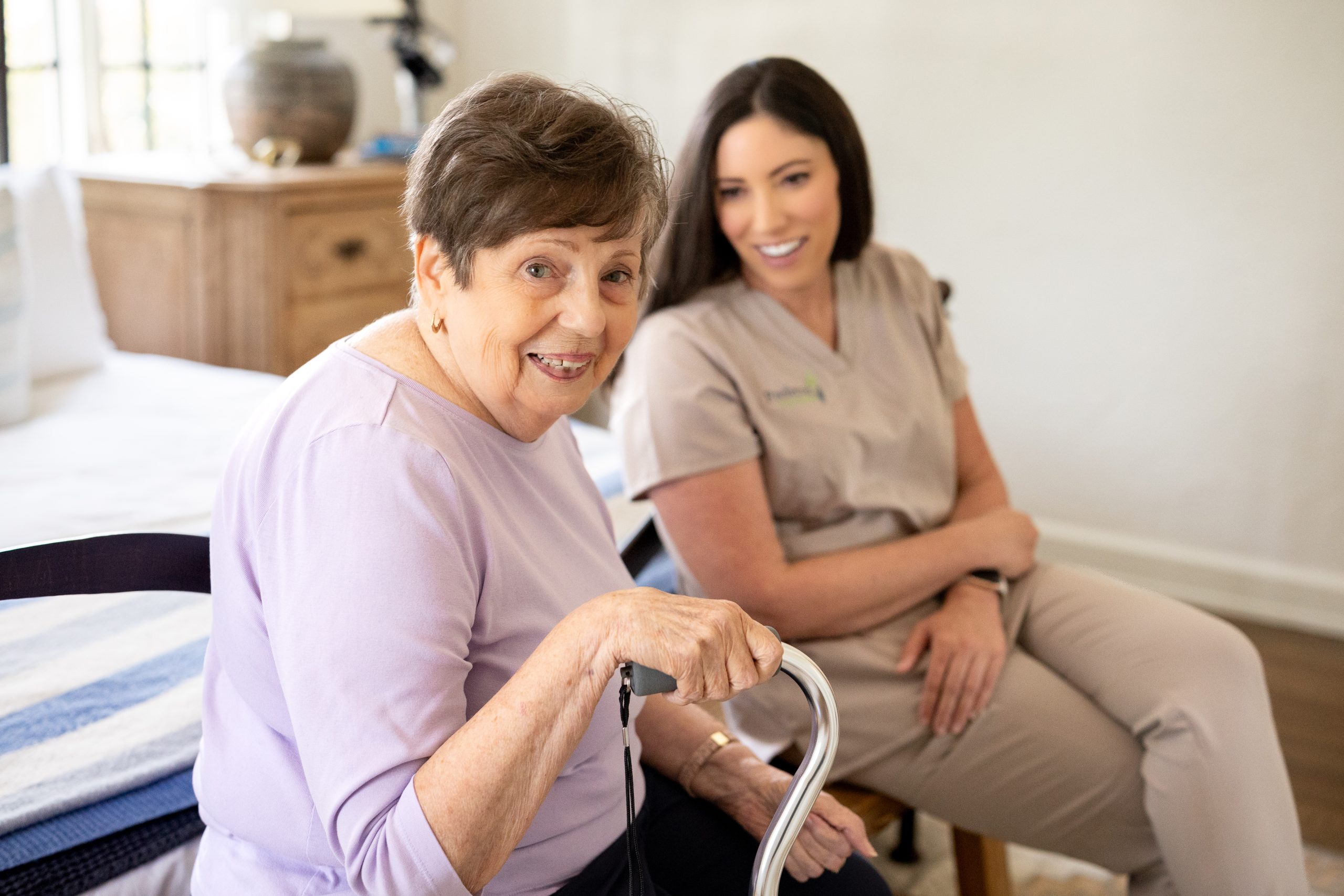
Repeated questions, a forgotten appointment, hesitation on a driving route taken for years. Trouble with finances, taxes, or medication schedules; difficulty finding familiar words; getting lost on familiar routes. Still living independently — companion care at this stage often starts small, a few hours a week for errands and company.
 02
02
Usually the longest stage, where family caregiver strain peaks. Bathing, dressing, and toileting start needing prompts, then hands-on help. Confusion about time and place, mood swings, sleep disruption, night wandering, and sundowning in late afternoon. Personal care support often begins here, once prompting alone isn’t enough.
 03
03
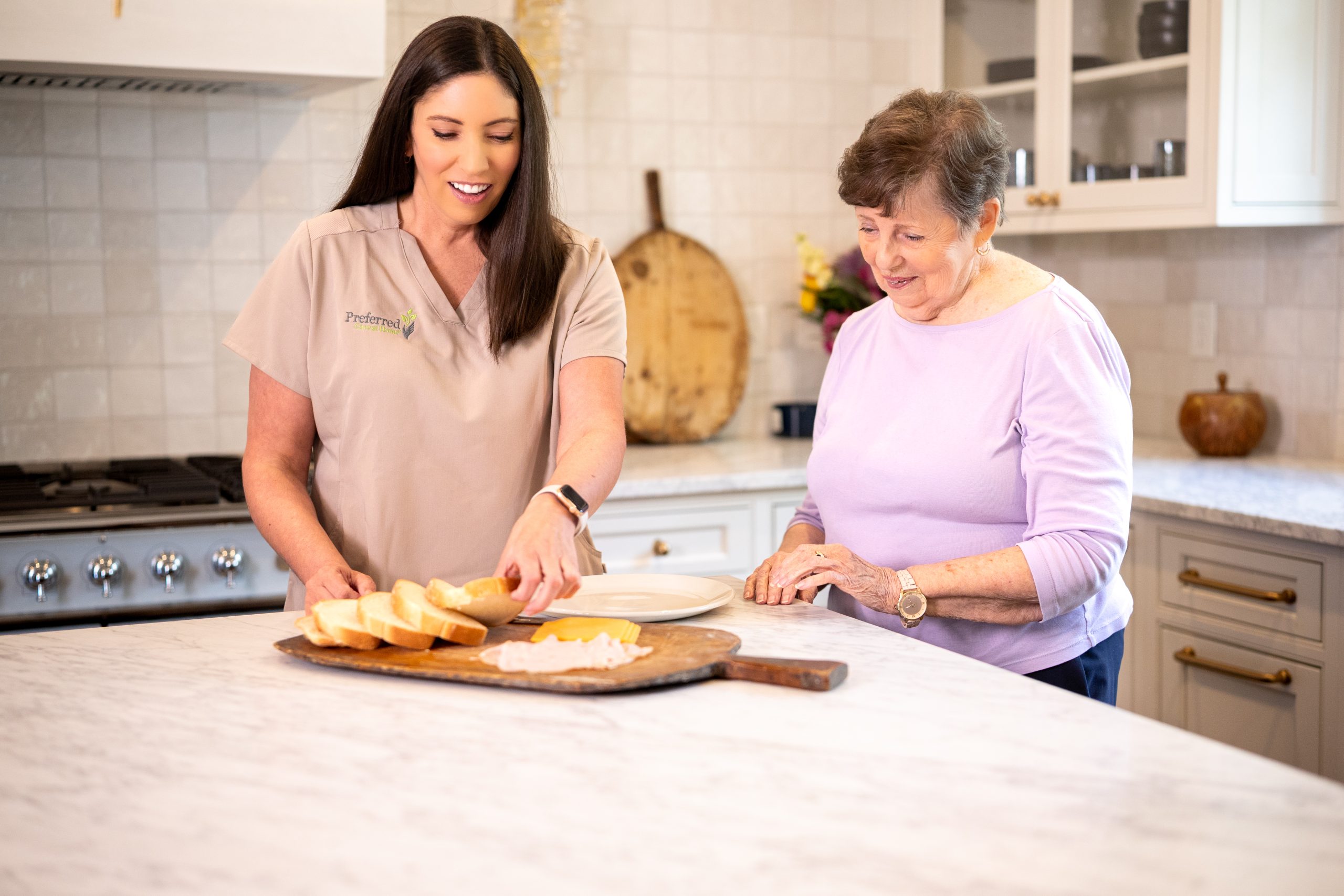
Verbal communication becomes limited; mobility declines; swallowing problems raise choking risk, which is why caregiver presence during meals matters. Incontinence requires consistent personal care support — and live-in care is often the setup families choose here, with hospice coordination when appropriate.
Reversible causes of confusion exist, and they are often missed: thyroid problems, infections, dehydration, medication interactions, sleep deprivation, and depression can all produce dementia-like symptoms. A medical evaluation is the only way to tell the difference — and it can change everything about how a family plans next steps.
Mild cognitive impairment causes noticeable memory or thinking changes, but the person still manages daily activities independently. About 10 to 20 percent of people over 65 with MCI develop dementia within a year, per the NIA — though many never do.
About one-third of people age 85 or older may have some form of dementia, per the National Institute on Aging — which also means two-thirds do not. Risk factors like family history, age, and cardiovascular health raise risk, but none guarantee it. Diet, checkups, and quitting smoking all reduce it.



Where a local home care team fits — from the first “something feels off” call to full-time presence at home.
We take your call at (203) 401-8464, listen to what changed at home, and help you separate normal aging, MCI, and patterns worth acting on.
Companion services start at just one hour per day — for families who want to add supervision gradually rather than all at once.
Personal care for bathing, dressing, and medication support — delivered by caregivers trained in dementia-specific approaches, which usually reduces resistance.
When full-time presence becomes necessary, live-in care keeps meals supervised, personal care consistent, and hospice coordinated when appropriate.
We process long-term care insurance paperwork weekly, and the Transparency Room portal keeps out-of-state family in the loop without daily calls.
Preferred Care at Home of Central Fairfield is part of a franchise built in 1984, and has spent decades helping families through exactly this kind of transition — across Wilton, Ridgefield, Trumbull, Fairfield, Norwalk, and the surrounding towns.
Our location processes long-term care insurance paperwork weekly — faster than the monthly industry standard — so coverage starts sooner and families are not fronting costs longer than they need to.
The Transparency Room family portal lets out-of-state family members watch care happen in real time without daily calls — built for the Manhattan or Boston adult child checking in on a parent in Wilton or Bridgeport.
No noticeable symptoms, or occasional memory lapses — forgetting familiar words or where something was placed — indistinguishable from normal aging.
Trouble with complex tasks, name recall, and planning; forgetting recent events; difficulty with finances and travel planning. Family members and coworkers begin to notice.
Needs help choosing clothes, may forget address or phone number; then help with dressing, bathing, and toileting, personality changes, and difficulty recognizing family. Where caregiving strain peaks.
Loss of speech, mobility, and control of basic functions. Full dependence for daily activities — consistent presence, meal supervision, and hospice coordination become the priorities.
A forgotten name or misplaced keys is not a diagnosis. Per the National Institute on Aging, the difference between normal aging, MCI, and dementia carries real weight for planning — and a medical evaluation is the only way to tell.
The seven stages come from the Global Deterioration Scale, developed by Dr. Barry Reisberg in 1982, ranging from Stage 1 (no cognitive decline) through Stage 7 (very severe decline with loss of speech and mobility).
Stages 3–4 correspond to what families call the early stage; stages 5–6 map to the middle stage; stage 7 is the late stage.
Both models describe the same progression at different levels of detail. The 3-stage model is used by the Alzheimer’s Association and most family-focused resources because it matches how caregiving needs actually change.
The 7-stage Global Deterioration Scale is more clinical, and useful when comparing charts across specialists or conflicting medical paperwork.
MCI causes noticeable memory or thinking changes, but the person still manages normal daily activities independently. Mild dementia begins to interfere with daily functioning.
About 10 to 20 percent of people over 65 with MCI develop dementia within a year, per the National Institute on Aging — though many do not.
Refusing to bathe is not tied to one exact stage, but hands-on personal care help is most common during the middle and late stages. Resistance often reflects confusion, embarrassment, or fear of falling — not stubbornness.
Caregivers trained in dementia-specific approaches handle personal care with dignity, which usually reduces resistance.
Care at home usually begins during the middle stage, when supervision needs rise but full-time facility care is not yet necessary. Some families start earlier for companion visits, meal support, or respite for a spouse caregiver.
The clearer trigger is not a stage label but a safety change: wandering, medication mistakes, or the person no longer being safe alone for long stretches.
The clearest triggers are practical: leaving the stove or oven on, difficulty using the phone in an emergency, wandering from the home, and repeated medication errors. If any two show up in the same month, most families begin adding in-home support — companion services start at just one hour per day.
Advanced dementia typically involves loss of speech, difficulty walking, and full dependence on caregivers. Swallowing problems become common and can raise choking risk, per the NIA.
Consistent presence during meals, help with personal care, and coordination with hospice when appropriate are the priorities — live-in care is often the setup families choose here.
Yes. Thyroid problems, infections, dehydration, medication interactions, sleep deprivation, and depression can all produce dementia-like symptoms — and they are often missed.
A medical evaluation with personal history, cognitive testing, and physical exams is the only way to rule out reversible causes, and it can change everything about how a family plans.