

A person in their 40s or 50s who can’t find the right word, gets lost driving a familiar route, or struggles with tasks they used to handle at work often gets misdiagnosed with stress or depression long before anyone considers Alzheimer’s disease. This post explains what early onset Alzheimer’s actually looks like before age 65, how doctors diagnose it today, what family history and genetics really tell you, and when to ask for help at home.
Key Takeaways
- Younger-onset dementia affects about 200,000 Americans, per the 2024 Alzheimer’s & Dementia facts report
- Memory loss isn’t always the first sign; up to two-thirds of cases may begin with non-memory symptoms
- Only about 5 to 10 percent of early-onset cases involve known inherited gene mutations
- Biomarker testing through PET scans and blood tests now makes earlier, more accurate diagnosis possible
What Counts as Early Onset Alzheimer’s
Early onset Alzheimer’s disease (also called younger onset Alzheimer’s disease) means symptoms begin before age 65, sometimes as early as the 40s. It’s a rare form of a common condition. According to the Continuum clinical review, early onset Alzheimer’s accounts for about 5 to 6 percent of all Alzheimer’s disease cases. Per the CDC, early signs of Alzheimer’s can appear as early as the mid-40s.
The term gets confused with a broader category, so it helps to see the three side by side.
Early Onset Alzheimer’s vs. Late Onset vs. Young-Onset Dementia
| Condition | Typical Age of Onset | What It Includes |
| Early onset Alzheimer’s disease | Before 65 (sometimes 40s) | The Alzheimer’s-specific early onset form; about 5 to 6 percent of all cases |
| Late onset Alzheimer’s disease | 65 and older | The most common cause of dementia; per the CDC, Alzheimer’s accounts for 60 to 80 percent of all dementia cases |
| Young onset dementia (broader category) | Before 65 | An umbrella term that includes Alzheimer’s plus frontotemporal dementia and other forms |
This distinction matters because a doctor evaluating someone under 65 considers several causes, not just Alzheimer’s. Frontotemporal dementia, vascular issues, and other forms of the disease can look similar in the early stages but progress differently and respond to different kinds of support. A family that knows the difference can describe what they’re seeing more accurately, which speeds up the right workup.
In most cases, younger people develop Alzheimer’s disease without a clear family pattern. That brings up the next question: what does “what they’re seeing” actually look like when the disease affects people younger than 65?
Why Memory Loss Isn’t Always the First Sign
According to a Continuum clinical review of early-onset Alzheimer’s disease, one-fifth to two-thirds of sporadic early-onset cases may begin with non-memory symptoms rather than memory loss.
The same review found that early onset patients often show less severe memory loss in the early stages and greater problems with attention, executive function (the brain’s ability to plan and finish tasks), praxis (coordinating learned movements like buttoning a shirt), and visuospatial processing (judging distance and space). These are the mental skills that quietly fall apart first, and they don’t look like the Alzheimer’s most people picture.
Here are the other symptoms families often miss:
- Trouble organizing or finishing routine tasks at work that used to be automatic
- Stalling on the right word mid-sentence or losing the thread of a conversation
- Getting lost on familiar driving routes, misjudging steps, or bumping into doorframes
- Difficulty with sequenced movements like buttoning a shirt or using kitchen tools
- Personality, mood, or judgment changes that family members notice before the person does
- Misplacing things in odd locations, like keys in the freezer or glasses in the laundry
These signs get missed because they look like stress, burnout, depression, or a workplace conflict, especially when the person is still employed and still functioning in most areas of life. Months or years can pass before anyone asks whether a neurological evaluation is warranted.
Healthcare providers often see patients who have been struggling for some time before getting diagnosed. Early diagnosis matters because it opens the door to treatment options, planning, and support like memory care at home sooner rather than later.
Brain changes caused by Alzheimer’s begin years before symptoms appear, which is why recognizing these early patterns matters. So what does that workup actually look like today?
How Doctors Diagnose Early Onset Alzheimer’s Today
The diagnostic landscape has shifted in the last few years. Per the National Institute on Aging, PET imaging and blood-based tests can now detect the amyloid protein and other biomarkers associated with Alzheimer’s in living patients, which enables earlier and more accurate diagnosis than the symptom-only evaluations of a decade ago. Biomarkers are biological signals (like beta amyloid buildup in the brain) that point to specific disease processes.

A typical evaluation today often follows these steps:
- Document symptoms in plain language: when they started, what’s changed, what family members or coworkers have noticed
- See a primary care provider for initial cognitive screening and to rule out reversible causes like thyroid problems, vitamin deficiencies, or other health conditions
- Get referred to a neurologist or memory specialist for full neuropsychological testing
- Discuss biomarker testing options, including PET imaging or blood-based tests, to confirm or rule out Alzheimer’s-related changes in the brain
- Review whether the diagnosis qualifies the person for newer treatments or clinical trials
As of mid-2026, FDA labeling for some newer anti-amyloid treatments requires confirmed amyloid pathology and mild-stage disease, which is why biomarker confirmation now matters earlier in the process than it used to. Research studies continue to explore new approaches, and some families diagnosed early may qualify for clinical trials. This area changes quickly as researchers learn more about the disease, so ask your specialist what current guidance looks like at the time of evaluation.
Healthcare providers now have tools to track how the disease progresses through brain imaging and cognitive assessments over time, which helps families plan for the road ahead. That still leaves one question almost every family asks first: is this going to happen to me, too?
What Family History and Genetics Really Tell You
Per a 2023 LEADS cohort paper published in Alzheimer’s & Dementia: Translational Research, only about 5 to 10 percent of people with early onset Alzheimer’s disease carry a known autosomal dominant pathogenic variant in the APP, PSEN1, or PSEN2 genes.
Most people with early onset Alzheimer’s do not inherit it through a single gene. There are two different things that get called “genetic risk,” and they aren’t the same. Deterministic genetic mutations (APP, which makes the amyloid precursor protein, plus PSEN1 and PSEN2) almost guarantee the disease and tend to run through families in an obvious pattern across generations. These are the known genetic mutations that define familial Alzheimer’s disease.
Susceptibility risk genes (like APOE variants) raise risk but don’t determine the outcome. GeneReviews advises that susceptibility genes aren’t diagnostic and shouldn’t be used in a multigene panel to diagnose Alzheimer’s. While genetic mutations account for a small share of cases, other risk factors like cardiovascular health and lifestyle also play a role.
Should I get genetic testing if a parent has early onset Alzheimer’s?
Talk to a genetic counselor before ordering any test. A counselor can tell you whether your family history suggests familial Alzheimer’s disease or whether your risk picture is closer to the general population, and they can explain what a positive or negative result actually means for you and your children.
Families with strong multigenerational patterns of younger onset disease have the most to gain from formal counseling. Families with a single relative diagnosed later in life generally don’t benefit from consumer-style DNA kits, which often answer the wrong question. If a diagnosis is already on the table for a loved one, the more useful next step is usually planning for day-to-day support, which is where Alzheimer’s care at home enters the picture.
When Early Onset Alzheimer’s Starts Changing Life at Home
Someone under 65 with early onset Alzheimer’s often keeps doing many things well for a long time. But specific tasks become unsafe or exhausting, both for the person and for the family around them. The shift from “we’ll manage” to “we need help” usually shows up around three pressure points: safety, sleep, and the family caregiver’s own capacity.
Here’s what families notice first:
- Sleep disruption when a loved one becomes restless or active at night, which wears down the whole household
- Safety concerns around driving, cooking, or being alone at home for long stretches
- A spouse who’s still working and now also caregiving running out of hours in the day
- Medication reminders becoming a daily friction point that strains the relationship
- Social withdrawal as the person pulls back from work, friends, and a former support group
- Children still at home needing attention from a parent who’s now a caregiver too
According to the CDC, about 80 percent of adults with Alzheimer’s disease and related dementias receive care in their homes, which is part of why families plan for in-home support earlier, while the person is still active and daily routines still work.
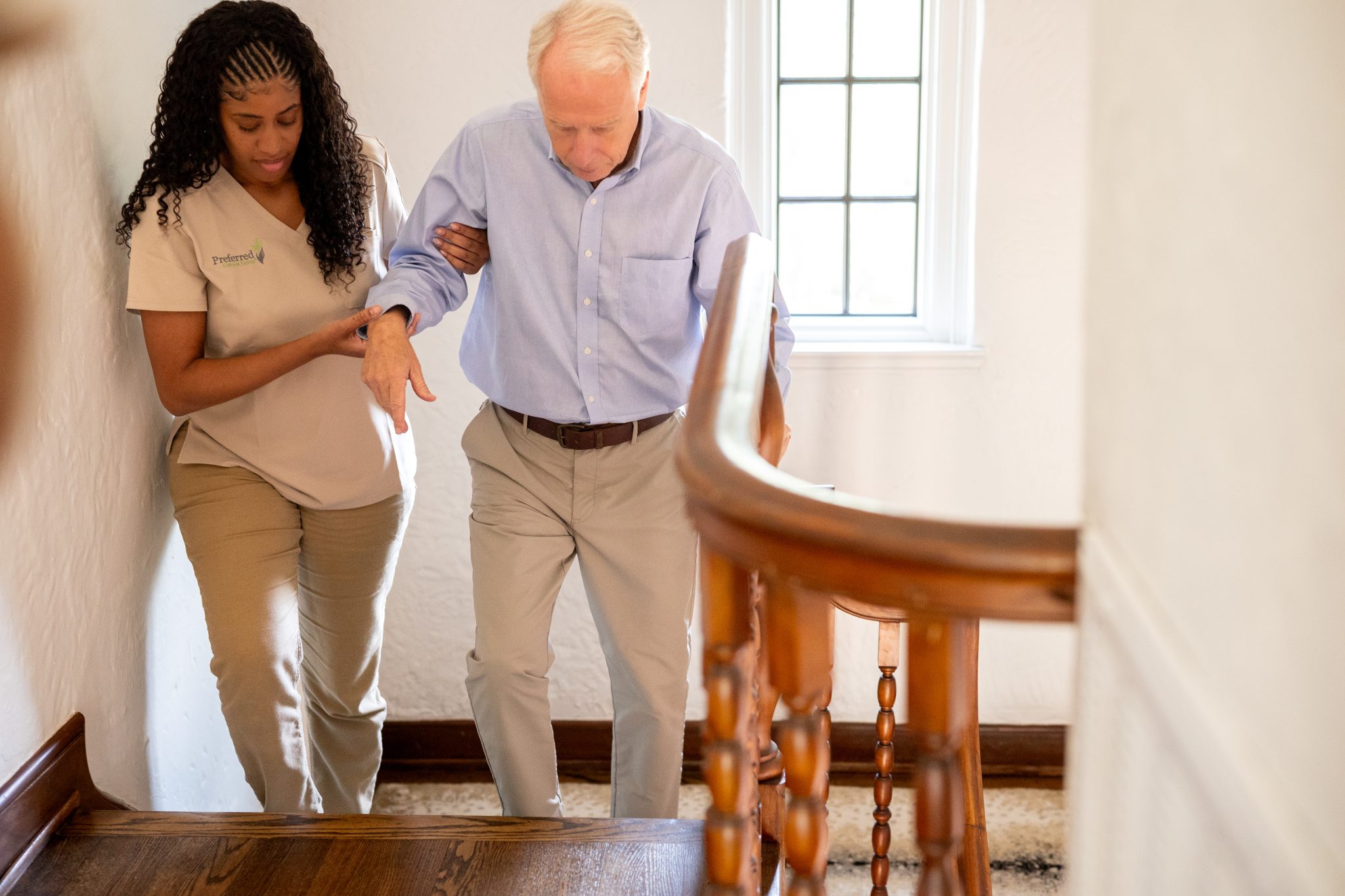
The kinds of help that fit early onset Alzheimer’s are non-medical and built around presence, routine, and relief. That includes companion care for keeping active and engaged, dementia-specific behavioral support, Respite Care so the family caregiver can rest or keep working, and hands-on personal help with daily tasks. Bluegrass-area families navigating a young age diagnosis often start with Companion and Homemaker Care for a few hours a week and scale up as needs change.
A diagnosis at this age creates unique challenges for working families. The Alzheimer’s Association offers support groups and educational materials, and many families also explore workplace protections under the Family and Medical Leave Act, sit down with a financial planner about long-term care costs, and verify health insurance coverage for in-home services. A healthy diet and regular activity support overall well-being too, though they don’t change life expectancy after diagnosis, which varies widely by age at onset and overall health.
Frequently Asked Questions
Could someone in their 40s or 50s really have Alzheimer’s?
Yes, and per the CDC, early signs of Alzheimer’s can appear as early as the mid-40s.
According to the 2024 Alzheimer’s & Dementia facts report, about 200,000 Americans are living with younger-onset dementia. Symptoms in this age group often get blamed on stress, depression, or burnout long before anyone considers a neurological evaluation, which is one reason diagnosis is so often delayed for people diagnosed before 65. When the person is still working full-time and managing most daily tasks, the idea that Alzheimer’s could be responsible for word-finding difficulties or workplace errors feels unlikely to both the person and their family.
Is memory loss always the first sign of early onset Alzheimer’s?
No, early onset Alzheimer’s often starts with language, visual, or executive problems instead of memory loss.
Per the Continuum clinical review, early onset patients often show less severe memory loss and more problems with attention, executive function, and visuospatial processing than late onset patients. Because primary care screening tends to focus on memory, these non-memory presentations slip past initial visits, which is a major reason diagnosis can take years. The person may remember names and dates well while simultaneously losing the ability to organize a work project or judge spatial distances.
What symptoms of early onset Alzheimer’s are easy to miss?
Trouble finishing routine work tasks, getting lost on familiar routes, and personality changes the family notices before the person does.
Workplace performance issues often surface first. A manager flags missed deadlines, a longtime employee can’t follow procedures they wrote, or coworkers notice the right word goes missing in meetings. Trouble with visual judgment, sequencing, and misplacing things in odd places usually shows up at home around the same time but gets attributed to stress. Personality shifts tend to be subtle at first, like more irritability, less patience, or withdrawal from social situations, and only in retrospect do families recognize these as early disease markers.
Is early onset Alzheimer’s genetic?
Rarely in a deterministic way; only about 5 to 10 percent of cases involve known inherited gene mutations.
Per a 2023 LEADS cohort paper, only about 5 to 10 percent of people with early onset Alzheimer’s disease carry a known autosomal dominant variant in APP, PSEN1, or PSEN2. Family history matters and can raise risk, but for most families a single relative with the disease doesn’t guarantee anyone else will develop it. An affected parent raises vigilance around cognitive changes, but it does not mean the disease runs inevitably through the family line the way families often fear.
Should family members get genetic testing?
Talk to a genetic counselor first; consumer DNA tests don’t give the answers families actually need.
GeneReviews advises that susceptibility genes like APOE aren’t diagnostic and shouldn’t drive testing decisions. A counselor reads your family history first and tells you whether testing is even informative. Families navigating younger onset Alzheimer’s usually need two things: medical guidance from specialists and day-to-day support at home. Dementia care from Preferred Care at Home addresses the second need while your medical team handles the first. Most families benefit more from practical care planning than from susceptibility testing that raises anxiety without changing the care approach.
How is early onset Alzheimer’s diagnosed today?
Through a workup that often includes neuropsychological testing and biomarker confirmation via PET scans or blood tests.
Per the National Institute on Aging, biomarker tests can now detect amyloid changes in the brain in living patients. Ask your specialist whether biomarker testing is appropriate for your situation, because confirmation is sometimes required for eligibility for newer treatments or clinical trials, and researchers hope earlier confirmation will improve outcomes over time. The testing process has evolved significantly in recent years, and what was once research-only is now part of standard diagnostic pathways at specialized memory clinics.
What’s the difference between early onset Alzheimer’s and young-onset dementia?
Young-onset dementia is the umbrella; early onset Alzheimer’s is one specific cause within that umbrella.
Per the CDC, Alzheimer’s accounts for 60 to 80 percent of all dementia cases overall, but young-onset dementia in someone under 65 can also include frontotemporal dementia and other forms. The distinction matters because a doctor evaluating someone with early symptoms has to weigh several possibilities, not just confirm one. Early onset dementia is the broader term that includes all forms of dementia beginning before age 65, while early onset Alzheimer’s specifically refers to Alzheimer’s disease that begins before that age threshold.
When does in-home care become helpful for someone with early onset Alzheimer’s?
Usually when safety, sleep, or the family caregiver’s capacity starts breaking down, not at diagnosis.
According to the CDC, about 80 percent of adults with Alzheimer’s and related dementias receive care in their homes. Families in Lexington often start with a few hours a week of companion or respite care while the person is still active, then adjust as needs change. To talk through what would help your family, Get Care Now and Preferred Care at Home will walk you through the options. The timing matters less than recognizing when current arrangements are becoming unsustainable for the person, the primary caregiver, or the household as a whole.


